





Materials and Colors: How to Choose the Right Sign for Your Space
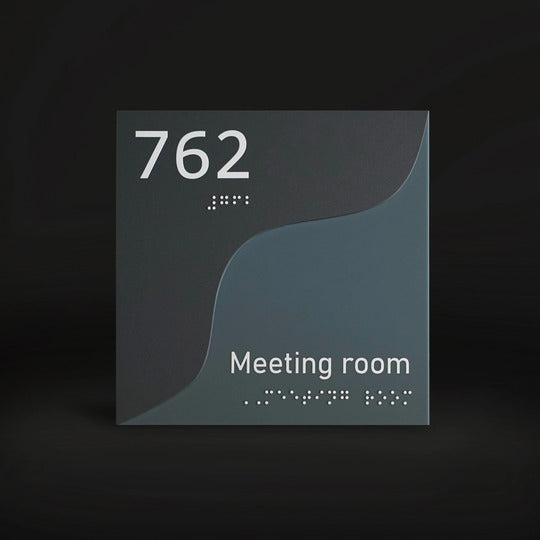
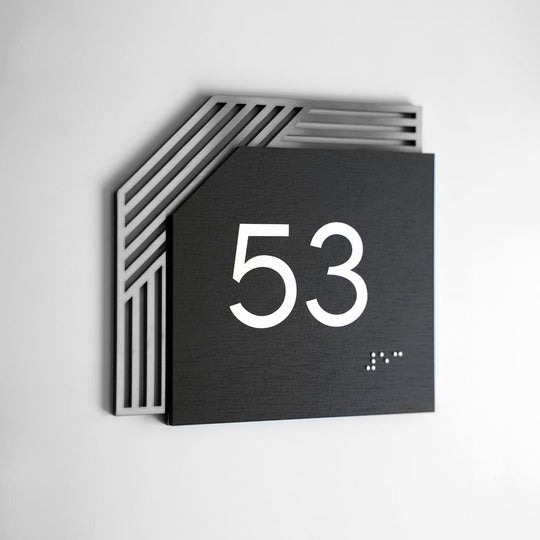
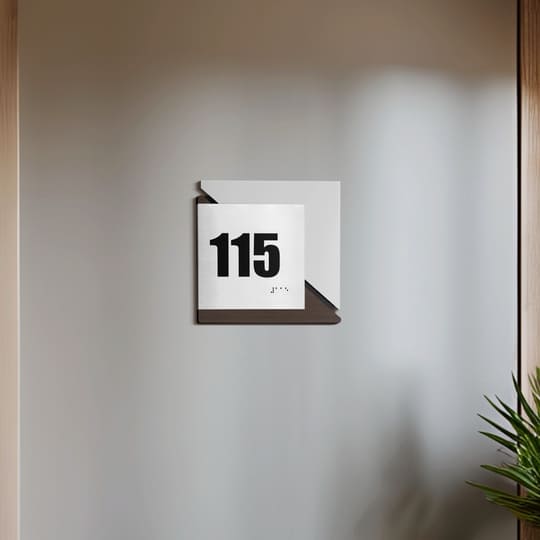
Choosing the right material and color for your sign is about more than appearance. A good sign should match the interior, stay readable, feel appropriate for the space, and serve its practical purpose for years. At Bsign, we create custom door signs, room numbers, office signs, restroom signs, hotel signs, and wayfinding signs using three main premium materials: stainless steel, wood, and acrylic glass. These materials can be used separately or combined in one design to create a more dimensional and distinctive look. Bsign’s catalog also notes that signs can be personalized by changing size, adding a company name, QR code, icon, UV printing, 3D text, or Braille.
Stainless Steel: Modern, Durable, and Professional
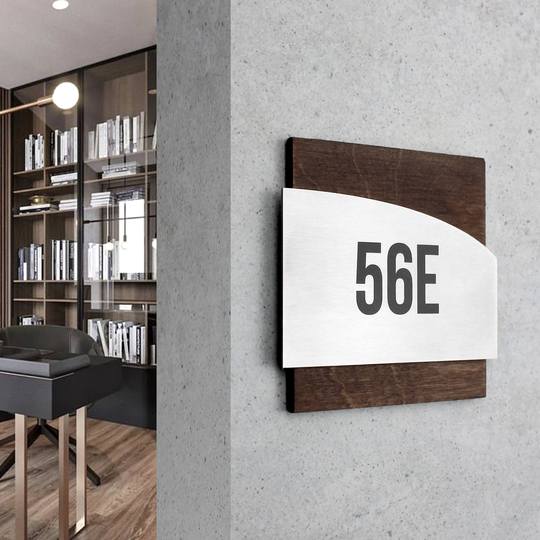
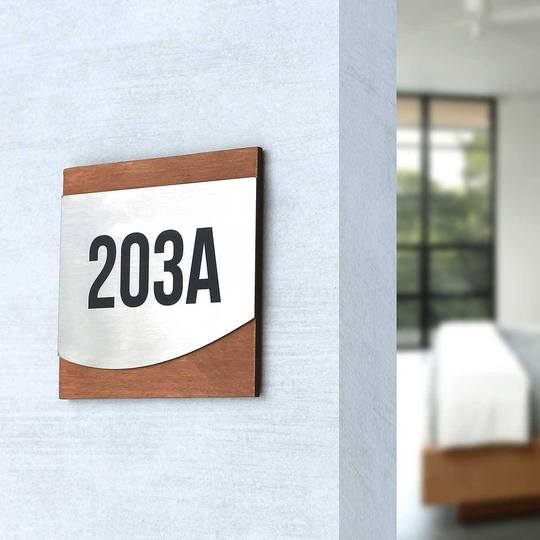
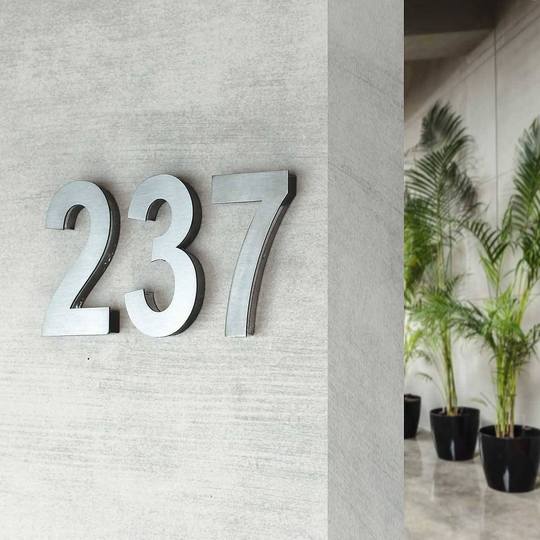
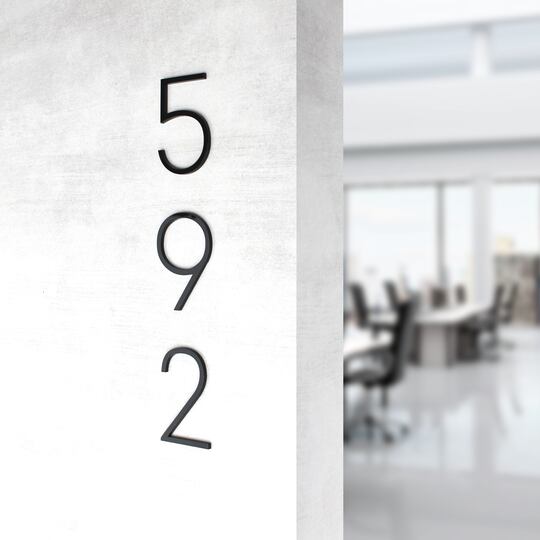
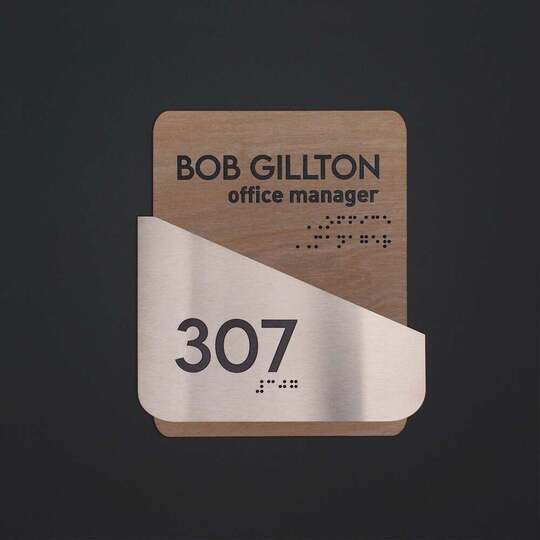
Stainless steel is a strong choice for spaces that need a clean, modern, and long-lasting sign. It works especially well in offices, hotels, apartment buildings, business centers, clinics, and other high-traffic interiors. The brushed metal surface gives the sign a professional look without feeling overly decorative. It pairs naturally with glass doors, metal handles, concrete walls, dark doors, and minimalist interiors.
Stainless steel is also one of the best options when durability matters. It does not easily rust or lose its appearance, which makes it suitable for areas where signs are touched often or need to look fresh for a long time. For outdoor or semi-outdoor use, metal-based signs are usually the safest choice, especially when the sign is placed near an entrance, under a roof, or in a covered exterior area.
Choose stainless steel if you want your signage to feel strict, modern, elegant, and reliable. It is especially suitable for room numbers, office signs, restroom signs, wayfinding signs, floor numbers, and building navigation systems.
Wood: Warm, Natural, and Welcoming
Wood is the best option when you want the sign to feel warm, natural, and handcrafted. It softens the interior and creates a more personal atmosphere, which is why it is often chosen for boutique hotels, spas, restaurants, cafés, wellness centers, private clinics, creative studios, and residential interiors.
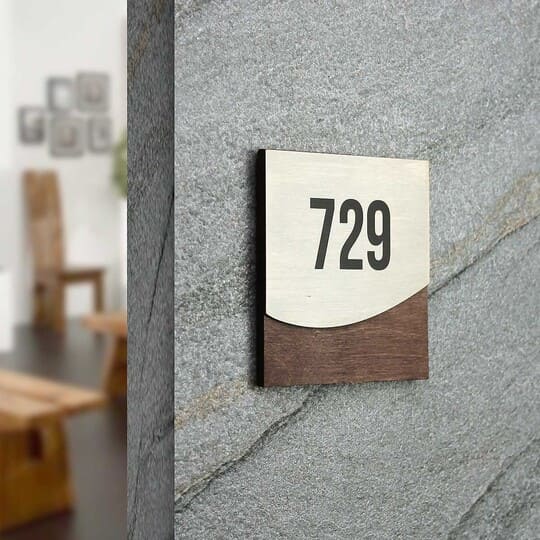
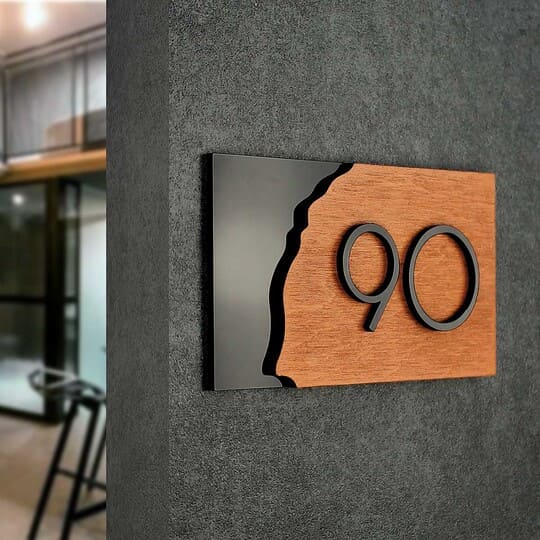
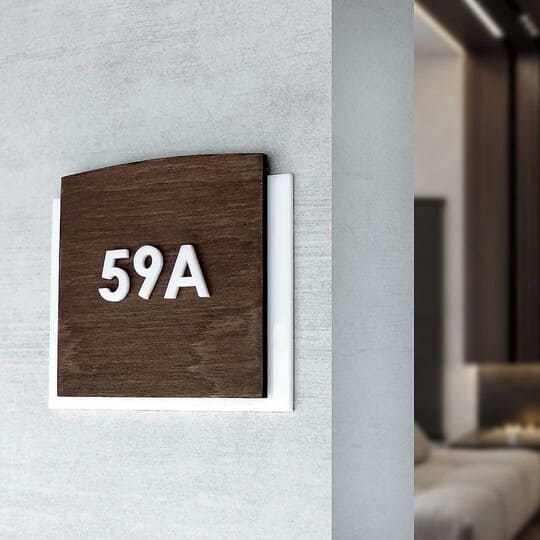
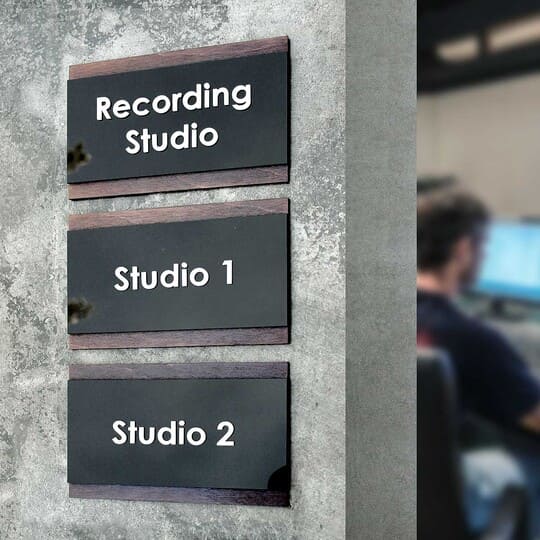
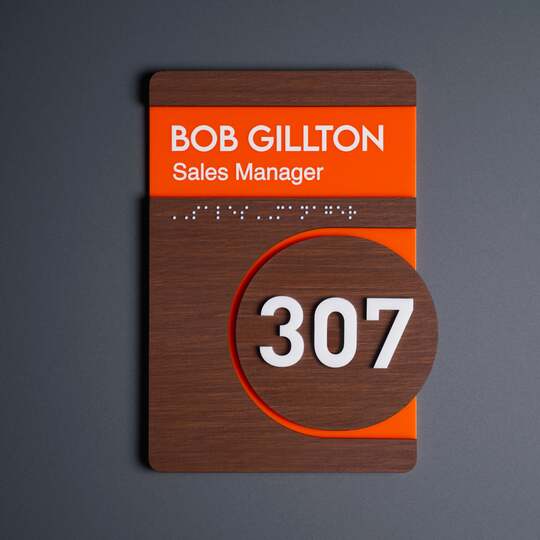
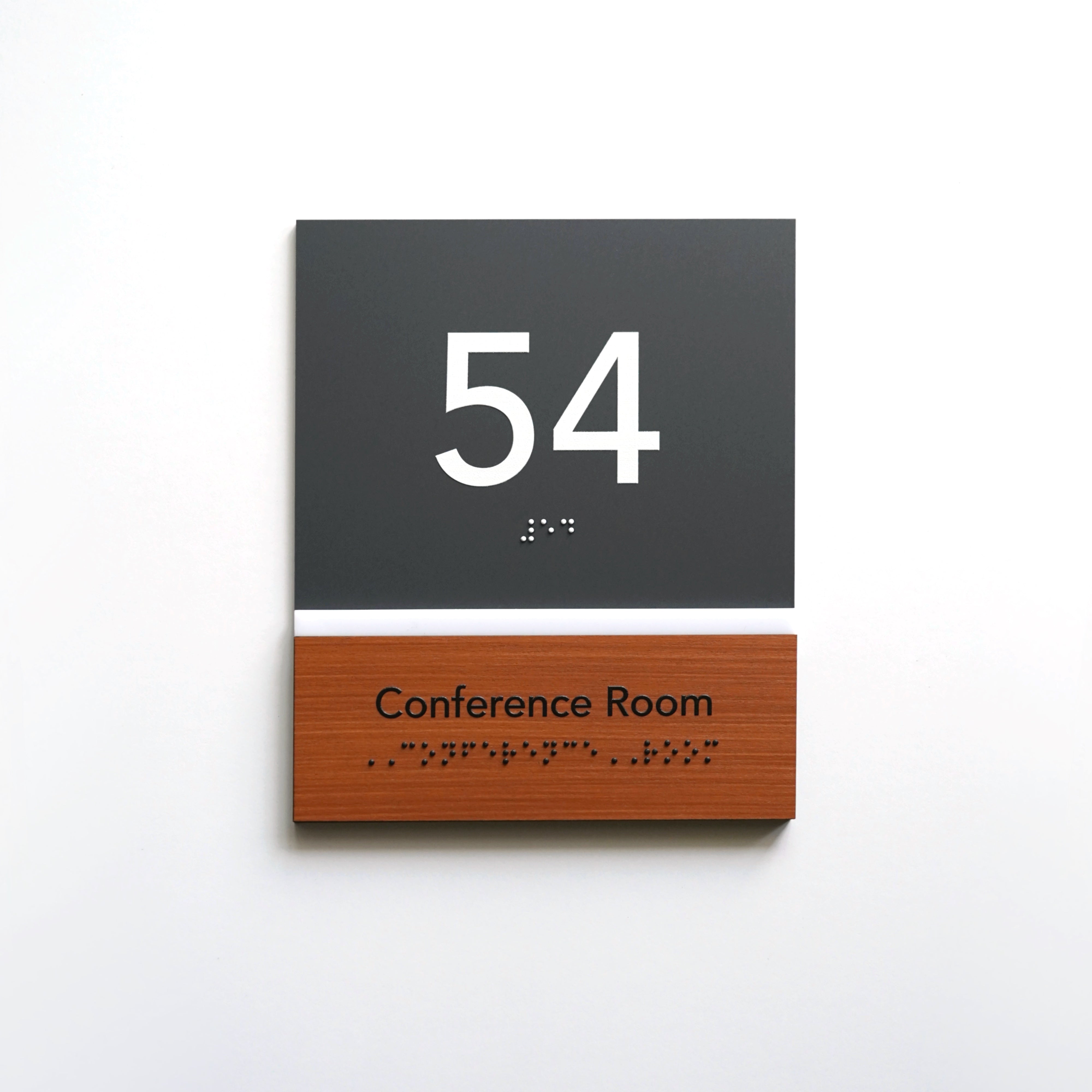
Wood works beautifully with both stainless steel and acrylic. For example, a wooden base with metal numbers gives a premium hospitality feeling, while wood combined with black acrylic creates a modern but cozy look. Wood is also a good match for interiors with natural textures, plants, warm lighting, beige walls, wooden doors, or Scandinavian-style design.
Bsign offers several wood tones depending on the design, including natural wood, walnut, redwood or rosewood tones, and anthracite gray. These options make it easier to match the sign to doors, walls, furniture, or the general mood of the interior.
Wood is mainly recommended for indoor use or protected areas. Although wooden parts are finished and sealed, long exposure to direct rain, strong sunlight, or humidity may affect their appearance over time. For exterior signs, it is better to choose stainless steel or ask our team which combination will work best.
Acrylic Glass: Clean, Versatile, and Easy to Customize
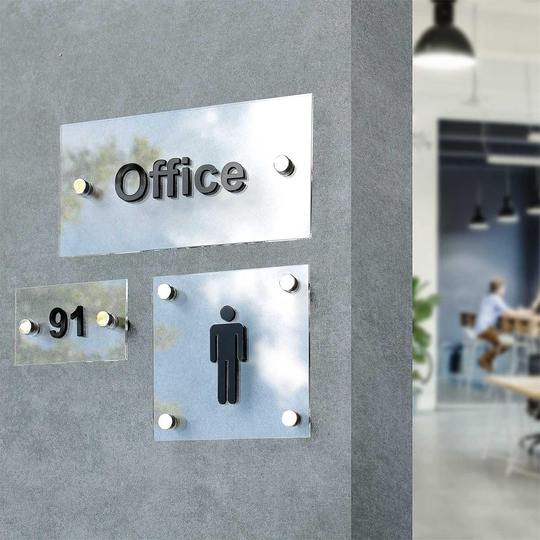
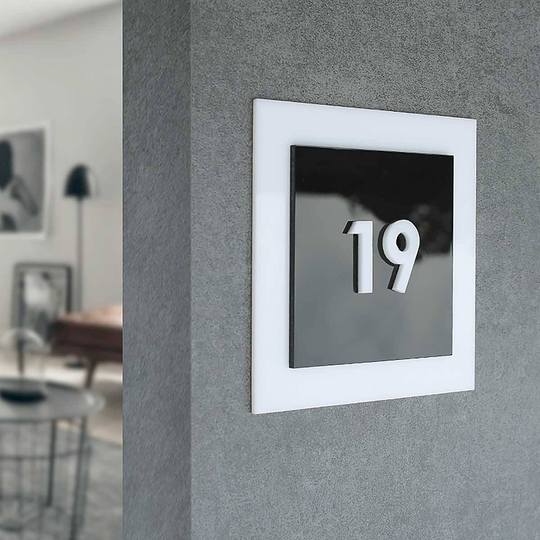
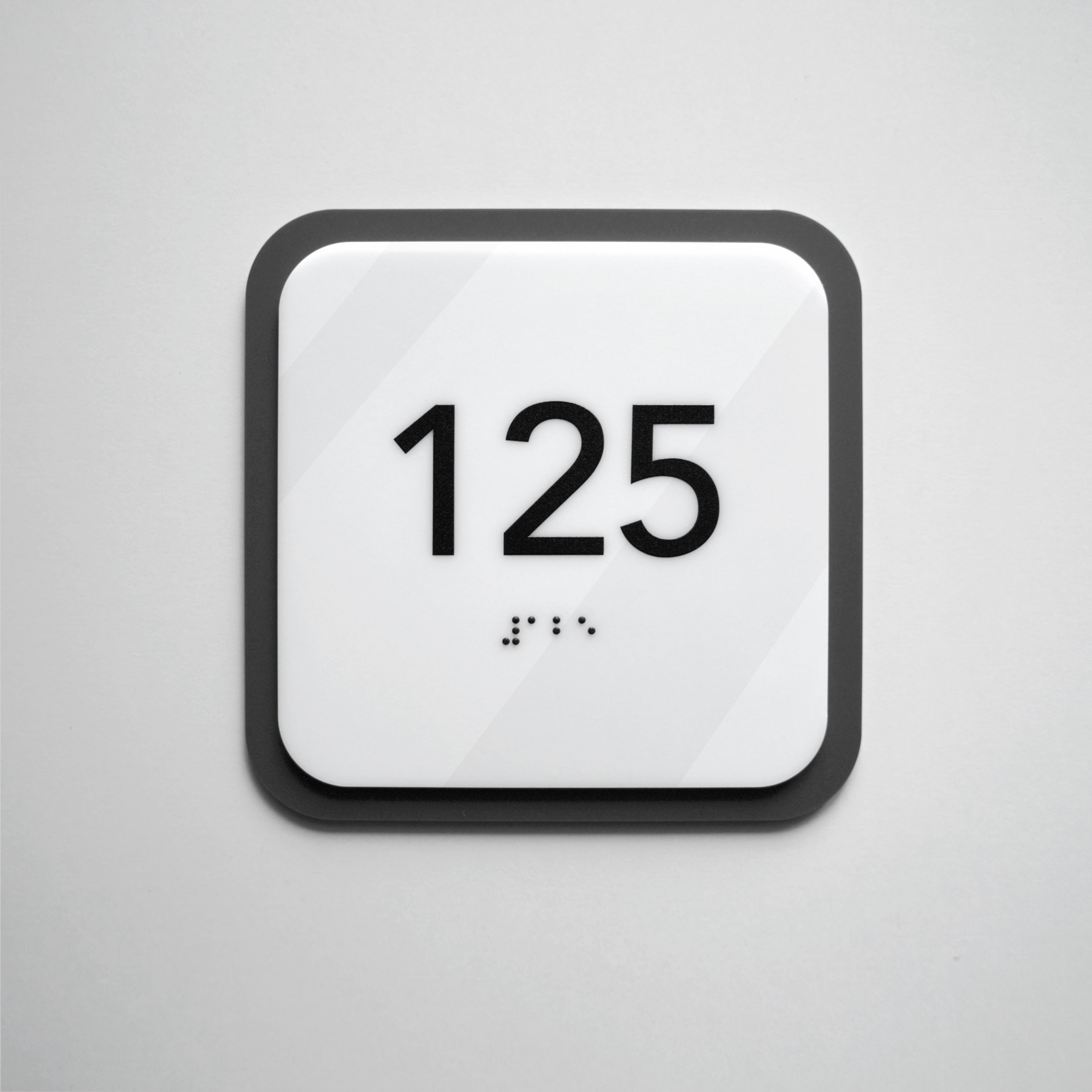
Acrylic glass, also known as plexiglass, is one of the most flexible materials for custom signage. It can be transparent, black, white, colored, glossy, printed, layered, or cut into detailed shapes. Acrylic is often used for office signs, restroom signs, hotel room numbers, clinic signs, information signs, pictograms, raised letters, and Braille elements.
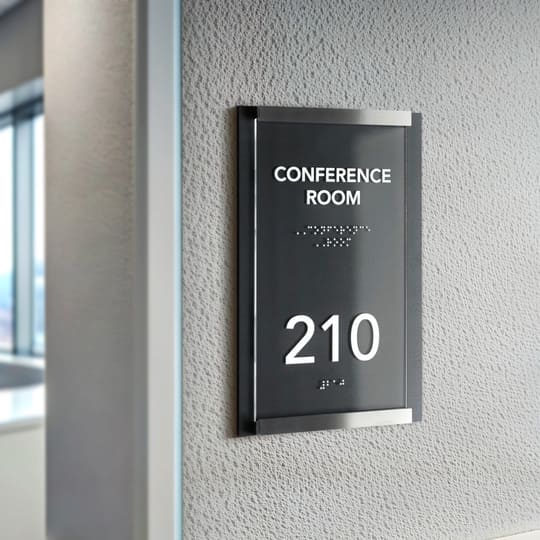
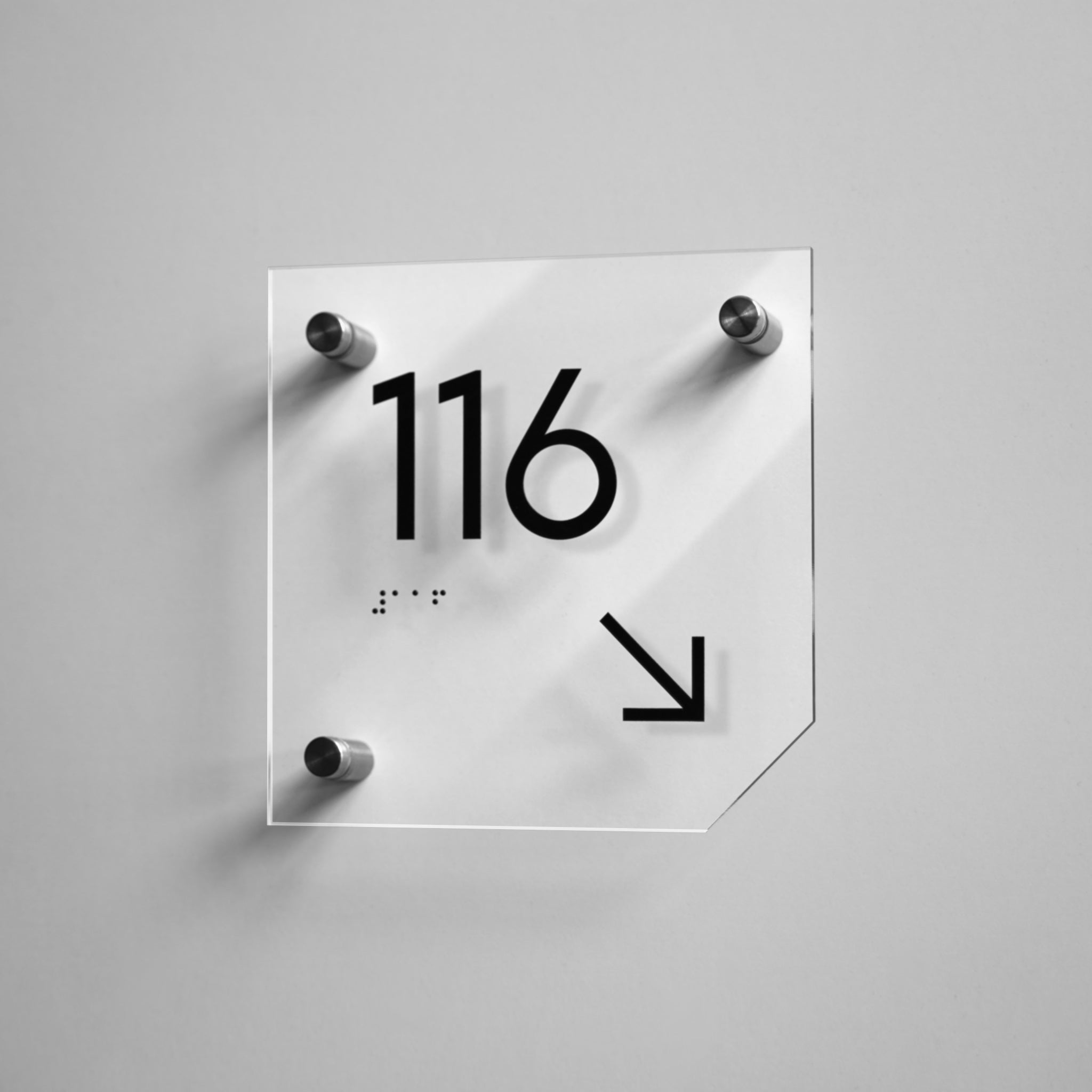
Clear acrylic is a great choice when you want the sign to look light and elegant. It is often used in classic-style plaques with black lettering and metal holders, creating a “floating” effect on the wall. Opaque acrylic is better when stronger contrast is needed, especially for readable text, icons, or directional signs.
Acrylic is also very useful for branding. With UV printing, Bsign can print custom colors, logos, icons, or text on acrylic or metal surfaces. This is helpful for companies, hotels, clinics, restaurants, and offices that want signs to match their brand identity.
For outdoor use, acrylic should be chosen carefully. It looks beautiful, but direct sunlight, high heat, or harsh weather can affect some acrylic elements over time. If the sign will be installed outside, please tell us before ordering.
How to Choose the Best Color
The most important rule is contrast. A sign should not only look beautiful; it should be easy to read. Dark text on a light surface, light text on a dark wall, black acrylic on clear acrylic, or stainless steel on a dark door are all reliable combinations.
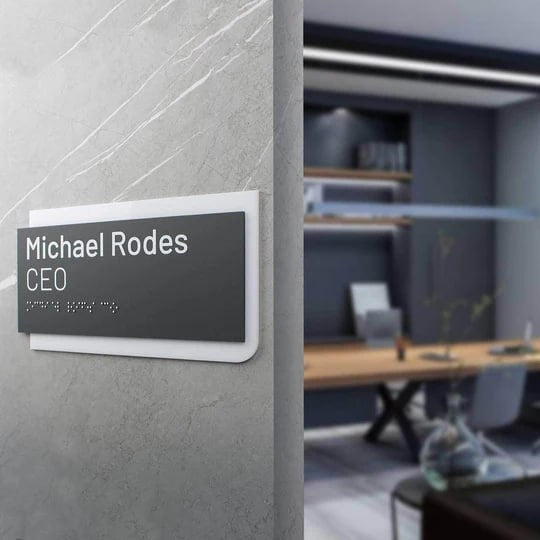
For modern offices, good choices are brushed steel, black acrylic, white acrylic, clear acrylic, and dark gray wood. For hotels and boutique interiors, walnut, natural wood, anthracite, and mixed wood-metal designs often look more premium. For clinics and public spaces, clear contrast, simple colors, and easy-to-read typography are especially important. For restaurants, cafés, and wellness spaces, warmer wood tones usually create a more welcoming impression.
What to Consider Before Ordering
Before choosing a material, think about where the sign will be installed, what surface it will be mounted on, and how people will use it. Smooth doors, painted walls, glass, tile, metal, and varnished wood usually work well with adhesive mounting. Textured walls, brick, stone, or decorative plaster may require screws or metal holders instead.
If you are ordering signs for a full building, hotel, office, clinic, or apartment complex, we recommend keeping all signs in one consistent style. Door numbers, restroom signs, arrows, floor signs, and information signs should feel like one system. This makes navigation easier and gives the whole space a more professional, finished appearance.
If you are not sure which material or color to choose, send us a photo of your door, wall, or interior. Our team will help you select the best material, color, size, and mounting method for your project.


