











by Oleh Tomilenko
Door Signs: A Complete Guide to Selection, Design, and Installation
A door sign is chosen in a fixed order: define its function and information first; assess usage conditions and location, including whether it identifies a permanent room or space subject to tactile requirements; then select the material and design; finally, choose a mounting method that suits the surface, sign weight, and future replacement needs.
Facility managers, interior designers, property managers, and business owners often need more than one attractive plaque. They need a clear system that works across offices, hotel rooms, restrooms, classrooms, and shared areas. This guide explains how to make those decisions in the right order, compare common materials, account for accessibility requirements, choose a mounting method, and prepare a complete sign schedule before requesting a quote. The result is a practical specification that contractors and manufacturers can review without having to guess about its purpose, content, or installation.
Key Takeaways
-
Define the function, message, conditions, and location before choosing material or style.
-
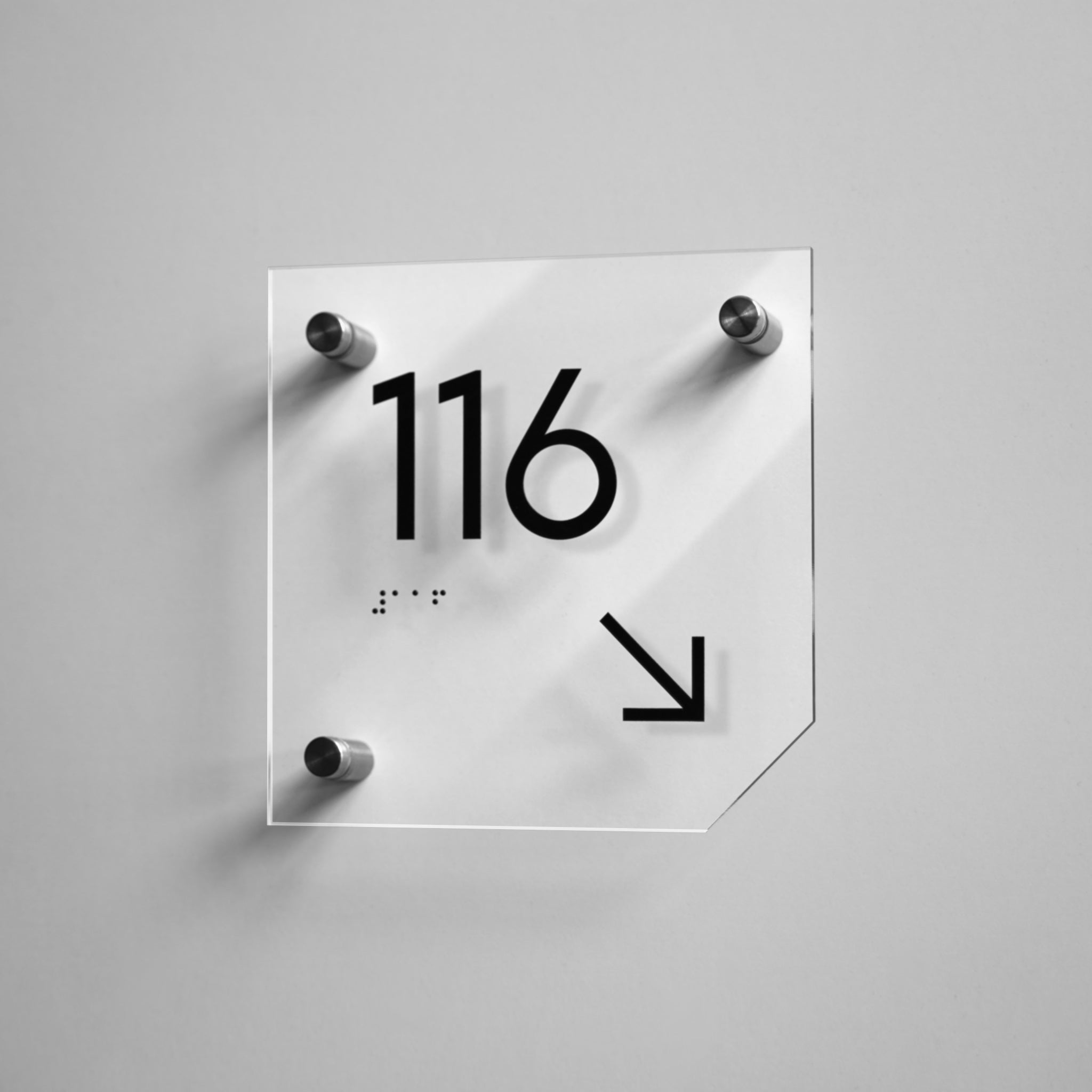
A door sign identifies a room, a door number identifies it by number, and a directional sign points the way to it.
-
Match the material to the setting and expected use.
-
Decide whether tactile requirements under the 2010 ADA Standards apply before design and mounting.
-
Prepare exact room texts, sign types, surfaces, and quantities.
What Is a Door Sign and What Does It Do?
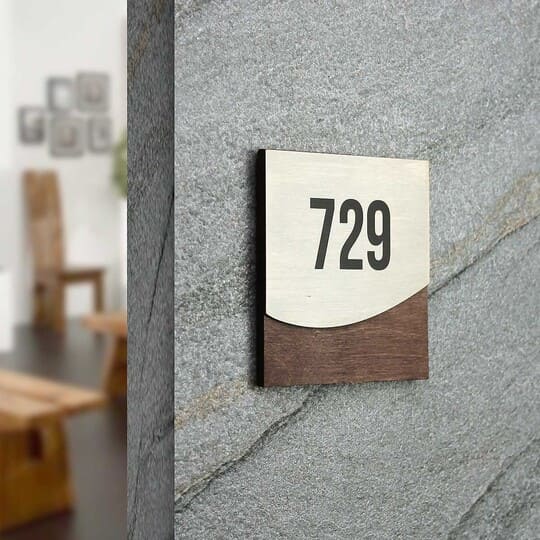
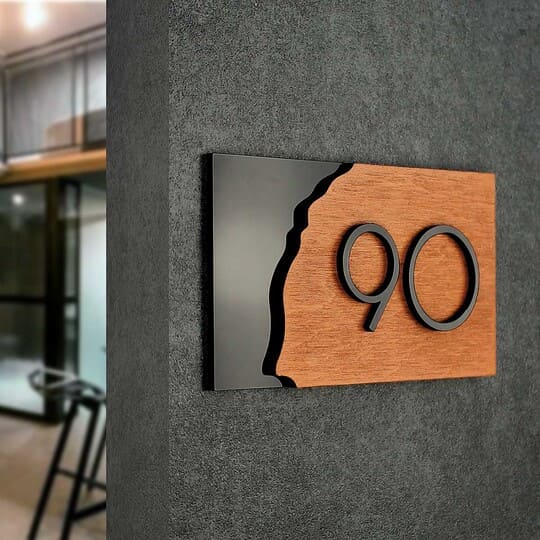
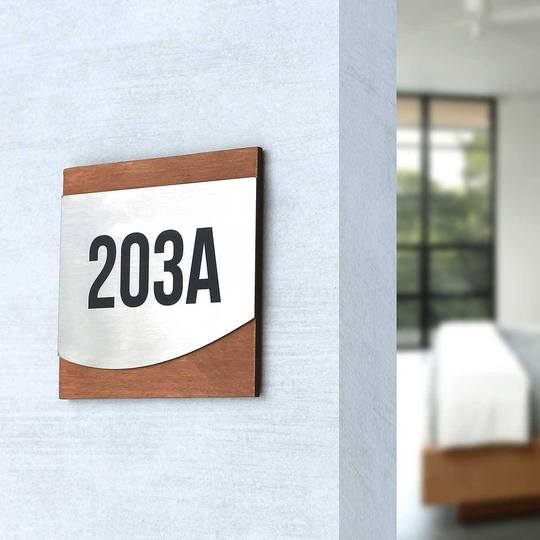
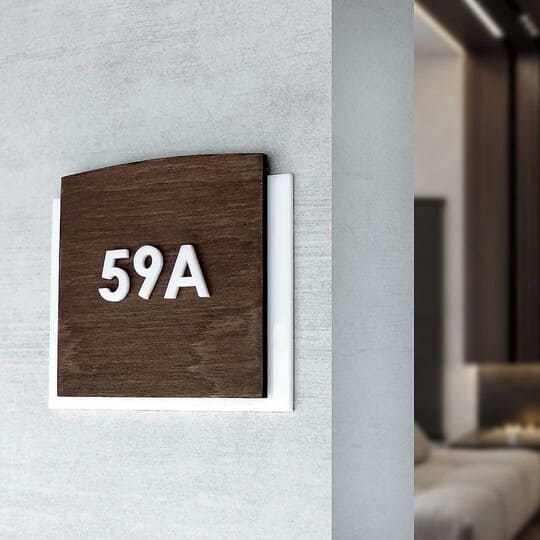
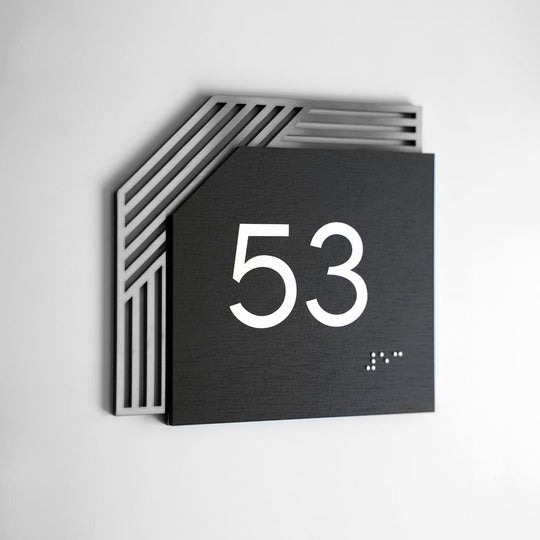
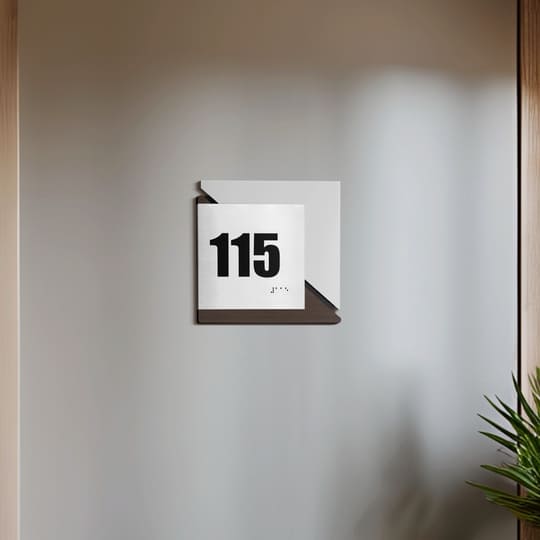
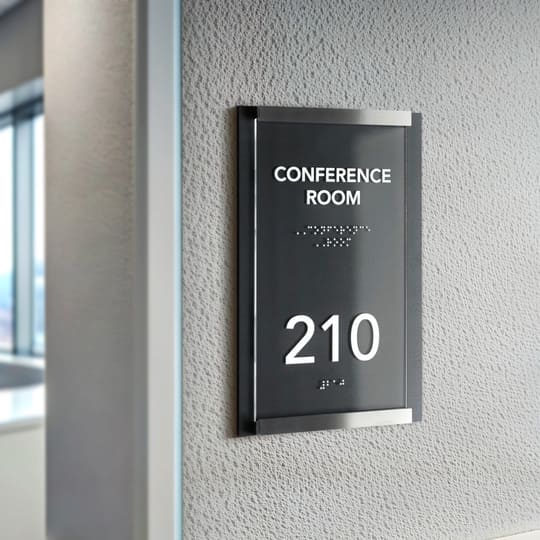
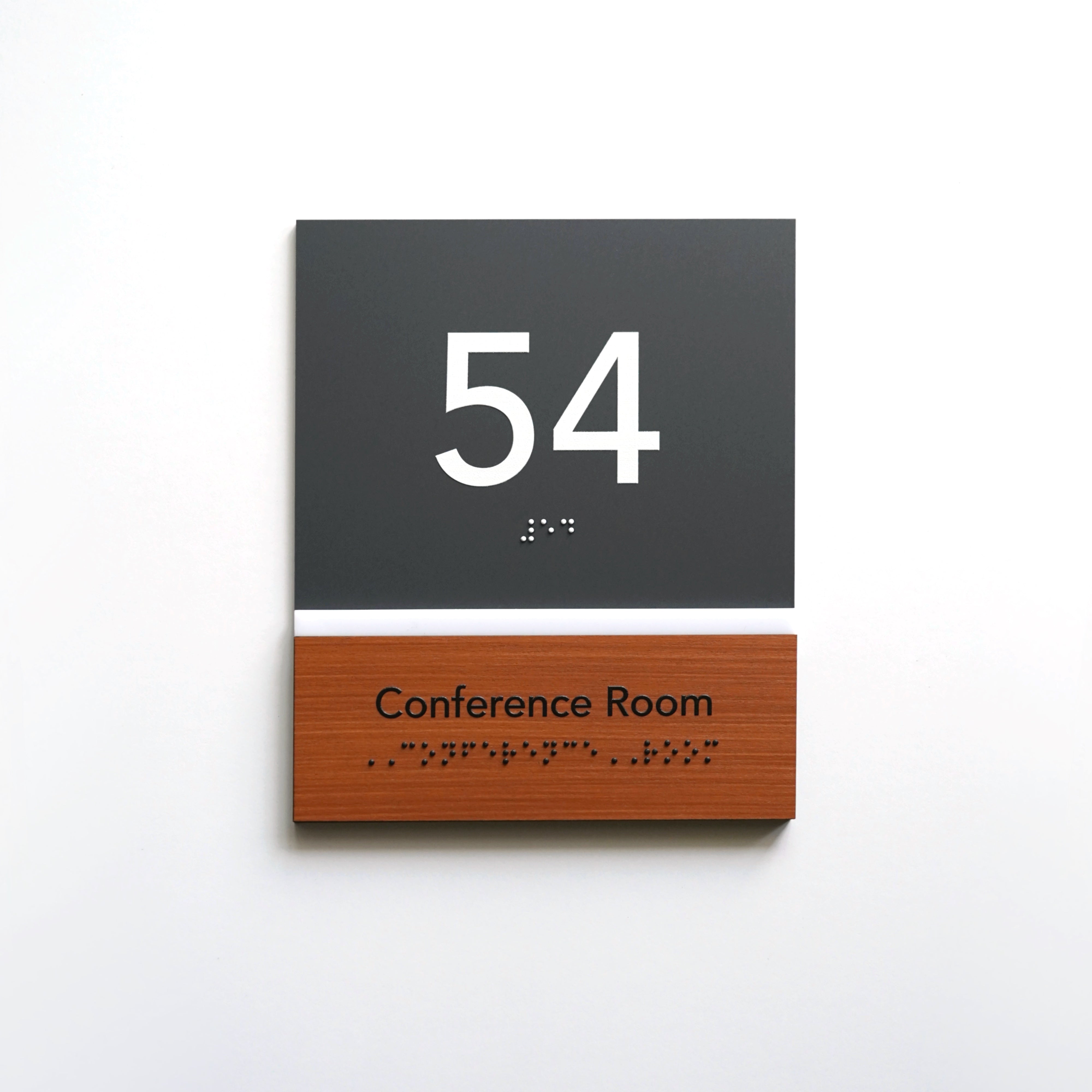
A door sign identifies a room or communicates its function and is mounted on the door or on the wall beside it. It may name a conference room, department, restroom, or staff-only area. Door numbers and personal nameplates are separate sign types when their primary role is numbering a space or showing a person's name or title.
In a building, these signs support three practical goals: identification, information, and a consistent interior. Visitors can find the right room without asking for help, while matching typography, colors, and materials make the environment feel organized rather than pieced together.
How to Choose a Door Sign: Five Decisions in Order
1. Define the function and information type
Start with the question the sign must answer. Does it identify a room, show a department, name an employee, state a rule, or communicate a room number? Consider whether employees, guests, patients, students, or first-time visitors will read it. Once the purpose is clear, review relevant door signs without letting style drive the decision too early.
2. Assess the usage conditions
Next, consider traffic, moisture, cleaning routines, possible contact with water, and the risk of bumps or scratches. Decide whether the plaque will be indoors or outdoors. If a name, title, schedule, or room use may change, plan for replaceable content instead of treating the message as permanent.
3. Confirm the location and accessibility requirements
Decide whether the sign will sit on the door or on the wall beside it. Note glass panels, narrow frames, decorative details, door swing, and available wall area. Determine whether the message identifies a permanent room or space covered by the tactile requirements in §216.2. That decision affects the characters, Braille, construction, and mounting location before material selection.
4. Choose the material and design
With the practical requirements established, compare acrylic, wood, stainless steel, and combined constructions. For a numbering system for a multifamily property, keep apartment numbers consistent in their format, placement, typography, and finish across all floors. The finish should suit the interior, while the message retains strong contrast and a readable typeface. Keep one visual language across the property, even when sign formats differ.
5. Select the mounting method
Match the hardware to the surface, size, weight, and permission to drill. Consider whether the plaque may need to be removed or relocated. Choosing the mounting method before production helps avoid incompatible hardware and rework.
Types of Door Signs and How They Differ
Classify every item by function. A room label, personal nameplate, number, and directional marker may share a doorway, but each does a different job.
|
Sign type |
Primary function |
Typical settings |
What it usually includes |
|
Room name sign |
Identifies a room by purpose |
Offices, classrooms, meeting rooms |
Room name and, when useful, a pictogram |
|
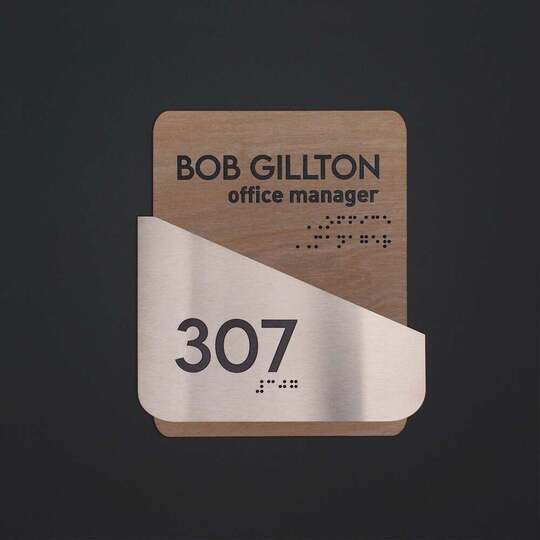
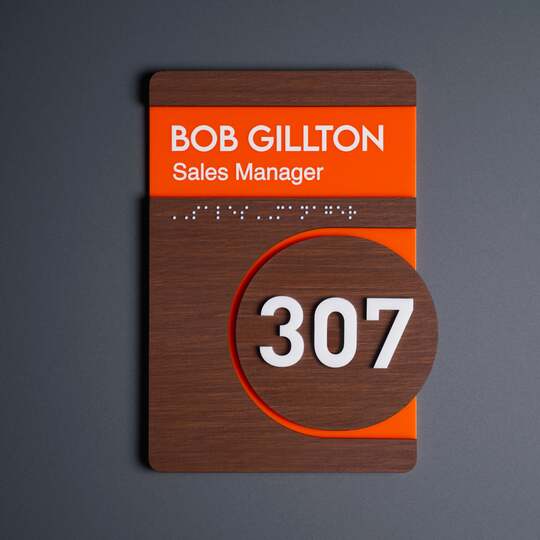
Nameplate |
Identifies a person or role |
Private offices, reception areas, medical offices |
Name, title, or department |
|
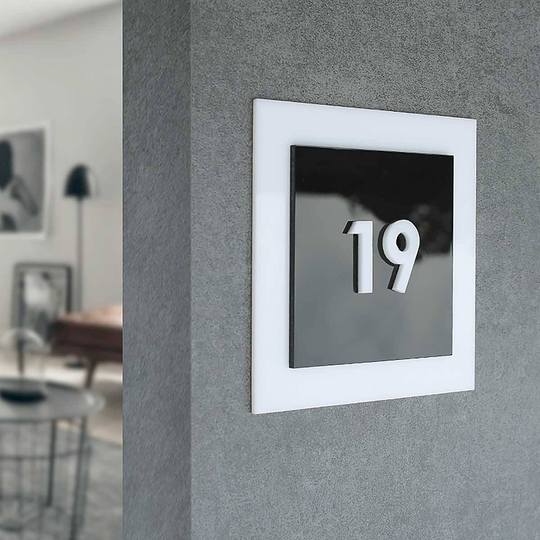
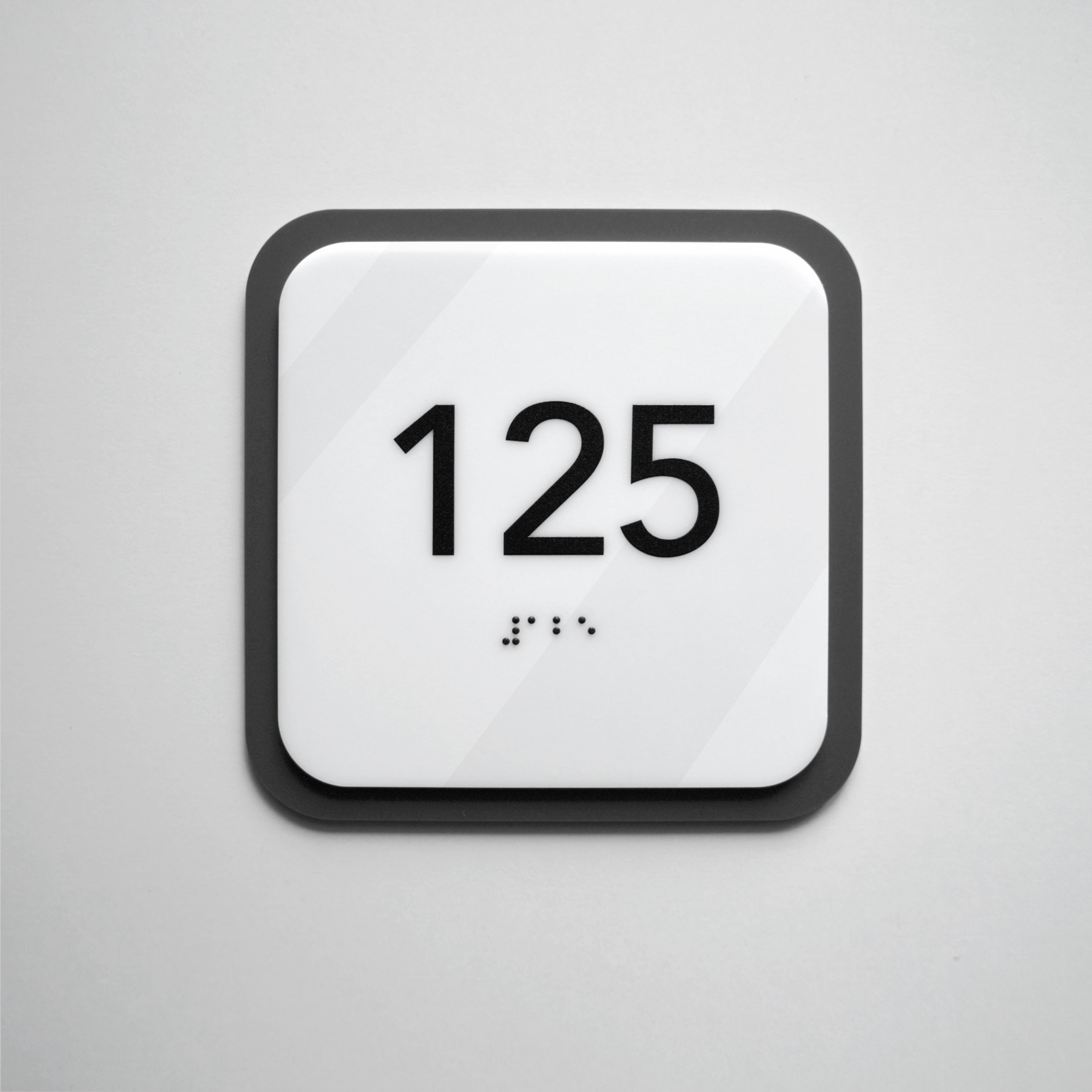
Door number |
Identifies a space by number |
Hotels, apartments, offices |
Room, suite, apartment, or office number |
|
Restroom sign |
Identifies the room and its use |
Public and commercial facilities |
Room label, pictogram, or both |
|
Informational sign |
Communicates a rule or practical detail |
Entrances, service areas, shared spaces |
Hours, instructions, policies, or notices |
|
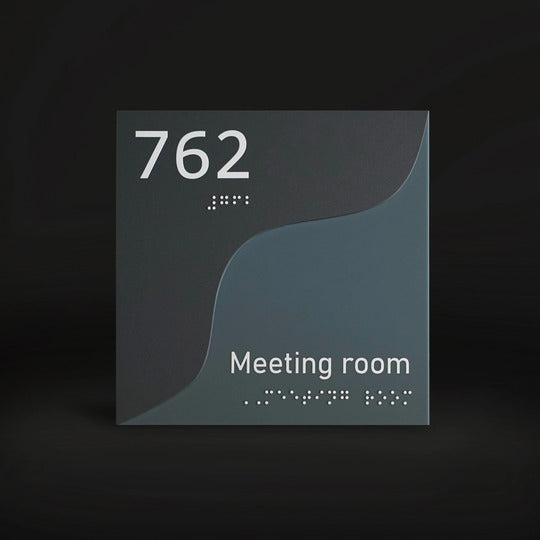
Tactile sign with Braille |
Provides touch-readable room identification |
Covered facilities and permanent spaces where tactile rules apply |
Raised characters and Braille, with visual information as required |
A room label identifies a space or its function, a door number identifies the space by number, and a directional sign points people toward it. A nameplate is different again: its main purpose is to display a person's name or title. Browse door numbers for numbered spaces or room signs for examples organized by room function.
Choosing Door Sign Materials by Use Case
There is no single best material for every project. The right choice depends on where the plaque will be installed, how the area is used, and how the material should relate to the interior.
|
Material |
Best suited for |
Watch out for |
|
Acrylic |
A wide range of modern interior settings and color-driven designs |
Make sure the format suits the expected level of physical contact |
|
Wood |
Interiors where a warm, natural appearance is part of the design |
Evaluate the installation environment before specifying it for moisture-prone areas |
|
Stainless steel |
High-traffic areas and interiors that call for a crisp metal finish |
Confirm that the finish and visual weight fit the surrounding materials |
|
Combined designs |
Projects that need the appearance of one material and the detailing of another |
Account for the characteristics of every material in the construction |
Acrylic door signs support varied colors and graphics. Wood door signs bring warmth, while stainless steel door signs work well in frequently used spaces. Combined designs can balance those qualities. For a deeper comparison, see the guide to the best materials for door signs.
Information can be applied with UV printing or engraving. UV printing supports color and detailed graphics; engraving marks the selected material directly.
Design and Content: What to Put on a Door Sign
Use only the information a visitor needs to identify the room or person quickly. More words does not make a sign more useful. In most settings, the content may include:
-
a room or department name;
-
an employee's name and title;
-
a room number;
-
a pictogram;
-
a company logo; or
-
a QR code that leads to supporting digital information.
A logo can reinforce the brand system, and a QR code can lead to a menu, schedule, website, or visitor resource. Neither should compete with or replace the primary room information. Custom door signs are useful when a project needs a particular size, language, color palette, logo, or combination of elements.
Coordinate the shape, material, typography, and color with the interior, but protect readability. Use a clear typeface and strong text-to-background contrast; avoid ornate lettering, busy backgrounds, and unnecessary graphics. If names, titles, or schedules change regularly, specify a design with interchangeable inserts, so updates do not require replacing the entire plaque.
Mounting Options: Tape, Standoffs, and Surfaces
Mounting depends on the surface, the weight of the product, and whether drilling is permitted. Double-sided tape is a practical option for a lightweight plaque on a smooth indoor surface when avoiding holes is a priority. It also keeps hardware out of view.
Metal standoff mounts are used for heavier pieces when mechanical mounting is acceptable. They require drilled holes and hold the sign away from the surface, creating a deliberate gap. Before choosing either method, check whether the item may need to be moved or replaced and whether the door manufacturer, property owner, or lease limits drilling.
The door sign installation guide covers preparation and installation in more detail.
Placement: On the Door or Beside It
For signs not subject to tactile mounting rules, use a consistent height and placement throughout the facility and choose a comfortable reading position near the entrance. A wall location on the latch side is often easier to find, especially when the door frequently remains open, or the door surface is unsuitable. Make sure the open door will not block the message.
Tactile room identification signs follow ADA location and height requirements, so these general placement principles do not replace the applicable standards. See the full door sign placement rules for common layouts.
When ADA Requirements Apply to Door Signs
For facilities covered by the 2010 ADA Standards for Accessible Design, the required sign features depend on what the message does. A plaque that identifies a permanent room or space and is covered by §216.2 must meet tactile requirements, including raised characters and Braille. Examples may include permanent room names, room numbers, and restroom labels.
Directional and informational signs covered by §216.3 must meet requirements for visual characters but are not required to have tactile elements. Instructions, hours, visitor notices, and arrows therefore do not automatically follow the same rules as a permanent room designation. A single sign can also contain more than one kind of content, so each message should be classified by function.
Which door signs must be tactile?
|
Sign purpose |
Requirement under the cited provision |
|
Permanent room or space identification covered by §216.2 |
Tactile requirements, including raised characters and Braille |
|
Directional or informational content covered by §216.3 |
Visual requirements only; tactile elements are not required |
The Standards separately address characters, Braille, and mounting for tactile signs. Review ADA sign mounting height and placement for the detailed installation criteria. For projects that require touch-readable identification, Bsign offers tactile signs with Braille. Confirm the requirements for the specific facility and sign type before production; this overview is not legal advice.
Door Signs by Facility Type
Offices and business centers. Departments, meeting rooms, service areas, room numbers, and personal nameplates should share a consistent format. Browse office door signs for formats suited to workplace interiors. For door signs for business spaces, a consistent system is more useful than treating each room separately.
Hotels and apartments. Guests need a coordinated system of room numbers, amenity labels, restroom markers, and staff-area notices. Matching hotel door signs with numbers and directional elements makes the property easier to navigate.
Healthcare facilities. Clear room names and pictograms help patients and visitors move through unfamiliar spaces. Select materials and finishes that fit the facility's regular cleaning routines, and classify permanent room identification early so accessibility features are built into the specification.
Schools and colleges. Classrooms, administrative offices, shared spaces, restrooms, and service rooms need simple labels that work for students, staff, families, and visitors. Consistent language and recognizable pictograms reduce ambiguity.
Multi-tenant and residential buildings. Coordinate suite or apartment numbers with names for shared amenities, floors, mailrooms, and management offices. Restaurants, cafes, and coworking spaces can use the same planning method for guest, staff, and service areas.
Common Mistakes When Choosing Door Signs
-
Starting with price or appearance. A low price or attractive finish cannot correct the wrong sign type, message, or location. Define the practical job first.
-
Ignoring the installation environment. A material selected without considering traffic, moisture, cleaning, or indoor versus outdoor use may be a poor fit for the space.
-
Placing similar signs inconsistently. Varying heights and locations force visitors to search at every doorway. Set one placement logic for each sign family.
-
Checking tactile requirements after ordering. If permanent room identification is classified too late, the characters, Braille, construction, or mounting plan may need to change.
-
Mixing unrelated visual styles. Uncoordinated fonts, colors, materials, and shapes make the building's navigation feel improvised.
-
Using too much or poorly legible text. Long messages, decorative type, weak contrast, and clutter slow down recognition. Keep the primary message short and easy to scan.
One Signage System for the Whole Building
Together, room labels, door numbers, and directional signs form one coordinated door signage system. They can differ in size and format while sharing typography, colors, materials, pictogram style, and placement logic. Visitors then learn where to look and how to interpret each element as they move through the property.
Plan the system during design or renovation, before every department orders separately. A common specification also makes future expansion easier: new rooms can be added without introducing a competing style. For larger properties, one coordinated schedule helps designers, contractors, facility teams, and the sign producer work from the same information.
How to Order Door Signs: What to Prepare
Create a sign schedule before requesting a quote. Start with a complete room list and copy the wording exactly as it should appear, including capitalization and every required language. Group similar doors, then record the construction, mounting surface, accessibility status, and quantity for each group.
|
Item |
What to prepare |
|
Room list |
Every room, space, or entrance that needs identification |
|
Texts and languages |
Final wording, spelling, capitalization, and translations |
|
Sign type |
Room label, nameplate, number, restroom marker, informational plaque, or tactile sign |
|
Material and style |
Acrylic, wood, stainless steel, combined construction, colors, and finish |
|
Mounting surface and method |
Door or wall material, surface condition, drilling restrictions, tape, or standoffs |
|
Tactile room list |
Permanent rooms and spaces for which tactile requirements apply |
|
Brand assets |
Logo files, color references, type guidance, or a brand manual |
|
Quantities |
Count by sign type, plus any approved spares |
Once the room list and project requirements are ready, contact Bsign to order door signs. Bsign produces handcrafted signage in wood, acrylic, and stainless steel for custom projects and bulk orders for offices and hotels. A free mockup is available before production, and orders ship worldwide with tracking.
Frequently Asked Questions
What door signs does an office need?
Most offices need room names for departments, meeting rooms, and service areas, plus personal nameplates and numbers where useful. Keep the visual system consistent across the office, and determine separately which permanent room identification signs are subject to tactile requirements.
What is the best material for door signs?
No material is best for every project. Acrylic suits many interiors, wood fits spaces where a warm natural look matters, and stainless steel works well in high-traffic areas. Choose based on the environment, expected use, interior concept, and mounting plan.
What is the difference between acrylic, wood, and metal door signs?
Acrylic supports varied colors and graphics. Wood adds natural warmth and texture. Stainless steel provides a crisp finish for frequently used areas. Combined constructions can bring two of those visual qualities together when the surrounding interior clearly calls for them.
How do you attach a door sign without damaging the surface?
On a smooth indoor surface, double-sided tape can secure a lightweight plaque without drilling. Check the finish first. Standoff mounts provide mechanical attachment, require holes, and are better considered when drilling is allowed and the sign needs greater physical support.
What should be on an office door sign?
Include only what a visitor needs: a room or department name and, when relevant, an employee's name and title or a number. A pictogram can aid quick recognition. Keep secondary information brief so the main message remains easy to scan.
Can I add a logo or a QR code to a door sign?
Yes. A logo can connect the sign to the brand system, and a QR code can lead to a website, menu, schedule, or visitor resource. Treat both as supporting elements. A QR code should not replace essential room, instruction, or tactile content.
Do door signs have to be ADA compliant?
Not every sign has tactile requirements. In covered facilities, permanent room and space identification signs under §216.2 must meet tactile requirements. Directional and informational signs under §216.3 must meet visual requirements and are not required to include tactile elements at all.
What should I prepare before ordering door signs?
Prepare exact wording, languages, and quantities; assign a sign type to each door group; choose the material and style; document mounting surfaces and drilling restrictions; identify rooms that need tactile signs; and supply logo files or brand guidelines for the mockup.


