










by Olena Zadniprovska
Best Materials for Door Signs in 2026: Acrylic, Wood, and Metal Compared
The choice of door signage materials 2026 is no longer just a technical decision. Commercial interior signage has become a strategic tool for shaping a visitor’s first impression of a business.
This is why door signs in 2026 are viewed as a fully integrated, functional, and design element that supports interior navigation, quick visual recognition, and long-term use.
In this article, we examine how acrylic vs wood vs metal door signs perform in different types of interiors, how they differ in terms of durability, maintenance, and design flexibility, and in which spaces each material is appropriate.
We have prepared this article as a practical guide for those who make decisions about architectural wayfinding solutions for hotels, medical and public spaces, as well as modern office signage design in 2026, with a focus on functionality, readability, and long-term cost of ownership.
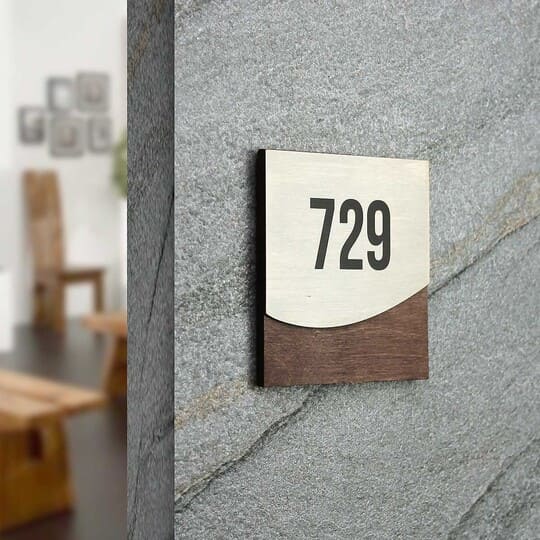
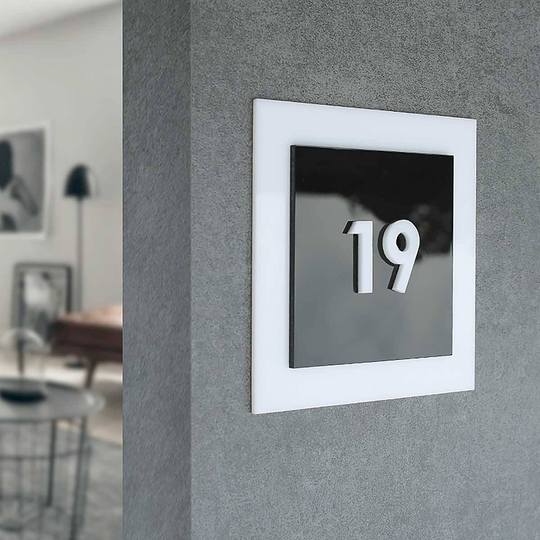
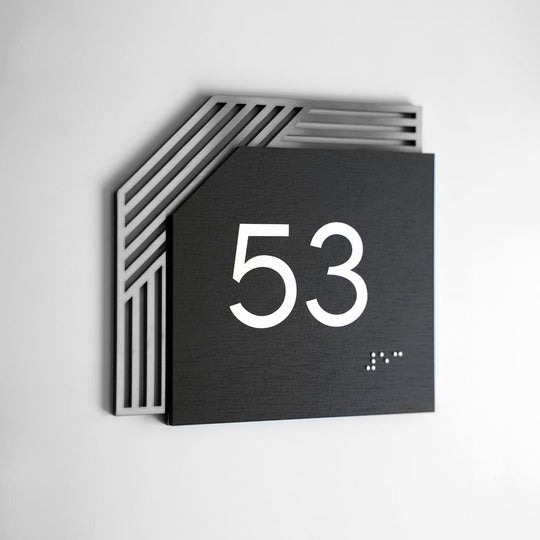
Stainless steel door numbers showing the material’s texture and light reflection in a contemporary interior:

Top Materials for Interior Door Signage in 2026
In modern projects, materials for interior door signs are chosen according to three criteria. Typically, these are compatibility with the space’s style, wear resistance, and the ability to integrate into the space’s wayfinding logic without visual noise. This approach is driven by the fact that door signs are part of a spatial orientation system and work together with architecture, lighting, and visitor movement logic, rather than functioning as isolated elements.
In practice, the market has narrowed down to three solutions — acrylic, wood, and stainless steel — as these materials make it possible to predict how a product will perform in an interior for years to come. They consistently maintain their geometry, retain legibility, and do not create visual conflict with other elements of the space.
These materials form the foundation of interior wayfinding because they provide stable legibility of signs, controlled text contrast, and a predictable appearance over years of use. For this reason, they are perceived not as decorative accents but as functional tools that influence the first impression and the overall perception of the brand in the space.
Other materials either lose their aesthetic qualities over time or fail to meet the requirements of a long-term wayfinding system, where stability, logic, and predictable results in daily use are essential.
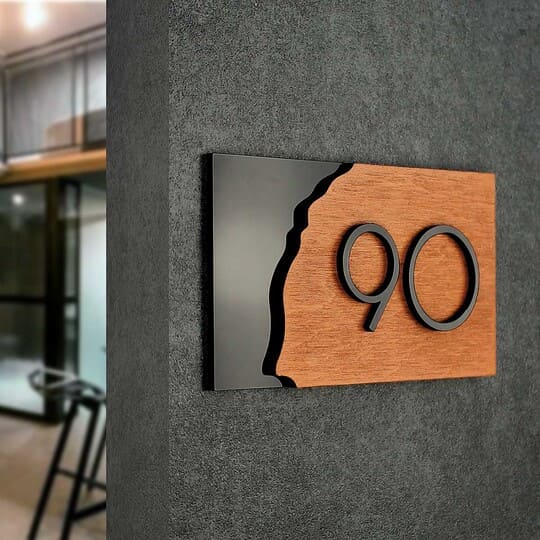
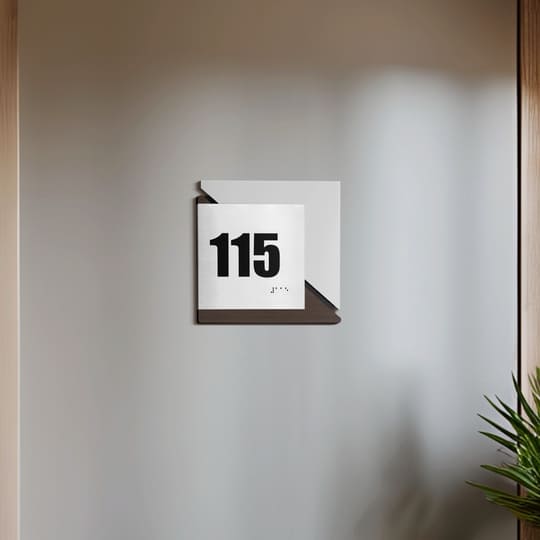
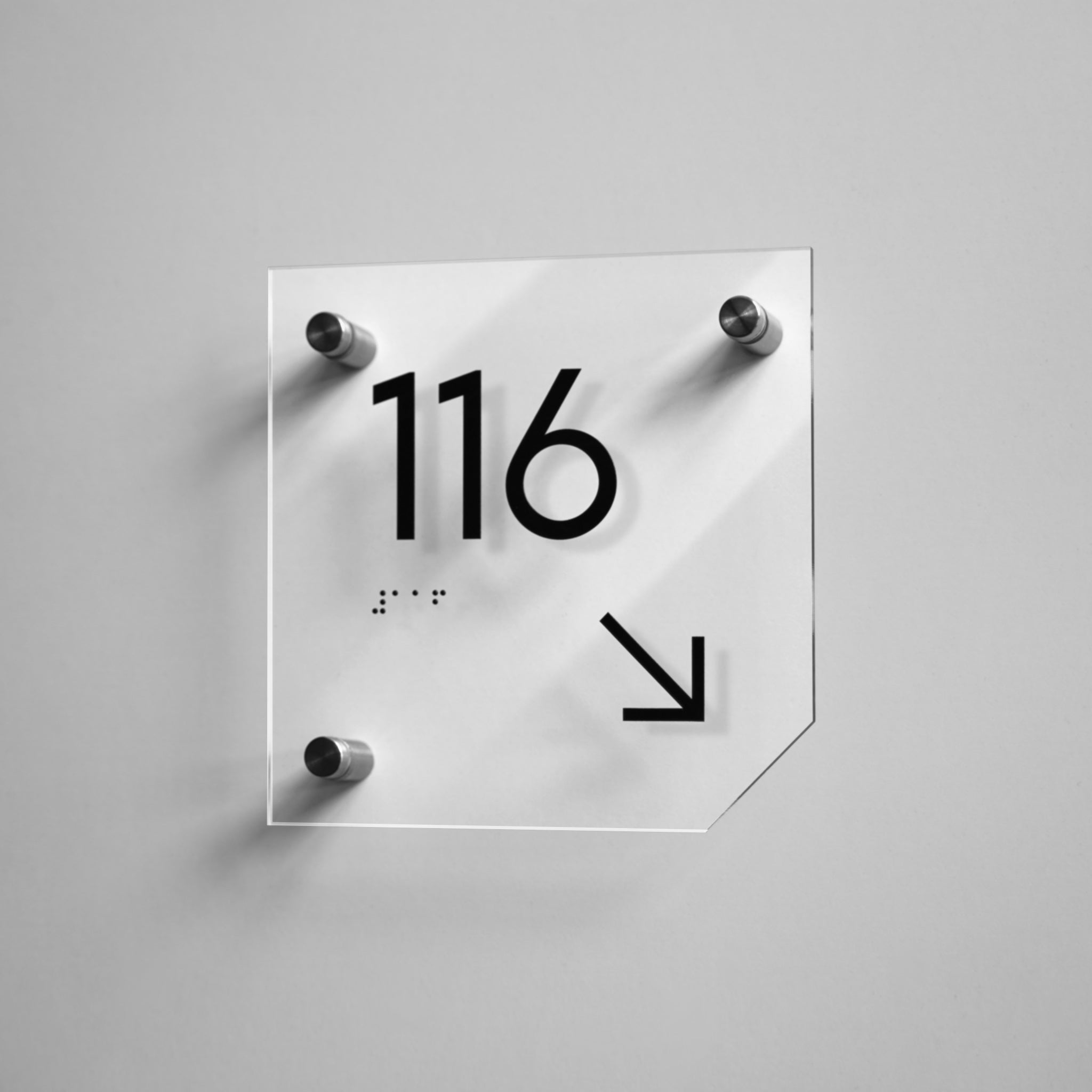
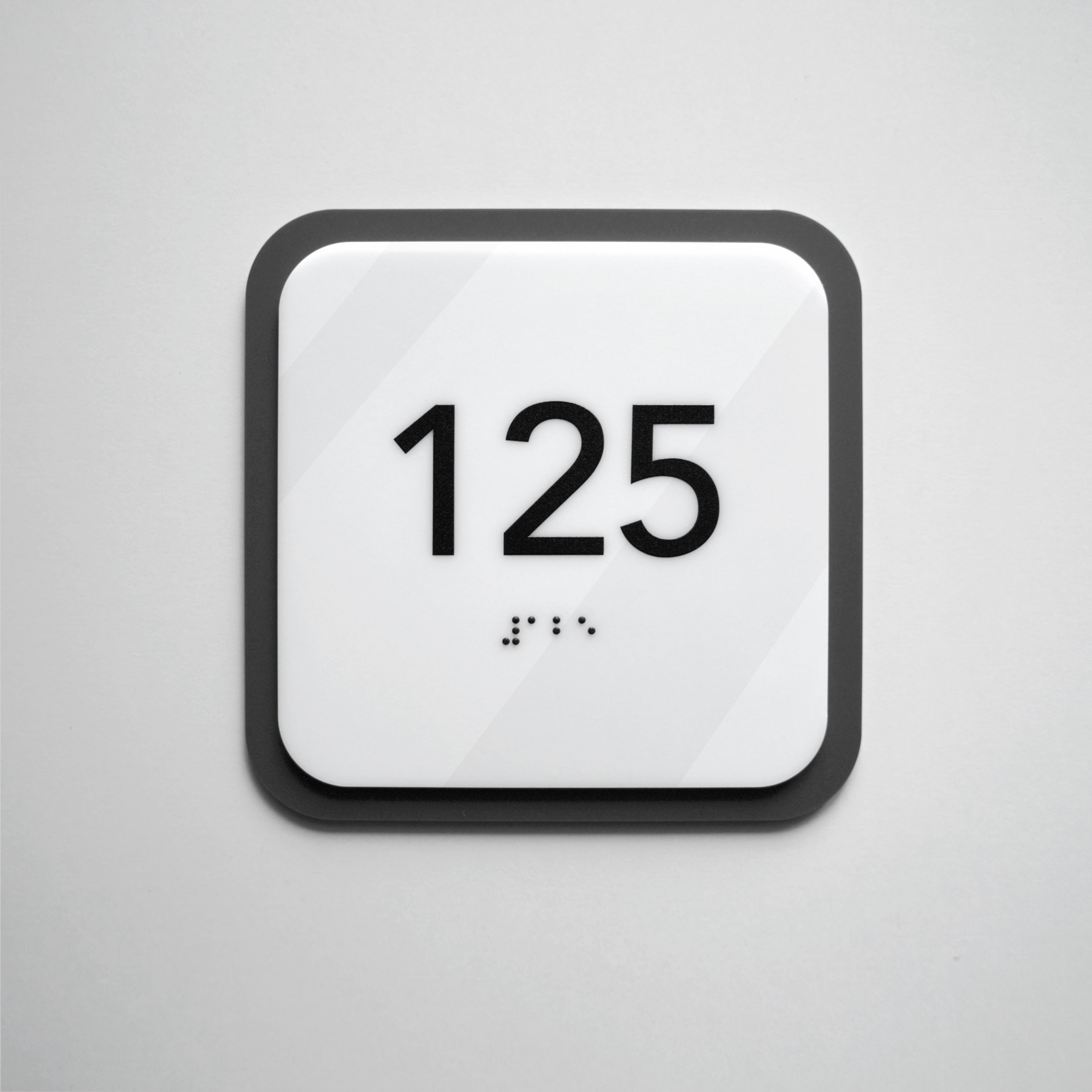
A minimalist acrylic door signage with high-contrast typography, designed for clear legibility in controlled interior lighting:
How to Choose the Right Material for Interior Door Signage
The choice of door signs for interior spaces is based not on trends, but on usage scenarios. Premium interior door signage must function reliably in offices, hotels, medical facilities, and public spaces without frequent replacement or complex maintenance.
In this context, the material determines how well it supports the logic of people’s movement through the space, preserves legibility, and does not create unnecessary visual load. That is why material decisions are made by taking into account traffic, the nature of the audience, and wayfinding requirements.
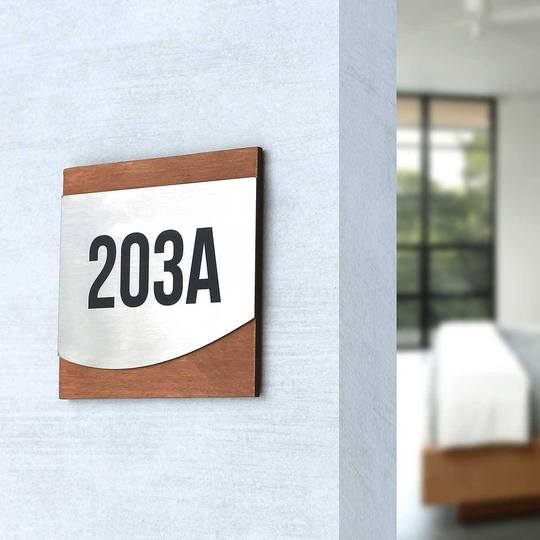
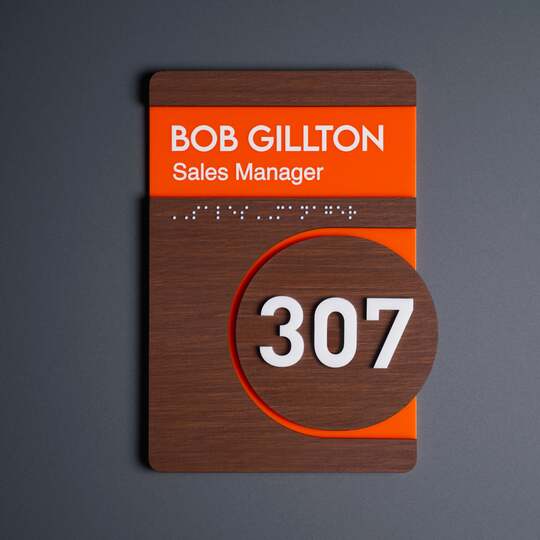
An example of a wooden interior door sign with visible natural texture in a calm hotel-type space:

Choosing the Right Material for Door Signage
Acrylic Door Signs for Modern Interiors
Acrylic door signs have become the standard for modern spaces with a clean architectural logic. Matte acrylic provides visual lightness and, when the thickness is chosen correctly, avoids an artificial look. In such solutions, UV printing on acrylic, dimensional lettering, and complex geometry are widely used, allowing the signs to be integrated into minimalist and modern interiors.
Acrylic signage performs well as part of a wayfinding system where text contrast and legibility under varying lighting conditions are important.
Wood Door Plaques for Warm, Human-Centric Spaces
Wooden door signs create an emotional balance within a space. Natural wood in interiors evokes a sense of privacy, warmth, and trust, which is especially valuable for hotel projects and private zones. Such solutions are rarely used in isolation, as designer signs combining wood and metal or wood and acrylic offer a more cohesive and long-lasting appearance.
In hospitality interiors, natural textures help support a calm and welcoming atmosphere, making wood door signs for hospitality spaces a practical solution for guest-facing areas.
Wood belongs to the category of warm navigation materials that serve not only an informational function but also help shape the atmosphere of a space.
Stainless Steel Door Signs for Durability and Timeless Design
Stainless steel door signs are the preferred choice for areas with intensive use. It’s the most durable door sign material in commercial interiors where constant contact and regular cleaning are unavoidable.
Brushed stainless steel maintains a neutral aesthetic, does not age visually, and is suitable for door signs for high-traffic areas.
Such metal signage is often used in corporate and medical environments where wear resistance and minimal maintenance are essential.
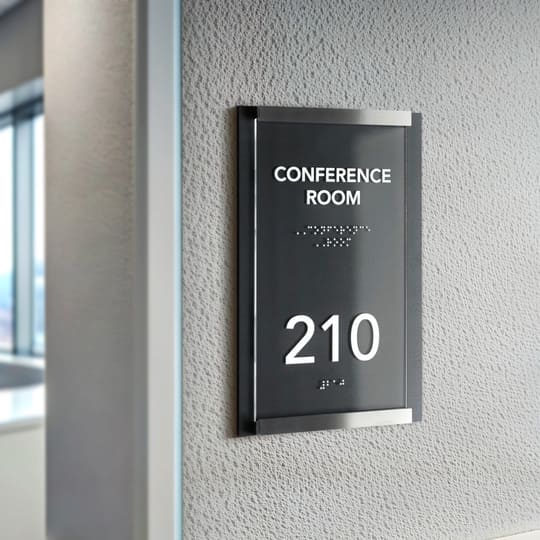
An informational stainless steel sign optimized for durability and frequent contact.

Door Sign Materials Compared: Durability, Maintenance, and Design
Door signage material comparison only makes sense when you evaluate not isolated properties, but the behavior of signs in real-world use. For interior solutions, it is important to understand how door sign materials respond to wear, maintenance, and changing usage conditions over time. That is why the key evaluation criteria are reduced to durability, service requirements, design flexibility, and cost-effectiveness in the long term.
Resilience & Wear Resistance
Acrylic is stable in interior environments, resists moisture, and retains its shape, making it an excellent choice for long-lasting door signs in spaces with controlled operating conditions. Its properties allow it to preserve a crisp form and legibility over long periods without deformation.
Wood needs protection, but over time, it acquires a noble patina and emphasizes the status of the space. With proper finishing, it ages predictably and retains visual integrity.
Stainless steel offers the highest resistance to mechanical stress, making it optimal for wear-resistant signs in medical facilities or other spaces with constant traffic and regular cleaning.
Ease of Maintenance for Large Facilities
In large buildings with extensive navigation systems, material choice directly affects operational efficiency, which is why low-maintenance door signage is prioritized during the planning stage.
Acrylic is easy to clean without special products and does not require complex procedures in daily use. This simplifies maintenance for large facilities with many wayfinding elements.
Wood is a natural, warm material that adds coziness to any space. To preserve its beauty and longevity, regular maintaining door sign materials is required. This approach helps maintain both the appearance and the protective properties of the material.
Stainless steel is the least demanding material in everyday use and withstands intensive operation without loss of functionality.
Design Flexibility & Branding Potential
Acrylic offers maximum freedom in shapes and colors, allowing signage to be adapted to different usage scenarios without overloading the space.
Wood has more limited geometry but a strong decorative effect that helps position a space as more private and prestigious.
Metal supports a restrained design suited to corporate, minimalist, and contemporary styles.
Buyer Mindset: Total Cost of Ownership for Door Signage
When choosing a material, the initial price matters less than the cost of ownership. From a buyer’s perspective, the focus shifts toward long-lasting interior signage ROI, where durability and stability over time directly affect operational efficiency. A material that doesn’t need replacement for 5–10 years lowers operating expenses, simplifies maintenance, and minimizes reputational risk tied to worn-looking wayfinding elements.
An acrylic navigation element that forms a cohesive wayfinding system in a modern interior:

Choosing Materials by Space Type
Choosing materials for interior signage depends on how a space is used, how often people interact with signage, and what functional role it plays in navigation. The table below summarizes how different materials perform across common space types based on durability, perception, and day-to-day use.
|
Type of space |
Recommended material |
Functional purpose |
|
Door signs for offices |
Acrylic, stainless steel |
Support clear navigation without overloading the interior |
|
Door signage for hotels |
Wood + metal |
Create a consistent impression in guest areas |
|
Door signs for medical facilities |
Stainless steel, acrylic |
Reliable performance under constant use |
|
Durable signage for public buildings |
Acrylic, metal |
Ensure quick information comprehension |
This comparison shows that material choice is not universal but task-driven. Matching signage materials to space type helps maintain consistent navigation, predictable performance, and a stable visual impression over time.
How to Select Based on Your Space Requirements
Choosing the best material for door signs always starts with traffic analysis: low, medium, or high. This step helps define how to choose door sign material that will remain readable and stable under real usage conditions. Next, consider the interior style, the audience type, and the wayfinding requirements.
The next step is to consider the style of the interior and the type of audience. For spaces frequented by clients, visitors, or patients, speed of information uptake and the absence of confusion are critical. In internal staff-only areas, consistency and alignment of all navigation elements are the primary priorities.
Navigation requirements are also important, particularly when signage must be clear without requiring additional explanation. For spaces with increased accessibility requirements, tactile and Braille door signage is used, ensuring universal legibility and tactility for both regular users of the space and visitors.
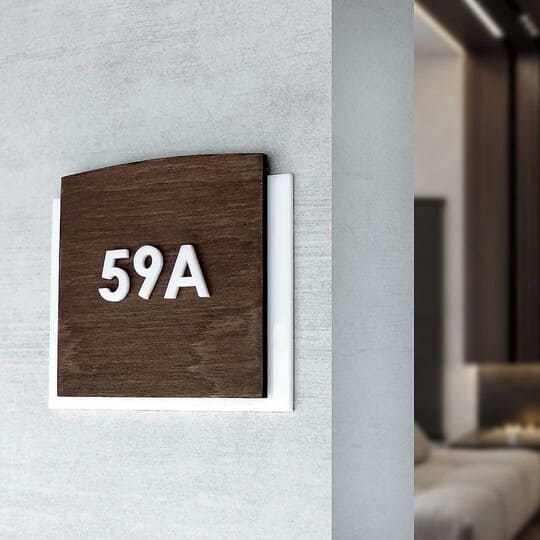
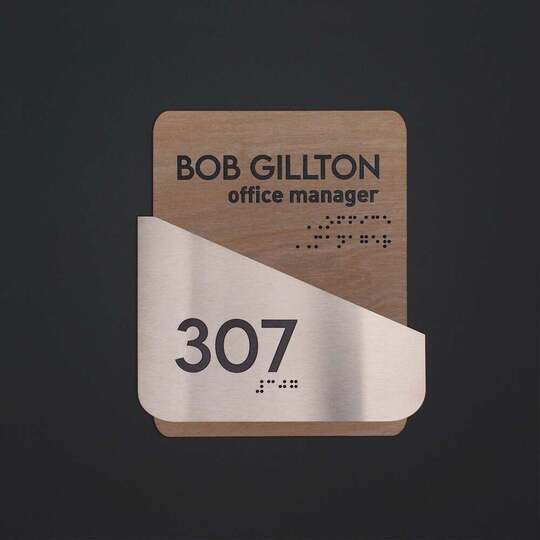
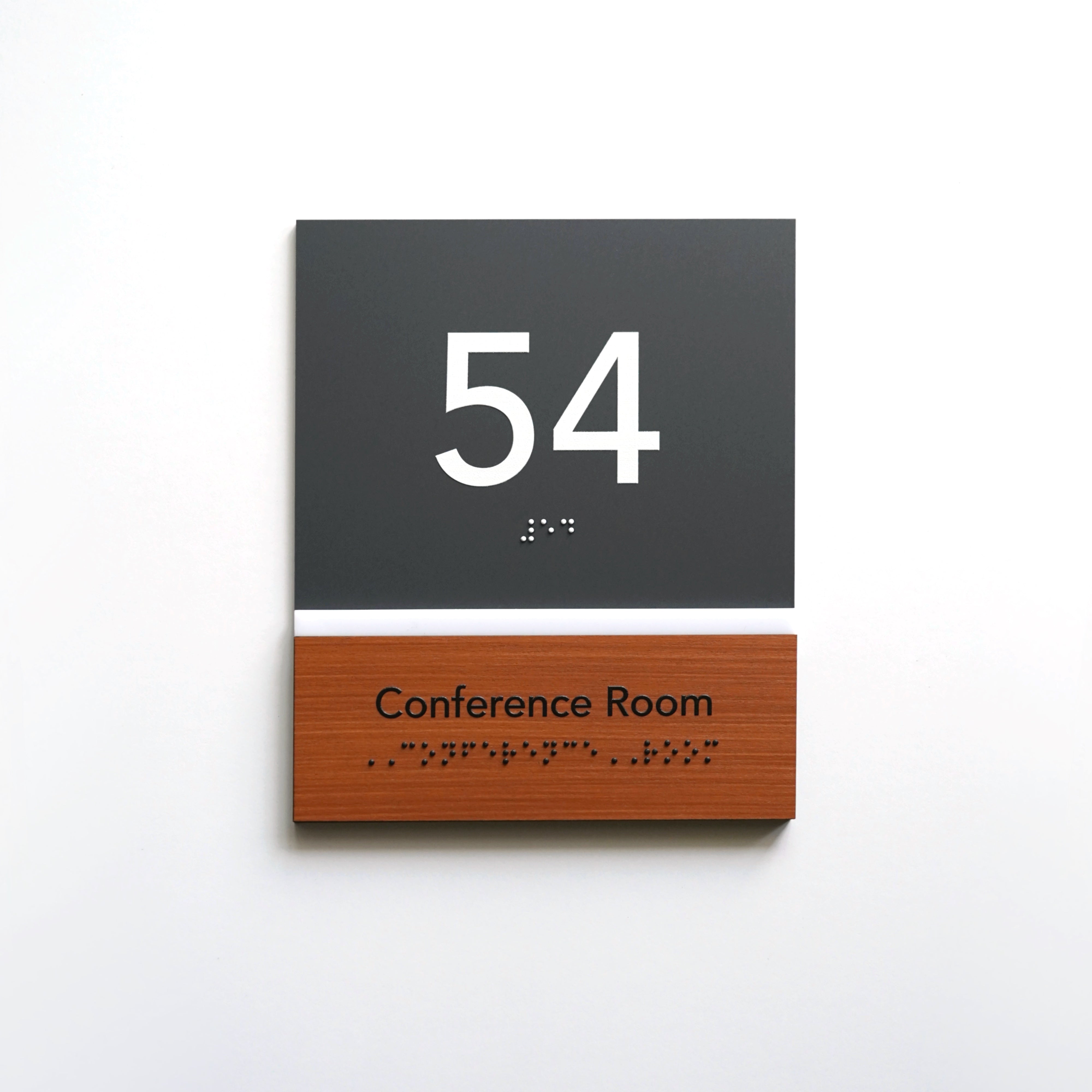
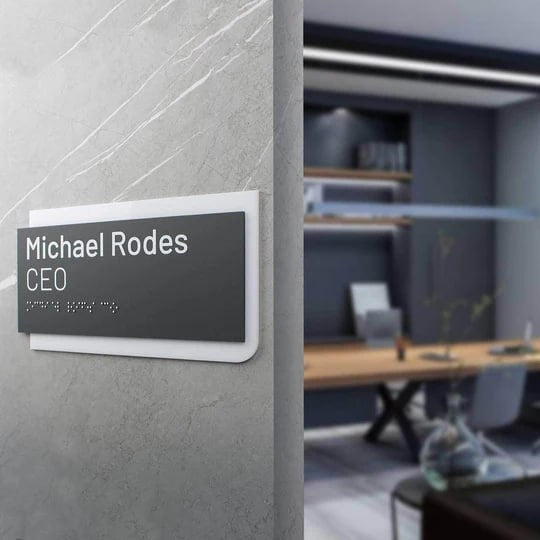
A custom interior door sign combining stainless steel and wood, demonstrating a balanced contrast between warm and technical materials:

Expert Solutions by Bsign
Bsign specializes in working with acrylic, wood, and stainless steel, creating custom interior signs for offices, hotels, public, and medical spaces. We work with material combinations, hand assembly, and the adaptation of each system to the specific architecture.
This approach makes it possible to create products that do not appear as standalone objects but function as part of a cohesive spatial system. Solutions are developed with consideration for functional requirements, wayfinding logic, and real operating conditions. This is especially important for projects where modern office design, hotel navigation, or orientation systems in public and medical spaces are treated as part of the architectural system rather than an add-on. This method ensures predictable perception across user groups and stable results over the long term.
If you’re working on a project and need a balanced decision on materials and navigation logic, a consultation can evaluate options against traffic, architecture, and real operating conditions. This format allows decisions to be made at the design stage and helps avoid mistakes that only become obvious after the space is launched.
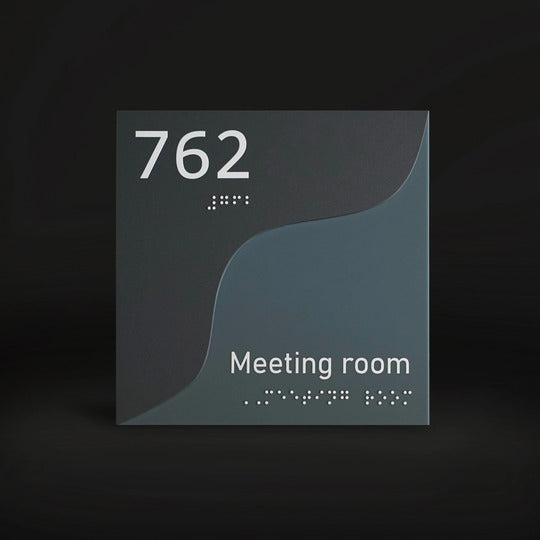
An example of an interior wayfinding signage integrated into the architecture of the space and designed for quick information readout without visual overload:

Frequently Asked Questions
What material lasts longest for door signs?
For spaces with heavy foot traffic, premium door signage materials are stainless steel and acrylic. These materials withstand constant contact, regular cleaning, and retain their appearance over time. That is why acrylic and metal information signs are often used in high-traffic zones.
Which door sign material looks most premium?
A visually restrained yet premium effect comes from combining materials where texture and proportion are clearly considered. Such information signs do not draw excessive attention to themselves, but help create a cohesive perception of the space. This approach works particularly well for door signage for hotels and offices where consistency matters.
Can materials be combined within a single space?
Combining materials allows you to build a logical, consistent wayfinding system. This approach is especially effective for large facilities where different zones have different usage scenarios.
Which materials are optimal for wayfinding in hotels?
The best materials for hotel wayfinding are those that balance legibility with visual comfort. It is important that information signs can be read at a glance while supporting the overall atmosphere of the space. To enhance accessibility, ADA-compliant interior door signs are also used, ensuring universal navigation for all visitors.


