
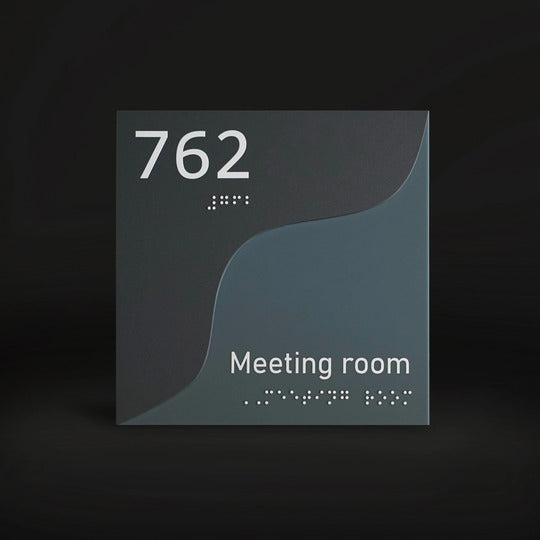
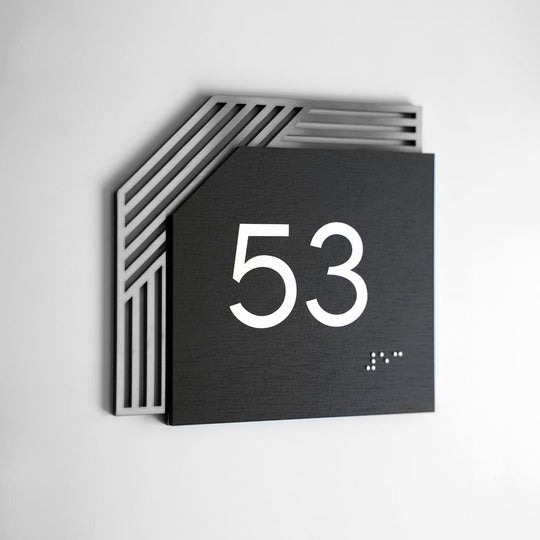
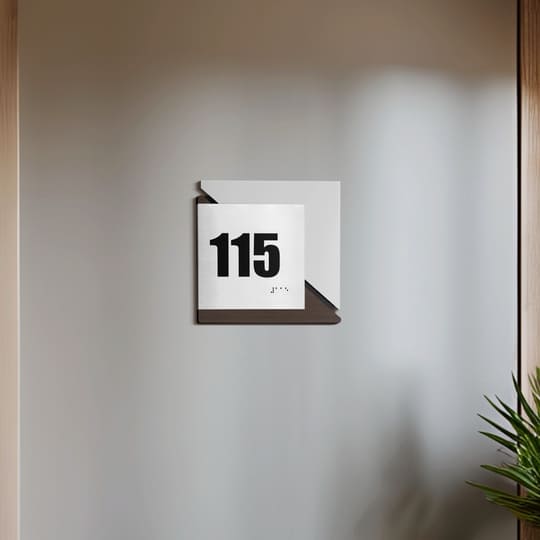
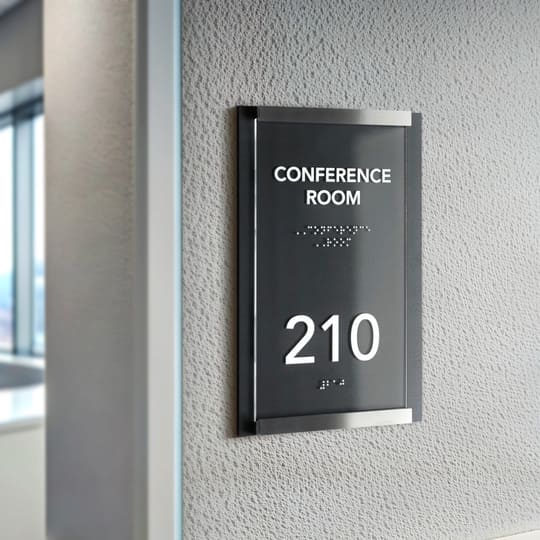




Printing, Text Application, and Production Methods
How Is Text Applied to Bsign Signs?
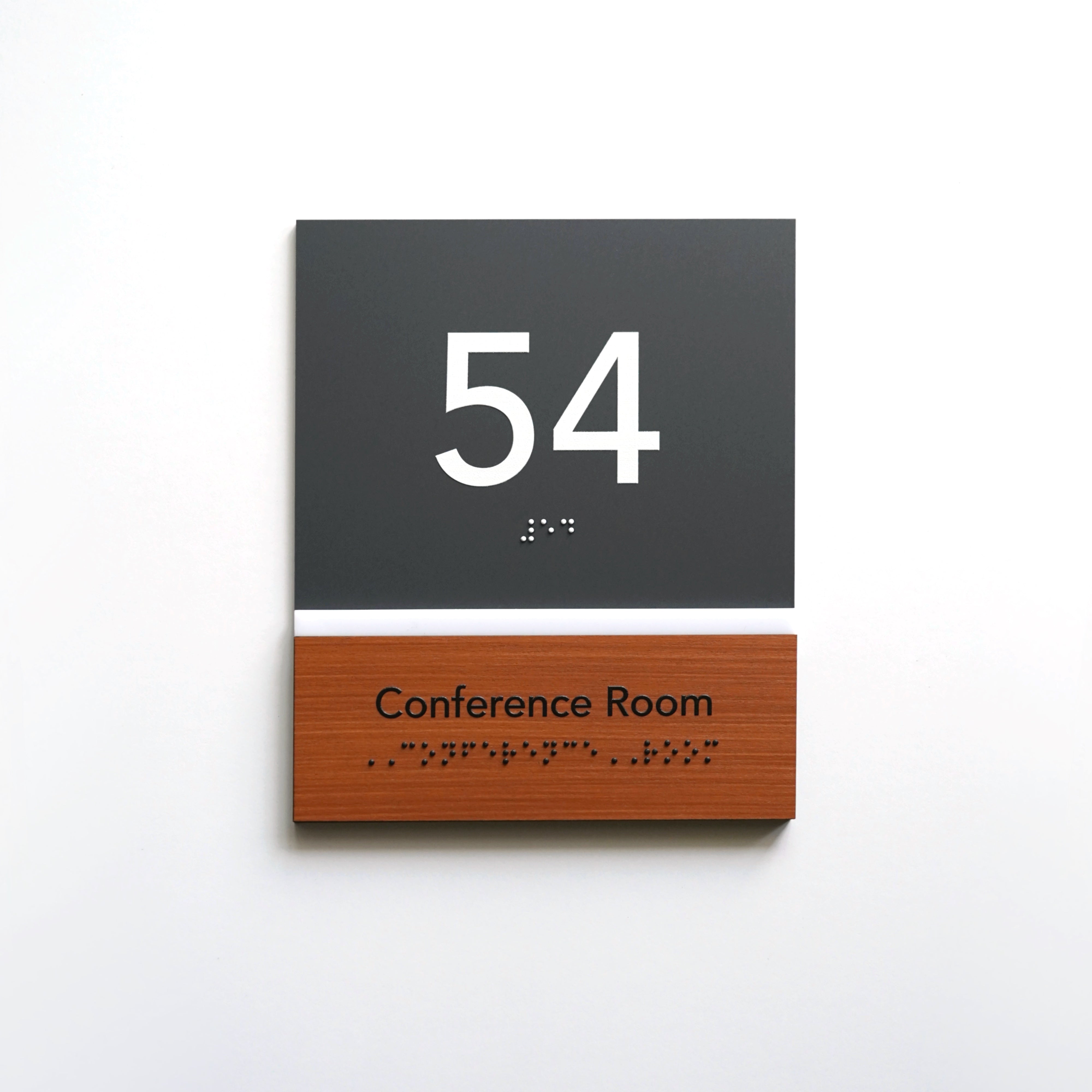
At Bsign, text can be applied to a sign in several different ways depending on the design, material, size, purpose, and desired visual effect. Some signs look best with clean UV printing, others need raised 3D letters, and some projects require tactile elements or Braille for accessibility. Our main production methods include UV printing, laser cutting, raised acrylic or metal elements, engraving, layering, and Braille application. Bsign’s catalog describes the main personalization options as UV printing, 3D text, and Braille, with the ability to customize size, company name, QR code, and icons.
The best method is not always the most decorative one. For example, a hotel room number may need strong readability from a distance, while a corporate office sign may need a logo in exact brand colors. A restroom sign may require a pictogram and Braille. A boutique interior may look better with layered wood and acrylic rather than flat printing. That is why our team chooses the production method based on both design and function.
UV Printing
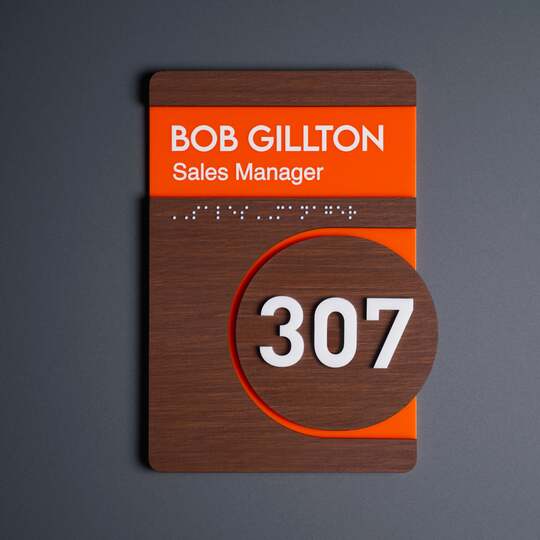
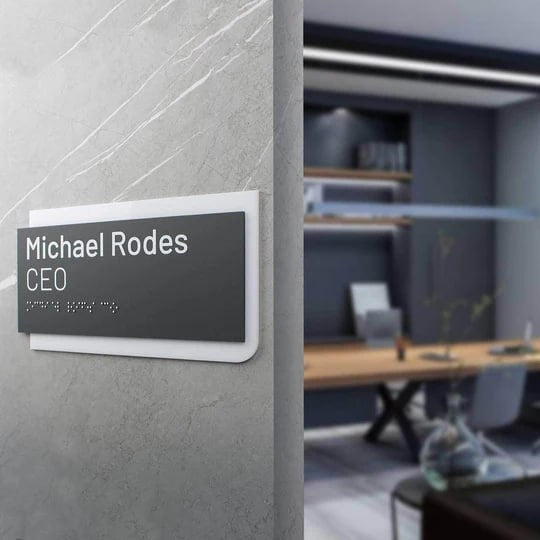
UV printing is one of the most flexible ways to apply text, logos, icons, QR codes, patterns, or custom colors to a sign. It allows us to print directly on materials such as acrylic, metal, or wood. This method is especially useful when the design includes small text, a full-color logo, gradients, brand colors, or detailed graphics.
UV printing is a good choice for office signs, clinic signs, information signs, directional signs, QR code signs, and branded plaques. It creates a clean, sharp result and allows more color freedom than cut-out letters. If your company has specific brand colors, UV printing is usually the best way to reproduce them on a sign. Bsign’s knowledge base confirms that custom colors and company logos can be applied using UV printing, including directly onto acrylic or metal.
UV printing is also useful when the text is too small to be produced as separate cut-out letters. Very tiny lettering or ultra-thin details may not be ideal for laser cutting, so printing can be a better solution for clarity and durability.
Raised 3D Text and Elements
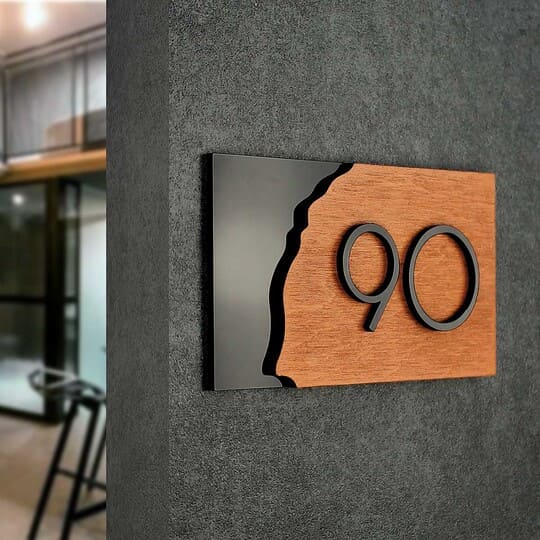
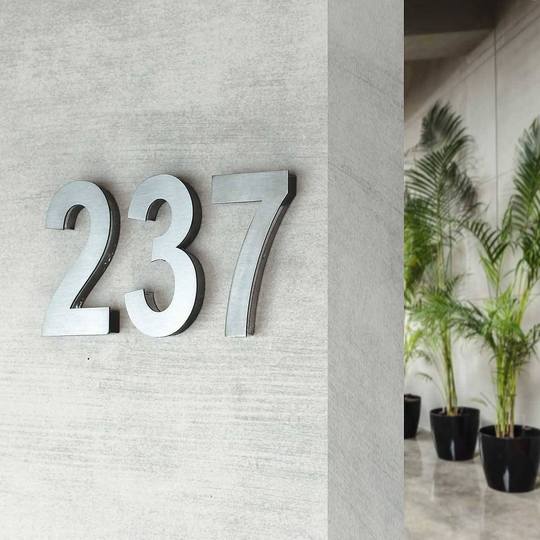
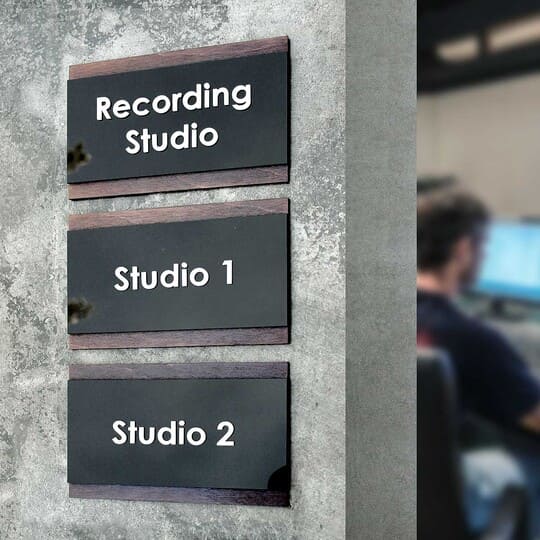
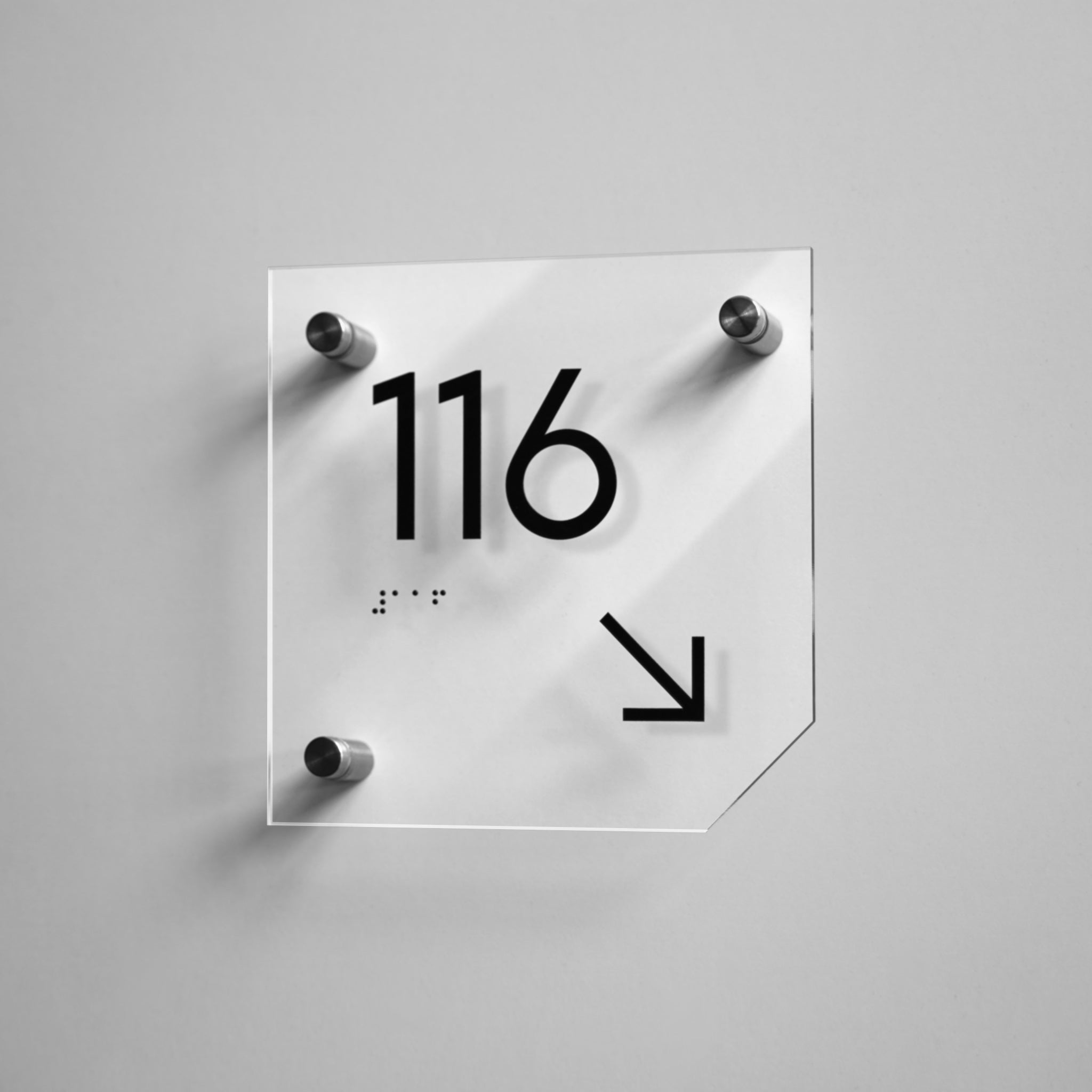
Raised text is used when the sign should have depth, texture, and a more premium appearance. Instead of simply printing the text on the surface, we cut letters, numbers, icons, or symbols from acrylic, metal, or another suitable material and attach them to the sign base.
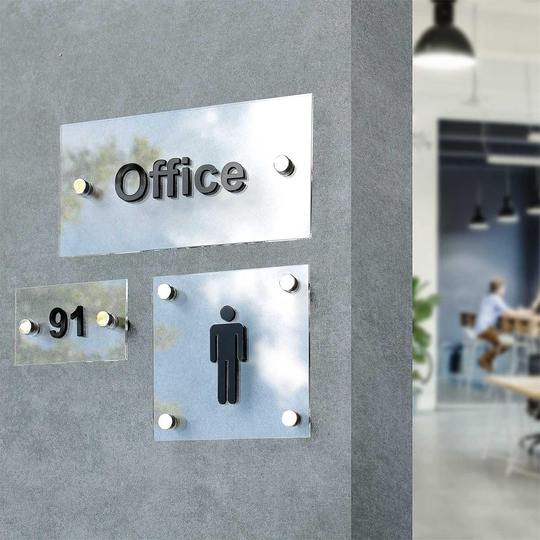
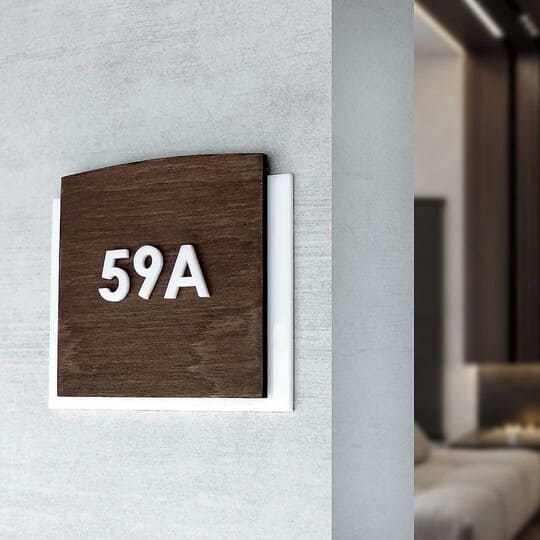
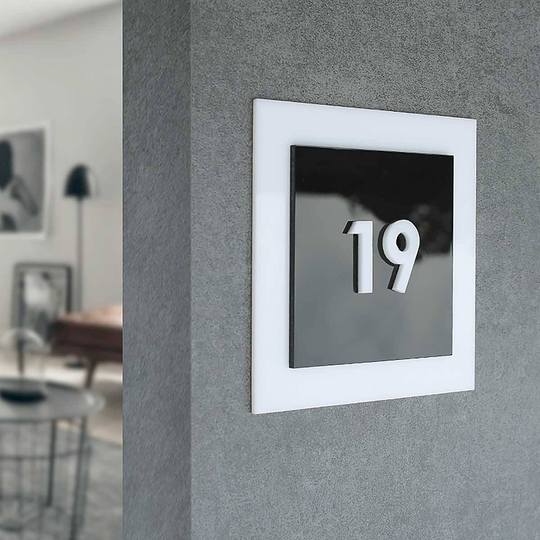
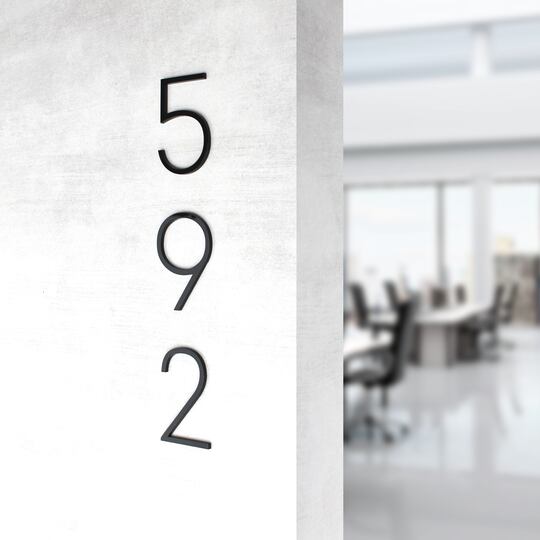
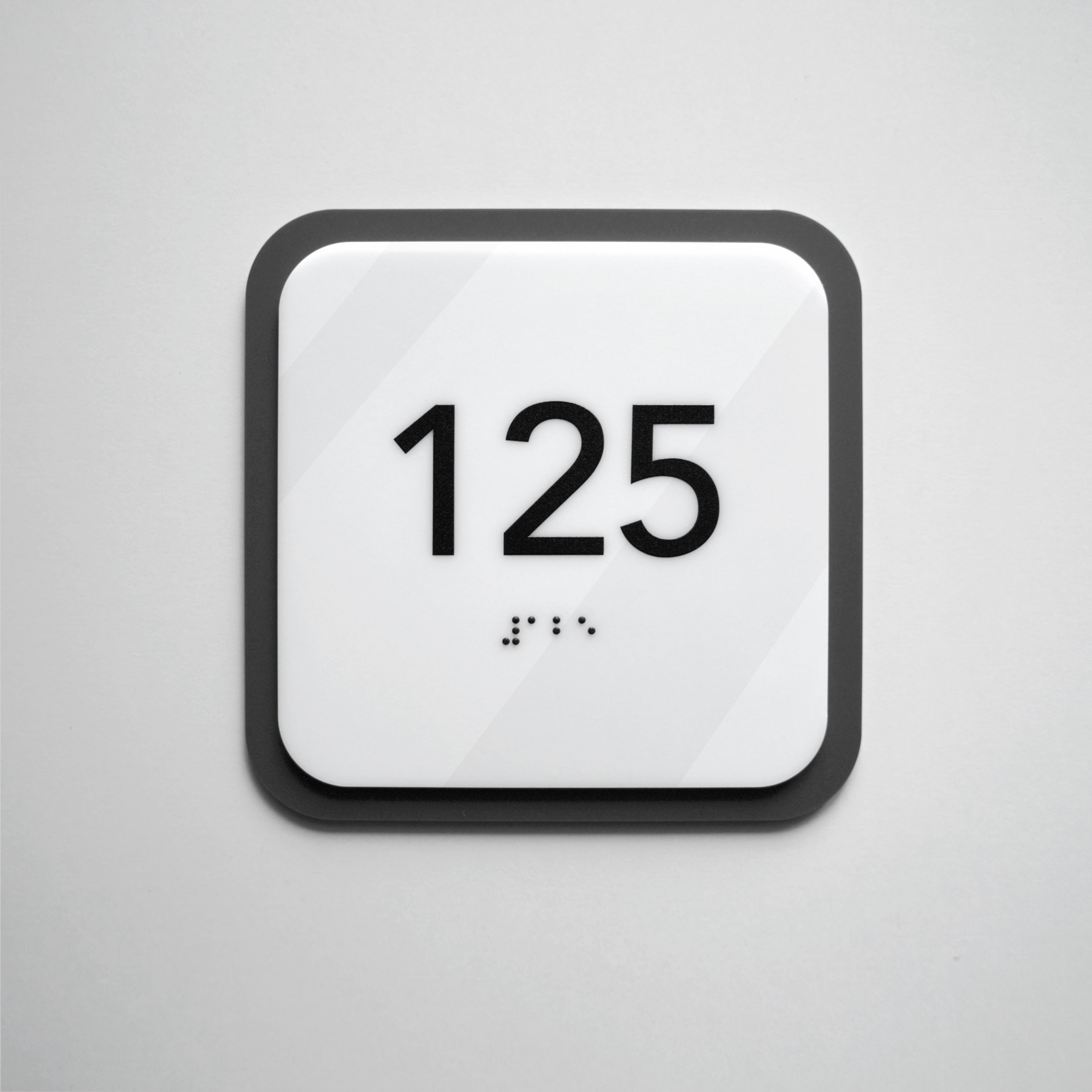
This method is often used for room numbers, hotel signs, office nameplates, restroom signs, and decorative interior signage. Raised elements create shadows and make the sign feel more architectural. They are also helpful when tactile readability is important.
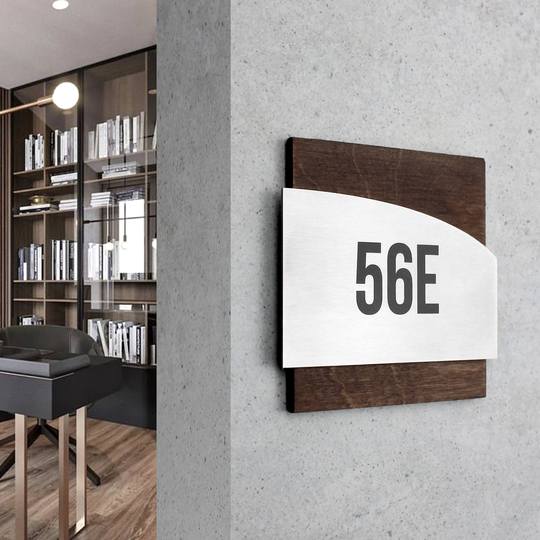
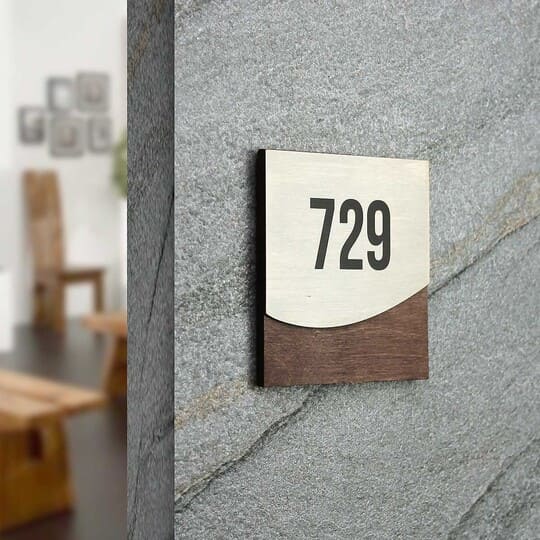
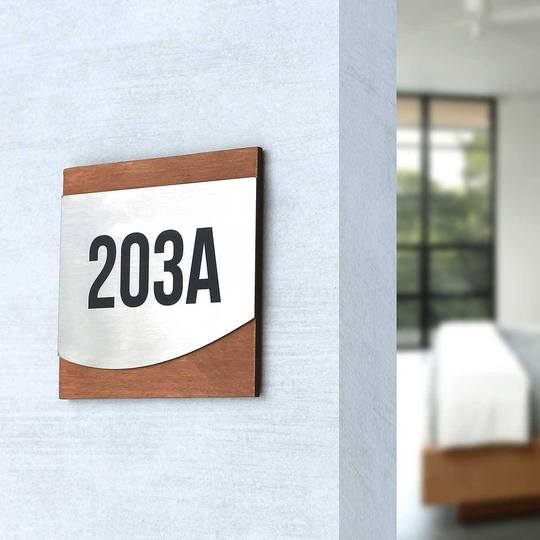
For example, a wood sign with black acrylic letters feels warm and dimensional. A clear acrylic plaque with raised black letters looks classic and professional. A stainless steel sign with layered acrylic elements feels modern and precise. Bsign’s technical documentation notes that acrylic can be laser-cut, layered for 3D effects, and used for raised details.
Laser Cutting
Laser cutting is used to shape letters, numbers, icons, pictograms, and sign bases with high precision. It allows us to create clean edges, custom shapes, separate characters, and layered constructions.
This method is especially important for signs with individual letters or numbers, such as door numbers, office names, room numbers, and wall lettering. It is also used for acrylic icons, metal numbers, and custom shapes. If your sign includes a logo silhouette or a simple symbol, it may be produced as a cut-out element rather than printed.
Laser cutting works very well for acrylic and many metal or wood components, but there are practical limits. Extremely small letters or very thin strokes can become fragile or difficult to read. In those cases, our designers may recommend making the text larger, changing the font, or using UV printing instead.
Engraving
Engraving is used when the design requires a more subtle, carved, or etched effect. It can be especially attractive on wood, where engraved elements can create a natural, slightly darker “burned-in” appearance. Engraving may also be used for simple logos, decorative details, or text depending on the selected material and design.
Engraving gives a quieter, more refined look than raised elements. It is a good option when the sign should feel elegant but not visually heavy. However, it may not be the best method for all signage needs. For wayfinding, room numbers, or restroom signs where strong readability is required, raised text or high-contrast printing may work better.
Braille and Tactile Application
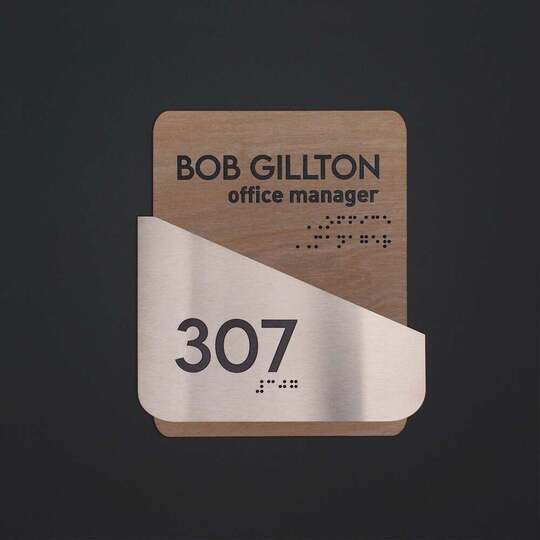
For accessible signs, Bsign can add tactile lettering and Braille. This is important for ADA-style signs, restroom signs, room identification signs, clinic signs, hotel signs, and public-space signage. The knowledge base notes that Bsign supports raised text and Grade 2 Braille, and Braille dots are applied as UV-relief domes made of clear acrylic varnish.
Braille is not just a decorative add-on. It must be placed correctly and paired with readable text, good contrast, and appropriate layout. If your project requires accessible signage, please mention this before production so we can prepare the correct design.
Which Method Should You Choose?
If you need exact brand colors, small text, QR codes, or detailed logos, choose UV printing. If you want a premium dimensional look, raised acrylic or metal elements are usually better. If you prefer a natural, subtle effect on wood, engraving may be suitable. If your signs must support accessibility, choose tactile text and Braille.
You do not need to decide everything alone. Send us your text, logo, preferred style, and a photo of the installation area. Our team will recommend the best production method for your sign and prepare a digital mockup before manufacturing when needed.


