




by Andrew Stychinskij
Color Theory in Wayfinding Signage: How to Influence Visitor Behavior in B2B Spaces
Wayfinding signage for flexible office spaces are information elements that help people navigate indoor spaces, locate specific rooms, routes, and functional zones.
They're a vital part of any orientation system in offices, business centers, hotels, medical facilities, and commercial settings, including business signage for commercial spaces.
In modern B2B spaces, the navigation logic shapes the first impression of a brand, helps people orient themselves quickly, and directly affects comfort in the building.
That's why navigation signage today is treated as part of the interior concept rather than as a standalone functional object.
Color works faster than text in directional signage. People notice hue, contrast, and shape first, and only then read the information. For that reason, a well-designed navigation system directly influences visual perception of space, shortens route-finding time, and improves the overall experience.
For offices, business centers, hotels, healthcare facilities, and commercial spaces, logic matters as much as aesthetics. Navigation in interiors must combine quick recognition, clear visual communication, and a consistent interior style.
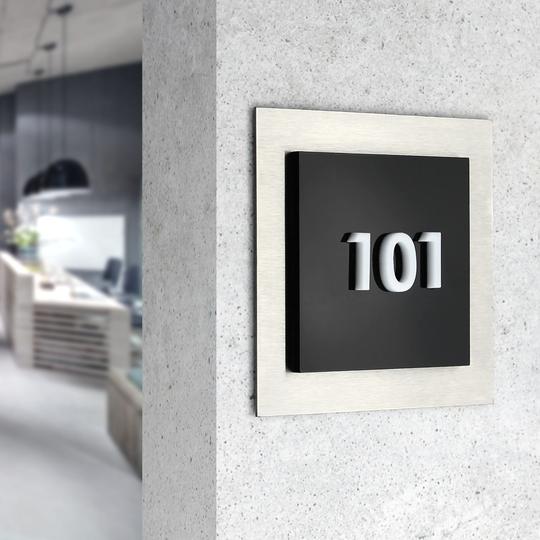
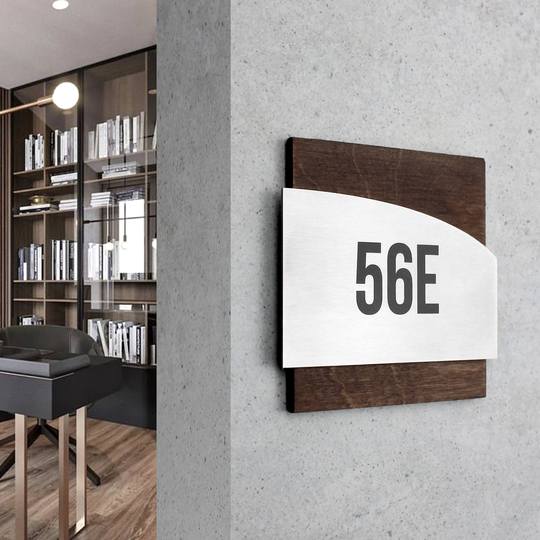
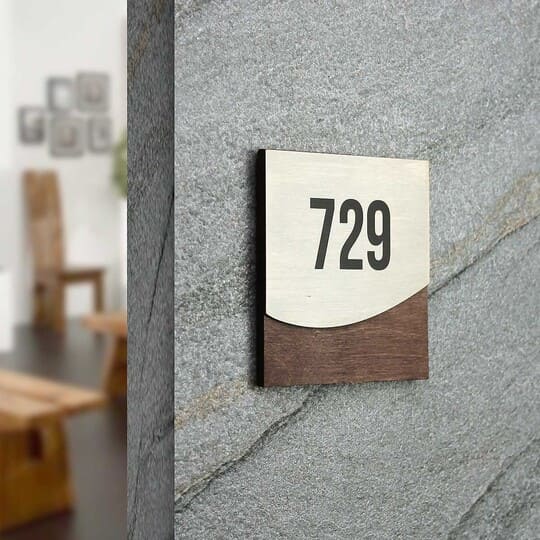
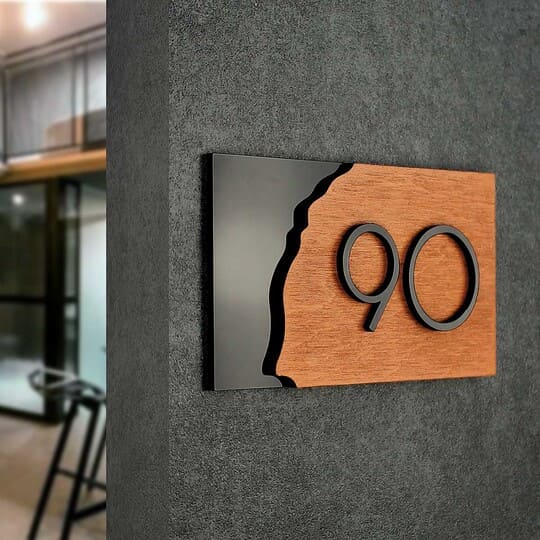
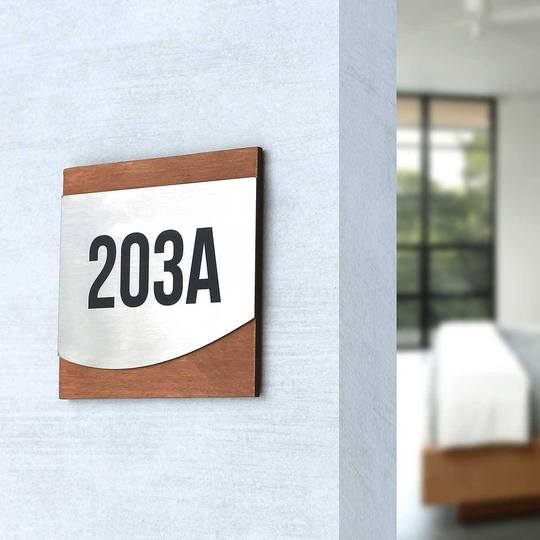
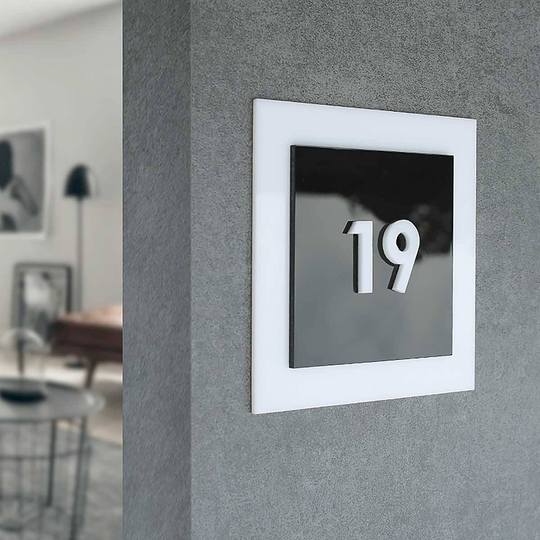
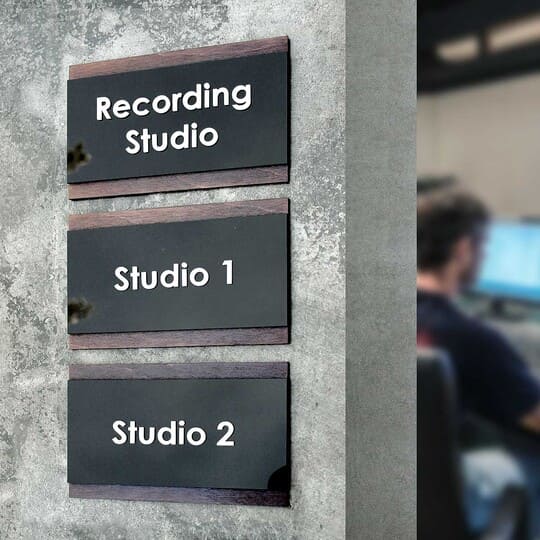
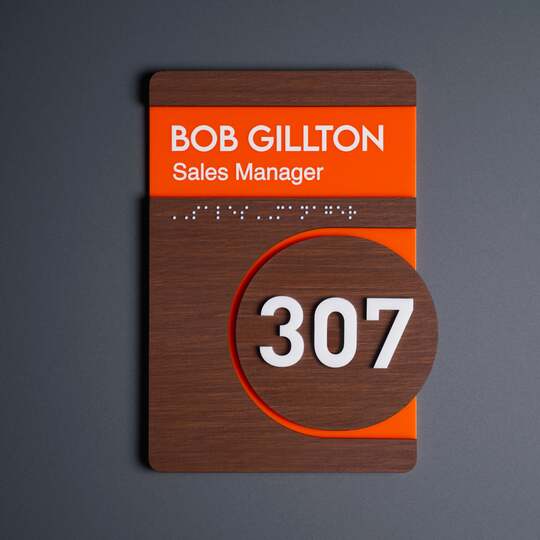
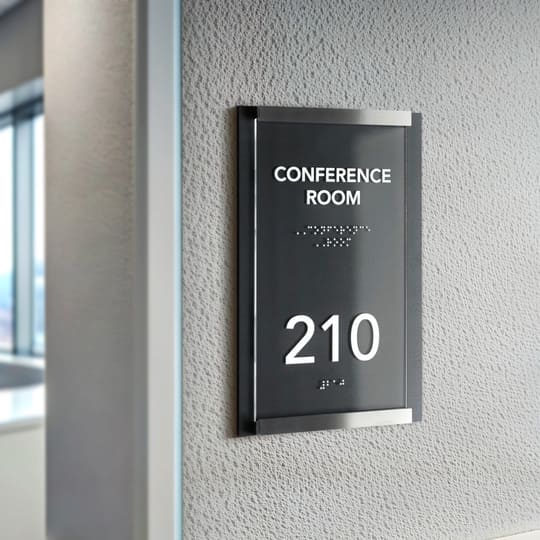
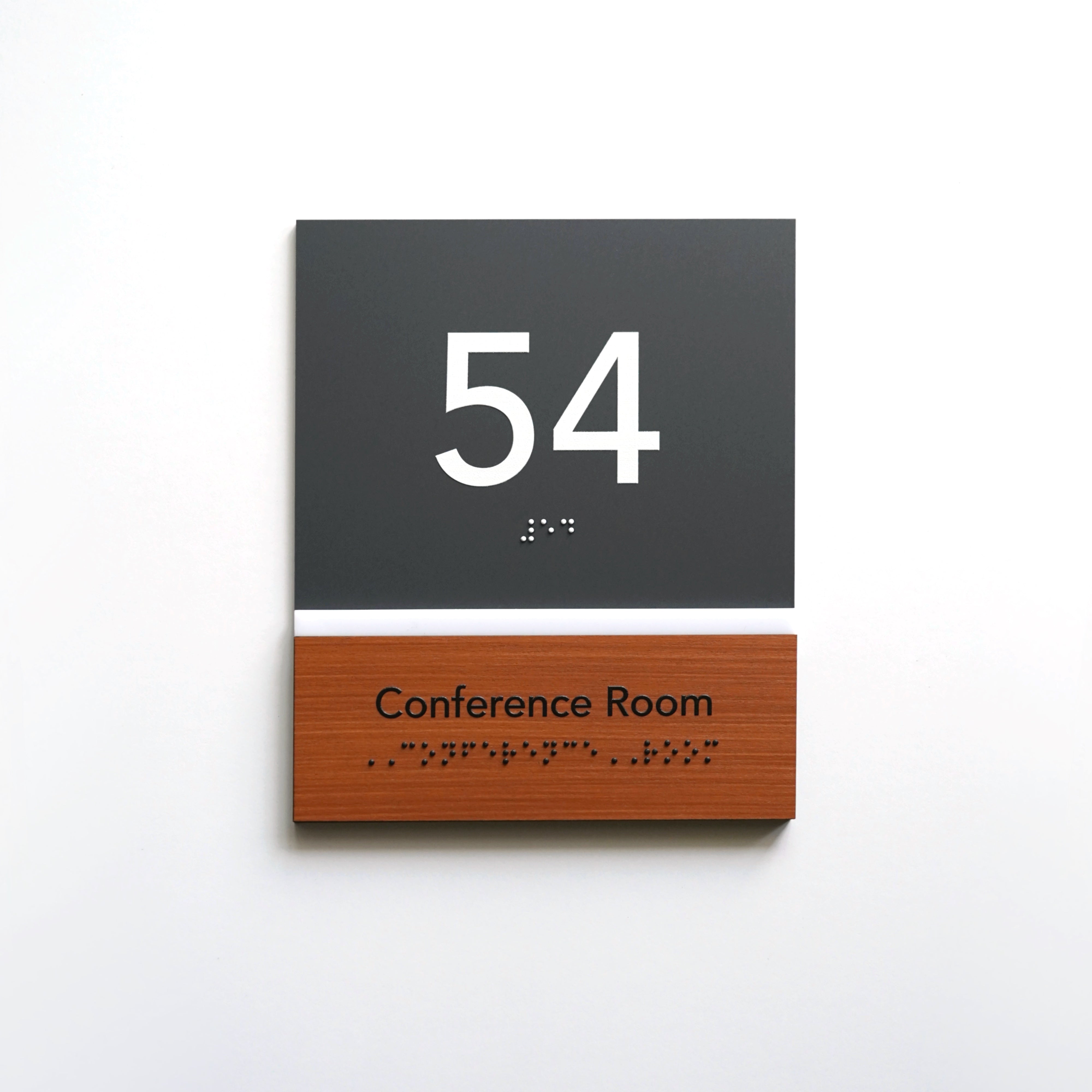
Example of acrylic signs from the Buro collection for a contemporary project, combining wood, high-contrast text, and minimalist signage design

How Color in Wayfinding Signage Affects Visitor Behavior
In a building, color functions as a visual marker: it helps people identify a route faster without repeatedly reading text. Color in navigation helps visitors find the right movement routes more quickly and reduces mistakes while moving through the building. This clearly demonstrates how colors affect interior navigation in modern B2B environments.
The simpler and more logical the orientation system, the lower the cognitive load on a person, and the easier spatial orientation becomes.
In practice, visitors almost never study orientation systems the way designers expect them to. In a busy business center, people are usually walking fast, carrying a laptop, answering messages, or looking for a meeting room they've never visited before.
In those situations, color works as a shortcut. A repeated blue accent near conference areas or a warm wood finish around reception becomes easier to recognize than reading every directional plaque one by one. People start following visual patterns almost instinctively.
Why People React to Color Faster Than Text
The brain processes color faster than words. Visual markers outperform long textual explanations. When floors, zones, or routes use distinct color codes, people learn the spatial movement logic more quickly.
Color psychology also affects emotional response. Warm tones create a sense of comfort, while cool tones help concentration. User behavior in a space often depends on how the visual navigation is organized.
Color as Part of a Navigation System
A quality wayfinding system works like a single movement script. Color ties all elements together: information panels, room numbers, and building directional signs for navigation systems.
In large office hubs or mixed-use buildings, visitors are constantly between elevators, corridors, reception areas, and meeting zones. If wayfinding elements look disconnected, people slow down and start double-checking directions.
Repeated color cues reduce that friction and create a more intuitive movement flow across the building.
Color Theory Basics for Wayfinding Signage
Color theory in interior wayfinding rests on three principles: contrast, readability, and orientation consistency. Color should assist people, not distract them.
It's also important to consider materials for wayfinding signage. Wood, acrylic, and stainless steel each alter color perception and visual contrast in different ways.
|
Material |
Color Perception |
Visual Effect |
Recommended B2B Spaces |
|
Wood |
Softens contrast |
Warmer and more comfortable appearance |
Hotels, offices, restaurants |
|
Acrylic |
Enhances color clarity and brightness |
Modern and lightweight appearance |
Business centers, commercial spaces |
|
Stainless steel |
Increases sharpness and contrast |
Professional and structured appearance |
Medical offices, corporate spaces |
Warm vs Cool Colors in Navigation Design
Warm colors visually bring objects closer and grab attention. They're often used for reception areas, elevators, or key movement routes.
Cool tones work more quietly; they suit office interiors, medical centers, and waiting areas.
Practical takeaway: for comfortable spatial navigation, combine a neutral base with moderate accent colors.
How Materials Affect Color Perception
The same color may look completely different depending on the material surface. Matte wood softens contrast, while polished steel reflects surrounding light and can visually sharpen typography.
Designers usually evaluate signage materials directly inside the interior because showroom samples often behave differently once exposed to actual lighting conditions.
Neutral and Accent Colors in Wayfinding Systems
Neutral colors form the foundation of a wayfinding system. Accent colors help highlight important zones or decision points.
Use one base color and no more than two accents. This color system looks consistent and doesn't overwhelm the space.
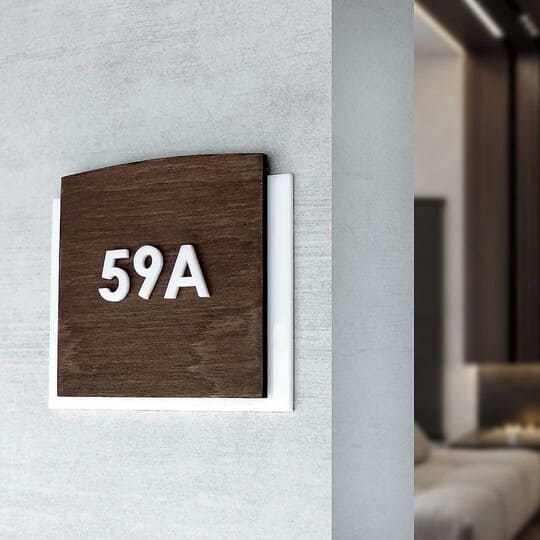
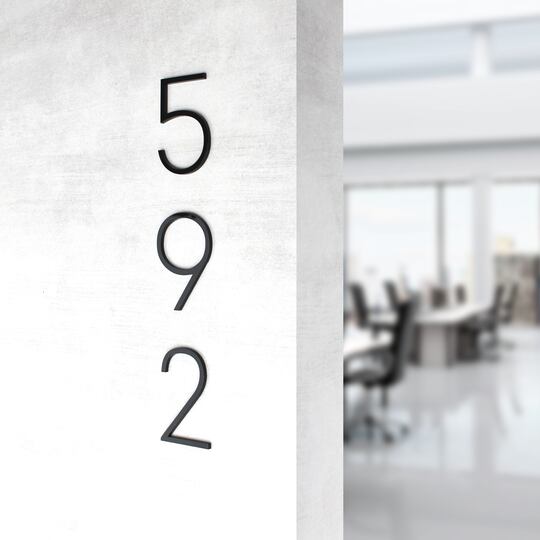
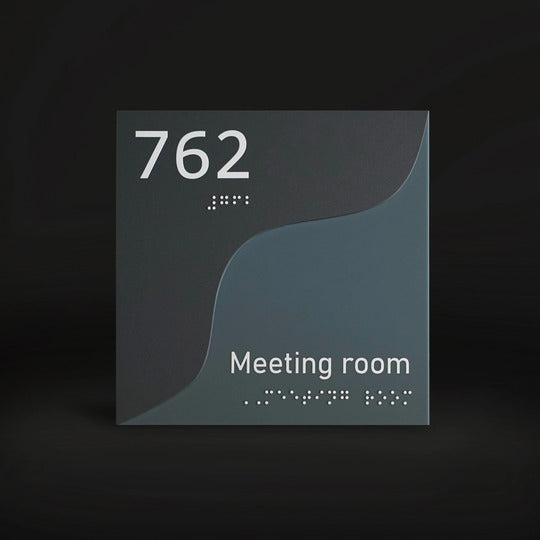
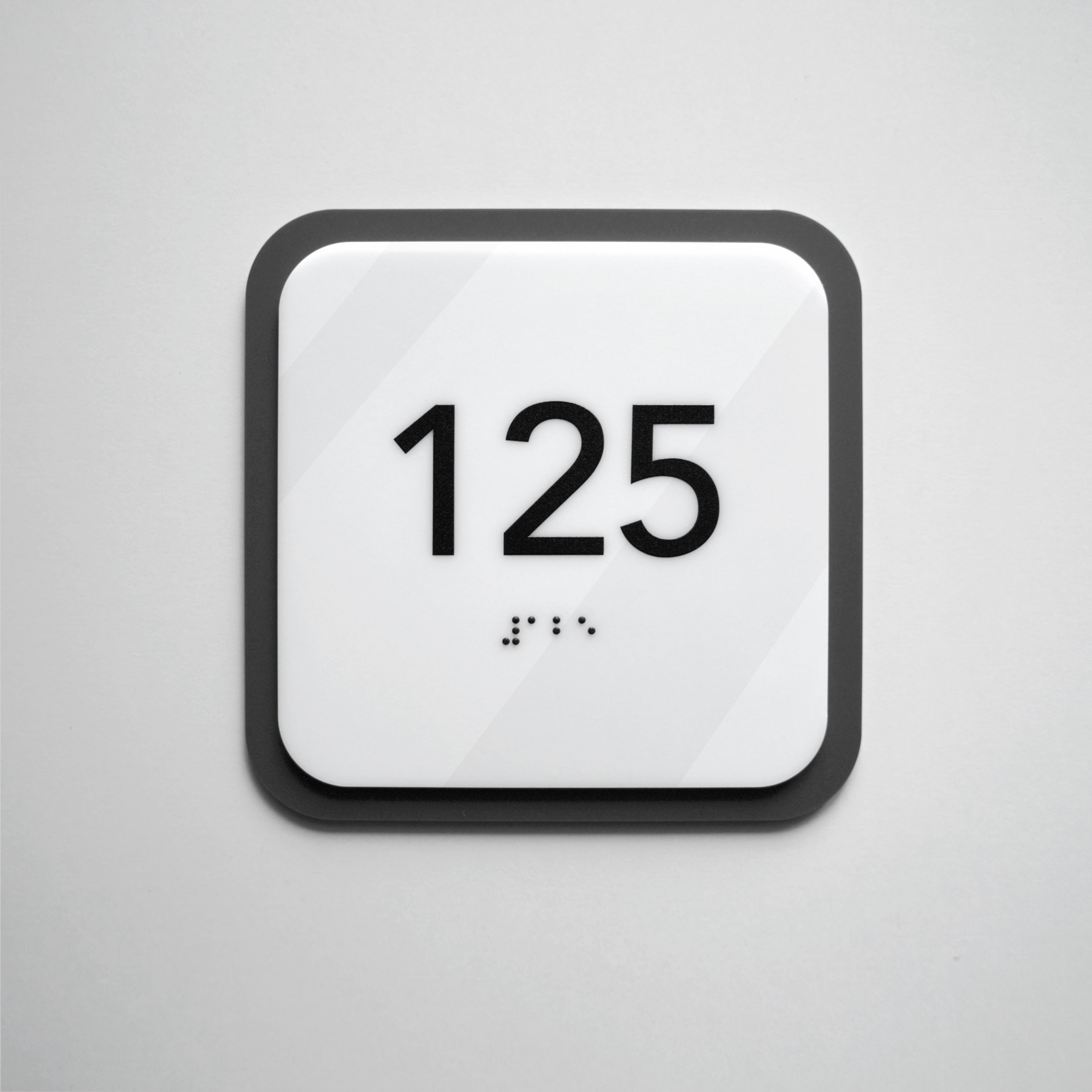
Minimalist signs from the Classic collection, featuring neutral tones for commercial environments:

How Colors Improve Navigation in Interior Spaces
Thoughtful color zoning lets people move intuitively. Repeated color signals create ease of orientation, so visitors don't need to read every sign.
Most contemporary commercial wayfinding rely on quick visual recognition rather than excessive text.
How Color Affects Orientation Speed
High-contrast colors help people find the right route faster. This effect is especially noticeable in large offices, medical centers, and hotels.
How Navigation Colors Reduce Cognitive Load
When people receive too much textual information, orientation becomes harder. Color lets you cut down on explanatory text.
For example:
-
blue floor — conference halls;
-
green — office spaces;
-
graphite — technical zones.
This approach improves indoor orientation and simplifies visitor behavior.
Contrast and Readability in Wayfinding Signage
Reading speed is a core requirement for any interior navigation system. People must be able to read information quickly, even from a distance or while moving.
Best Contrast Levels for Navigation Signage
High text-to-background contrast works best. Dark text on a light surface or light text on a dark background ensures rapid information uptake. Low text contrast undermines signage readability even in high-end interiors.
Contrast problems often become visible only after a signage system is installed. A sign that looks elegant in a design presentation may become difficult to read in a dim corridor, under warm hotel lighting, or behind reflective glass surfaces.
This is why readability testing matters as much as aesthetics. In office environments, people frequently read signs while walking quickly between meetings. In retail spaces, they scan information from a distance. Even small reductions in contrast can slow orientation and create unnecessary friction inside the space.
Designers therefore tend to prioritize immediate recognition over decorative effects. Clear typography, balanced spacing, and strong contrast usually outperform visually complex solutions in real-world navigation.
How Lighting Affects Signage Readability
Lighting changes color perception. What appears high-contrast during the day can lose legibility in the evening.
For this reason, wayfinding signage design should always be tested under different lighting conditions before implementation.
Avoid using matte neutral shades without sufficient contrast in signage for dark corridors.
Color Coding in Navigation Systems
Modern color zoning helps structure large environments and makes movement routes clear even for first-time visitors.
Color Codes for Space Zoning
In complex commercial interiors, color zoning helps visitors mentally divide the building into understandable sections before they even read room names or floor plans.
-
office spaces;
-
meeting rooms;
-
technical rooms;
-
reception;
-
medical suites.
This creates accessible navigation without an overload of text.
Orientation by Floors and Movement Routes
In multi‑storey buildings, color zoning is especially effective. Each floor can be assigned its own hue or accent color.
That approach increases route recognition and simplifies visitor navigation.
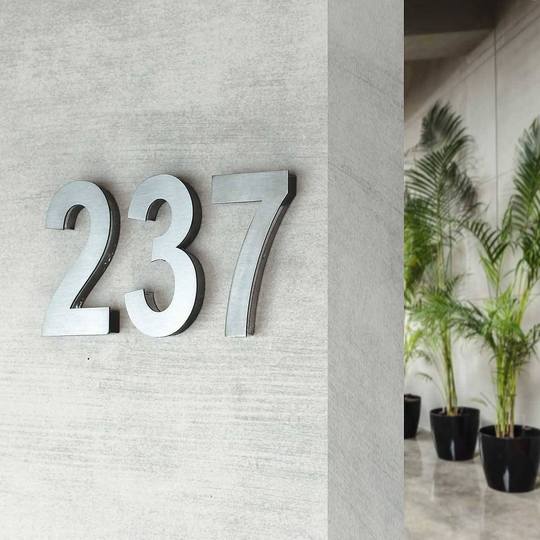
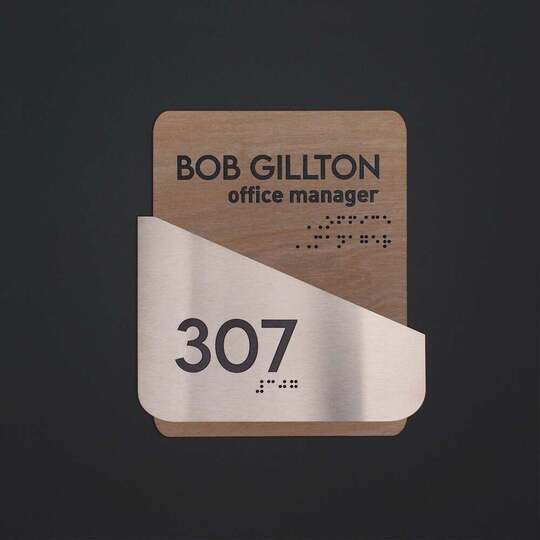
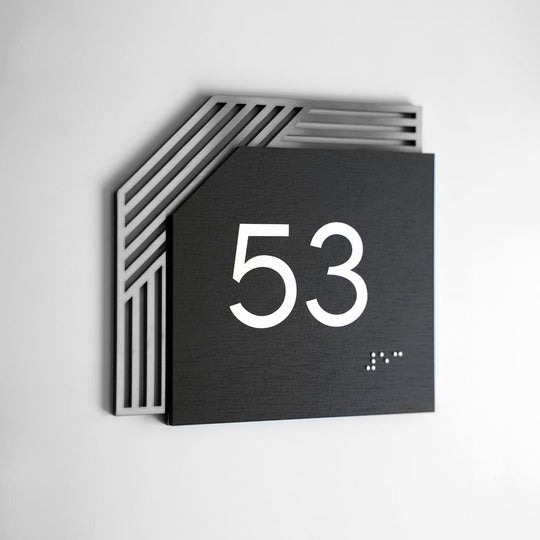
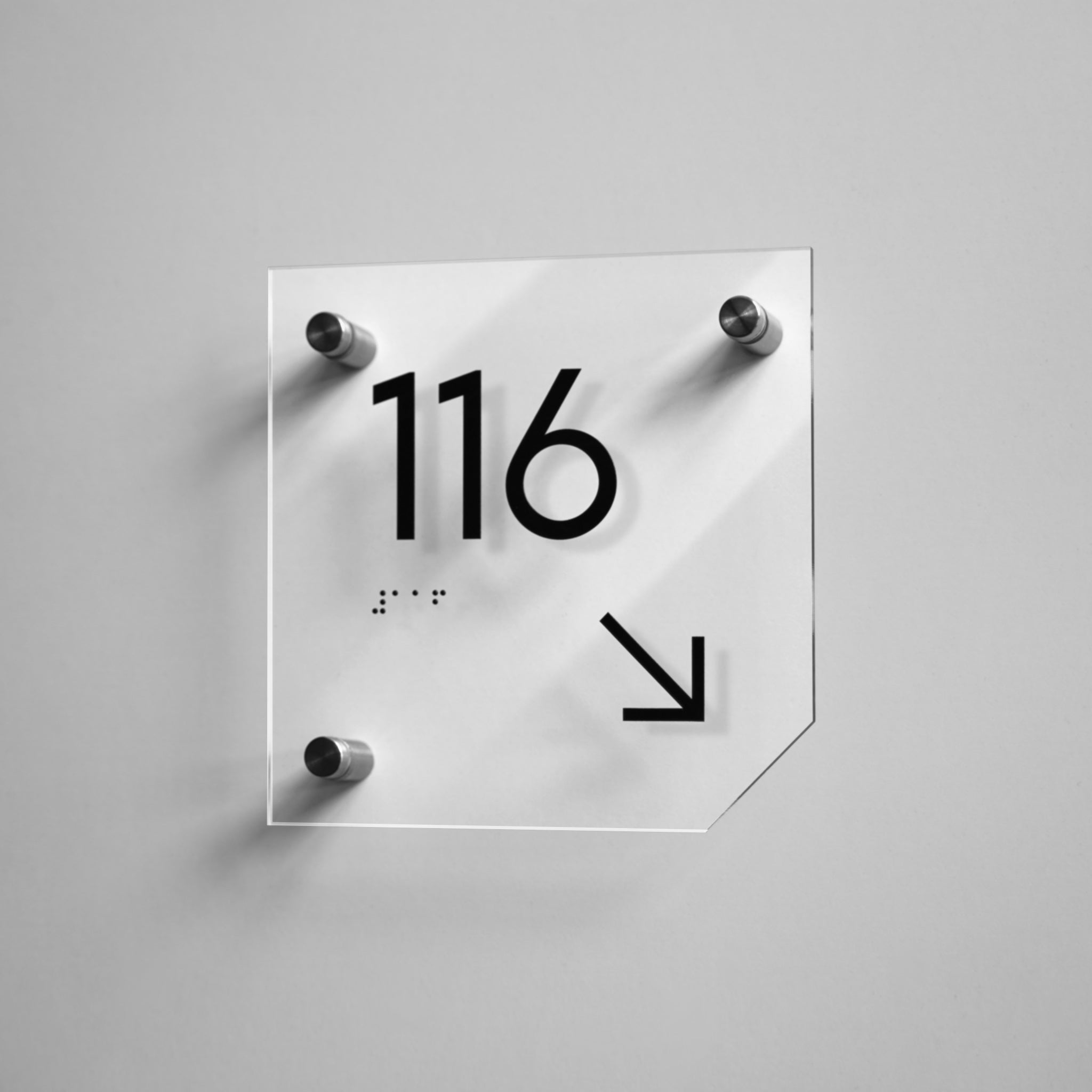
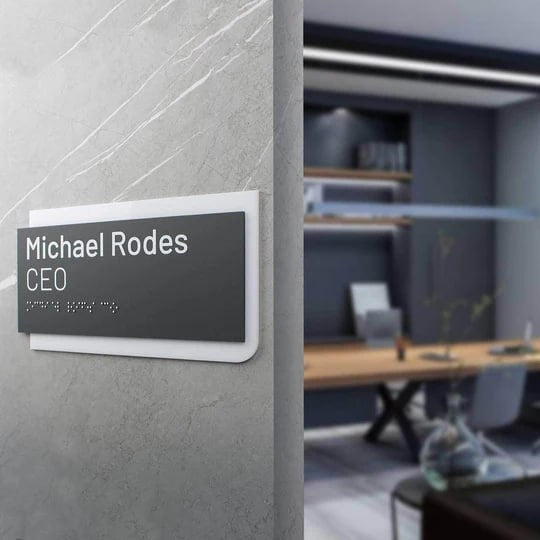
Example of a high‑contrast sign in stainless steel from the Juro collection for commercial and public interiors:

Wayfinding Signage for Offices, Hotels, and Commercial Spaces
Different interior types have different movement scenarios, so there's no one-size-fits-all color system.
|
Space Type |
Recommended Colors |
Main Navigation Goal |
Key Characteristics |
|
Offices |
Neutral and restrained |
Fast orientation without overload |
Minimalism and readability |
|
Hotels |
Warm and soft tones |
Comfort and visual integration |
Blend of orientation and interior design |
|
Medical spaces |
Light and calming colors |
Stress reduction |
Maximum readability |
|
Commercial spaces |
High-contrast colors |
Fast attention capture |
Focus on routes and zones |
Best Colors for Office Wayfinding
Office navigation works best when people barely notice it. In well-designed business spaces, visitors intuitively understand where to go without constantly checking directories or asking for assistance.
That's why office wayfinding usually relies on restrained palettes: graphite, white, muted natural tones, and subtle wood textures. These colors support concentration and integrate naturally into contemporary architecture instead of competing with the workspace itself.
Hotel Navigation Signage Colors
Hotel wayfinding follows a different logic from office environments. Guests are not trying to process information quickly — they expect the space to feel calm, intuitive, and visually comfortable from the moment they enter the lobby.
For that reason, hotel wayfinding often uses warm neutrals, soft contrast, wood finishes, and integrated signage materials that feel like part of the interior rather than technical additions. A guest should be able to find an elevator or room naturally, without feeling guided by aggressive visual cues.
Wayfinding Colors for Medical Spaces
Medical spaces place much higher demands on healthcare wayfinding signage because visitors are often stressed, distracted, or unfamiliar with the environment. In these situations, even small design decisions can influence how comfortable people feel inside the building.
High contrast, calming tones, and clear directional hierarchy help reduce confusion and shorten decision time. Patients should not need to stop repeatedly to interpret signs or search for departments.
This becomes particularly important in multi-floor clinics and diagnostic centers, where intuitive orientation can significantly improve overall visitor experience and reduce pressure on reception staff.
High-Contrast Navigation for Commercial Interiors
In retail and business environments, rapid response to visual signals is essential. That's why commercial wayfinding often uses pronounced contrast and noticeable orientation markers to help visitors quickly locate zones, entrances, or movement routes even during high footfall.
Common Mistakes in Navigation Signage Color Design
Even premium materials and modern wayfinding for business centers won't guarantee effective orientation if the color system lacks clear logic. A common problem is prioritizing visual effect over user convenience. As a result, signs may look stylish but fail at their primary function: to quickly assist with visitor orientation.
Typical mistakes include:
-
too many colors;
-
weak contrast;
-
no unified logic;
-
ignored lighting conditions;
-
excessive decorative elements;
-
complex typefaces.
Another common mistake is adapting routes solely to a brand book without considering information readability and the venue's specifics. Some corporate colors may look great in brand identity but lose contrast on materials or perform poorly under different lighting.
Brand colors should support the wayfinding system, not complicate it. If visitors spend more time searching because of low contrast or overloaded design, the logic stops functioning effectively.
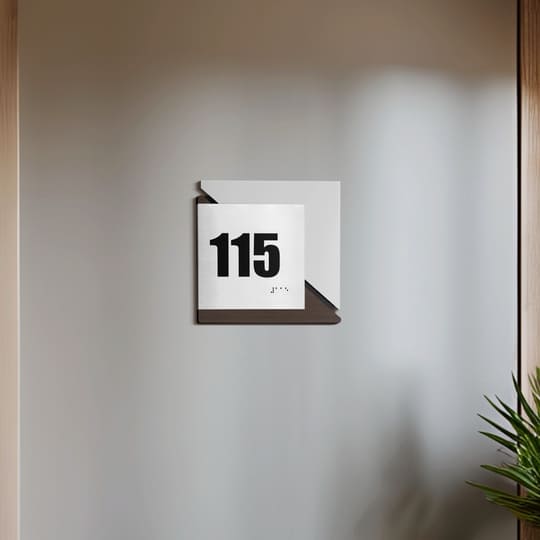
Example of a custom sign from the Authentic collection integrated into interior and corporate identity:

How to Choose Colors for a Wayfinding System
An effective orientation system starts not with color selection but with analysis of the space itself. Consider movement routes, the type of interior, lighting, and visitor behavioral patterns. What works well in an office may be ineffective in a hotel or medical center.
Step-by-Step Color Planning for Navigation
To keep routes clear and visually coherent, a color-based wayfinding system should be developed step by step. A phased approach helps avoid chaotic choices and creates a logical wayfinding structure for the entire facility.
Key stages include:
-
Identify primary movement routes.
-
Map functional zones.
-
Choose a base color.
-
Add one or two accent colors.
-
Check visual contrast.
-
Test the system under real lighting conditions.
This is how an effective interior navigation system is created — a wayfinding system where colors support visitor orientation and don't overload the environment.
Testing Signage Readability in Real Conditions
Even the most carefully planned signage design should always be tested in real-world conditions. Perception of information depends not only on color but also on mounting height, lighting, and the speed of people moving through the space.
Test wayfinding elements for legibility:
-
at different heights;
-
under daylight and artificial light;
-
from various distances;
-
while people are in motion.
If a person can't read the information within a few seconds, simplify the route and improve contrast.
How Color-Based Navigation Improves Brand Experience and Visitor Orientation
Visitors usually notice orientation systems only when they fail. Confusing routes, inconsistent signage, or poor readability immediately affect how people perceive the entire space — even if they cannot explain why.
Well-designed wayfinding works differently. It removes friction from movement, helps people feel comfortable faster, and quietly reinforces the professionalism of the environment.
In modern B2B spaces, orientation should:
-
support the architecture;
-
match the interior style;
-
facilitate movement;
-
reduce stress;
-
improve how people interact with the space.
It is also important to consider room numbers as part of the wayfinding system — they contribute to the visual integrity of the space.
If you are planning to create or update an orientation system for an office, hotel, or commercial property, it is important to carefully plan the combination of colors, materials for wayfinding products, and logic in advance. A consultation with Bsign specialists will help you build orientation that's not only stylish but genuinely convenient for visitors.
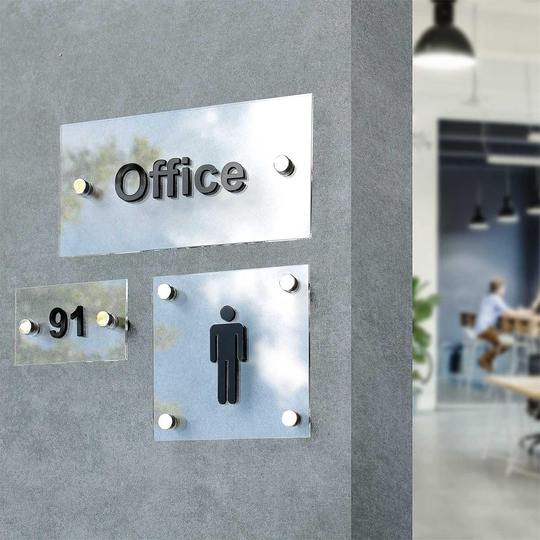
Example of a contemporary system from the Genova collection for B2B environments combining color zoning and premium materials:

FAQ
How does color affect visitor behavior in a space?
Color helps people orient faster, reduces stress, and influences decision speed. A correct color system makes the environment clearer and more comfortable.
What level of contrast is best for wayfinding plaques?
High contrast between text and background delivers the best readability. A strong contrast ratio speeds up information recognition.
Can brand colors be used in orientation systems?
Yes — but they should be adjusted to support rapid information recognition. If brand colors have low contrast, it's advisable to use additional neutral tones.
How do you combine signage colors with interior design?
Wayfinding logic should support the environmental design, not clash with it. Use natural materials, restrained tones, and repeated accents.
How many colors should be used in one orientation system?
The best approach is one primary base color combined with up to two accent colors. Too many colors negatively affect spatial perception.
Does lighting affect color perception in signage?
Yes. Lighting changes contrast and reading speed. In practice, plaques should always be tested under different lighting conditions.
Which colors work best in B2B spaces?
Neutral tones work best for office orientation, warm natural shades are ideal for hotel wayfinding, light calming colors suit healthcare wayfinding, and strong contrast with accent colors is most effective for commercial environments.
How can signage readability be improved?
To improve readability, use simple typefaces, sufficient text size, high contrast, and logical placement of wayfinding elements.


