







by Oleh Tomilenko
Signs for Medical and Wellness Centers: How to Create Stress-Free Navigation
Spa and wellness signs form a wayfinding system that helps people quickly find the right areas, reduces visitor disorientation, and creates a more comfortable and trustworthy experience. For example, a first‑time visitor to a diagnostic center won't waste time hunting for the correct wing of the building or repeatedly asking the front desk for directions when clear signs are in place.
For clinics, diagnostic facilities, and rehabilitation centers, a clear interior signage system has become a part of the service. It affects patient reassurance, speeds movement through the building, and shapes overall brand perception. In wellness centers, orientation also supports a calm atmosphere and helps create a cohesive interior.
Modern signs for medical centers are part of visual communication and environmental design. They prevent chaos, reduce questions for staff, and make the visitor journey intuitive.
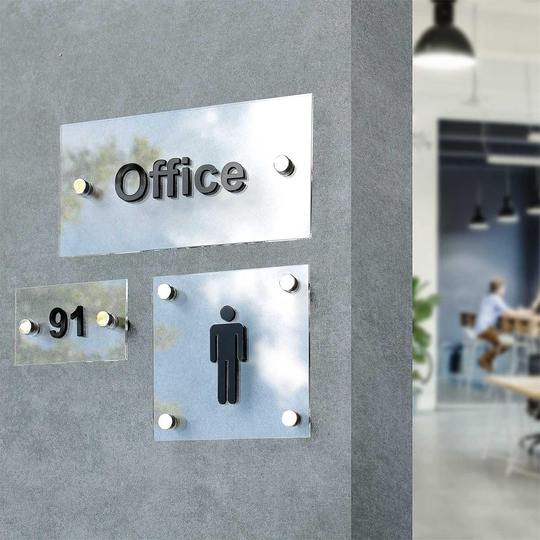
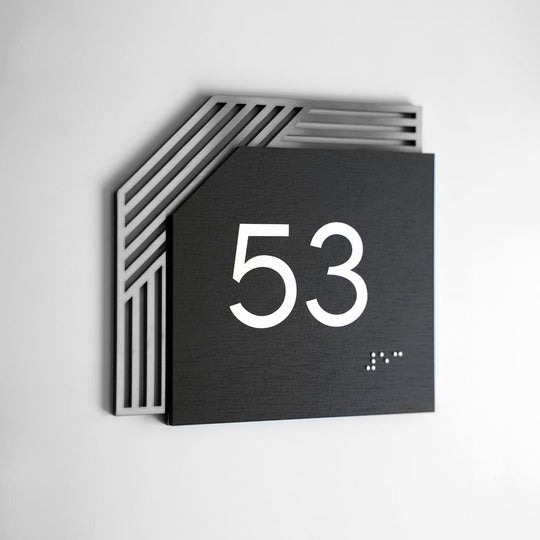
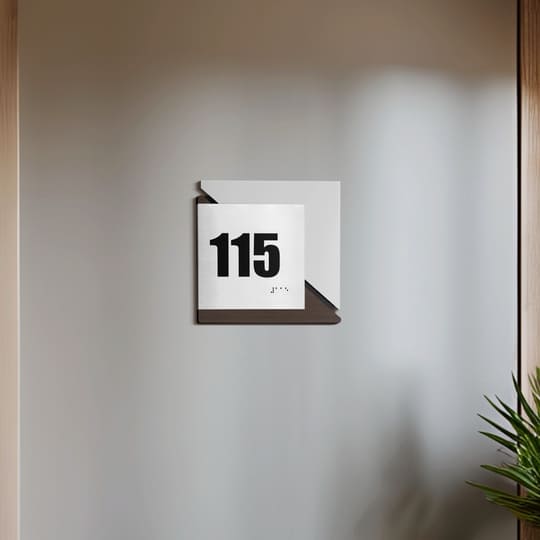
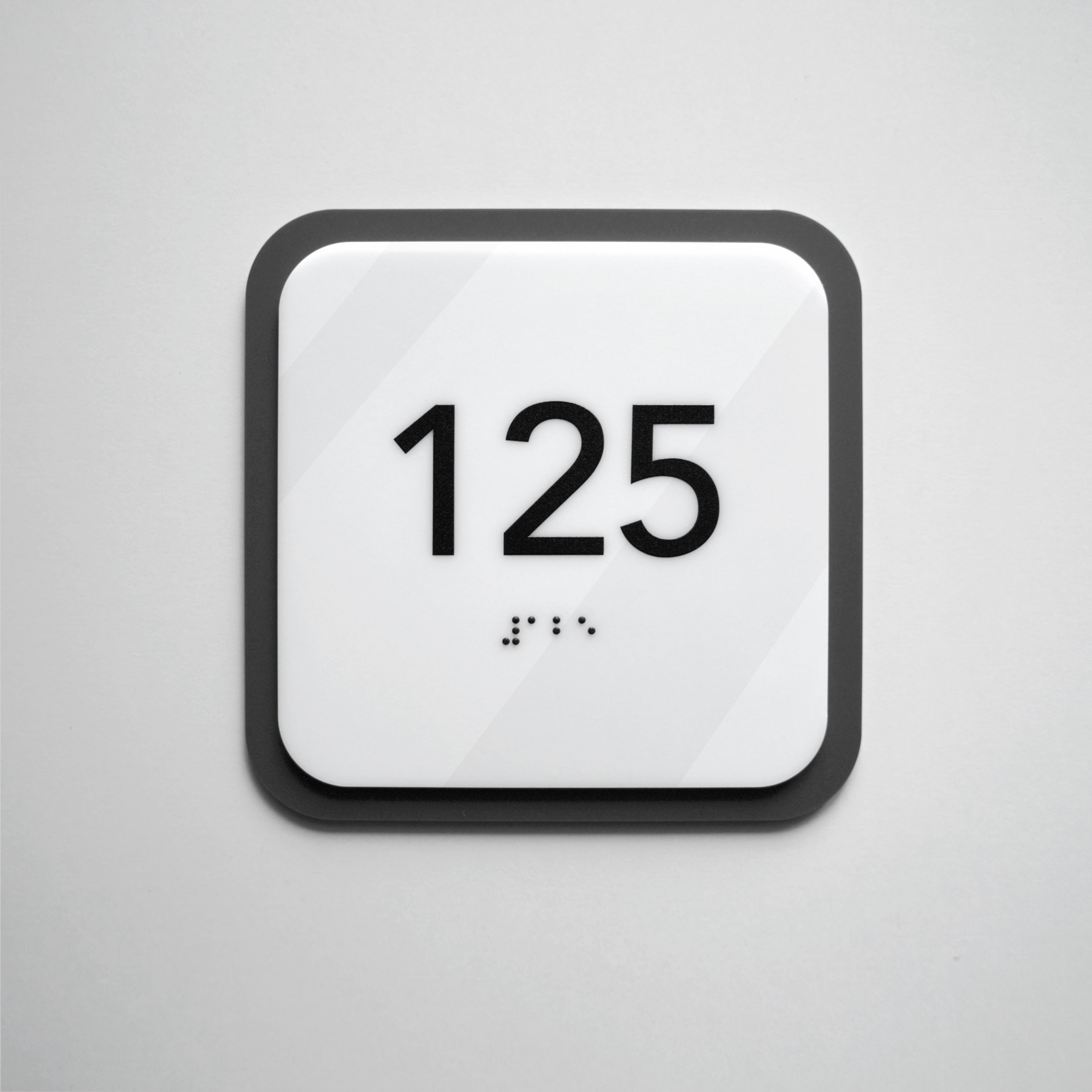
A minimalist clinic sign from the Creative collection that emphasizes clear orientation:

Why Navigation in Healthcare Facilities Affects Patient Reassurance and Stress Levels
Orientation in healthcare settings shapes the first impression of service even before any contact with staff. Clear movement logic helps people find their way quickly, reduces cognitive load, and supports a sense of control within the healthcare environment.
How to reduce visitors' anxiety with a clear route
Making every route predictable and easy to follow is one of the most effective strategies for visitor stress reduction. A person should be able to locate reception, treatment rooms, and waiting areas quickly without constantly searching for clues. In large clinics, patients often feel anxious before their appointment; a chaotic orientation only increases that discomfort. Navigation signs for medical institutions help people feel calmer and more confident.
How visitors perceive a space before interacting with staff
People judge an environment within seconds. If the entrance area is overloaded with informational signs, directions are unclear, or zone labels contradict each other, tension arises. This is especially noticeable in clinics, where visitors are often emotionally vulnerable.
Clear patient navigation creates a sense of organization. Visitors can easily understand the facility layout when reception areas, waiting rooms, treatment rooms, diagnostic centers, and service spaces are clearly identified and consistently marked.
Why clear orientation creates a sense of control
People feel more at ease in environments where they don't have to hunt for directions. A well-designed wayfinding system allows visitors to make decisions more quickly at key decision points and reduces the likelihood of taking the wrong route.
For a medical center, this means:
-
less strain on reception staff;
-
faster movement between zones;
-
greater patient comfort;
-
a more positive overall experience.
That is why navigation in healthcare facilities directly influences trust in the brand.
What Makes a Navigation System Effective in Medical and Wellness Centers
The route logic for medical and wellness centers should help people orient themselves quickly and without unnecessary disorientation. This is achieved through concise messaging, clear directions, a unified visual style, and logically placed wayfinding signs. In healthcare settings, this is especially important because visitors are often anxious or rushing to appointments.
How to reduce cognitive load in healthcare spaces
People in medical environments are usually focused on their own health concerns, so a complicated navigation system only makes orientation harder. Short messages, intuitive pictograms, and consistent room labeling work best.
To keep wayfinding simple, it is important to:
-
reduce the amount of information on each sign;
-
use a single stylistic approach;
-
avoid conflicting directions;
-
highlight key orientation points.
In large clinics, people often make decisions on the move — by the elevator, at corridor intersections, or right after leaving the reception area. When directional plates are overloaded with text, people tend to stop, hesitate, and seek confirmation that they are heading in the right direction. A predictable wayfinding system creates a space with clear, easy‑to‑follow logic that supports the visitor journey and enables cognitive load reduction.
Why intuitive orientation works better than complex design
Interior wayfinding should support the route rather than draw attention to itself. Overly decorative elements or cluttered compositions make information harder to read.
For this reason, effective healthcare signage often features restrained color palettes, matte surfaces, and readable typography.
What Signs for Medical Centers Are Essential for Clear Navigation
Clinics usually need directional signs, floor markers, reception signage, and informational elements for service areas. In large medical centers, additional wayfinding signs may be used to guide visitors to elevators, diagnostic departments, and waiting zones. To ensure effective medical wayfinding, all signage elements should follow a consistent design language and support a logical visitor journey throughout the building.
Room signage and numbers
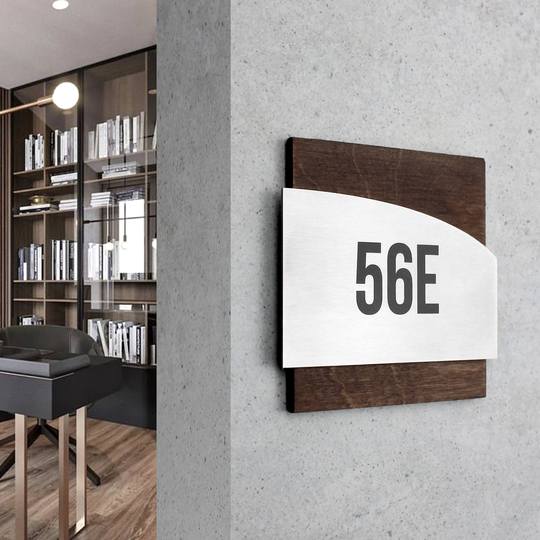
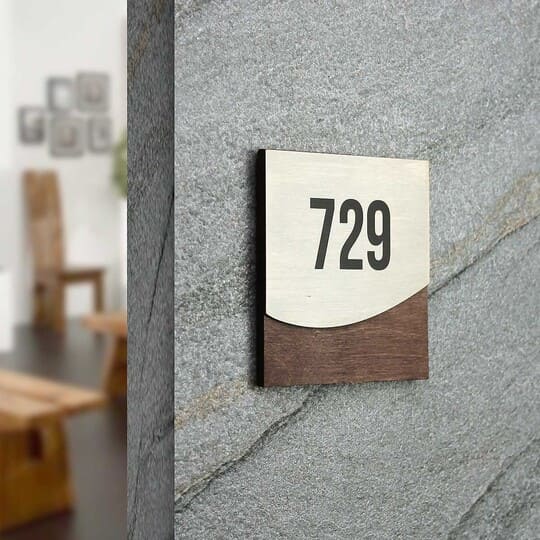
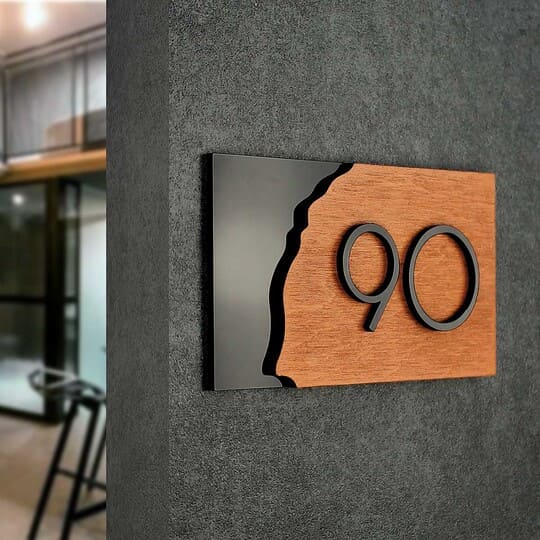
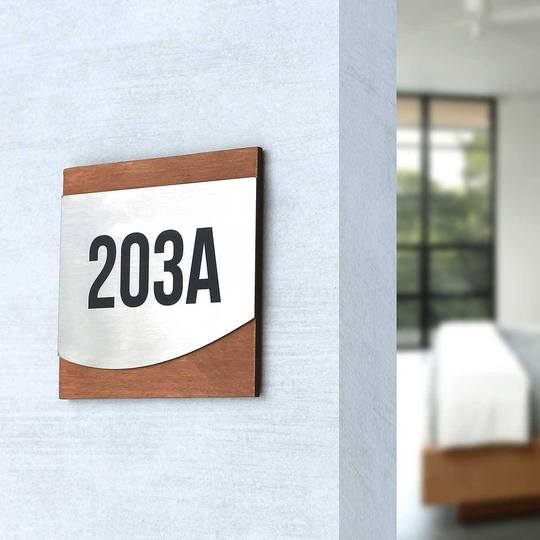
Room identification must be quick and obvious. Use room numbers with large numbers, practitioner names, or functional labels.
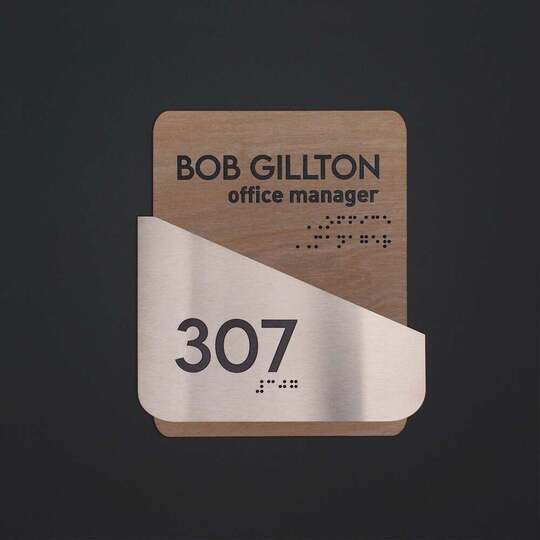
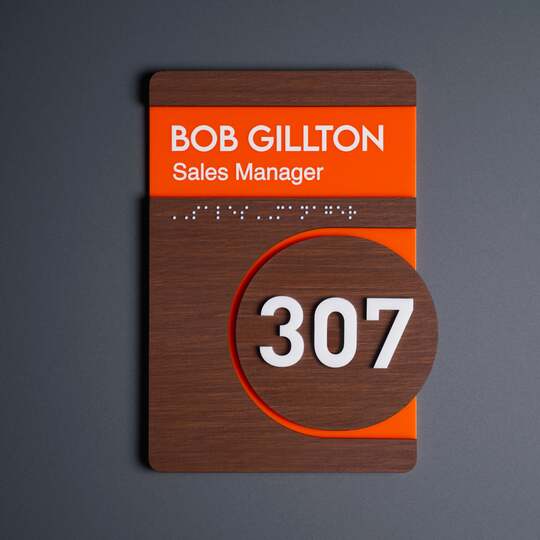
Maintaining a consistent visual style is particularly important in medical settings. For this reason, medical and hospital signs are often produced using combinations of wood, acrylic, and stainless steel, creating a cohesive visual identity while maintaining durability and readability.
Reception as the main orientation point
Reception is the central node of the medical wayfinding system. It's where visitors make their first routing decisions.
An effective orientation system should help visitors immediately understand:
-
where registration is located;
-
how to reach a specific room;
-
where the waiting area is situated;
-
how to access diagnostic or rehabilitation departments.
In many medical centers, the reception area is where most questions arise. If a visitor has to ask for directions to a lab or office several times, the whole environment feels chaotic, even in a modern interior.
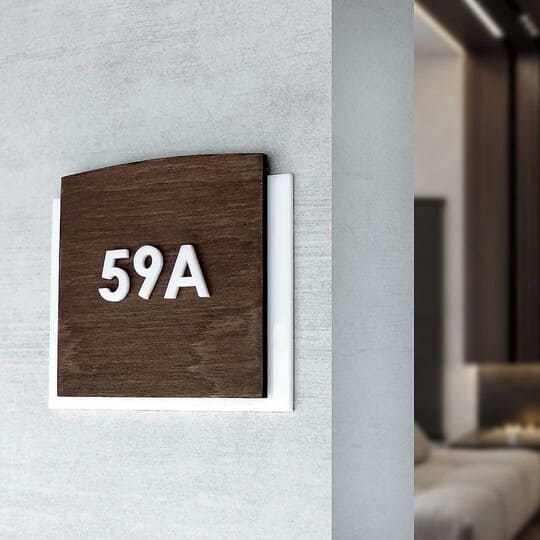
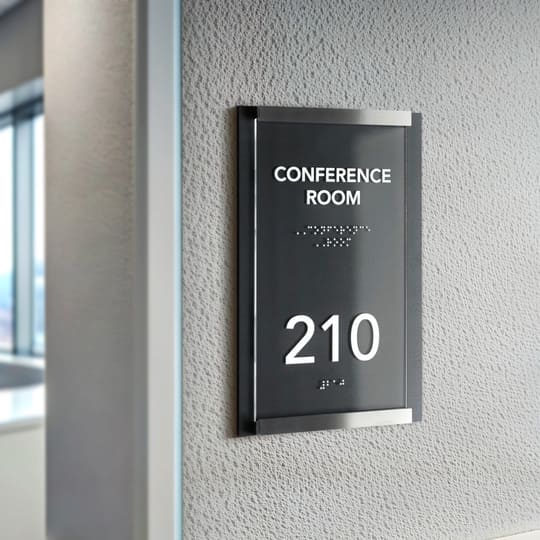
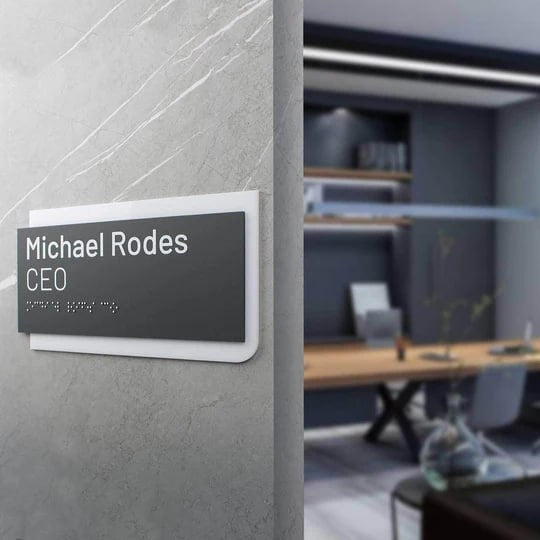
Elegant reception signage from the Buro collection that shapes the first impression of the facility:

Directional signs between functional areas
Directional wayfinding signs help people move between floors and functional areas. They are placed in corridors, at route intersections, and near elevators.
Short messages with a clear arrow and high contrast work best.
Restroom and service area signage
Sanitary and service zones should be easy to find without extra explanation. Informational signs for these areas must be noticeable while remaining visually consistent with the interior.
|
Sign Type |
Purpose |
Recommended Placement |
|
Room numbers |
Identify rooms |
Doctors' offices |
|
Directional plaques |
Organize the route |
Corridors, passageways |
|
Reception signs |
Main orientation point |
Entrance area |
|
Restroom signs |
Quick location of service areas |
Restrooms, service rooms |
|
Informational plates |
Communicate rules or zones |
Waiting area |
How to Make Signs for Clinics Readable and Accessible
To ensure clinic orientation remains simple and efficient, signage should incorporate readable typography, sufficient contrast, and concise messaging. A person should be able to read the information in a few seconds, even while walking down a corridor. In medical spaces, it is also important to avoid glare and text overload.
Readability of wellness signage affects orientation speed and patient reassurance. People should be able to read the information in a few seconds without straining their eyes.
Typography and optimal reading distance
When designing clinic signs, it is essential to consider viewing distance. Signs placed beside doors can be relatively compact, while directional plaques in hallways must remain legible from farther away.
Optimal solutions:
-
simple, non-decorative typefaces;
-
adequate line spacing;
-
large numerals for room numbers;
-
concise wording.
Contrast and faster information recognition
Contrast plays a critical role in helping visitors process information quickly. Light letters on a dark background or vice versa are far more effective than low-contrast combinations.
For healthcare facilities, matte surfaces and anti-glare finishes are highly recommended. This becomes particularly important in corridors with bright artificial lighting or near large windows, where glossy surfaces can create significant glare. In such conditions, people often have to change their viewing angle just to read the text.
When Braille signage should be included
Accessible signage in Braille promotes inclusive orientation and enhances user access. It is recommended near key zones:
-
rooms;
-
restroom facilities;
-
elevators;
-
reception.
Braille signs are a core element of accessible design in modern medical facilities, improving signage readability for all users.
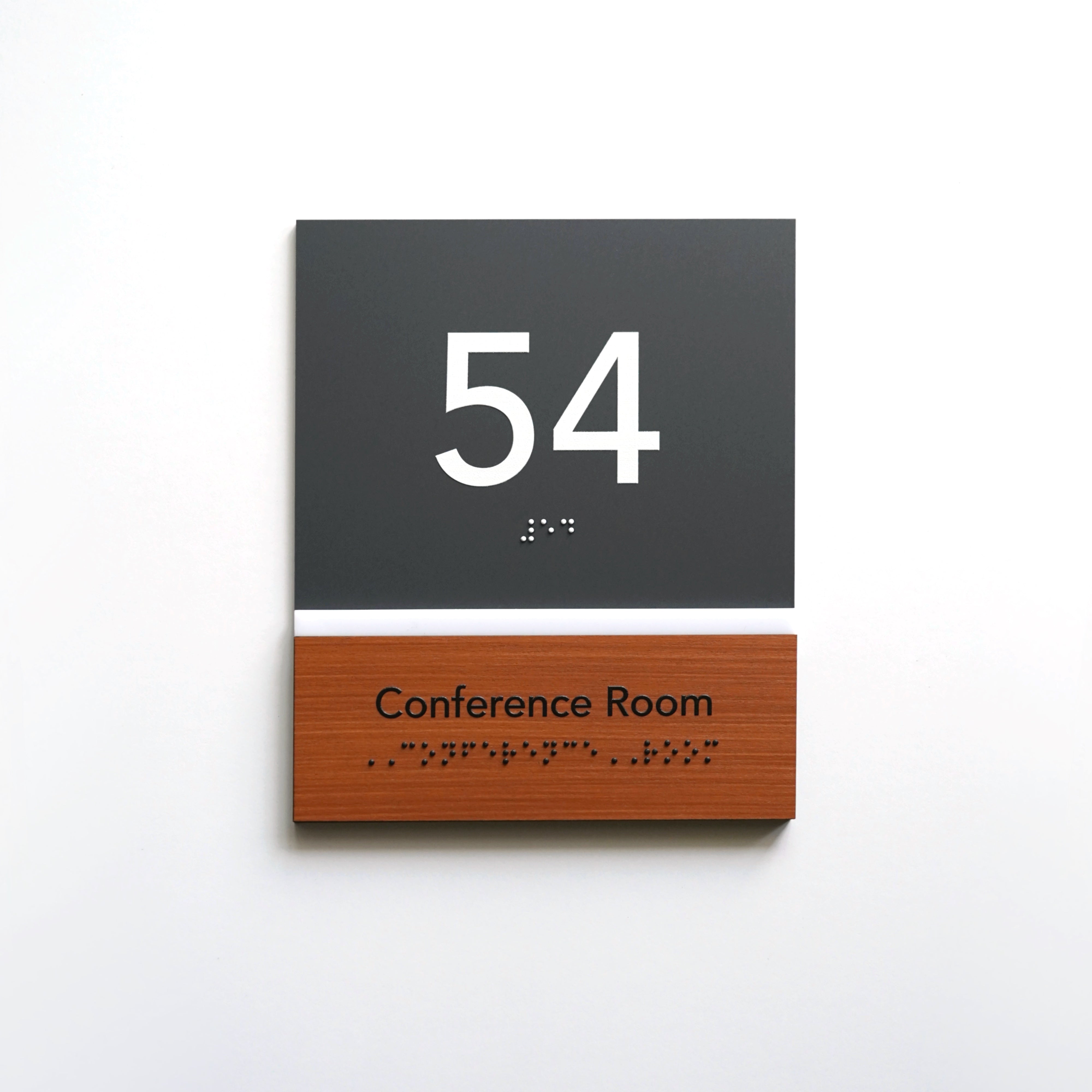
Modern wayfinding signs from the Dragon collection for people with disabilities that ensure quick orientation:

Best Materials and Colors for Medical and Wellness Signage
For medical and wellness spaces, materials affect not only aesthetics but also how the service is perceived. Quality hospital signs help create a tidy, organized environment where visitors find their way more easily and feel more comfortable. In medical interior design, details often form the first impression of a facility's standard and the professionalism of its brand.
Wood for warmer and calmer environments
Wood signage is commonly used in wellness environments and private medical practices where it's important to establish a calm atmosphere from the moment someone walks in. In rehabilitation centers or recovery studios, where people spend more time in waiting areas, cold materials can make the interior feel overly "technical". Wood, by contrast, softens that perception and makes the environment feel more comfortable.
A matte finish of wood softens the visual impression and helps maintain a calm atmosphere.
Acrylic for clean and modern interiors
Acrylic signage is a popular choice for clinics with a modern, minimalist interior where clean geometry and easy information recognition matter. In new medical centers, acrylic wayfinding signs work well in corridors and near reception because they don't visually clutter the space and are easy to keep pristine.
Acrylic pairs well with UV printing and complements modern design. It enables crisp shapes, dimensional elements, and clean visual communication.
Stainless steel for durability and hygiene
Stainless steel signage is an investment in durability and a consistent look for high-traffic commercial medical spaces. Durable, low‑maintenance materials directly influence perceptions of service quality and trust in the facility.
The combination of materials in wayfinding signs — where wood, acrylic, and steel work together as a unified system — is particularly striking.
|
Material |
Advantages |
Best use |
|
Wood |
Warm perception, reassurance |
Wellness environments |
|
Acrylic |
Modern look, clean forms |
Clinics, reception areas |
|
Stainless steel |
Durability, wear resistance |
Corridors, common areas |
Common Healthcare Wayfinding Mistakes That Increase Visitor Anxiety
Most orientation problems in clinics stem from information overload, conflicting directions, and a lack of unified style. If visitors frequently stop in a corridor or repeatedly ask for directions, the wayfinding system is not functioning effectively. These issues become particularly noticeable in large medical and wellness centers with multiple zones or floors.
Inconsistent sign styles
Many clinics build their signage piecemeal: door numbers first, then signs for new zone identification, and later a redesigned reception. When these elements use different styles, visitors struggle to read the route as a single logical system.
Weak route logic and decision points
Even the highest-quality signs for medical centers won't fix a poorly planned route. A visitor might walk half a floor before realizing the required room is in another wing. In healthcare environments, such situations create unnecessary frustration and anxiety, particularly for patients who may already be physically or emotionally stressed after examinations or procedures.
Common orientation mistakes include:
-
duplicated directions;
-
conflicting arrows;
-
hidden zone markings;
-
missing guidance at decision points;
-
chaotic room labeling.
Wooden directional plaques from the Sherwood collection create a warm, welcoming atmosphere and are particularly well-suited to wellness centers, rehabilitation facilities, and recovery-focused environments.

How to Organize Stress-Free Navigation: A Practical Healthcare Framework
Creating anxiety-free wayfinding begins with mapping the visitor's path from the entrance to the target room or waiting area. The next step is identifying key orientation points: reception, floor transitions, elevators, and main corridors. The goal is to minimize complex decisions while keeping the wayfinding signs and the overall orientation system consistent throughout the building.
Mapping the patient journey
In small clinics, the route may seem obvious to staff but not to a first‑time visitor. That's why the navigation system is usually tested from the perspective of someone entering the building for the first time. First, mark the main movement nodes:
-
Entrance.
-
Reception.
-
Waiting area.
-
Treatment rooms.
-
Sanitary facilities.
-
Exit.
Reducing decision points
The fewer choices a person must make, the easier it is to find their way. Effective patient navigation strategies often include using:
-
Clear directional guidance.
-
Repeated visual cues.
-
Prominent floor identifiers.
-
Visible landmarks.
Building a unified signage system
A single, coherent logic supports the brand and helps create a comfortable environment. Consistent typography, materials, and colors make the orientation system feel whole and reliable.
How to create a navigation system for a clinic
An effective wayfinding system is built around how visitors move through a space, not just the design of the signs. Successful systems combine using a single typeface, repeated color cues, and a clear route structure. For example, keeping the same visual language across floors helps visitors adapt faster, even in a large facility.
Chaotic Navigation vs Structured Navigation: Which Creates a Better Experience
A systematic route logic helps people orient themselves faster and feel more confident. When all elements are styled consistently and reinforce the route logic, visitors spend less time searching for the right area. Chaotic placement of signs, by contrast, increases anxiety and creates a sense of disorder.
How people respond to confusing environments
For instance, a patient may walk past the required room several times because the marking is inconspicuous or arrows conflict in a corridor. In large wellness complexes, the same confusion often happens between SPA zones, pools, and treatment rooms.
Why structured orientation increases trust
Thoughtful navigation design signals professionalism. Visitors can see that routes have been carefully planned and that the environment is designed with their reassurance in mind.
|
Chaotic navigation |
Systematic navigation |
|
Different sign styles |
Unified visual system |
|
Complex route |
Logical movement |
|
Information overload |
Short messages |
|
Frequent questions to staff |
Independent orientation |
|
Anxiety and confusion |
Comfortable environment |
How to Evaluate Whether Your Healthcare Navigation System Works
You can assess wayfinding effectiveness by observing visitor behavior. If people quickly find the right rooms, don't stop to search for routes, and ask staff less often, the system is working correctly. It's best to watch new visitors in the entrance area and at route intersections.
Visitor behavior signals
Signs of a well‑functioning system:
-
people do not stop to look for directions;
-
patients ask staff for help less often;
-
routes are traversed quickly;
-
zones are easy to locate on the first attempt.
If people regularly stop at the same points or look around searching for directions, this usually signals weak route logic. These problems most often occur at floor transitions or in long, monotonous corridors.
Common disorientation points
Problems most frequently arise:
-
near elevators;
-
in long corridors;
-
at route intersections;
-
in large wellness spaces.
These are the points to analyze when designing a wayfinding system for a wellness center or clinic.
Conclusion: How Medical and Wellness Signage Shapes Visitor Experience
Well-designed signs for medical centers help people adapt to the space faster and reduce anxiety during their stay in a clinic or wellness center. When the route is clear from the first minutes, visitors spend less time searching for destinations and are more likely to perceive the service as professional, organized, and trustworthy.
For health and wellness facilities, it's important not only to mark zones but also to create a coherent environment with a logical movement structure. Quality materials, sign legibility, and a unified style all contribute to a positive healthcare experience and help make the interior feel complete.
For the business, this means less load on administrators, a more organized patient flow, and a positive brand perception.
Designing wayfinding to support a calm wellness center environment
In wellness spaces, it's important to combine functionality with visual reassurance. This is typically achieved by using soft colors, matte surfaces, warm materials, and minimalist wayfinding elements. This approach helps create a more cohesive and comfortable environment for guests.
Thoughtful signage helps medical and wellness spaces become easier to navigate, reduces visitor anxiety, and creates a more comfortable and trustworthy experience.
If you're planning a wayfinding system for a clinic, medical, or wellness center, specialists at Bsign can help create a clear visitor route, organize movement logic between zones, and select solutions that match your space's style.
We help commercial medical and wellness facilities build cohesive wayfinding systems that improve patient experience, reduce spatial chaos, and support a professional brand image.
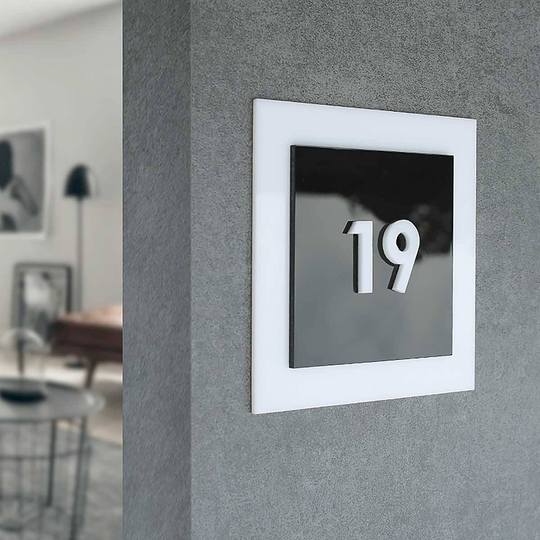
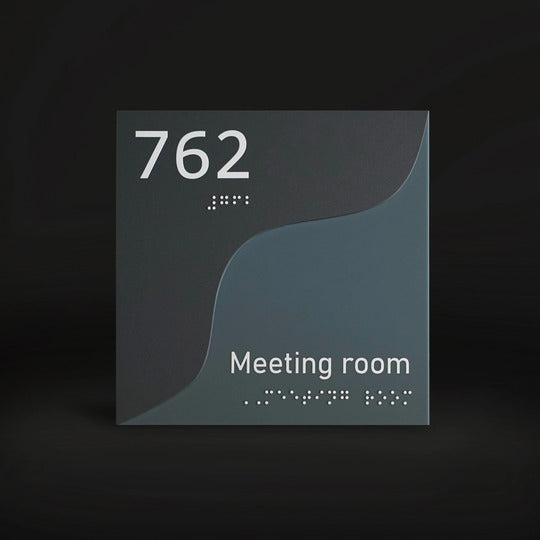
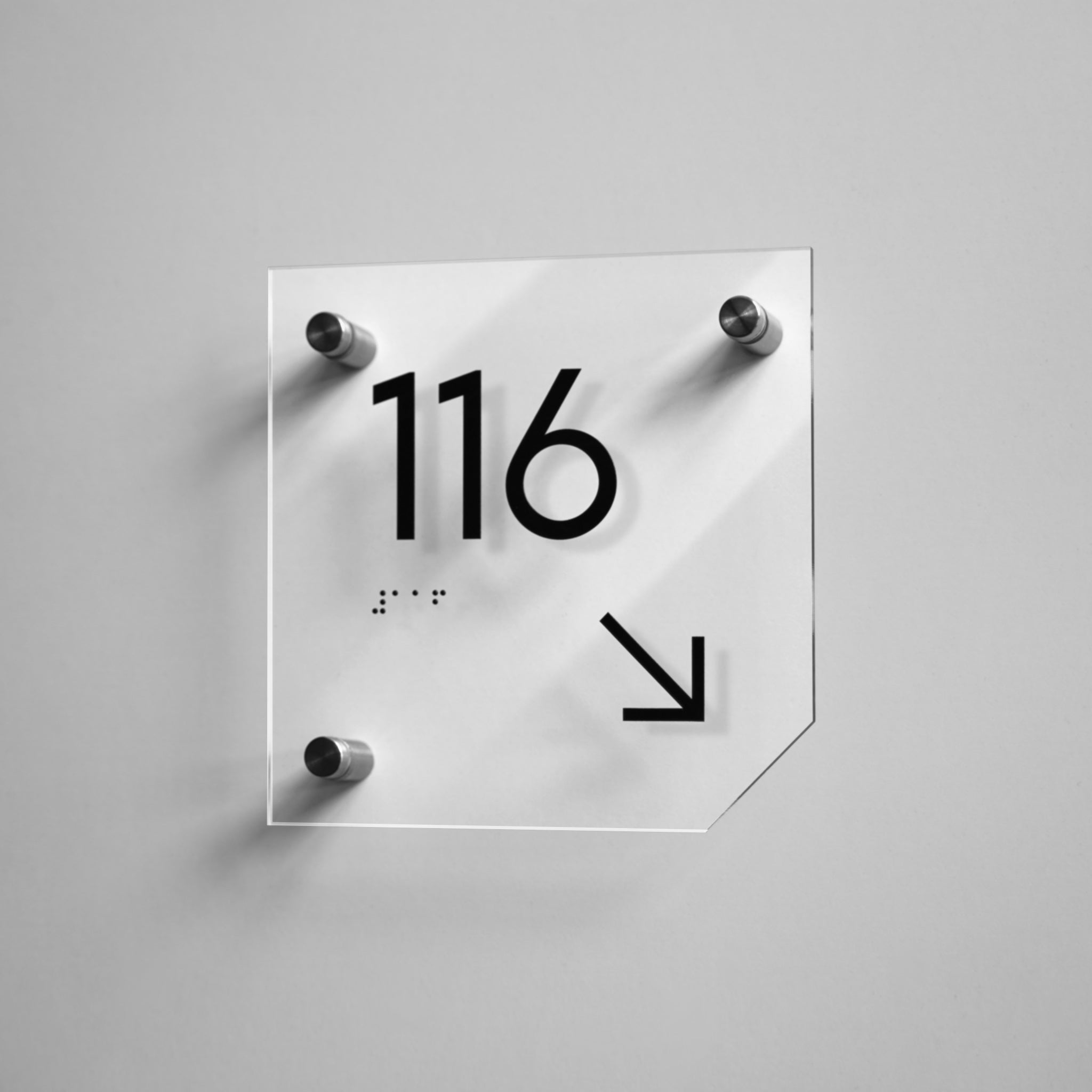
Minimalist signs from the Grey Calm collection are ideal for clinics and healthcare environments where visual clarity, simplicity, and understated elegance are essential.

FAQ
How does orientation affect anxiety levels in healthcare environments?
A clear orientation system helps people find the right areas faster and avoid wasting time searching for a route. When a visitor understands where to go next without extra explanations, they feel calmer and more confident. Clear orientation in healthcare facilities reduces cognitive load, cuts down on wrong turns, and makes staying in a medical environment more comfortable.
What signs are essential for a clinic or wellness center?
Clinics typically use room identification, directional, reception, and informational markings for service areas. It's important that all elements share a unified style and support the route logic. This helps even first‑time visitors orient themselves quickly.
What font works best for medical signage?
Simple, highly legible typefaces without decorative elements work best for healthcare wayfinding. They are read quickly while people are moving and don't overload perception. Thin decorative fonts may look good in layouts, but in real corridors, they are hard to read at a glance.
Should healthcare signs include Braille?
Braille signs help create an accessible environment for people with visual impairments. It's appropriate to place them near key zones: rooms, elevators, reception, and restrooms. This approach supports inclusivity and shows the facility's attention to the reassurance of all guests.
What materials are best for healthcare signage?
Wood, acrylic, and stainless steel are most commonly used in medical settings. They combine durability, a neat appearance, and comfortable visual perception. Matte surfaces and high‑quality application of information help avoid glare and keep the interior looking tidy over time.
How can you evaluate whether a wayfinding system works?
Observe client behavior at key route points. If people easily find the right areas without staff help, don't stop to look for directions, and don't get confused between floors, the system is effective. In many clinics, a few minutes of watching new visitors in the entrance area is enough to spot problematic route points.
Which colors work best in medical interiors?
Wayfinding should support a calm, restful atmosphere. Use restrained colors, soft contrasts, matte surfaces, and minimalist design. It's important that all signs blend organically with the interior and do not create visual noise.
What is the difference between clinic and wellness center navigation?
In clinics, the focus is primarily on fast spatial orientation, functionality, and route clarity. In wellness centers, orientation also needs to support emotional reassurance by creating a softer visual environment. Warm materials, calm colors, and a more delicate signage system are often used in these spaces.


