











by Olena Zadniprovska
How to Properly Organize Door Sign Placement in Interior Spaces
The placement of door signs is a crucial and inseparable process that marks the starting point of any wayfinding system within a space. A sign is the first element people interact with after entering a building. It sets the direction of movement, helps visitors orient themselves faster, reduces unnecessary stops, and creates a sense of an orderly space. When navigation fails, even an expensive interior reads as chaotic and inconvenient. This is where interior signage effectiveness becomes critical, as clear and predictable sign visibility at a glance supports smooth navigation.
In modern spaces, the placement of navigation elements in the premises should follow a clear logic based on human movement. This is a question of functionality: how to place door signs, at what height, whether they should be mounted on the door or the wall, and on which side. All of these decisions directly affect spatial orientation and the line of sight in interior spaces.
This article serves as a practical door sign placement guide, bringing together universal design principles based on architectural logic, international recommendations, and real-world observations of how people read signs while walking and navigate interior spaces in practice.
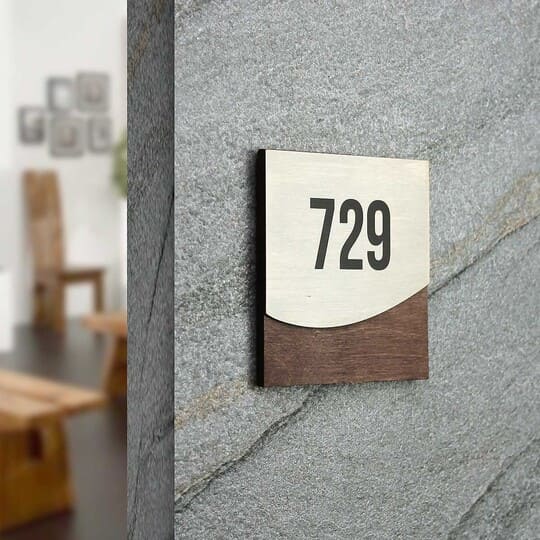
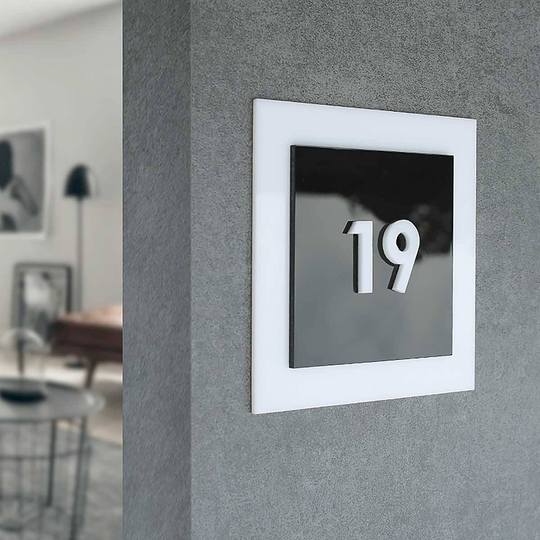
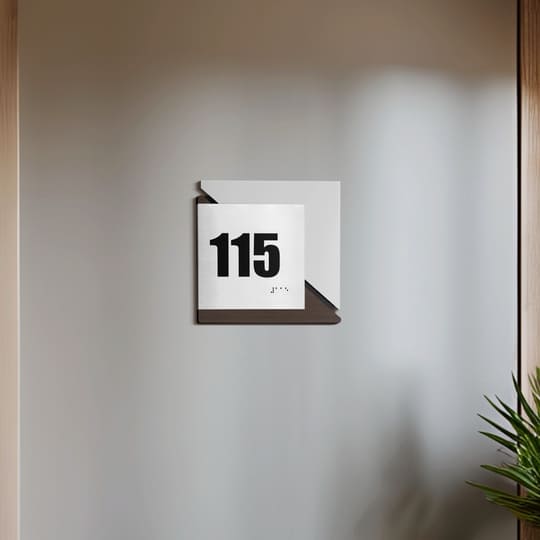
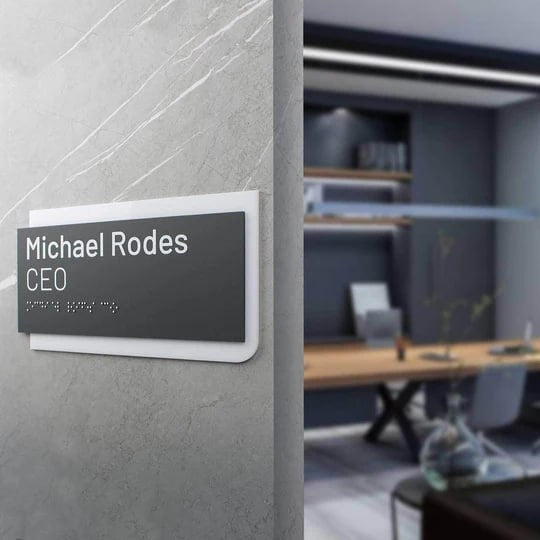
An example of a door sign integrated into a modern interior, demonstrating consistent placement and material harmony with surrounding finishes:

Why Correct Placement of Door Signs Matters
Wayfinding is noticed before the decor. People look for information first, then evaluate materials, colors, and interior details. For this reason, interior wayfinding signage plays a decisive role in shaping the first impression of a space.
Poor signage placement creates a sense of visual disorder. Plates "jump" in height, appear sometimes on doors and sometimes on walls, get obscured by the door leaf, or disappear into decorative elements. These are classic signage placement mistakes that undermine trust in the space and complicate movement.
Consistent rules function as a system. When door signage placement follows one consistent logic, people begin to orient themselves intuitively and effortlessly. In that case, the door plaques blend seamlessly into the interior’s wayfinding design.
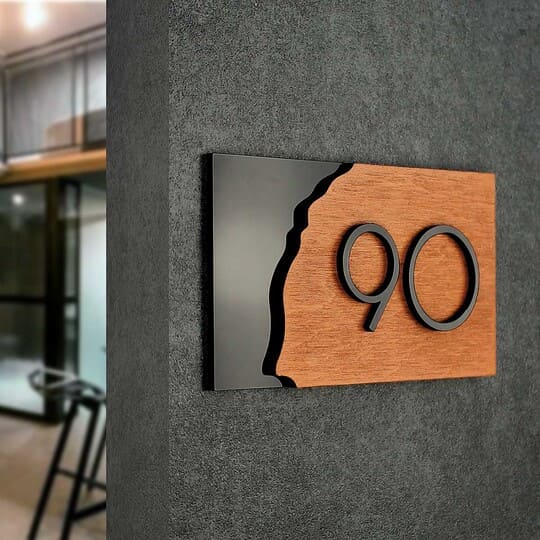
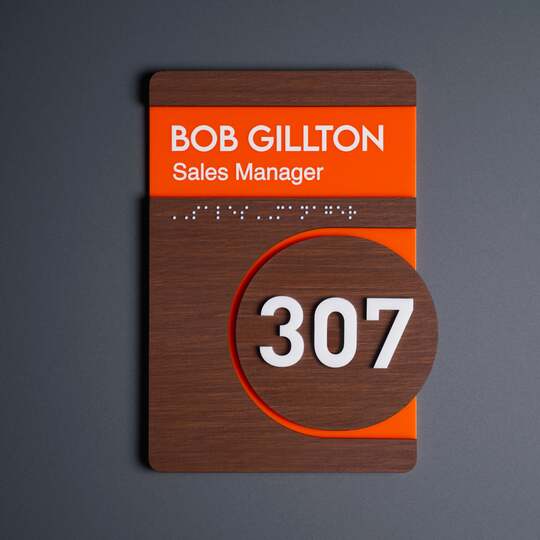
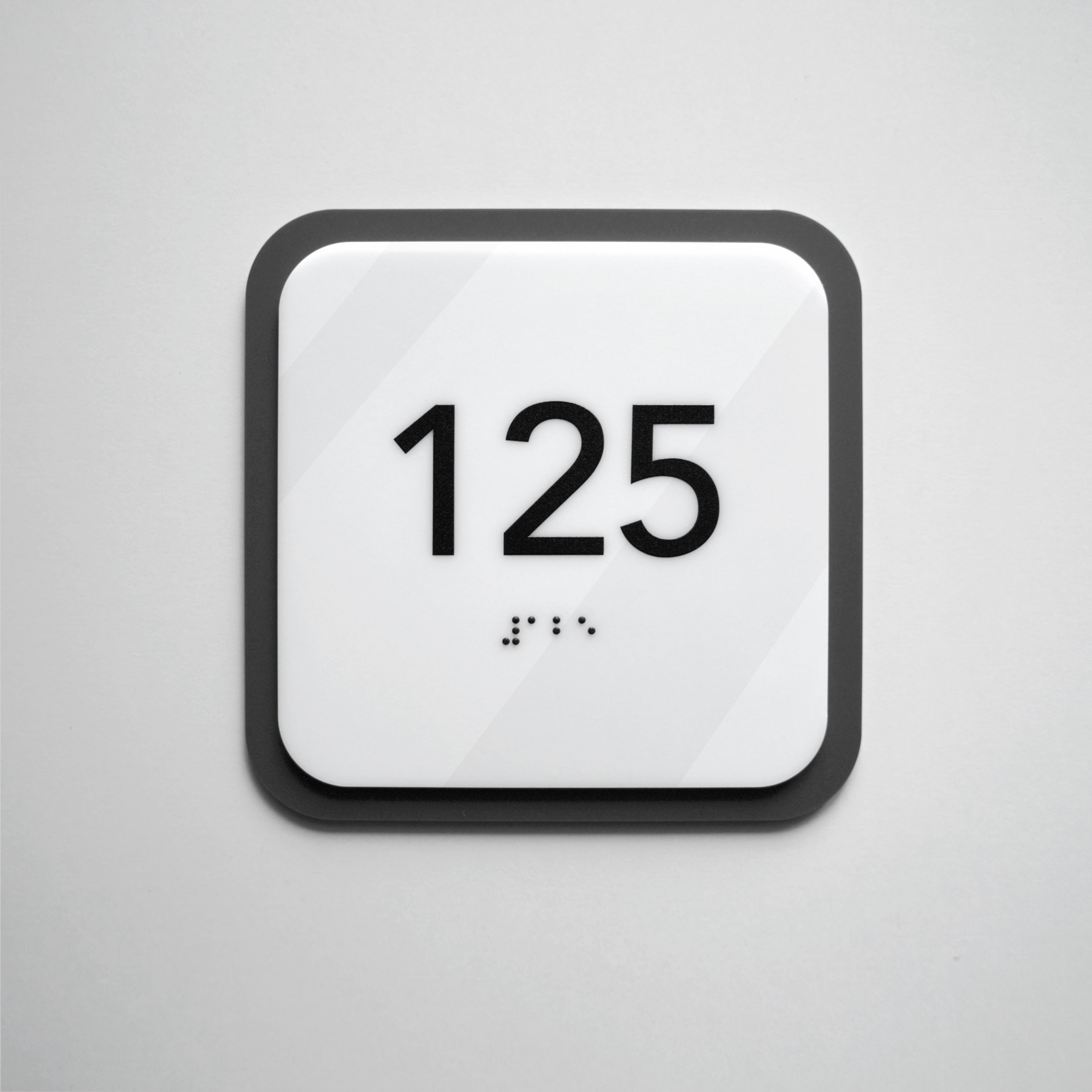
Tactile room numbers in high-contrast colors, designed to improve readability and tactile perception within corridor spaces:

Basic Rules for the Correct Interior Sign Placement
These basic rules exist to ensure that navigation works consistently and intuitively across all spaces. At this stage, the core logic is established — one that eliminates chaos and allows people to orient themselves without stopping, asking questions, or making unnecessary movements. Eye level, the choice between door and wall, and placement on the handle side are the three foundations of stable and predictable navigation. We will examine each of them in detail:
Eye-Level Placement Rules
The optimal viewing height is the level at which information can be read comfortably, without straining the neck or eyes. In most spaces, this is 140–160 inches from the floor to the center of the sign, which corresponds to the eye level of an adult and creates a stable reading zone. In this range, the gaze naturally falls while walking down a corridor, without the need to change posture or pace.
Placing navigation elements too high — above 165–170 inches — forces people to tilt their heads and breaks the flow of movement, while placing them too low — below 130 inches — disrupts the natural sightline. Both extremes work poorly for navigation. The key rule is consistency: a single height throughout the building. When the level does not change from door to door, the space reads as a system rather than a collection of random decisions.
Door vs Wall: Where Signs Work Best
Navigation elements can be mounted directly on doors, but this is not always appropriate. This option works only when doors are closed most of the time, do not obscure the information, and do not have complex opening trajectories. Under those conditions, the decor product stays in view and retains its functionality.
In many cases, however, the wall provides a more reliable solution. A wall does not move, does not obstruct information, and is easier to read from the corridor. This becomes especially important when doors open outward or are frequently left open. Therefore, when deciding where to place signs, consider usage scenarios and actual human behavior rather than aesthetics.
At the implementation stage, it is important not only to choose the location but also to understand door signs installation principles so that they remain stable, legible, and do not damage the surface. Incorrect fixing can undermine even a well-thought-out navigation logic, especially in high-traffic areas.
Handle-Side Placement: The Fastest Reading Zone
Placing the navigation elements on the handle side aligns with natural human behavior while moving. A person instinctively scans this side, making navigation faster and effortless. This principle is supported by international accessibility standards, contributing to accessible wayfinding for all visitors.
When a sign is located in this zone, it is read faster and without extra movement. A person does not need to stop or search for information with their eyes. That is why this principle underpins most international recommendations and is directly linked to how people move through a building.
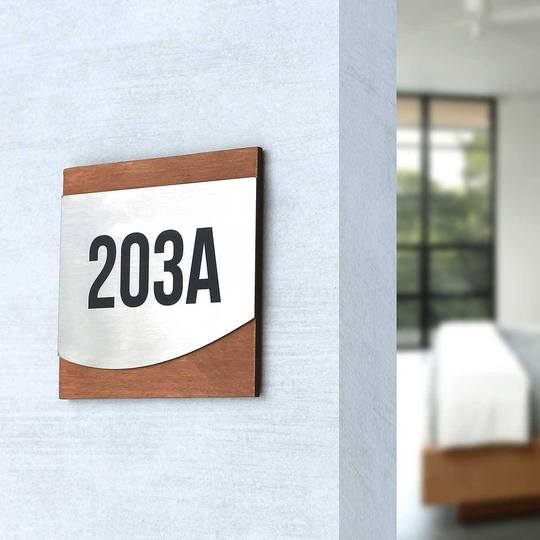
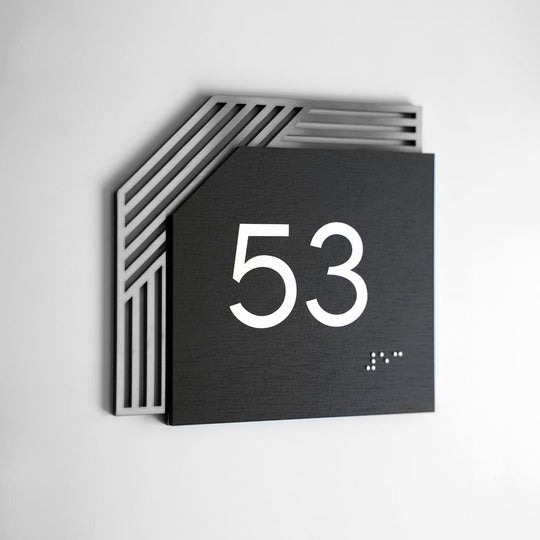
A sign on the handle side illustrating comfortable reading while walking down a corridor:

ADA (US) Requirements and General Accessibility Best Practices Used Internationally
Accessibility standards matter not only for inclusive spaces but also for commercial interiors where people with varying levels of spatial orientation experience are present every day. Accessible wayfinding signage reduces hesitant movements, pauses, and questions, making the environment predictable and calm for all users.
ADA door sign placement requirements and tactile door signs must combine visual legibility and tactile readability without conflict between these two modes of perception. The key is not the plaque format itself but its stable position, predictable height, consistent placement zone, and repeatable logic throughout the building. Repetition allows people to quickly grasp the principle and use it without additional cues.
This approach creates a barrier-free environment and reduces cognitive load in navigation, not only for specific user groups, but for everyone. As a result, navigation becomes intuitive, and the space reads as thoughtful and professional, without the sense of special solutions “for some people only.”
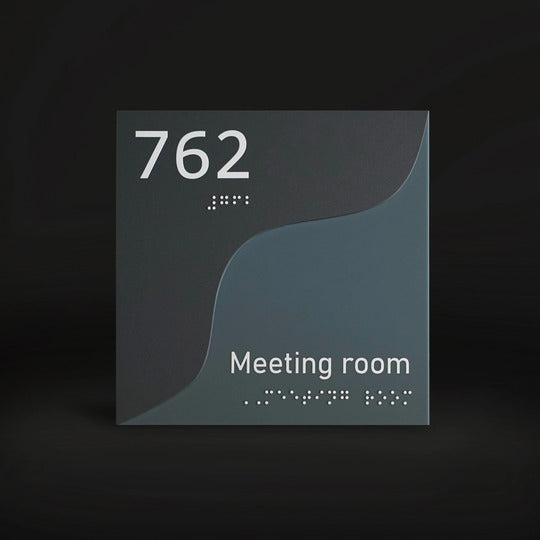
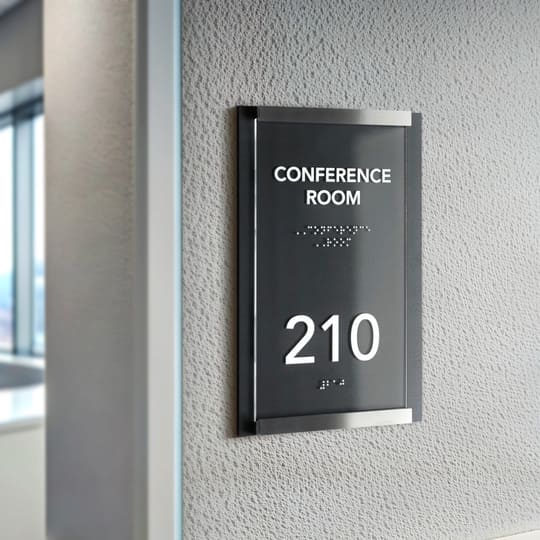
A tactile navigation element with text and Braille for a service area, produced in high contrast to support both visual and tactile reading:

Placement Rules for Different Types of Spaces
Navigation is always tied to the specific usage scenario of a space. What works well in an office may create confusion in a hotel or fail in shared public areas. Therefore, deciding where to place door signs must take into account the type of space, the intensity of foot traffic, and the expected speed of information processing. Consistent signage alignment across all spaces creates clarity and a professional impression.
Office Door Signs
In business environments, a reliable navigation system is critical because people move daily between offices, meeting rooms, and service areas. Office door sign placement should follow a unified system where format, placement, and style are repeated without exceptions. This consistency supports user-friendly navigation, reduces orientation time, and prevents unnecessary distraction from work processes.
Minimizing visual clutter in corridors is achieved through repetition: the same height, format, and symmetry create a sense of order. When a person walks a corridor and sees navigation elements placed in the same way, the space reads as considered and professional rather than a collection of isolated decisions.
Medical Space & Hotel Wayfinding Signage
In hotels, navigation must function without staff assistance. Architectural signage should enable guests to orient themselves intuitively, without explanations or prompts. Guests are often in an unfamiliar environment, so any inconsistency in placement quickly leads to confusion and hesitation.
Premium aesthetics cannot replace clarity. Decorative experiments are acceptable only if they do not disrupt placement stability. If wayfinding elements change height, side, or format from floor to floor, even the highest-quality materials will not compensate for the loss of navigational logic or a broken visual hierarchy in interiors.
Restrooms and Shared Areas
In public areas, instant recognition of function is essential. Restroom door sign placement must operate at an intuitive level, without the need to stop or peer closely. People look for this information while moving, often in a hurry, so placement must be as predictable as possible.
These plaques should follow the flow of people, not the decorative accents. When they are positioned where the eye naturally seeks information, intuitive sign placement works automatically. This reduces tension in the space and makes using the building simple and clear.
The same principles apply to residential buildings, where the priority is not speed of movement, but a sense of calm and clarity. Consistency, predictable height, and a coherent style help residents orient themselves without strain or undue attention to the navigation itself.
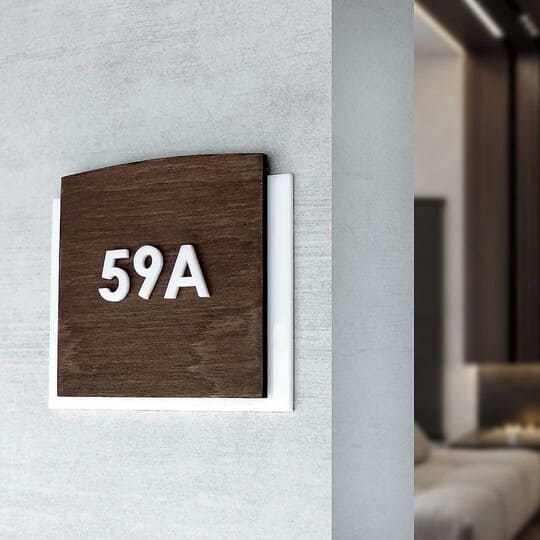
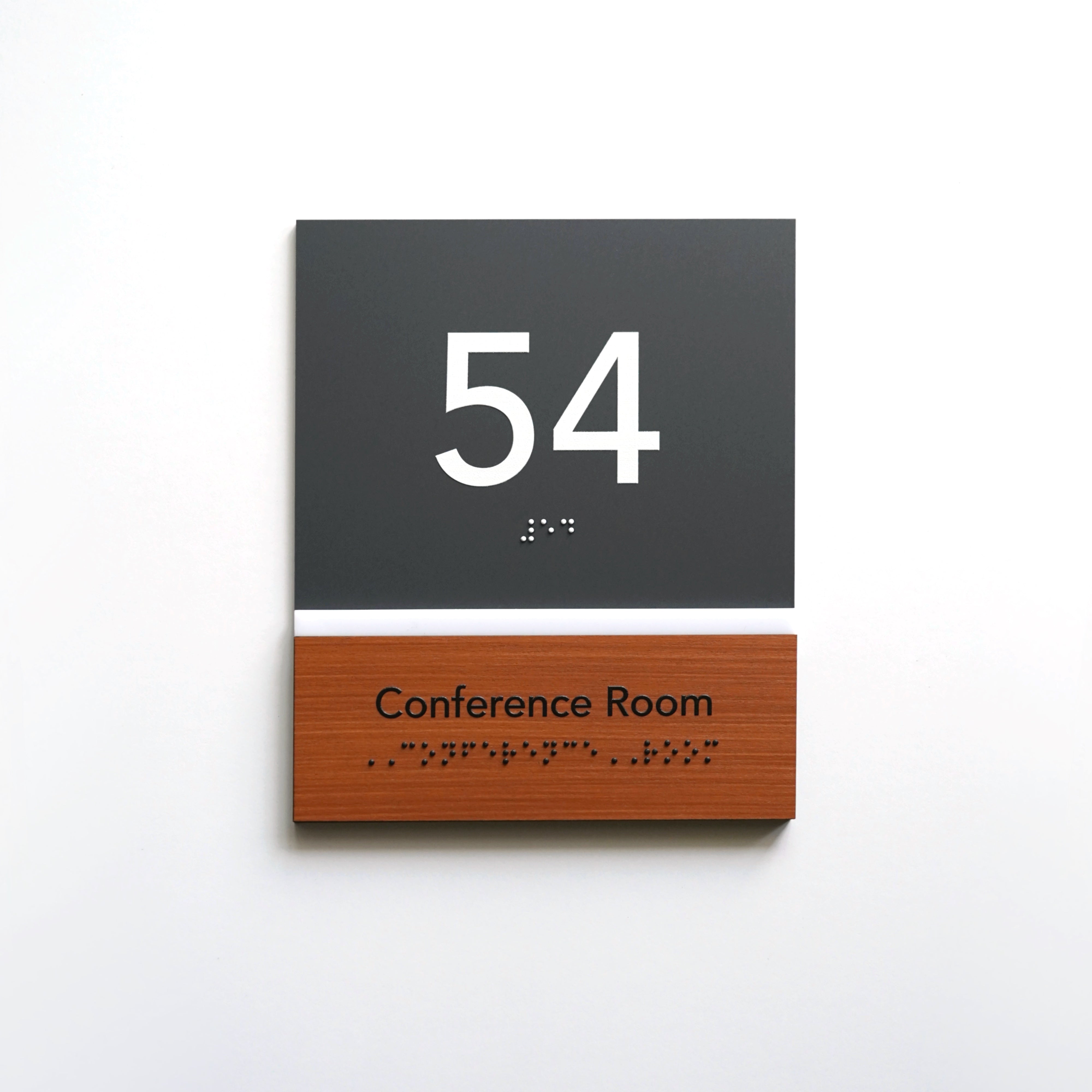
Door sign designed for calm perception, featuring restrained contrast and predictable placement:

Placement of Door Signs: Checklist
We have created this checklist to help clarify navigation logic without diving into technical details. It distills complex rules into clear reference points and allows for a quick check of whether door plates function as a unified system. Using it makes it easier to see the space from the user’s perspective and maintain interior coherence.
-
• A single height creates a predictable reading zone. When navigation elements are mounted at the same level, people don’t need to reorient their gaze or search for information on a different part of the door or wall. This builds a sense of order and helps the space be felt as a coherent system.
-
• Choose one mounting surface and stick to it across all areas. When some signs are placed on doors and others on walls without a clear reason, navigation loses consistency. A single logic lets people grasp the principle quickly and use it without extra effort.
-
• Placement on the handle side aligns with natural human behavior while moving. This is the side where the eye instinctively looks for information before interacting with a door. When a navigation element appears exactly where it is expected, it is read faster and with minimal effort.
-
• Ensure the navigation element remains visible regardless of the door’s position. If the door leaf obscures the information when opened, navigation fails at a critical moment. Check this especially for doors that are left open frequently.
-
• Make the sign readable from the direction people normally approach the door. If it is only visible up close or from a specific angle, users are forced to stop and search for information. Aligning signage with the main circulation route supports smooth movement and unobtrusive navigation.
-
• Material and stylistic consistency reinforce a sense of a well-considered space. When wayfinding elements look visually different across zones without a logical reason, they are perceived as random elements. A coherent style helps to feel signage as part of interior design rather than visual clutter.
Restroom door sign with graphic pictograms and text, centered on the door leaf for instant information recognition:

Explaining Placement Logic in Simple Terms
Standards are not constraints but tools that make a space understandable without extra explanation. They don’t dictate style or materials; instead, they record proven solutions based on how people behave in an environment. That is why the architectural logic of space is always stronger than decor: it functions independently of visual techniques.
Rules are formed from human movement patterns. When we enter a building, walk down a corridor, or approach a door, both our gaze and body follow predictable scenarios. Standards simply organize these scenarios, turning them into clear reference points that remove the need to think about where to look or search for information.
Successful navigation is always built through the interaction between signage and space, not through isolated decorative choices. When navigation elements account for movement scenarios, they reinforce the perception of the interior and avoid visual conflict.
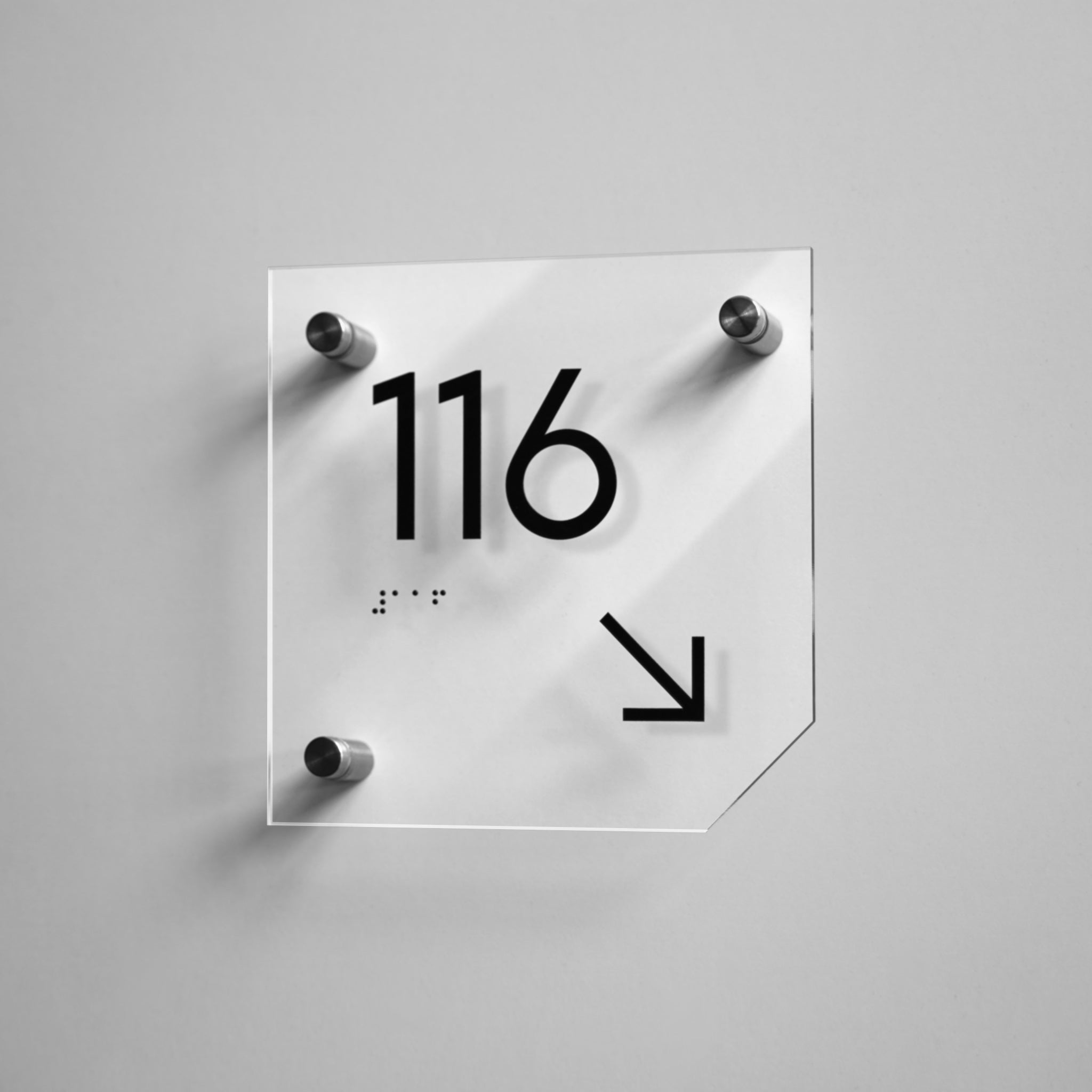
Room number on a transparent wall-mounted sign with clear contrast and high legibility:

Interior Navigation Signage: Why It Matters
Door signs in the interior quietly structure the environment and set its rhythm. They function as a design element that reinforces a sense of order. When placed consistently and clearly, the space reads as a whole and requires no explanation.
Proper placement of door signs has a direct impact on navigation comfort and overall spatial perception. A unified placement logic creates a sense of order, professionalism, and a thoughtfully designed interior. These are the decisions that build trust in a space even before the first interaction takes place.
If you want to check whether navigation in your space functions as a coherent system, or if you are planning it at the design stage, it is worth starting with a consultation. This helps avoid chaotic decisions and ensures that navigation becomes an integral part of the interior rather than an afterthought.
Wall-mounted wayfinding symbol with a Wi‑Fi pictogram, integrated into a light interior and positioned in an easily visible area:

Practical Answers to Common Navigation Questions (FAQ)
Can door signs be mounted directly on the door?
Yes, provided the doors are stable, remain closed most of the time, and do not block information when opened. It is important that this solution does not disrupt the overall logic of navigation in the building or shift the established reading zone. If doors move frequently or are often left open, readability may suffer.
When does wall placement work better?
The wall is a better option when doors are frequently open or have a complex opening trajectory. In that case, the information stays visible regardless of the door’s position. This makes navigation more stable and predictable for people in motion.
How can common placement mistakes be avoided at the design stage?
The most effective approach is to plan navigation together with the interior, not after construction is complete. This lets you set the correct height, placement logic, and alignment with the space from the start. Such an approach eliminates the need for compromises and prevents random decisions that weaken navigation.
Why should signage be planned together with the interior, not after?
Because integrating signs into the interior creates a coherent system rather than a collection of disconnected solutions. When navigation is thought through in advance, it supports the overall logic of the space and looks organic. Post-renovation additions often disrupt consistency and reduce the effectiveness of navigation as a whole.


