




Resort & Hotel Wayfinding Signs: How to Prevent Guest Disorientation
Hotel signs are an integral part of a property’s environmental branding. Well‑designed signage creates a clear navigation logic for guest movement throughout the resort, supports wayfinding, and gives visitors an immediate sense of clarity and professionalism.
A guest forms an impression of a hotel long before they reach their room. If someone struggles to locate the reception desk or elevator, their confidence in the hotel immediately decreases.
Modern hotel navigation signs do more than point the way — a thoughtful directional wayfinding system promotes comfort, helps guests orient themselves faster and prevents confusion in large properties.
A resort signage system is even more critical: resort properties often include multiple buildings, restaurants, pools and recreational areas. Without a clear wayfinding logic, even a beautiful interior can make guests feel disoriented.
A well-planned system helps:
-
• reduce the number of questions addressed to staff;
-
• improve hospitality user experience;
-
• create intuitive navigation throughout the property;
-
• support a cohesive interior concept;
-
• reinforce the premium positioning of the property.
Minimalist stainless steel restroom plates from the Wave collection for upscale hospitality environments:

Why Hotel Wayfinding Signs Are Critical for Guest Experience
Contemporary hotel orientation shapes overall perceptions of service. A guest judges the space before interacting with staff — how easy is it to find reception, the elevator, their room or the spa? When guests can orient themselves quickly, the hotel feels organized, well thought‑out, and professional.
Today, signage has become an essential part of the hospitality environment. Effective hotel directory signs create clear navigation pathways, reduce stress after check-in, and create a more comfortable customer experience.
Navigation as part of the customer experience
Seamless guest navigation in hotels works intuitively: guests naturally understand where to go next.
Hotel wayfinding signs have a direct impact on perceived service quality. When routes are logical and information signs are easy to notice, the entire property feels more polished and well-managed.
A successful orientation system must account for:
-
• guest circulation patterns;
-
• correct room number signs installation;
-
• peak-hour loads;
-
• different visitor categories;
-
• international guests;
-
• accessibility compliance for guests with disabilities.
A well‑thought‑out guest navigation system also prevents crowding in the lobby, elevator lobbies or at building transitions — a crucial benefit for large resorts where guests frequently move independently across the site.
Why guests lose trust in confusing spaces
Non‑systematic navigation creates a sense of disorder even in an upscale interior. When a space uses mixed fonts, colors, materials and random plaque formats at the same time, guests subconsciously perceive the environment as poorly organized.
Problems most often stem from:
-
• random placement of interior elements;
-
• lack of a unified wayfinding logic;
-
• mixed styles of navigation elements;
-
• poor readability and contrast;
-
• information overload.
A separate issue is temporary signage solutions. Paper plaques, stickers or hastily added plaques create visual noise and undermine the premium feel of the property.
Guests associate the quality of navigation with the quality of service. When the system looks cohesive and well-designed, the space reads as more professional, more valuable and more comfortable. This is why modern destination signage is now an essential part of hotel planning.
Hotel Wayfinding System vs Random Navigation Signs
Thoughtful wayfinding helps guests orient themselves quickly without asking staff for directions. Randomly placed items, by contrast, give an impression of disorganization and make the space harder to understand.
What defines a real wayfinding system
An effective hotel wayfinding signage system is a unified navigation structure that allows guests to orient themselves without additional explanations. It creates a clear route from the entrance to any destination and helps prevent guest disorientation in large properties.
It includes:
-
• interior directional signage;
-
• property maps and orientation boards;
-
• room numbers;
-
• informational signs;
-
• zone markers;
-
• ADA solutions and Braille signs;
-
• pictograms for interior wayfinding.
The primary goal of the system is to create intuitive guest movement. A person should be able to find a room, restaurant or conference hall easily even on their first visit.
Visual consistency across a property
Modern signage should complement the interior and function as part of a unified interior system. That’s why it’s important to use consistent materials, shapes, typography, color schemes and mounting methods.
For premium spaces, the most relevant materials are:
-
• wood;
-
• acrylic;
-
• stainless steel;
-
• combined solutions.
These materials align well with contemporary hospitality interior design, reinforce premium positioning, and help create a cohesive branded customer experience.
The following also play an important role:
-
• repeating elements;
-
• consistent geometry;
-
• a single visual hierarchy;
-
• high‑contrast readability.
A cohesive design language allows guests to quickly recognize navigation elements and improves intuitive orientation throughout the property.
Signage hierarchy and spatial logic
Proper hotel information hierarchy is based on guest behavior. People need cues at the moment they make a decision: near elevators, at corridor intersections, and in transitions between zones.
Key principles:
-
• minimal unnecessary text;
-
• fast legibility;
-
• visibility from a distance;
-
• directional reinforcement at key decision points;
-
• a logical route.
This is how modern wayfinding design works. The system doesn’t overload the space with information and helps guests move naturally and without stopping.
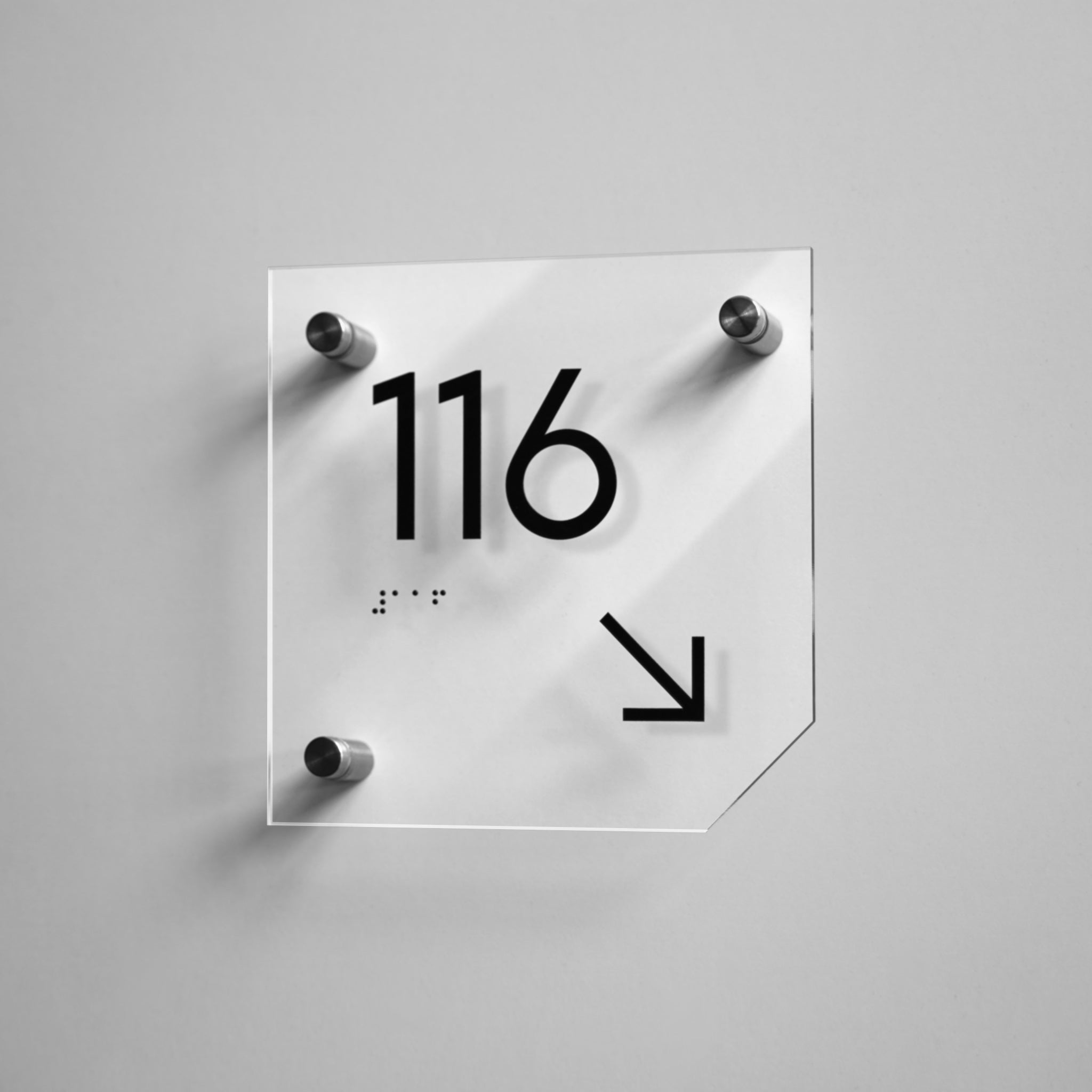
Modern directional product from the Venture collection for user-centered navigation in large hotels and resort complexes:

5 Essential Hotel and Resort Wayfinding Signs
Thoughtful interior wayfinding is made up of several types of indicators that operate simultaneously as a single system.
For modern resort complexes it’s important to build a logical route for guest movement, so different plaque types must be stylistically consistent and easy to use.
Property maps and orientation boards
For large resort complexes, maps are a fundamental part of guest navigation. They help visitors quickly understand the site layout and locate major zones before moving through the property.
Property maps are especially important for:
-
• large resorts;
-
• wellness complexes;
-
• hotels with multiple buildings;
-
• sites with pools;
-
• conference zones.
High‑quality resort signage should present a clear visual hierarchy and unambiguous routes. A guest should immediately see:
-
• where they are;
-
• how to get to the desired area;
-
• how long the route will take;
-
• which services are nearby.
Maps should be placed thoughtfully:
-
• by entrances;
-
• in the lobby;
-
• at route intersections;
-
• between buildings.
On large sites, the routing system is often reinforced with color zoning or repeating markers to speed up orientation.
Directional signs between zones
Directional signage guides movement between zones and has the biggest impact on how quickly guests orient themselves. When placed correctly, hotel directory plates keep guests moving along the route without stops or extra searching.
To ensure effective resort wayfinding solutions, it’s important to:
-
• repeat directional cues at key points;
-
• use short, clear wording;
-
• ensure good visibility from a distance;
-
• avoid information overload.
In large hotels directional signs are often paired with pictograms to improve comprehension speed and simplify orientation for international guests.
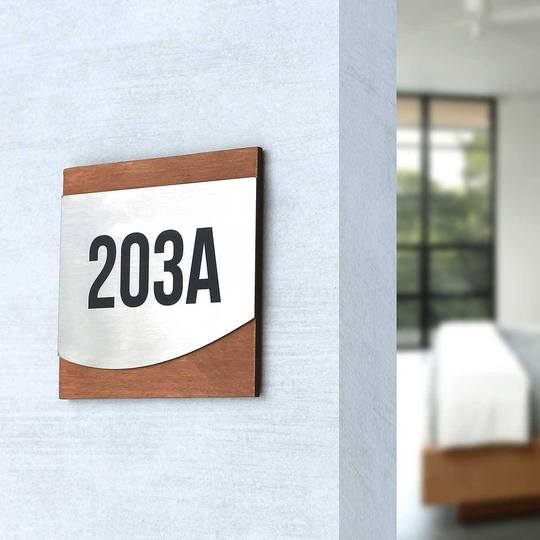
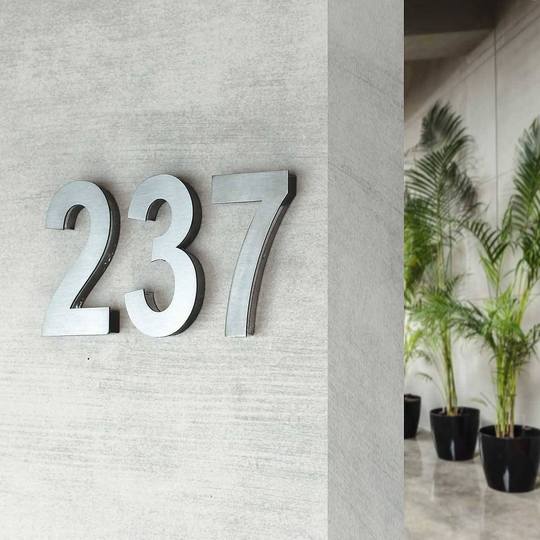
Hotel room number signs
Well‑designed hotel room numbering systems are a vital part of the hotel environment. They should be:
-
• noticeable;
-
• legible;
-
• stylistically consistent;
-
• durable.
Modern room numbers often include:
-
• hotel branding elements or logos;
-
• Braille;
-
• raised or dimensional lettering;
-
• high-contrast design elements.
For the premium segment, custom solutions in wood and stainless steel are popular — they look prestigious and complement contemporary interiors.
Beyond aesthetics, room number signs must be readable even in low lighting conditions or during nighttime movement through corridors. It's also important to know how to install room plates correctly so they remain visible from multiple viewing angles and align with the established route logic.
For this reason, the following remain essential:
-
• strong visual contrast;
-
• sufficient character size;
-
• strategic placement near doorways.
Spa, pool, restaurant, and lounge signage
Individual functional zones require their own navigation logic. That is why restaurant and spa signage, and wellness area navigation should always be part of a single concept.
For leisure zones designers often choose:
-
• calm color palettes;
-
• minimalist layouts;
-
• soft typography;
-
• clear pictograms.
These solutions help maintain a comfortable atmosphere without overwhelming the space visually. In spa areas it’s especially important to create a calm atmosphere without visually intrusive signage.
Pool area signs must remain legible even in high humidity and bright light. For this reason, resort signage in pool environments is usually produced using materials resistant to temperature and moisture changes.
Additional signage commonly used in resort environments includes:
-
• restaurant signs;
-
• navigation signage for wellness and spa zones;
-
• zonal markers.
In large complexes these elements help separate guest flows and make navigation around the property more intuitive.
Informational and rule-based signs
Informational signs help communicate rules and operational details without overloading hotel staff with repetitive guest questions. They make service clearer and reduce routine questions from guests.
This category includes:
-
• opening hours;
-
• wellness‑area rules;
-
• emergency indicators;
-
• ADA signage and Braille signs;
-
• technical and service notices.
High‑quality information signs should support the overall hotel interior signage concept and prevent visual clutter. They must be noticeable yet harmoniously integrated into the interior.
For modern hotel complexes, informational elements should:
-
• be easy to read;
-
• avoid text overload;
-
• use consistent typography;
-
• align visually with all other signage solutions.
A comprehensive approach creates a professional hotel signage system that functions as part of the service and upholds the overall standard of the hotel environment.
For hotel navigation to work effectively, different sign types must create a cohesive resort directional communication system. Some elements build the route, others help guests find a room or access specific information quickly. It is the combination of multiple signage types that creates a clear, intuitive, and guest-centered wayfinding experience.
Below are the main types and their roles in the hotel environment.
|
Type of Signage |
Primary function |
Common Placement |
|
Property maps |
Spatial orientation |
Lobby, entrances |
|
Directional signage |
Directional guidance |
Corridors, transitions |
|
Room number signs |
Room identification |
Guest floors |
|
Spa and restaurant signs |
Zoning |
Wellness and leisure areas |
How Guests Navigate Hotels and Resorts
Guests perceive a property through their own movement experience. When routes are clear and hotel wayfinding plaques are placed logically, people feel confident from the first minutes of their stay. That is why modern guest navigation in hotels and resorts is built around real guest movement scenarios, not just interior design.
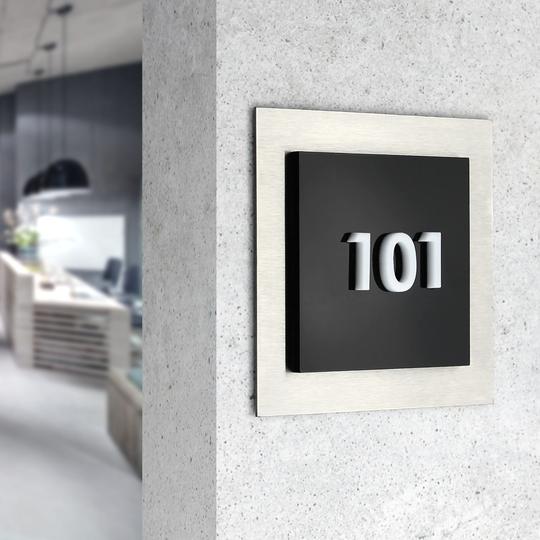
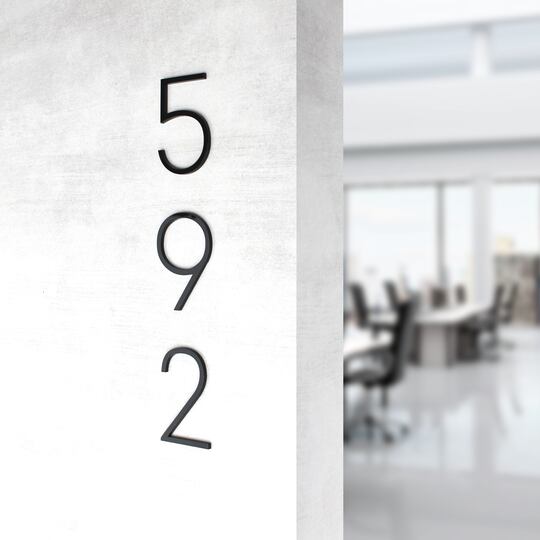
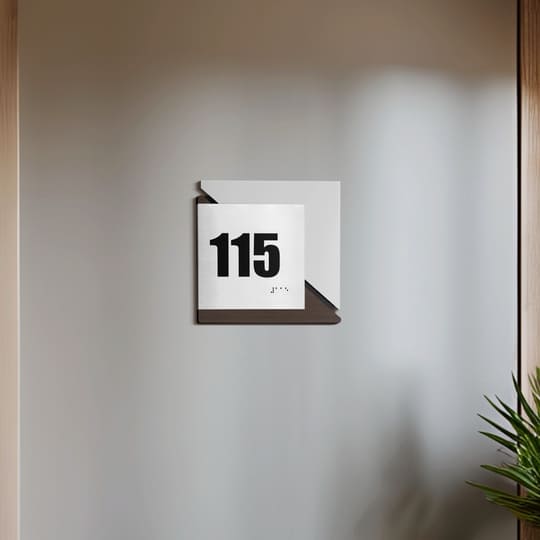
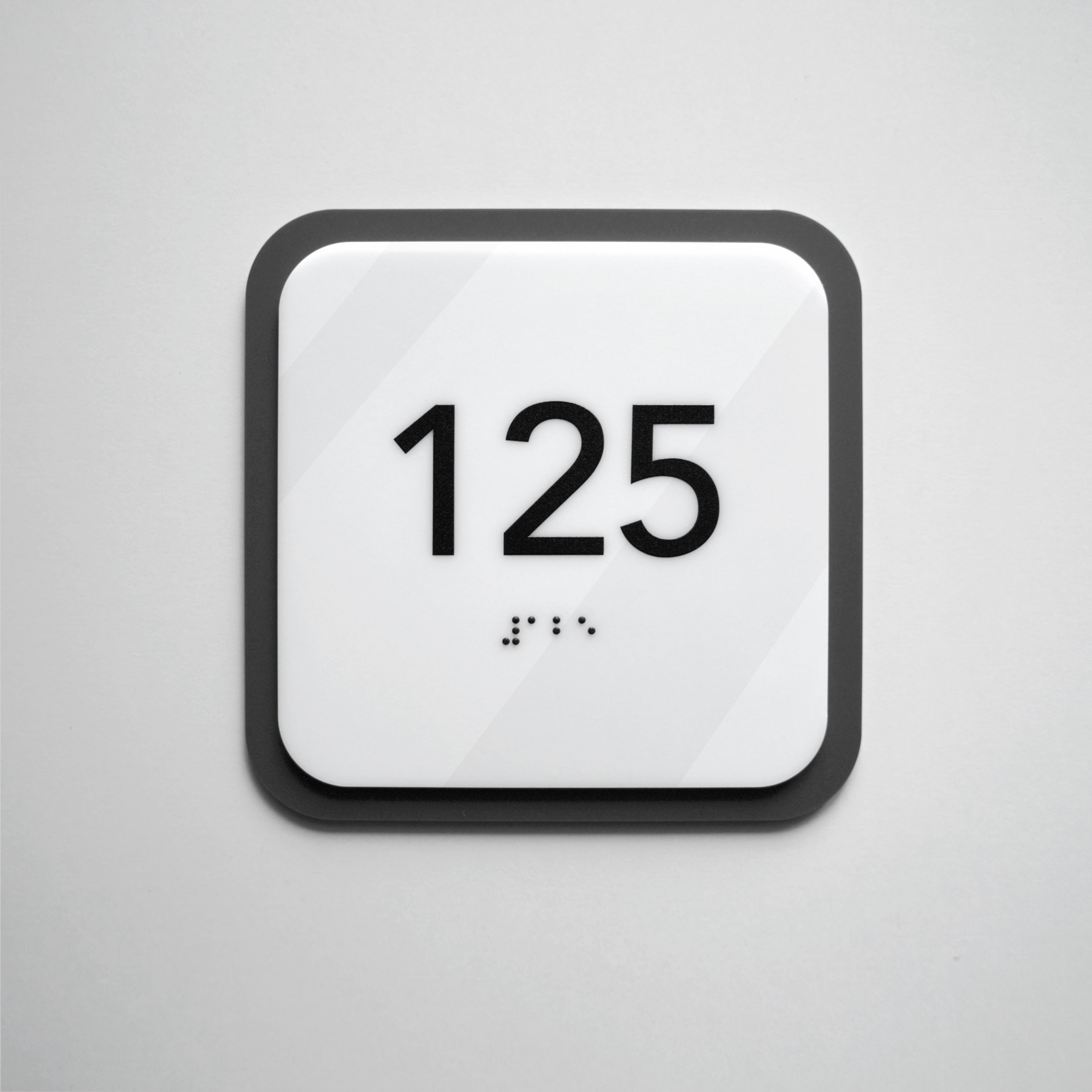
Thin acrylic room numbers from the Thin collection for contemporary hotel corridors with minimalist design:

Arrival-to-room journey
The first route defines the whole stay. If, after check‑in, a guest can easily find their room, the property reads as comfortable and well organized. Guests adapt faster to a new environment and are less likely to ask staff for directions.
To support intuitive hotel orientation, hotels typically rely on:
-
• directional signage;
-
• repeated visual markers;
-
• clear room numbering systems;
-
• logical resort zoning strategy.
This is how professional hotel orientation works. The route must remain clear at every stage: from the lobby to the elevator, from the elevator to the corridor, and from the corridor to the room.
For large-scale hotels and resorts, it is also important to:
-
• duplicate directions at key points;
-
• use highly visible navigation signage;
-
• avoid text overload;
-
• maintain a consistent signage style.
The faster guests find their room, the more positively they perceive the overall navigation experience and service quality.
Guest movement patterns
In large hotel and resort complexes guests often move around the site independently, so navigation must stay clear along the entire route — regardless of time of day or environment conditions.
Special attention should be given to:
-
• evening navigation;
-
• transitions between buildings;
-
• outdoor resort signs;
-
• plaques for open areas;
-
• repeating elements along the way.
A guest should not have to stop and check the direction after every transition between zones. That’s why the navigation system must support continuous route logic and duplicate key directions at important decision points.
For large resorts it’s also essential to consider:
-
• different guest movement scenarios;
-
• guest circulation during peak hours;
-
• evening lighting conditions;
-
• plate visibility from multiple approach angles.
Why spaces should guide naturally
The most important navigation elements are located where a guest makes a decision about their next move. At these points a person must instantly understand where to go next without extra searching or asking staff.
Key navigation decision points include:
-
• elevator exits;
-
• corridor intersections;
-
• transitions between buildings;
-
• stairwell areas;
-
• entrances to functional zones;
-
• route branches;
-
• large open spaces.
If plaques appear too late or are placed chaotically, guests begin to doubt they are on the right path. Even a carefully designed interior can feel awkward and disorganized in that case.
For an effective navigation system it is important to:
-
• duplicate directions at decision points;
-
• maintain continuous navigation logic;
-
• use short, clear wording;
-
• ensure good visibility;
-
• avoid text overload;
-
• account for guest circulation flow during peak times.
Resort Zoning Strategies That Improve Guest Navigation
In large resort complexes, guests constantly move between different zones: rooms, restaurants, spas, pools and outdoor areas. Proper zoning is the foundation for comfortable movement across the site. It helps build logical routes and simplifies orientation for guests visiting the complex for the first time.
Functional zoning principles
Large resorts have a complex structure. Without zoning, wayfinding in large hotels quickly becomes chaotic.
Main zones:
-
• residential;
-
• spa;
-
• restaurant;
-
• business areas;
-
• outdoor/public areas;
-
• service/technical.
Each zone uses its own navigational accents. This helps guests quickly understand which part of the complex they are in and how to reach the required service.
For example:
-
• spa areas are often designed in a calm style;
-
• restaurant areas use more prominent plates;
-
• outdoor directions use larger formats;
-
• business areas require clear, structured navigation.
Thoughtful zoning also helps to:
-
• separate guest flows;
-
• avoid corridor congestion;
-
• simplify movement during peak hours;
-
• maintain spatial logic.
Using signage to reinforce orientation
A well‑designed resort signage system integrates with the interior design. Products mustn’t conflict with the space’s design and reinforce a consistent visual language.
Navigation consistency helps improve guest pathfinding by allowing visitors to recognize wayfinding elements faster and orient themselves more easily.
For large complexes, it’s especially important to:
-
• maintain a consistent style across all buildings;
-
• use clearly visible navigation elements;
-
• follow a single typography system;
-
• avoid ad hoc temporary solutions.
Transition points between zones
Transitions between zones should be understandable without extra explanation. This is accomplished through:
-
• large directional elements;
-
• duplicated information;
-
• navigation markers;
-
• zonal identifiers.
This is crucial for large sites with multiple buildings. A guest should not have to stop and check whether they are on the right path after every transition between zones.
Quality resort wayfinding accounts for:
-
• routes between buildings;
-
• outdoor connectors;
-
• evening lighting;
-
• high visitor flow;
-
• architectural features of the site.
To keep movement comfortable, resort directional signs should be repeated at key points along the route and remain visible from multiple approach angles.
Concise directional plate from the Simple collection for resorts, wellness spaces and contemporary hotel interiors:

Common Hotel Wayfinding Mistakes That Confuse Guests
Even a luxurious interior does not guarantee a comfortable experience if guests cannot orient themselves quickly. Many problems arise from a non‑systematic approach to placement and design.
Inconsistent sign styles
The most common issue is the random addition of new signs without a unified concept. This often happens gradually — after renovations, zone changes or the launch of new services.
As a result:
-
• navigation logic is disrupted;
-
• visual noise appears;
-
• guests get lost in the space.
Poor readability and contrast
Low signage readability is one of the main causes of disorientation.
Problems occur due to:
-
• small fonts;
-
• weak contrast;
-
• excessive text;
-
• poor lighting.
Plaques must be readable quickly, even when a person is walking down a corridor or passing with luggage. If visitors are forced to stop and study a product closely, the signage is no longer functioning effectively.
High‑readability signs should be understood within seconds. To achieve this, it’s important to:
-
• use short wording;
-
• avoid tiny details;
-
• ensure sufficient contrast;
-
• choose the right mounting height.
Evening lighting and long hotel corridors require special attention to readability.
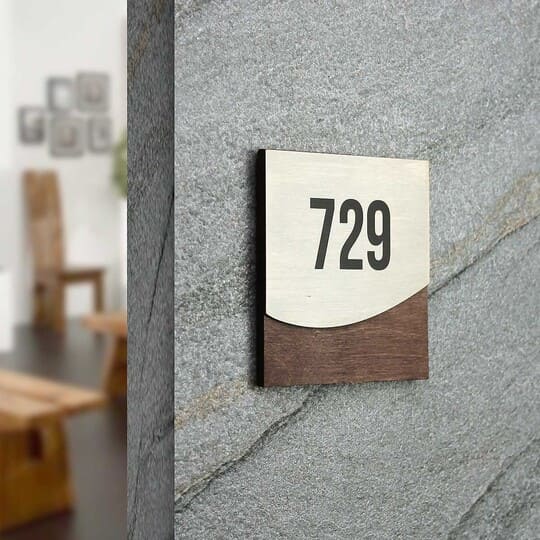
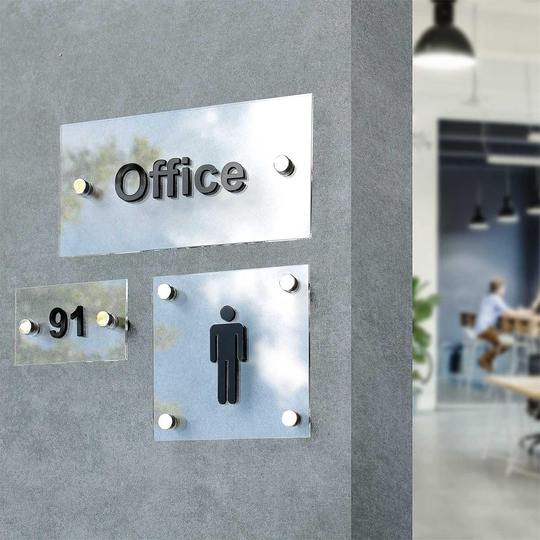
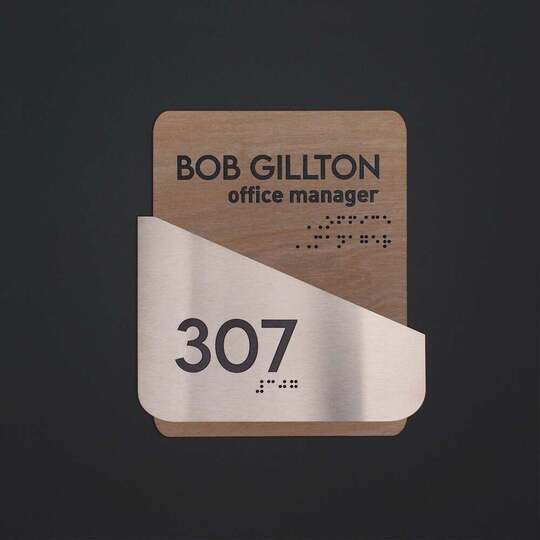
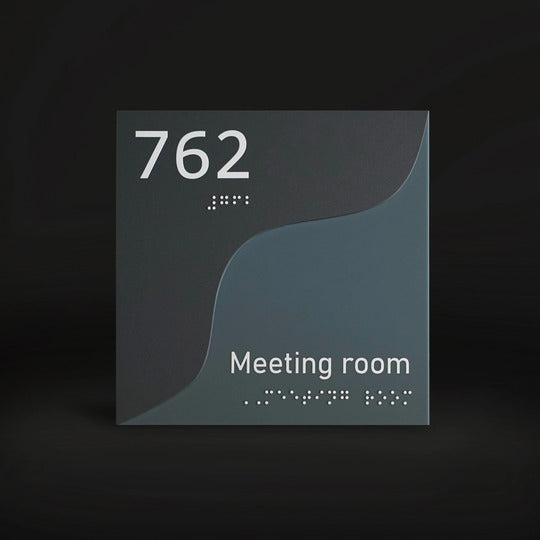
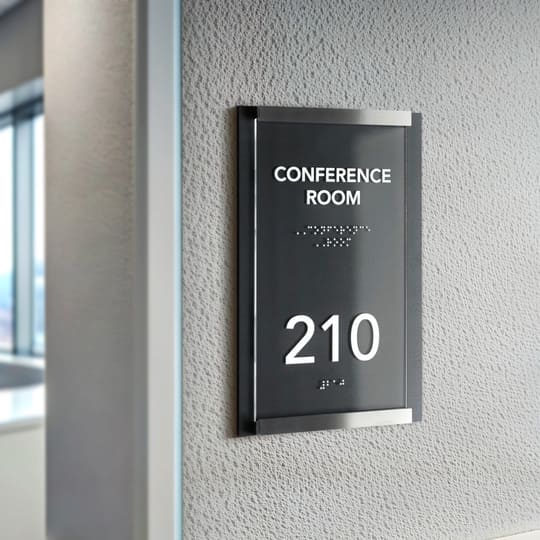
Modern informational plaques from the Modern collection with high legibility:

Best Materials for Hotel Wayfinding and Directional Signage
Materials directly affect how guests perceive the space. Even a well‑planned route can feel chaotic if hotel orientation signage doesn't match the interior style or quickly loses its appearance over time.
That’s why modern wayfinding signs for hotels must combine aesthetics, durability and readability. The choice of material depends on the hotel concept, zone type and traffic load.
Wood signage in hospitality interiors
Wood adds warmth and naturalness. It works well in:
-
• boutique hotels;
-
• wellness complexes;
-
• eco‑resorts;
-
• health‑focused spaces.
Wooden hotel interior signs emphasize the status of the interior and create a cozy perception of space. They look especially harmonious in projects with natural materials and a soft atmosphere.
Common design techniques for wooden hotel interior signage include:
-
• engraving;
-
• raised elements;
-
• matte finishes;
-
• contrasting inlays.
Such solutions integrate well into wellness zones where maintaining a calm visual atmosphere is essential.
Acrylic for modern resort environments
Acrylic allows for:
-
• clean geometry;
-
• minimalist forms;
-
• dimensional elements;
-
• modern visual navigation.
The material suits contemporary interiors thanks to its light appearance and wide range of finishes. Acrylic signs can be matte, transparent or combined with other materials.
They are often used for:
-
• indoor navigation;
-
• hotel lobby signage;
-
• corridors;
-
• wellness zones.
Acrylic also supports sleek minimalist aesthetics and helps create readable plates without unnecessary visual complexity.
Stainless steel for premium positioning
Stainless steel delivers a restrained yet premium appearance, making it ideal for:
-
• high‑end hotel complexes;
-
• business areas;
-
• modern resorts.
The material is resistant to moisture, heavy use and high traffic. That’s why steel products are often chosen for areas with large guest flows.
Advantages of stainless steel:
-
• durability;
-
• resistance to damage;
-
• premium appearance;
-
• easy maintenance.
These solutions pair well with contemporary interiors, glass, concrete and minimalist spaces.
Combining materials for balance
Combining wood, acrylic and steel makes it possible to create modern signage for hotel complexes.
Such solutions support a cohesive navigation design and allow adaptation of wayfinding to different functional zones. For example, wood may be used in spa areas, while steel and acrylic fit lobbies or business zones.
Combined materials also make it possible to:
-
• create complex multi‑layered elements;
-
• improve sign visibility;
-
• highlight architectural features;
-
• maintain a unified property style.
Before choosing materials, it’s important to consider space load, humidity levels, lighting and usage specifics.
|
Material |
Advantages |
Best use |
|
Wood |
Warm aesthetics |
Wellness complexes, boutique hotels |
|
Acrylic |
Modern look |
Lobbies, indoor spaces |
|
Stainless steel |
Durability |
Premium areas |
|
Combinations |
Design flexibility |
Resort complexes |
How to Build an Effective Hotel Wayfinding System in 2026
In 2026, modern hotel navigation is no longer seen as a separate technical element. It has become part of the service, design and overall guest experience. Guests expect spaces to be intuitively clear — without extra explanations or searching for the right zone.
That’s why an effective guest orientation system must combine design, functionality, accessibility and digital solutions. It’s essential to build a movement logic that works for all categories of guests.
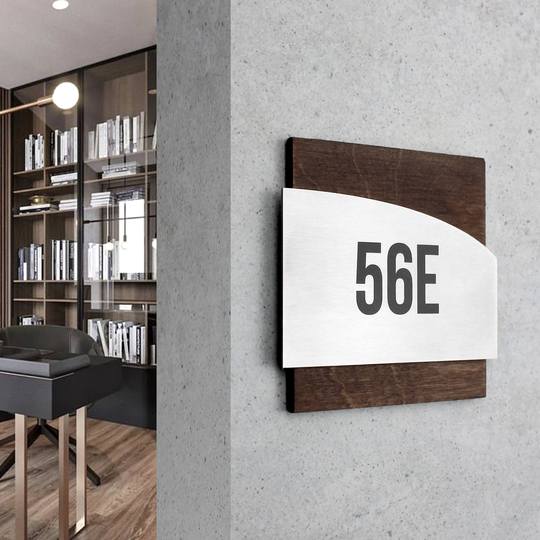
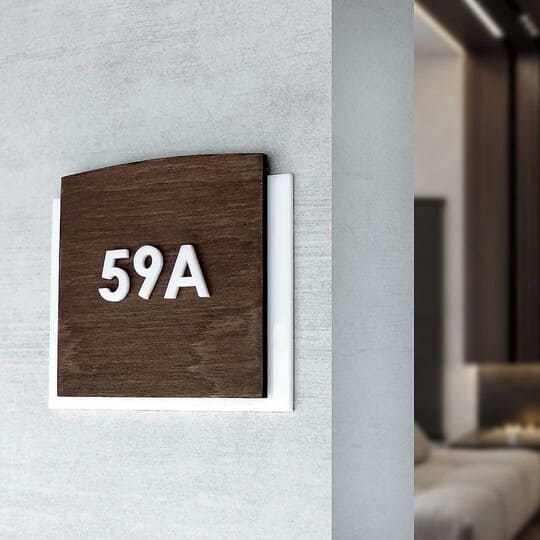
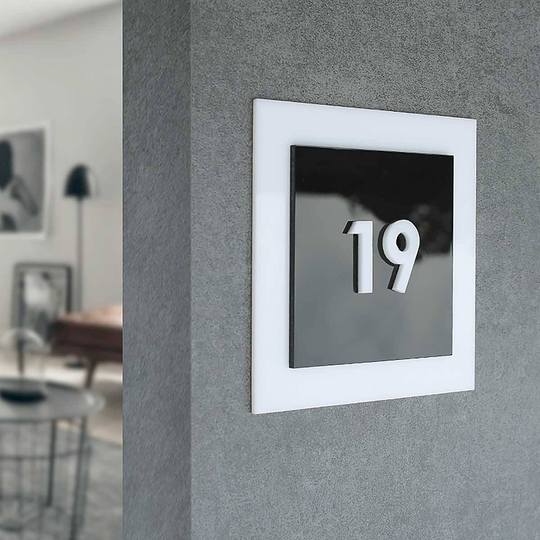
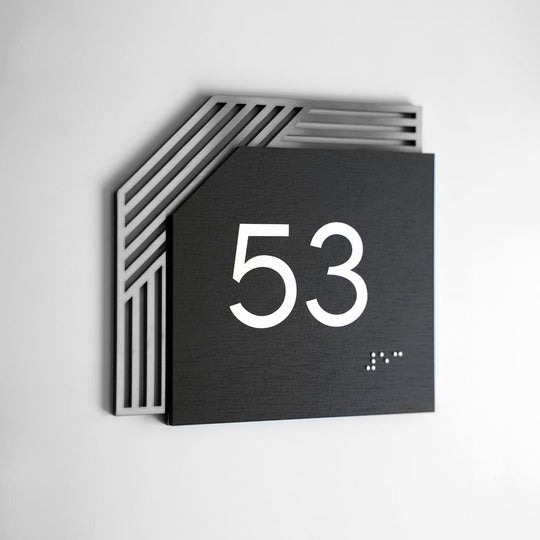
Scandinavian‑style door numbers from the Scandza collection for designer interiors:

Integrating signage into interior design
A modern hotel wayfinding system should be integrated into the property from the earliest design stages.
Effective hospitality spatial design should:
-
• support the interior;
-
• avoid visual overload;
-
• remain noticeable;
-
• create logical resort guest flow.
Information hierarchy principles
Not all information carries the same importance. That’s why it’s necessary to use:
-
• large headings;
-
• strong contrast;
-
• different levels of emphasis;
-
• minimal text.
This ensures directions are read quickly.
Pictograms and quick recognition
Pictograms significantly improve navigation speed for international visitors.
The most effective are:
-
• universal symbols;
-
• minimalist forms;
-
• contrasting elements.
This creates intuitive navigation.
QR codes and smart navigation tools
Modern hotel and resort navigation systems often include QR solutions:
-
• digital maps;
-
• menus;
-
• site layouts;
-
• instructions.
Accessibility and ADA considerations
Braille hotel signage helps:
-
• improve accessibility;
-
• support ADA compliance;
-
• make the space comfortable for all guests.
Modern accessible hotel navigation includes:
-
• high‑contrast elements;
-
• tactile solutions;
-
• ADA navigation signs;
-
• correct mounting height.
Chaotic Navigation vs Structured Wayfinding Systems
A cohesive signage system affects the overall perception of service, design and the hotel’s standard.
|
Chaotic wayfinding |
Structured orientation system |
|
Guests constantly ask for directions |
Space is understandable without assistance |
|
Mixed styles |
Unified visual identity |
|
Poor guest navigation |
Fast spatial orientation |
|
Visual noise |
Clutter‑free environment |
|
Temporary solutions |
Durable materials |
|
Random routes |
Clear guest route |
|
Low trust level |
Premium perception |
How Hotel Wayfinding Systems Improve Guest Experience and Brand Perception
High‑quality wayfinding design directly influences brand perception. Guests adapt to the space faster, ask staff less often and feel more comfortable in large complexes.
A thoughtfully designed hospitality wayfinding system helps:
- • improve hotel guest journey;
-
• reinforce the premium positioning of the property;
-
• create a modern hospitality design experience;
-
• strengthen trust in the brand;
-
• make the environment intuitive.
If you need consultation on hotel wayfinding, material selection, or creating a well-considered signage system, contact the specialists at Bsign. We can help select solutions for spas and resort complexes that account for spatial logic, interior style and guest comfort.
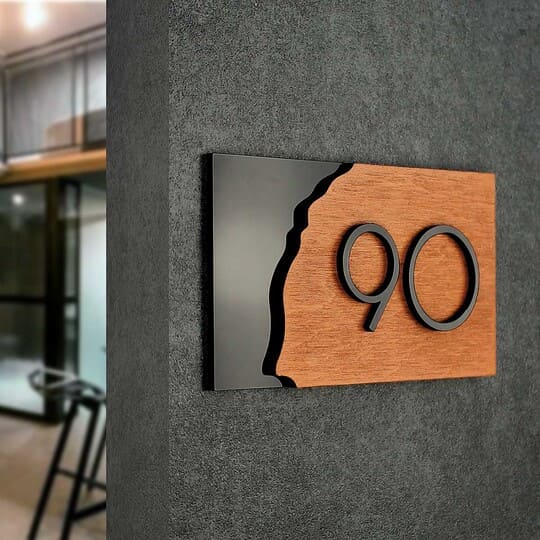
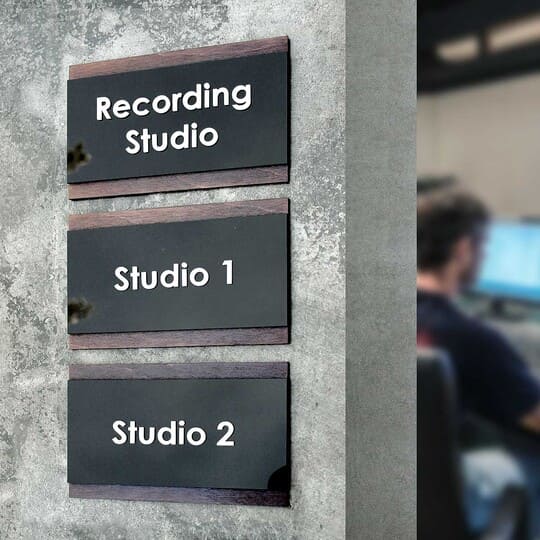
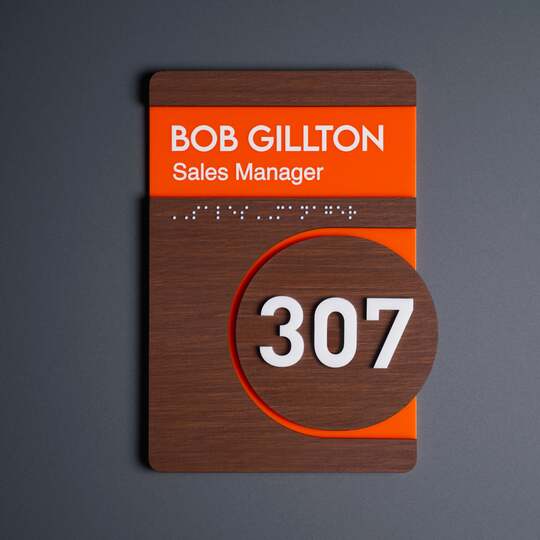
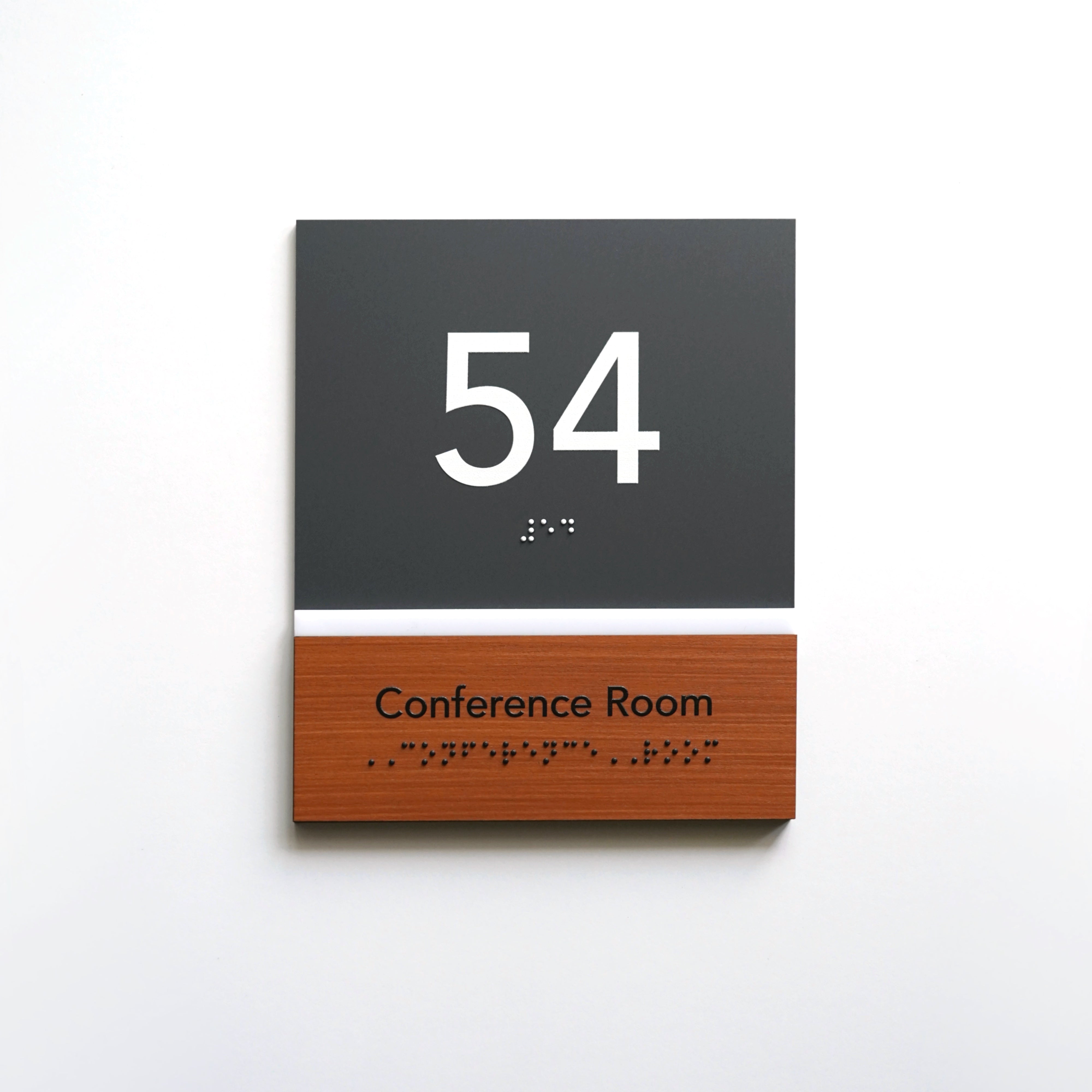
Wooden informational elements from the Buro collection for coworking and hotel environments:

FAQ
What Wayfinding Signs Do Hotels and Resorts Need?
A basic system includes property maps, directional signs, door numbers, ADA solutions, zonal and informational signs. Large resorts also need outdoor wayfinding signs.
How Do You Know If a Hotel Wayfinding System Is Not Working?
Key signals:
-
• guests frequently ask for directions;
-
• people get lost between zones;
-
• corridor congestion occurs;
-
• staff constantly explain routes.
Should hotels replace all signage at once?
Not necessarily. However, it’s important to gradually build a unified system to avoid mixed styles and chaos.
What Are the Best Materials for Hotel Wayfinding Signs?
Premium wayfinding materials include:
-
• wood;
-
• acrylic;
-
• stainless steel;
-
• combined solutions.
They are durable and integrate well into modern interiors.
How Does Hotel Wayfinding Improve Guest Experience?
A well-planned orientation system reduces stress, improves hotel spatial planning, and creates a stronger first impression of the service and hospitality environment.
How can hotels make navigation easier for international guests?
The most effective approach includes using:
-
• pictograms;
-
• international symbols;
-
• minimal text;
-
• multilingual signage with English duplicates.
High readability and logical sign placement are also essential.
What ADA signage should hotels include?
-
• modern hotel accessibility design often includes:
-
• Braille signs;
-
• tactile directional signage;
-
• ADA room markers;
-
• high‑contrast informational elements.
These solutions improve accessibility compliance and support inclusive hospitality environments.
How often should hotel signage systems be updated?
Navigation plates should typically be updated:
-
• after renovations;
-
• when zoning changes;
-
• after rebranding;
-
• or when signage readability declines.


