






Hotel Room Numbering: Systems, Principles, Materials and Placement
Hotel signs are navigational elements that help guests find their way around a building and quickly locate the rooms they need. These include number signage, informational plaques and other components of a hotel wayfinding system.
The hotel room numbering system is the foundation of navigation in a hotel. It helps guests quickly find the right room, orient themselves in corridors and move through the building’s space without relying on additional directions.
A properly organized numbering system provides a logical structure of plaques, clear hotel door number signs and carefully planned placement of navigation elements. When the system works smoothly, a guest can intuitively understand where their room is located, even in a large hotel.
In this article we explore how the numbering of navigational elements is organized, which systems are commonly used by hotels, how materials for hotel room numbers are chosen and where it is best to place them.
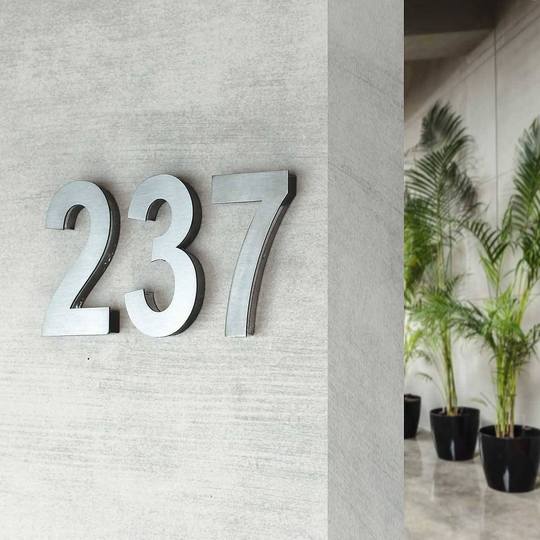
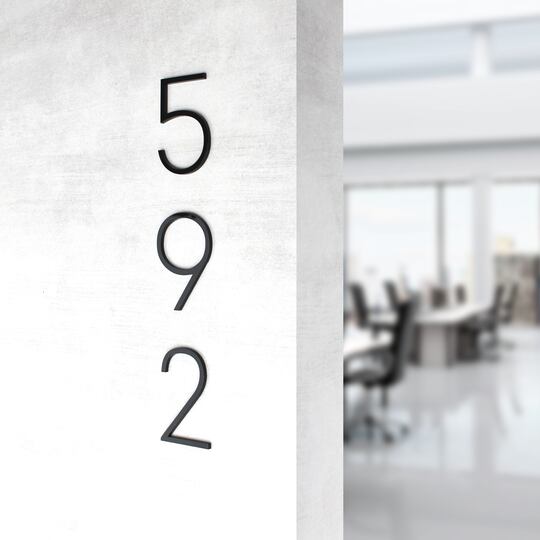
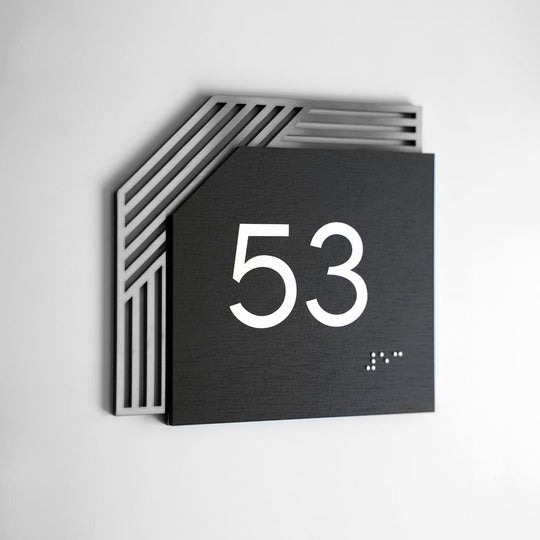
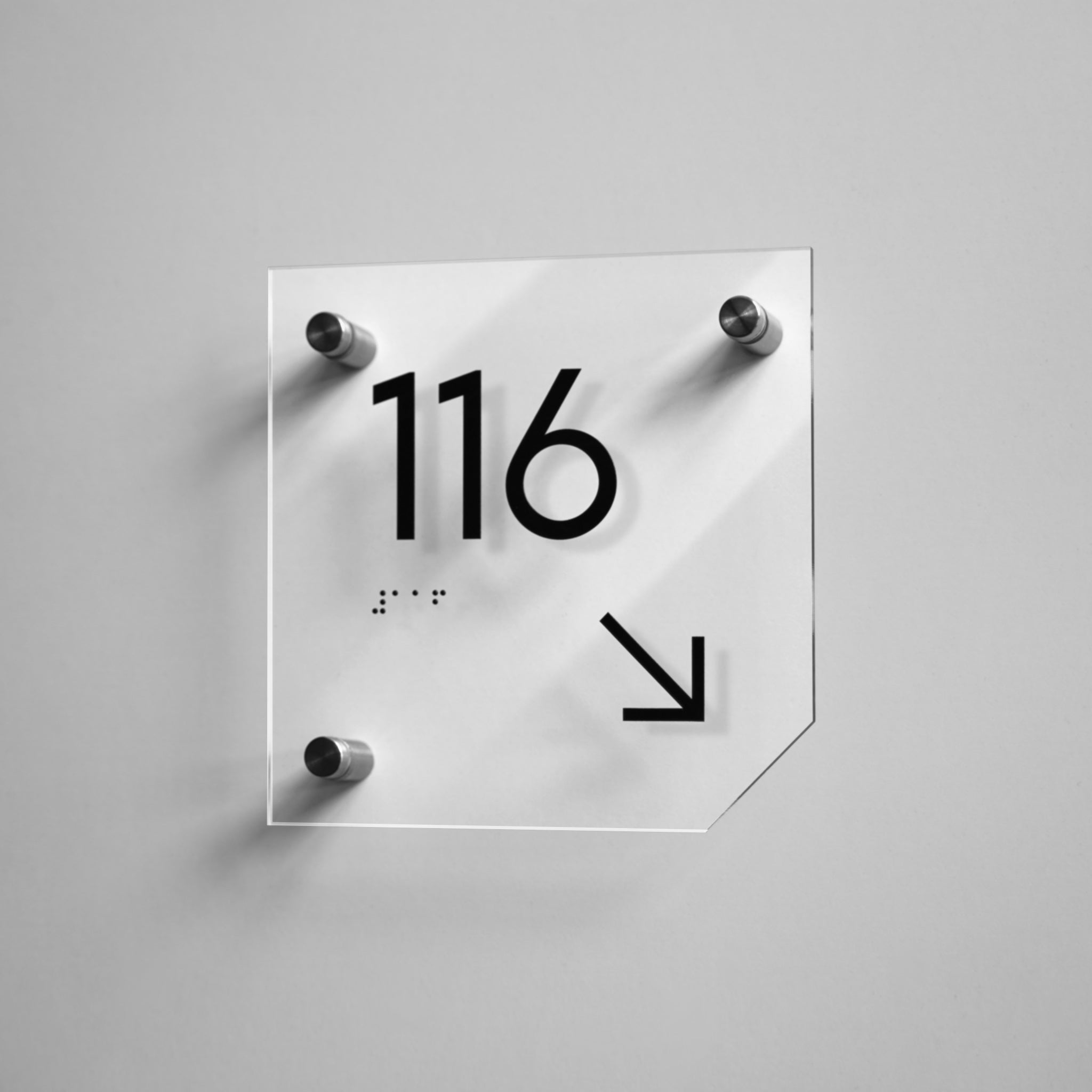
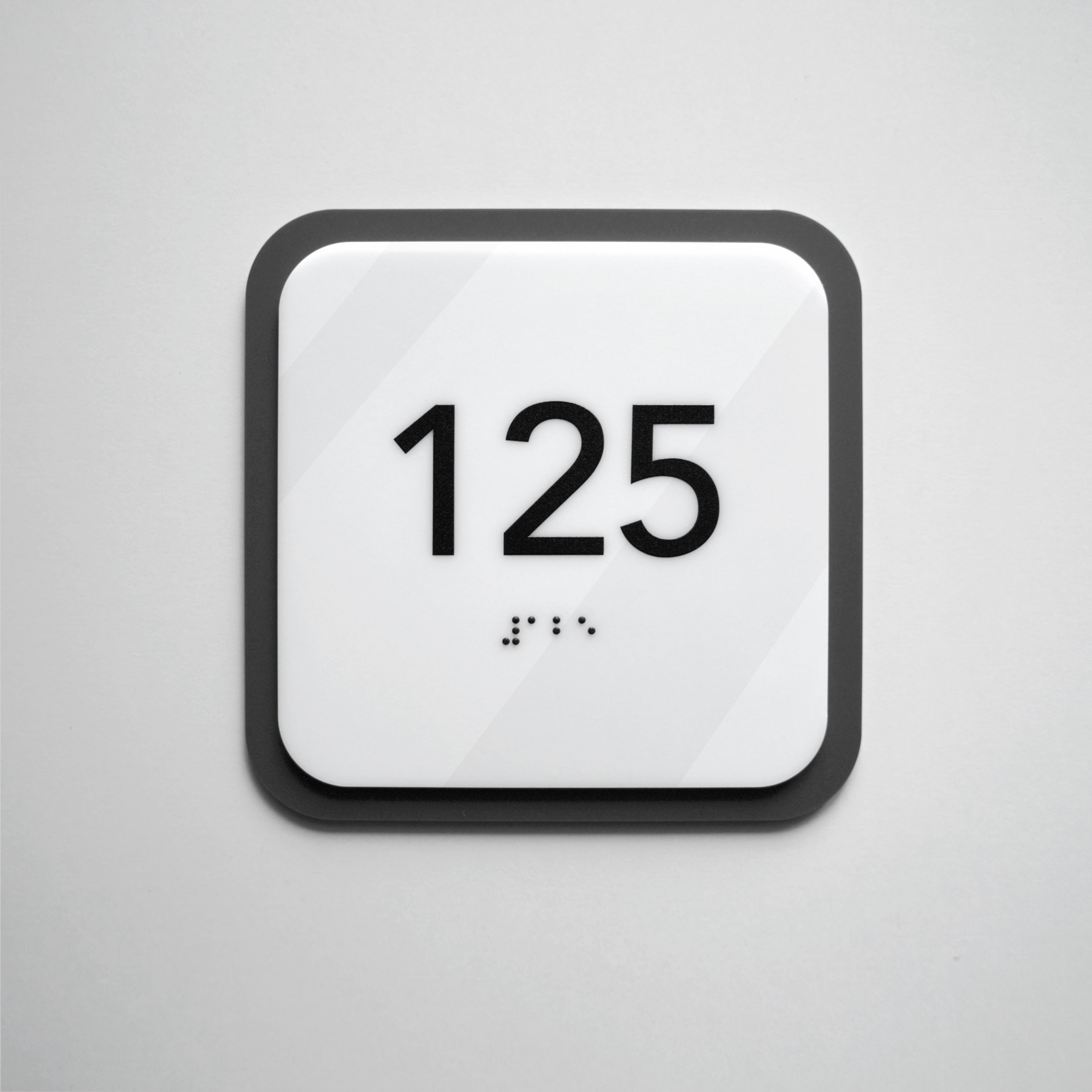
Illustration of matte acrylic room numbers from the Clear Signs collection, where minimalist design meets easy digit readability in modern hotel interiors:

What Is Hotel Room Numbering and How Does the System Work
Room numbering is a system of labelling rooms that enables clear navigation within a hotel. It consists of numbering logic, the design of room number plaques and their placement in corridors. Therefore, the role of hotel signs and room numbers in hotel reputation lies in helping guests quickly find their rooms and navigate the building’s interior.
A room numbering scheme affects guest comfort and staff efficiency. When the wayfinding system is logical, people can find their way quickly — even in large buildings.
Key elements of a numbering system:
-
• a logical structure of hotel room numbers that are easy to read from a distance;
-
• clearly readable room number plaques;
-
• consistent door number sign design;
-
• correct placement of hotel hallway signage.
A well-thought-out numbering system becomes an integral part of the overall hotel navigation system.
Main Hotel Room Numbering Systems
Hotels use several core approaches to the organization of hotel room identification. The choice depends on the building’s architecture, number of floors, corridor length and overall planning logic. The main goal of any system is to make guest orientation intuitive and immediately understandable.
A considered structure allows guests to find the right room quickly even in a large complex. When the system is logical, a guest easily understands which way to go and on which floor the room is located.
The most common systems:
-
• classic floor + room number system;
-
• zone or wing-based numbering;
-
• lettered or thematic numbering systems.
Each approach has its own application nuances. Compact hotels typically use a simple linear structure, while large complexes or resorts often combine multiple principles. This enables clear wayfinding even in buildings with complex layouts.
Classic “Floor + Room Number” System
This is the most common numbering system for hotels. The first digit(s) indicate the floor, and the following digits indicate the room’s sequential number on that floor. This structure is easy to read and intuitively understood by most guests, even if it’s their first time in the building.
Because of the logical numbering sequence, people can quickly find their way in the corridor: they simply locate the correct floor and follow the numbers up or down. For this reason, the approach is widely used in hotels with a large number of rooms.
Example:
-
• 101 — first floor;
-
• 205 — second floor;
-
• 312 — third floor.
Advantages:
-
• easy for guests to understand;
-
•
scalable;
-
• simple for staff to manage.
This structure works well in hotels with long corridors, where maintaining a clear numerical sequence is essential to avoid confusion and to ensure consistent room number visibility.
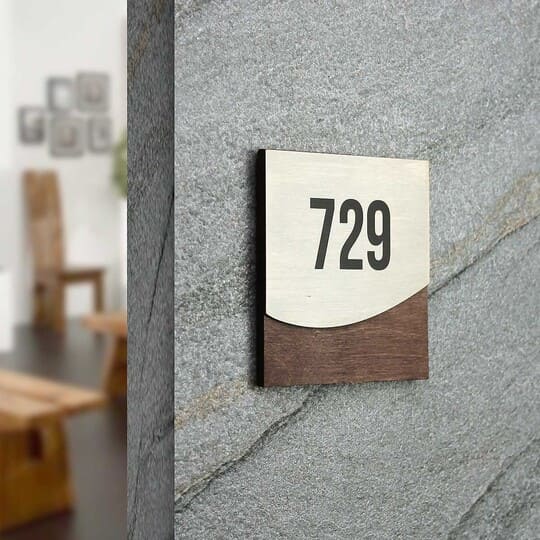
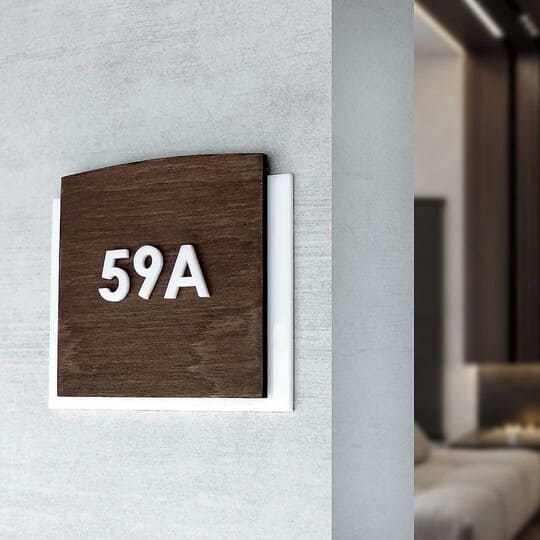
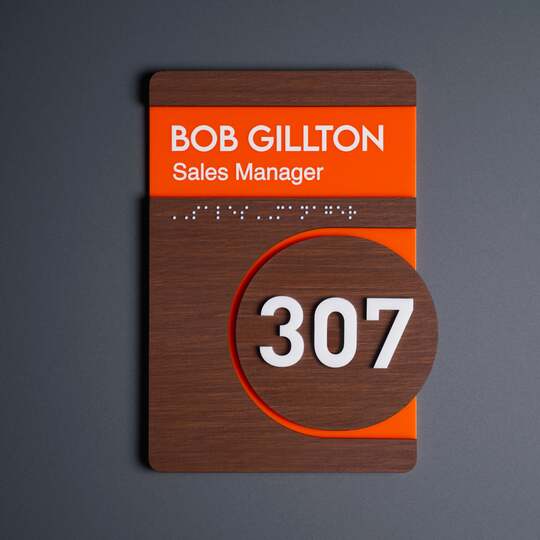
Example of room number plaques for hotels from the Scandza collection, designed in a Scandinavian style with a combination of wood and high-contrast numbers for improved readability:

Zone or Wing-Based Numbering
In large hotels a zonal system is often used. Rooms are grouped into blocks or wings to structure the space and separate guest flows within the building. This approach is especially useful in buildings with complex layouts, such as floors with multiple corridors or several interconnected buildings. Adding a letter or zone identifier helps guests determine direction more quickly.
Example:
-
• A101 — wing A;
-
• B210 — wing B.
Advantages:
-
• simplifies navigation within hotel corridors;
-
• speeds up room finding;
-
• optimal for large complexes.
With this structure, guests immediately understand which part of the building their room belongs to.
Letter or Thematic Numbering Systems
Some hotels use a thematic numbering system. Instead of standard numeric logic, letters, names, or other symbols may be applied.
This approach is common in boutique hotels or designer spaces where reinforcing the interior concept is important. A thematic system creates a unique atmosphere and is memorable for guests.
Example:
-
• A12;
-
• B7.
Sometimes entire floors follow a theme, for example:
-
• city names;
-
• plant names;
-
• color names
A thematic system makes the space more distinctive but requires carefully planned wayfinding to avoid confusion.
Integration of Room Numbers Into Hotel Navigation
Hotel room numbering must work together with wayfinding elements. When all plates are designed in a consistent style, guests can orient themselves much faster within the space.
The system typically includes:
-
• hotel corridor signage;
-
• informational elements;
-
• directional elements.
This approach creates a unified hotel interior navigation. It helps maintain order in the space and produces a cohesive impression of the interior.
Comparison of Hotel Room Numbering Systems
To choose the most optimal room identification system, it’s important to understand the differences between the main approaches. Each one influences navigation, spatial perception, and the overall guest experience in its own way.
-
• Classic “floor + room number” system is the most intuitive and universal option. It suits most hotels, provides quick orientation, and scales easily.
-
• Zone or wing-based system is effective for large hotels with complex layouts. It helps structure the space and simplifies navigation by dividing the building into zones.
-
• Thematic or letter-based system is used in boutique or design hotels. It emphasizes the interior concept but requires carefully planned wayfinding to remain convenient for guests.
The choice of system depends on the hotel’s architecture and the logic of the space. For simplicity, choose the classic system; for large-scale properties, choose the zonal system; for unique design concepts, choose the thematic system.
Comparison of Hotel Room Numbering Systems
To better understand the differences between room numbering approaches, it is useful to compare them side by side. Each system has its own logic, application context, and advantages depending on the hotel format and layout.
|
System Type |
Best For |
Advantages |
|
Floor + room number |
Standard hotels, business hotels |
Simple and intuitive, easy navigation, scalable |
|
Zone / wing-based |
Large hotels, resorts |
Improves orientation, structures space, reduces confusion |
|
Thematic / letter-based |
Boutique hotels, design hotels |
Enhances concept, memorable, supports branding |
Balancing Readability and Design of Hotel Door Numbers
Hotel room signage should be easy to read from a distance. Guests need to locate their room quickly without relying on additional directions or staff assistance.
To achieve this, it is important to understand how to ensure visibility of hotel room numbers through a combination of design and placement decisions. Visibility is influenced not by a single factor, but by how several elements work together:
-
• digit size;
-
• contrast;
-
• shape;
-
• corridor lighting.
When all these elements are considered together, the number becomes noticeable even in a long corridor or under low-light conditions.
Optimal Size of Room Numbers
The correct digit size for room numbers is determined by the viewing distance. The longer the corridor or the wider the space, the larger the digits should be.
Recommended sizes:
-
• 30–50 mm — for short corridors;
-
• 50–80 mm — for long corridors.
The longer the corridor, the larger the digits should be. This ensures the number is easy to find even from several meters away.
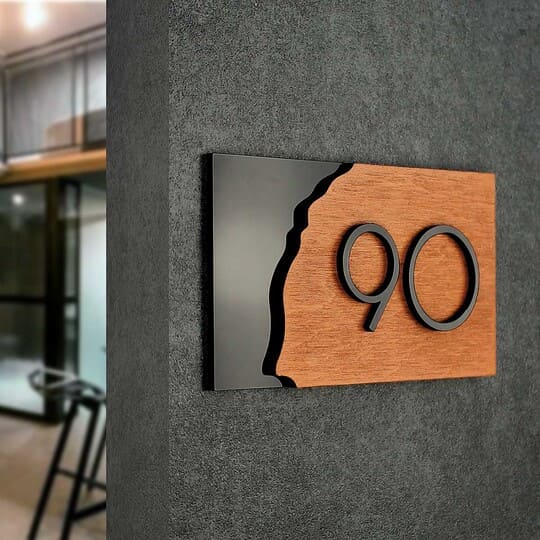
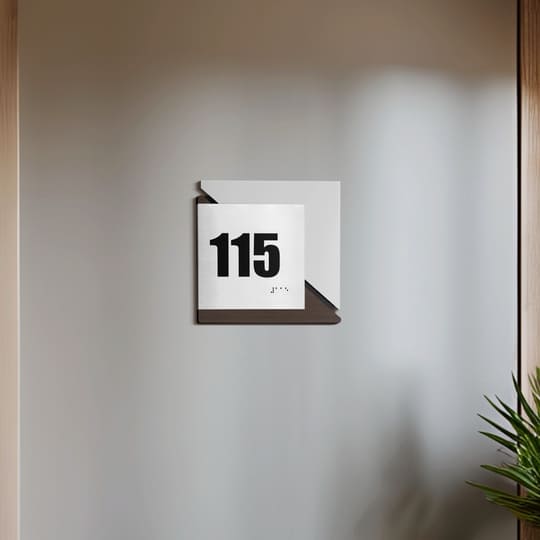
Sample of products from the Authentic Signs collection, where natural materials and three-dimensional digits emphasize the modern design of a hotel corridor wayfinding:

Why Contrast Is Important for Hotel Door Numbers
Digit contrast determines how quickly a number can be read in space. If the digits blend into the background, finding the right room becomes harder.
Key factors:
-
• light digits on a dark background;
-
• dark digits on a light background;
-
• minimal decorative elements.
Proper contrast significantly improves the readability of room number signs and helps guests navigate corridors quickly.
Raised and Three-Dimensional Room Numbers
Modern hotels often use raised room numbers to enhance visibility. These elements create depth and remain clearly noticeable even under side lighting.
Advantages:
-
• improved visibility;
-
• contemporary hotel navigation design;
-
• durability.
Three-dimensional elements can be made from colored acrylic, allowing them to match various interior styles.
Tactile Room Numbers and Braille (ADA Accessibility)
In modern hotels, it’s important to ensure navigation is accessible to all guests, which includes implementing accessible hotel signage. That’s why tactile elements are becoming more common in hotel door number plates.
Common solutions include:
-
• tactile room signs;
Braille room number signs help visually impaired guests navigate the building independently and find the rooms they need.
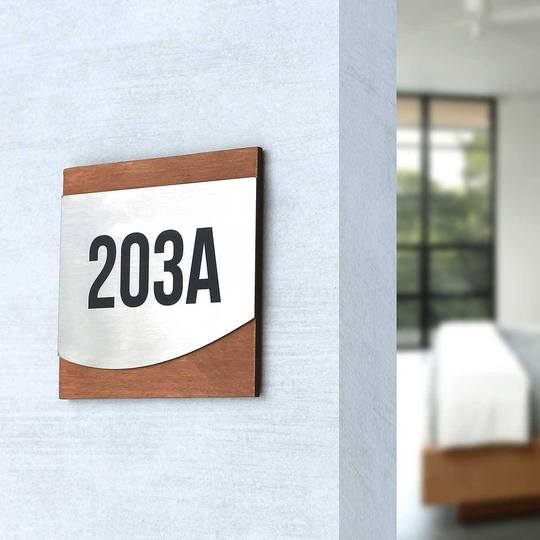
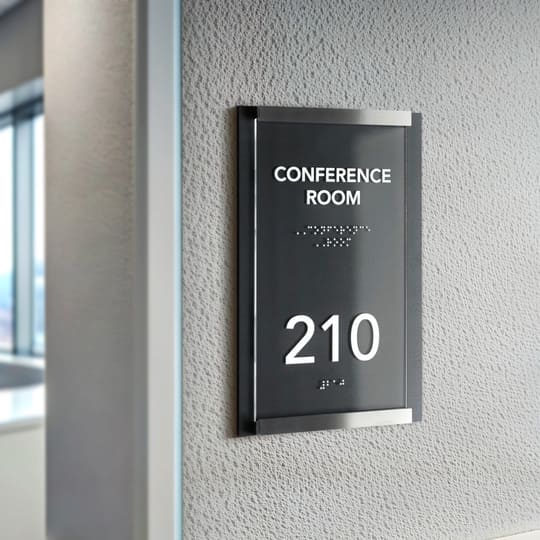
Illustration of door plaques from the Elegant Signs collection, combining restrained design, clear typography, and high contrast digits:

Where to Place Room Number Signs in Hotel Corridors
The placement of hotel door numbers affects how quickly a guest can find their room. It’s important that the number is clearly visible and mounted at the same level on every door in the corridor.
Most common options:
-
• on the door;
-
• on the wall next to the door.
Door Mounted Room Numbers
Mounting room number elements on the door is the most popular solution. Hotel room numbers are placed directly on the door leaf so the number is immediately associated with a specific room. Mounting room number signs for hotels on the door makes navigation as clear and intuitive as possible for guests.
Advantages:
-
• excellent visibility;
-
• intuitive navigation;
-
• space-saving solution.
This option is especially convenient in narrow corridors, where keeping wayfinding elements compact is important.
Wall Mounted Room Numbers
In some cases, navigation elements are installed next to the door.
This option is used when:
-
• a door has a complex design;
-
• room number signage needs to be larger.
Mounting can be done using standoff holders for plates, creating a small gap between the wall and the product.
Example of metal standoff holders from the Classic collection, used to mount acrylic room numbers on doors or walls and create a neat “floating” effect:

Choosing the Correct Height and Position
Height determines how easily the room number can be read and affects the overall visual order of the corridor. When installing door numbers, it’s important that all interior products are mounted at the same level — this makes navigation clearer and maintains order in the space.
Standard guidelines:
-
• center of the plaque at 140–160 cm from the floor;
-
• consistent height for all room numbers.
These parameters take into account the average eye level of a person walking down the corridor. As a result, room number signs for hotels are easy to read without stopping or shifting one’s line of sight.
Materials Used for Hotel Room Number Signs
The materials used define both their durability and overall appearance. The right choice determines how well the elements retain their look under daily use and how seamlessly they fit into the hotel interior.
In hotel corridors, room numbers are constantly in guests’ sight, so it’s important they look neat and maintain quality for many years. For this reason materials that combine aesthetics and practicality are used for their production.
Most commonly used:
-
• wood;
-
• stainless steel;
-
• acrylic.
Each of these materials has its own characteristics and influences the perception of the space differently.
Wooden Room Numbers
Wooden room plates pair well with contemporary interiors. The natural texture adds warmth to the space and makes corridors feel cozier.
These navigation elements are often used in hotels where the interior relies on natural materials or muted colors. Wood integrates easily with various styles — from minimalism to Scandinavian design.
Advantages:
-
• natural texture;
-
• warm appearance;
-
• harmony with the interior.
Stainless Steel Room Numbers
Stainless steel numbers have a restrained, modern look. This material suits interiors with clear geometry and minimalist design.
Stainless steel is highly resistant to mechanical wear and maintains a consistent appearance even under heavy use. As a result it is often chosen for hotels with a high guest flow.
Advantages:
-
• high wear resistance;
-
• stable color;
-
• durability.
Acrylic Room Numbers
Acrylic room products allow for a variety of shapes and the combination of multiple design elements. Thanks to precise material processing, it is possible to achieve clean geometric forms and neat details.
Acrylic is an excellent solution for creating layered room numbers with additional elements. This opens up more design possibilities.
Features:
-
• lightweight material;
-
• precise geometric shapes;
-
• ability to create three-dimensional elements.
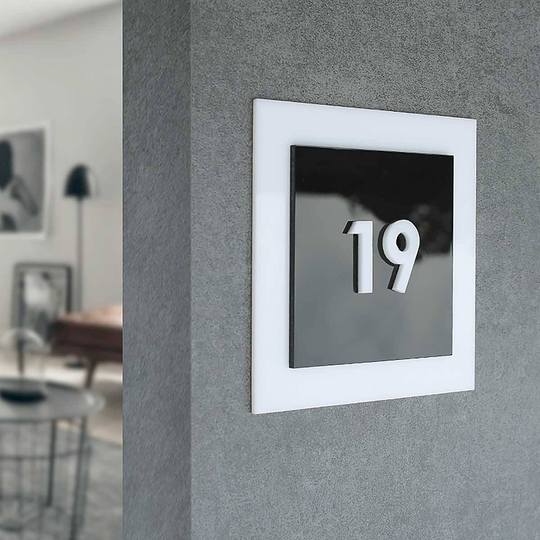
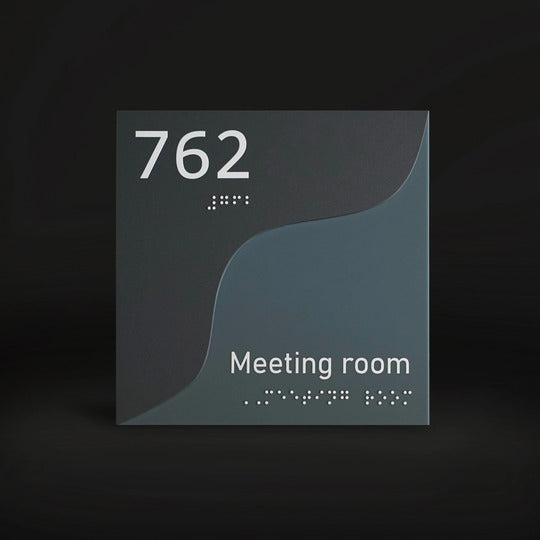
Sample of a matte wayfinding element from the Clear Signs collection, suited to modern hotel interiors and minimalist corridors:

Principles of Designing a Hotel Room Numbering System
For room identification in the hotel to work effectively, it’s important to follow several key principles. They help make the system clear for guests and keep the building’s circulation orderly.
A well-designed hotel room designation approach takes into account the hotel’s architecture, corridor lengths, and the logic of room layout. When all elements of the system are aligned, guests find it much easier to navigate the building.
Key rules:
-
• consistent numbering logic;
-
• unified typography for numbers;
-
• high visibility in corridors;
-
• alignment with hotel interior design;
-
• durable hotel door signage materials.
When all elements work together, they form a complete hotel wayfinding system that helps guests quickly find their rooms and keeps corridors looking neat and well considered.
Hotel Door Number Signs: Design and Manufacturing
Modern room number signage complement the interior and shape the atmosphere of the space. Well‑designed products make navigation intuitive for guests.
Bsign specializes in producing door numbers for hotels, offices, medical facilities, and other spaces. Production considers not only aesthetics but also usability, material durability, and compliance with contemporary hotel navigation standards.
Manufacturing features:
-
• use of wood, acrylic, and stainless steel;
-
• handcrafted assembly;
-
• ability to integrate Braille;
-
• mounting with standoff holders or double‑sided tape.
This approach allows the creation of hotel room number signs that combine navigation with aesthetics. With thoughtful design and quality materials, the plates look neat, read clearly, and integrate harmoniously into the hotel interior.
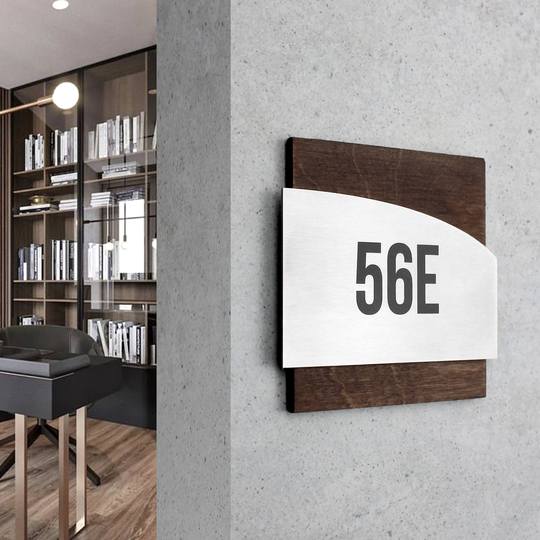
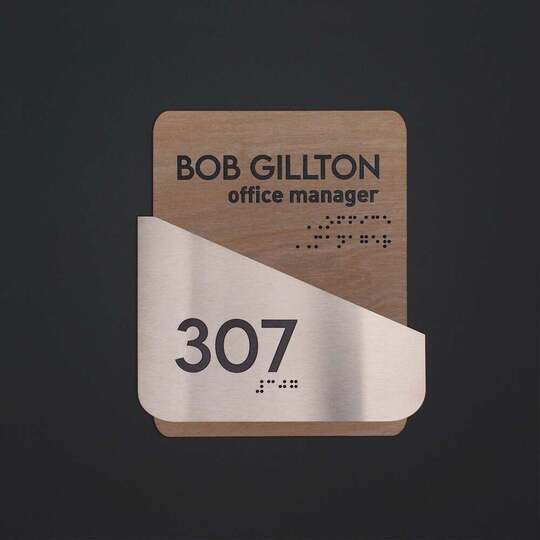
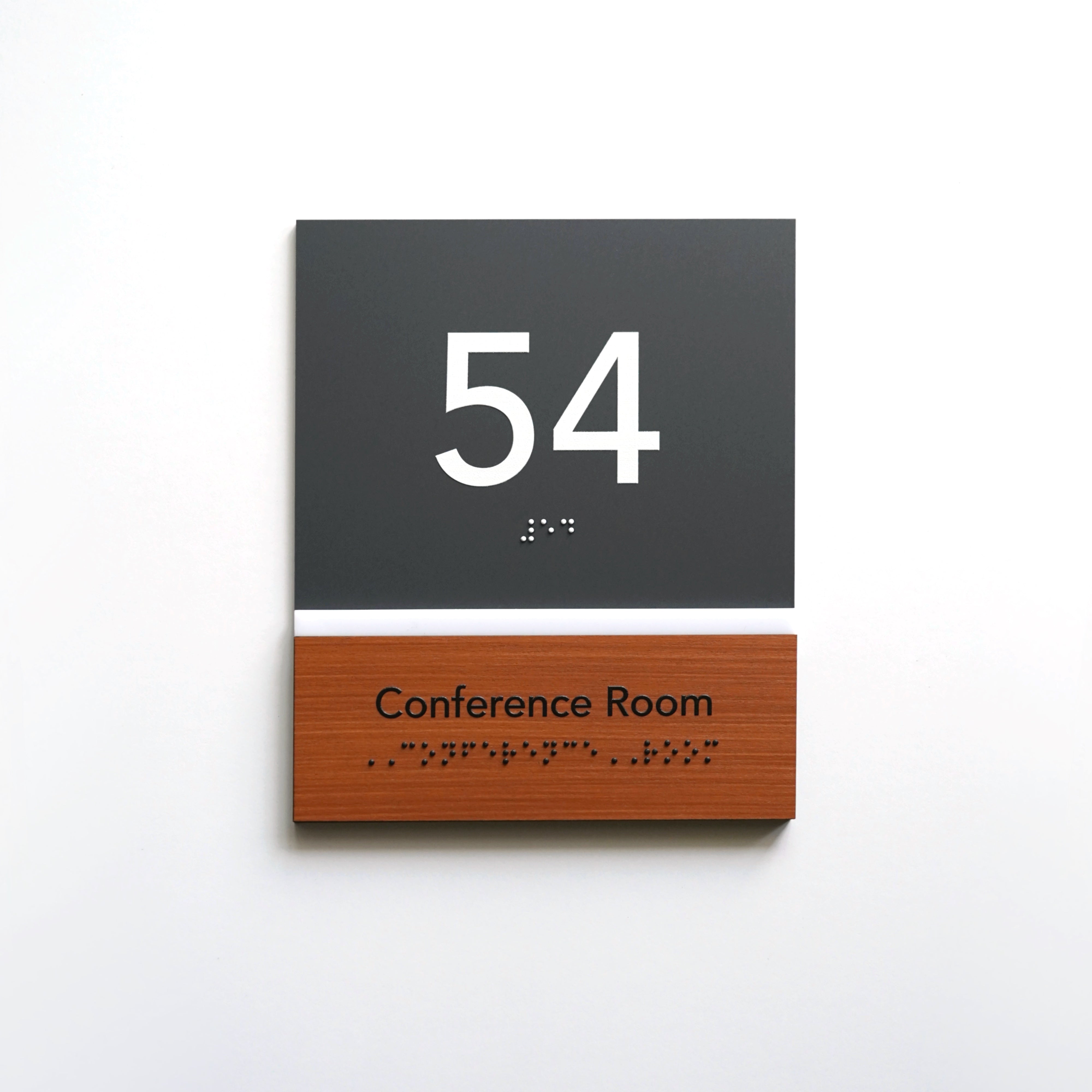
Illustration of designer room numbers from the Jure collection, where the combination of wood and metal creates a highly readable high contrast signage:

What to Remember
Thoughtful room designation in the hotel helps organize clear navigation within a building. A logical numbering system, properly placed navigational elements, and durable materials create comfort for guests and support a cohesive interior style. That is why numbers are now considered an important part of spatial design.
When the numbering system is planned during the design stage, guests orient themselves faster and spend less time finding their room. This is especially important in large hotels with long corridors or multiple wings. A clear room structure, a consistent style of hotel door numbers, and thoughtful placement create a sense of order and professional organization.
Beyond their practical role, hotel navigation elements also affect the overall perception of the interior. They can highlight the hotel’s style, complement finishing materials, and enhance corridor design. It’s therefore important to combine functionality, readability, and quality materials — that way the numbering system will work effectively and look harmonious for many years.
If you are planning to implement or update a numbering system, consider the number format, design, and manufacturing materials in advance. Bsign specialists can help select the optimal solution tailored to a specific hotel — taking into account the building’s architecture, interior style, and wayfinding requirements. A consultation will help avoid design mistakes and create a system that is convenient for guests and staff.
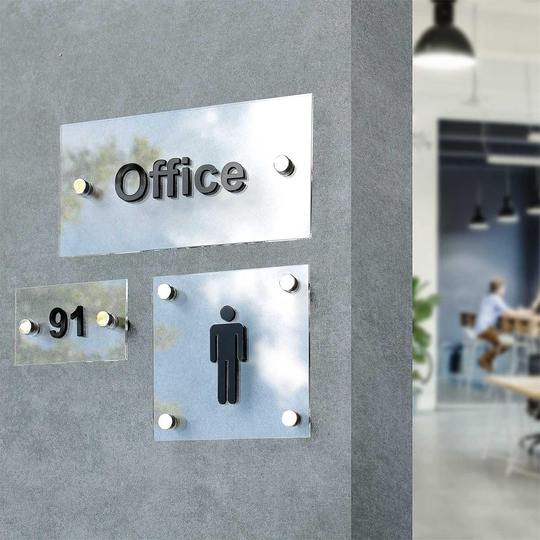
Example of contemporary door products from the Buro collection, suitable for hotels, offices, and other spaces with a minimalist navigation system:
FAQ
What is the most convenient hotel room numbering system for guests?
The most user-friendly option is the classic “floor + room number” hotel signage numbering system. The first digits indicate the floor, and the following digits indicate the room’s sequence. This system is intuitive for guests and integrates easily with the hotel wayfinding system.
Where should door signage be placed — on the door or on the wall?
Most often hotel room numbers are mounted directly on the door leaf. This is an intuitive solution for guests. In some cases, wayfinding elements are placed on the wall next to the door if the door’s design does not allow for a signage.
What materials are best for hotel room number signs?
Durable materials such as wood, stainless steel, and acrylic are the best choices for door signage. They resist wear, look neat, and pair well with modern hotel interiors.
Are Braille room number signs required in hotels?
Many modern hotels use Braille elements to ensure accessible navigation. Such solutions comply with ADA principles and help visually impaired guests navigate the building independently.
What size should hotel room numbers be for good visibility?
Optimal digit size depends on corridor length. In most cases, digits should be 40–70 mm high. This ensures that room numbers are easy to read from several meters away, improving overall room number sign placement effectiveness.


