



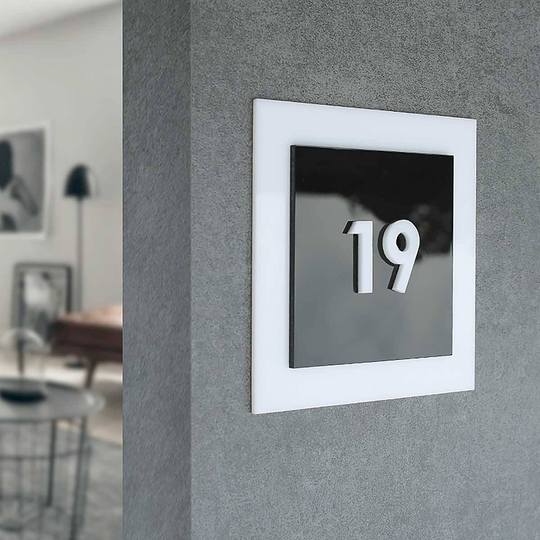


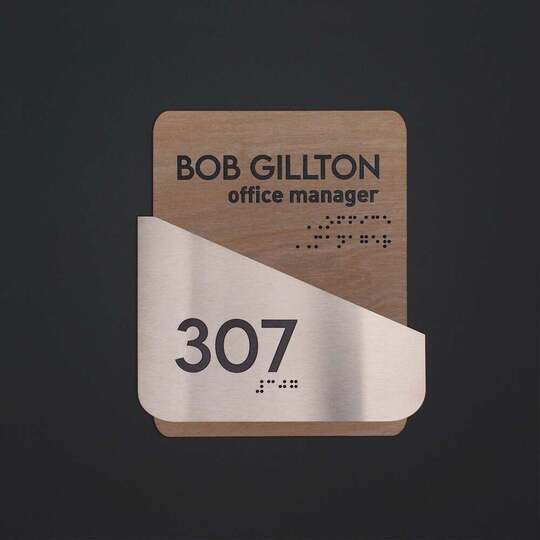
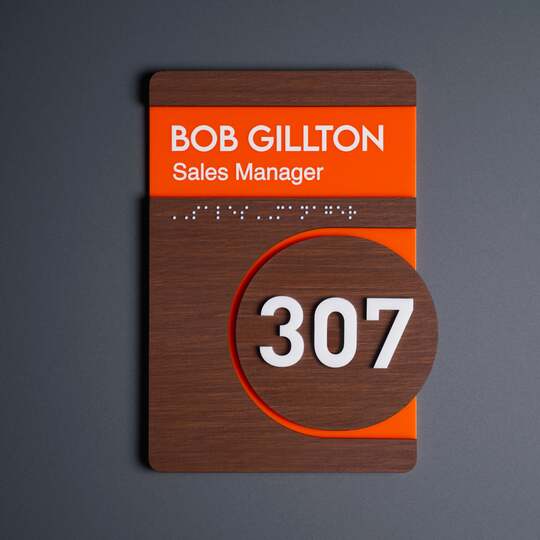
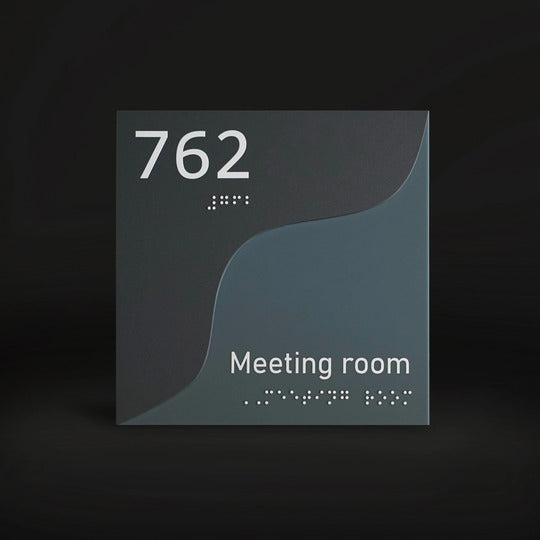





by Andrew Stychinskij
Where to Order Custom Door Signs in 2026: How to Choose the Right Manufacturer and Avoid Costly Mistakes
Door signs 2026 are an essential part of the wayfinding system, a component of brand identity, and a reflection of a business’s responsibility toward visitors and employees. They influence the first impression of the company, define the logic of movement within the space, and demonstrate the level of organizational efficiency.
Businesses are moving away from template solutions and choosing custom door signs that align with the architectural environment, meet accessibility compliance requirements, and ensure long-term durability. In modern offices, hotels, medical centers, and business complexes, signage is no longer a decorative afterthought — it has become part of a unified system rather than a standalone element.
This article provides a clear guide on custom door signs vs standard signage: how to choose the right sign manufacturer, when custom-made door signs are the best option, which materials remain relevant, and what to check before production begins to avoid redesigns and extra costs.

Example of a high-contrast universal restroom sign.
Why Choosing a Door Sign Manufacturer Has Become Critical in 2026
Companies operate not just with individual offices but with complex environments: business centers, medical clusters, educational campuses. In such facilities, a well-planned wayfinding system is essential.
Why Standard Door Signs No Longer Meet Business Needs
Ready-made solutions are designed for the mass market. They rarely consider the interior design concept, corporate identity, or the functional specifics of a space. As a result, spaces feel fragmented, and navigation looks like a random collection of elements.
Businesses increasingly require custom door plaques that:
- ● maintain a unified brand identity;
- ● comply with accessibility standards;
- ● scale across the entire property;
- ● withstand intensive use.
Standard models lack flexibility in size adaptation and materials, making them unsuitable for evolving business requirements.
How Wayfinding Quality Affects the Perception of a Space
The wayfinding system forms the first impression of a company. If signs vary in format, color, or font, the environment feels inconsistent and poorly organized. A clear structure enhances the architectural environment, creating a sense of order and thoughtful planning.
Custom solutions allow integration of logos, proper size adaptation, and unified typography without compromise. They function as part of a system, not as isolated details.
Why a Poor Manufacturer Choice Leads to Redesigns and Delays
If a door plaque manufacturer does not provide design proofing and an approval process, the risk of errors increases. Inaccuracies in dimensions, fonts, or materials often become visible only after installation. Redesigns mean wasted time, additional costs, and delayed project launches.
A reliable custom signage manufacturer controls not only production but the entire process — from initial planning to final installation. They calculate project scale, consider the specifics of the space, and deliver a systematic solution instead of fragmented items.
It is the manufacturer who is responsible for the custom sign manufacturing process, which includes:
- ● analyzing the space and wayfinding challenge;
- ● developing and approving design proofs;
- ● selecting materials based on operating conditions;
- ● manufacturing with quality control at every stage;
- ● preparing for installation.
This structured approach minimizes the risk of rework, technical errors, and unnecessary expenses.

Door sign for commercial spaces with clear graphics and a legible font.
Online Store or Custom Door Sign Manufacturer: What’s the Better Option?
For quick, basic solutions, an online store may be sufficient. If system consistency and scalability matter, it is better to choose a door sign fabricator. This decision is especially relevant for small and medium‑sized businesses, but it always depends on the task, the type of facility, and the wayfinding requirements.
The Difference Between Mass-Produced Signs and Custom-Made Door Signs
Online stores typically offer fixed formats. You select from predefined sizes and designs already approved by the producer. This approach is convenient but inherently limited.
Custom‑made door signs 2026 are tailored to a specific project: shape, font, material, and installation method. They adapt to the architectural environment and corporate style, rather than forcing the space to adapt to them.
A custom approach includes:
- ● analyzing the wayfinding challenge;
- ● customization aligned with brand identity;
- ● adaptation to architecture and interior design concepts;
- ● quality control throughout the process.
This flexibility eliminates compromises and creates a cohesive custom interior signage system.
When Ready-Made Door Signs May Be Sufficient
Ready‑made solutions are suitable for small offices with only a few rooms, where the structure is simple and does not require complex logic. If Braille door signs or multi‑level navigation are not needed, a standard option can cover the basic requirement without additional stages of mock‑up development and approval. In such cases, delivery speed matters more than customization.
When You Need a Manufacturer Instead of a Reseller
For medical facilities, hotels, business centers, or complex projects, a custom sign manufacturer is essential — one who takes responsibility for the entire cycle, from design to installation. In large‑scale projects, consistency across the series, accuracy of dimensions, and unified design logic are critical. Only the manufacturer ensures predictable results and the ability to expand the system later without losing quality.

Acrylic door sign for a service room with integrated Braille lettering.
The Limitations of Ready-Made Door Signs vs Custom Door Signs in 2026
Ready‑made solutions restrict scalability, adaptation, and compliance with modern requirements. Businesses operate in more complex environments, so compromises that once went unnoticed now become critical.
Fixed Sizes and Lack of Adaptation
Mass‑produced models do not account for size adaptation to specific doors or corridors. As a result, a sign may either disappear against the background or visually overload the wall, affecting the overall perception of the space.
Fixed formats also complicate scalability. When new rooms are added, finding identical solutions becomes difficult or impossible, and the space gradually loses cohesion.
Limited Materials and No Tactile Elements
Online stores rarely offer tactile door signs or fully compliant Braille door signs. Often, these are formal solutions that ignore placement standards and proportions.
Inclusive wayfinding in 2026 has already become the standard. If tactile elements are not integrated from the start, the system must be reworked later — raising costs and breaking design unity.
Inability to Handle Large-Scale or Complex Projects
Mass suppliers do not treat wayfinding for commercial spaces as a system. They sell individual products, not projects. This leads to a lack of unified numbering logic, typography, and materials.
In large facilities, such an approach results in chaos. Without systematic planning, it is impossible to provide uniform quality and predictable outcomes across all stages of implementation.

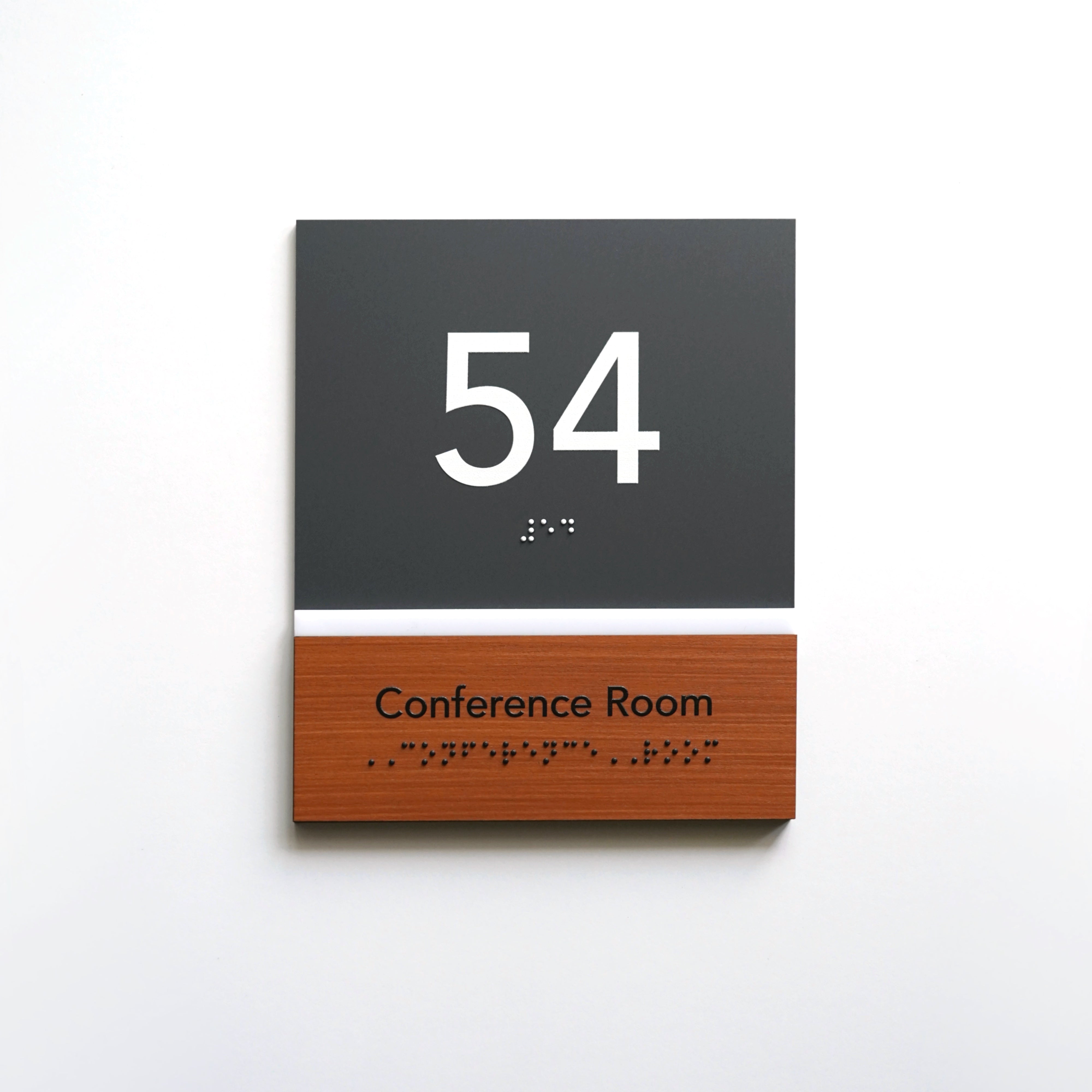
Example of a wooden door sign with a lacquered surface and strong readability.
What Are Custom Door Signs in Modern Commercial Projects?
Custom door plaques are part of a carefully designed wayfinding system that considers architecture, room function, and people’s movement scenarios. They do not exist separately from the environment but work in harmony with the entire navigation system.
In modern projects, customization means predictable results, consistency of details, and scalability without losing style.
Solving a Specific Wayfinding Challenge
Customization is about understanding the logic of human movement through a space — entrances, corridors, waiting areas. Made-to-order door signs integrate into the navigation system rather than stand alone.
During the planning phase, factors such as installation height, viewing distance, font size, and contrast are considered. This ensures usability and reduces navigation errors.
Alignment With Architectural and Interior Design Concepts
Signs must support the interior design concept rather than disrupt it. Materials and textures are chosen to match the style and function of the space.
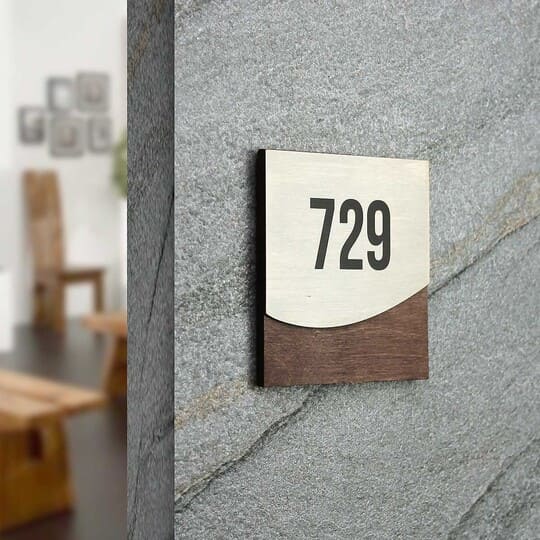
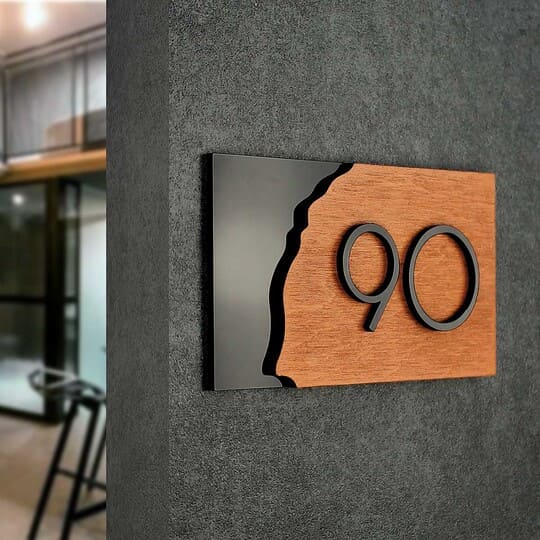
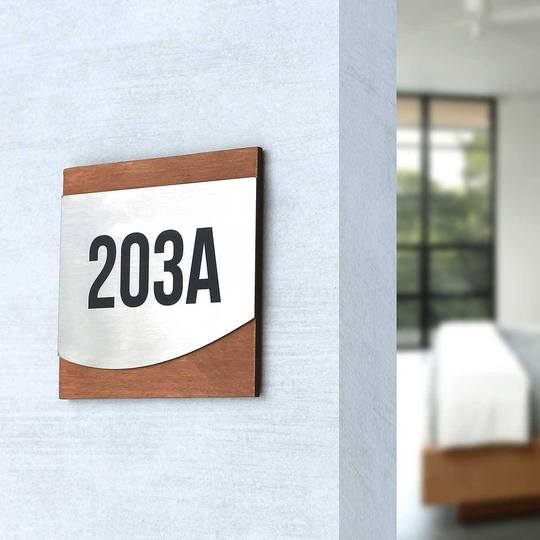
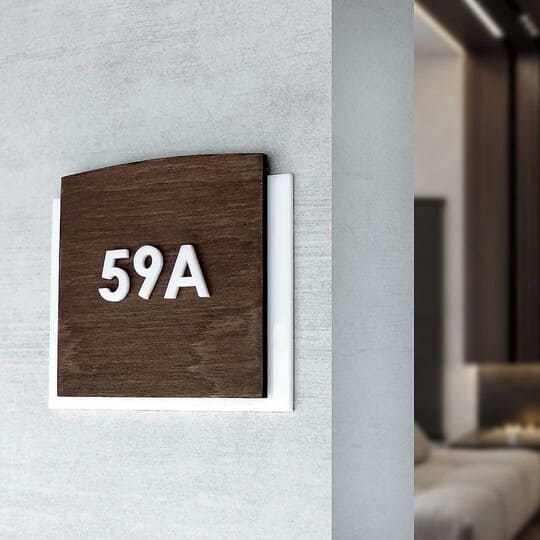
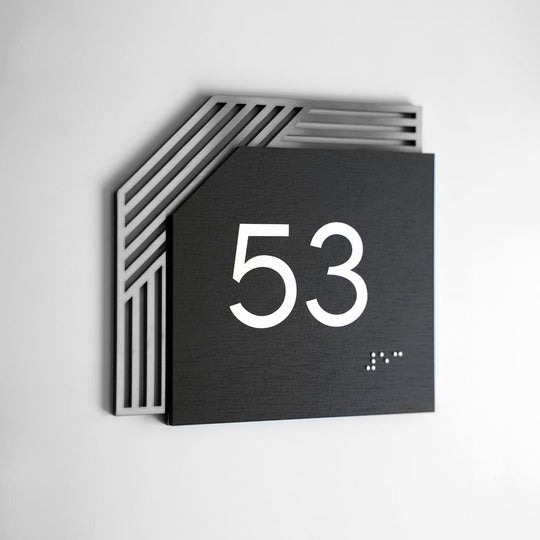
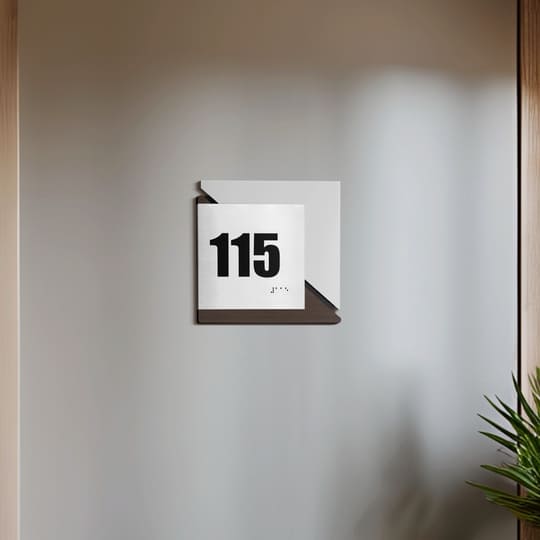
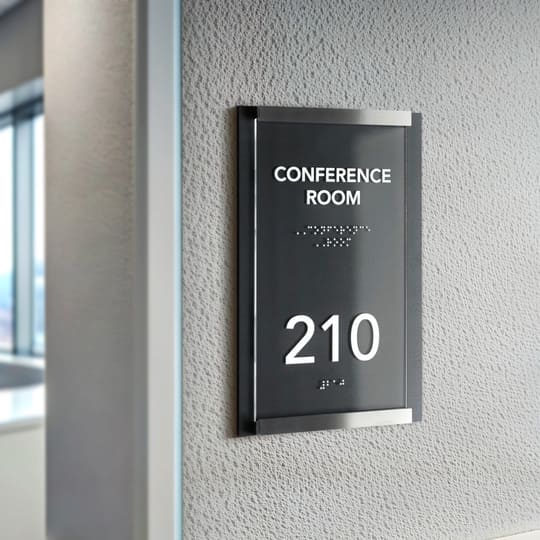
For minimalist spaces, steel metal door products are suitable — they are concise and restrained. For warm interiors, wooden door plaques add a sense of naturalness. In modern offices, acrylic door elements are popular, as they allow for clear graphics and contemporary typography.
The key is maintaining a balance between material, color, and function.
Predictable Results Instead of Trial and Error
A professional plaque manufacturer works through mock‑up creation, project approval, and quality control. This ensures every element is verified before series production begins.
Such an approach reduces errors, prevents design inconsistencies, and ensures uniform results across all areas of the facility. As a result, custom door signs look like part of a cohesive system, rather than a random collection of solutions.

A metal door sign with a clear outline and a modern minimalist design.
How to Choose a Door Sign Manufacturer: 5 Key Criteria
A manufacturer directly influences durability, compliance with standards, and the integrity of the wayfinding system. Below are the criteria that help minimize risks.
1. Materials and Production Technologies
Material durability is the key factor. The best materials for custom door signs are wood, acrylic, and stainless steel.
The most common solutions:
- ● Acrylic door signs – modern appearance, precise cutting, UV printing, and engraving options.
- ● Metal door signs – maximum wear resistance, laser engraving, powder coating.
- ● Wooden door signs – warm aesthetics, laser processing, protective coating.
When choosing, pay attention to:
- ● edge finishing quality;
- ● durability of inscriptions;
- ● cutting precision;
- ● suitability of the material for operating conditions.
Modern production methods include:
-
Laser cutting — millimeter-level precision, clean edges, and fast production.
-
Laser engraving — the application of text and tactile elements, including Braille.
-
UV printing — high‑detail images resistant to abrasion.
-
CNC milling — for complex shapes and multi‑layer constructions.
-
Powder coating of metal — even coverage without peeling.
2. Experience With Braille Door Signs and Accessibility Standards
Custom Braille door signs must comply with Braille font standards and tactile element height requirements. Errors are unacceptable, as they directly affect accessibility.
It is important to verify whether the manufacturer has real experience implementing such solutions, not just claiming the ability to produce them. Incorrect height or placement reduces functionality.
3. Quality Control and Design Proof Approval
A reliable signage manufacturer always conducts design proofing before launching full production. This allows checking dimensions, typography, text placement, and compliance with technical specifications.
Quality control should occur at every stage — from mock‑up preparation to final inspection before shipment. This helps reduce the risk of rework and budget loss.
4. Communication Flexibility and Responsiveness
Teamwork with the designer and client speeds up the process and minimizes risks. If the manufacturer responds quickly to edits and clearly explains technical limitations, it signals professionalism.
Flexibility means the ability to adapt without losing quality, not constant compromises.
5. Accountability for the Final Result
The manufacturer must accompany the project through to installation and guarantee the stability of results. This includes checking for completeness, accuracy, and compliance with the approved mock‑up.
A manufacturer who takes responsibility for the entire cycle ensures predictable outcomes and long‑term performance without extra costs.

Wooden information sign with high contrast for safe equipment marking.
Custom Office Door Signs and Door Signs for Commercial Spaces: What to Consider
In commercial environments, the priority is not an individual sign but the integrity of the system. Office door signs must support corporate style, remain visually concise, and be instantly understandable.
In large business centers, it is important to have commercial door signs that scale easily while maintaining the original concept. In large-scale projects, consider:
- ● unified typography;
- ● numbering logic;
- ● accessibility of the space;
- ● ability to replace individual elements without redesigning the entire system.
This approach enables the creation of custom office door signs for comprehensive wayfinding, where each element functions as part of the structure. As a result, the space looks organized, and orientation becomes intuitive for visitors and employees.
Braille and Tactile Door Signs: What to Know Before Ordering
In 2026, Braille door plaques are no longer optional because accessibility regulations require them in many public and commercial buildings.
Hotels, medical centers, offices, residential complexes, and other facilities must install tactile and Braille signs to comply with ADA and similar standards. Without them, projects risk failed inspections, delays, and legal issues.
Beyond compliance, inclusive navigation has become a professional standard. Tactile signage ensures independent movement for people with visual impairments and demonstrates that the space is designed responsibly.
Requirements for Tactile Elements and Braille Lettering
Correct Braille lettering, proper dot height, and strong contrast are essential parameters. Tactile door signs must be easy to read by touch and installed at the correct height from the floor.
It is also important to consider the overall size of the sign so that the text does not appear overloaded. Precision in production directly impacts accessibility and functionality.
Common Mistakes Online Stores Make With Accessibility Signage
Typical mistakes include:
- ● incorrect dot size;
- ● lack of contrast;
- ● chaotic text placement.
As a result, the navigation element formally contains Braille but does not actually fulfill its function. Custom Braille door signs are manufactured according to standards and tailored to the specifics of the facility, reducing the risk of technical errors and costly rework.

Example: a comprehensive wayfinding solution with tactile elements that enhance accessibility for all users.
Custom Door Sign Design: How to Balance Branding and Functionality
Design should serve orientation, not just aesthetics. Custom door sign design is a way to integrate visual identity into navigation without sacrificing functionality.
Logos, Typography, and QR Codes as Functional Elements
Custom design makes it possible to integrate logos, QR codes, and pictograms without overloading the sign. Each element must serve a clear role: to inform, direct, or complement the structure.
Proper customization helps maintain the balance between branding and ease of use.
Balancing Design and Readability
The main rule: readability is more important than decoration. If the text cannot be easily read from a working distance, the sign loses its function.
Door sign design should reinforce navigation, not compete with it. Clear typography, proper hierarchy, and strong contrast ensure predictable results.

Custom door sign design emphasizing branding and readability in a modern interior.
Why Ordering Directly From a Door Sign Manufacturer Is the Most Predictable Choice
In 2026, businesses increasingly choose to work directly with manufacturers rather than intermediaries or marketplaces. The reason is simple: systematic navigation requires precision, consistency, and control at every stage.
Fewer Intermediaries, Fewer Misinterpretations
Direct collaboration with the manufacturer reduces the risk of errors in technical specifications. Information does not pass through multiple levels of approval, so the result matches the original request.
Direct Communication and Full Process Control
The client controls every stage — from material selection to installation. This allows for quick adjustments and keeps deadlines under control.
Scaling Projects Without Losing Quality
For large facilities, series stability is crucial. That is why businesses increasingly prefer a professional door sign manufacturer instead of marketplaces. A systematic approach guarantees consistent quality standards at all stages of implementation.

Metal kitchen sign with precise engraving and durable coating.
What You Need to Know About Custom Door Signs
Custom door products are tools of systematic wayfinding, not decorative elements. They influence movement logic, spatial perception, and compliance with modern requirements. Spaces without a well‑designed system appear fragmented, and mistakes at the start often lead to costly redesigns.
Choosing a professional door sign fabricator allows you to establish the right structure from the beginning, avoid technical inaccuracies, and ensure series stability. This is especially important for offices, business centers, and high‑traffic facilities where navigation must work flawlessly.
Where to order door signs
When ordering door signs, evaluate not only the cost but also the project approach. Is project approval included? Is scalability considered? Is quality guaranteed? Systematic planning determines both the outcome and the durability of the solution.
If you need consultation on choosing the format, material, or placement logic, seek professional advice. Consultation will help determine the optimal solution for your facility before production begins and reduce risks during implementation.

Wooden all‑gender bathroom sign with natural texture.
FAQ
1. Where is the best place to order custom door signs in 2026?
The best option is to contact a company that is a direct manufacturer and specializes in custom projects. This ensures quality control at all stages, adaptation to the specific facility, and scalability without changing the concept. This reduces the risk of rework and simplifies future system expansion.
2. What is the difference between a door sign manufacturer and an online store?
A manufacturer works with the specific space and wayfinding tasks, considering dimensions, materials, and operating conditions. An online store sells ready‑made products without deep customization. In the first case, you get a systematic solution; in the second, just a standalone product.
3. What materials are best for custom door signs?
In 2026, wood, acrylic glass, and stainless steel are the most relevant. They ensure durability, coating stability, and preserved appearance even under intensive use. The choice of material depends on the style of the space and functional demands.
4. Should Braille door signs be ordered separately?
It is better to integrate Braille into the overall system. Braille plaques should be part of unified navigation to maintain style and meet accessibility requirements. Separate production without a systematic approach often leads to differences in size and design.
5. How can you evaluate the quality of a door sign manufacturer before ordering?
Review the portfolio, clarify the design proofing and approval process, and check the list of materials. A reliable custom signage manufacturer works transparently, explains production stages, and takes responsibility for the result. It is also important to verify how quality control is organized.
6. How long does it take to produce custom-made door signs?
Timelines depend on project size and complexity. Series production requires more time due to design proofing, approvals, and quality monitoring. The larger the facility and the greater the number of signs, the more important it is to plan production in advance.


