








by Andrew Stychinskij
Outdoor Signs for Cafes, Terraces and Summer Areas: How to Choose Signs That Improve Guest Flow
Outdoor cafe signs are informational and directional elements placed in terraces, patios, and outdoor seating areas to help guests navigate spaces quickly and reduce service delays.
In outdoor seating areas, guests are more likely to get confused, pause, and cause delays in traffic. This happens due to the lack of a well-defined spatial logic. In such conditions, even minor pauses quickly turn into queues, and staff spend time on repetitive explanations.
Outdoor restaurant signs become a tool for managing visitor movement, not just a design element. This is where restaurant terrace signage plays a key role, helping guests orient themselves more quickly, make decisions independently, and move without delays.
Well-chosen restaurant and cafe signs reduce chaos and shorten waiting time, and directly impacts the operational efficiency of the venue. In many cases, this leads to effective queue reduction, which is critical during peak hours.
Outdoor cafe signs work on a perceptual level. They guide, inform, and relieve tension. When a visitor immediately understands where to go and what to do, the layout becomes predictable and comfortable. This is achieved through clear visual communication, which removes uncertainty and improves the overall experience.
Without this, even a well-designed interior feels incomplete and puts unnecessary strain on the team. A structured wayfinding strategy ensures that every element in the space supports intuitive traffic.
In this article, Bsign specialists will show how to use cafe signage, which solutions work best for terraces and outdoor seating areas, which materials perform well in exterior conditions, and how to build a visual orientation system that truly impacts guest behavior.
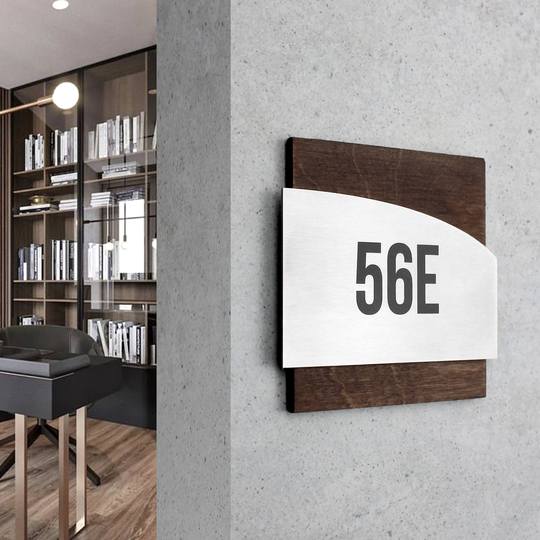
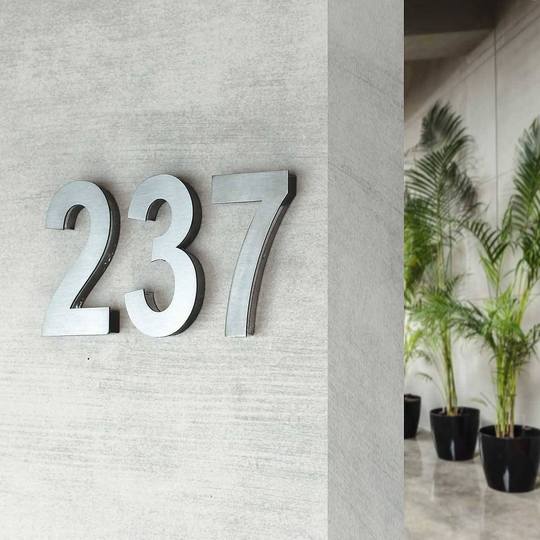
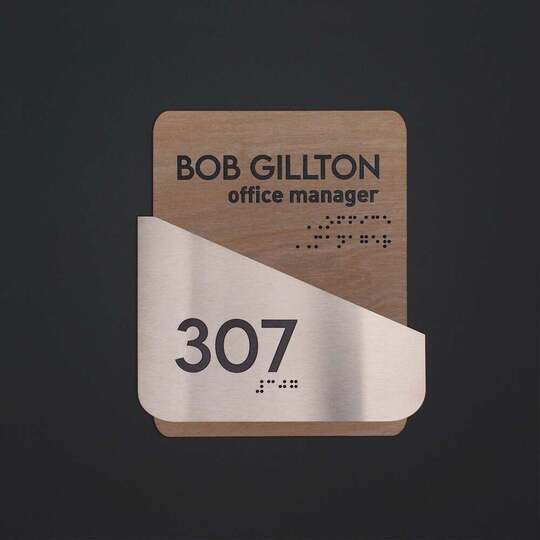
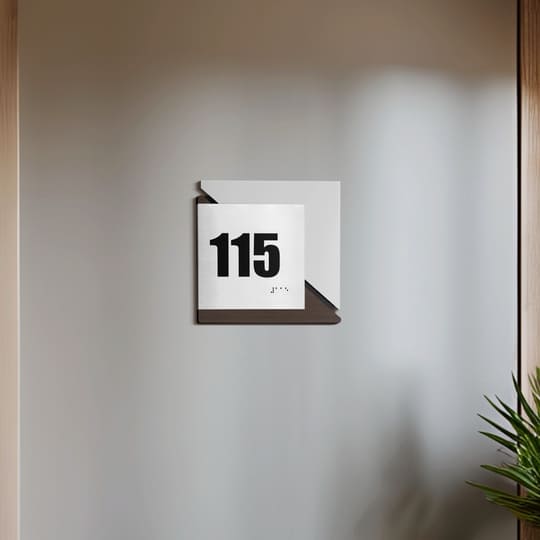
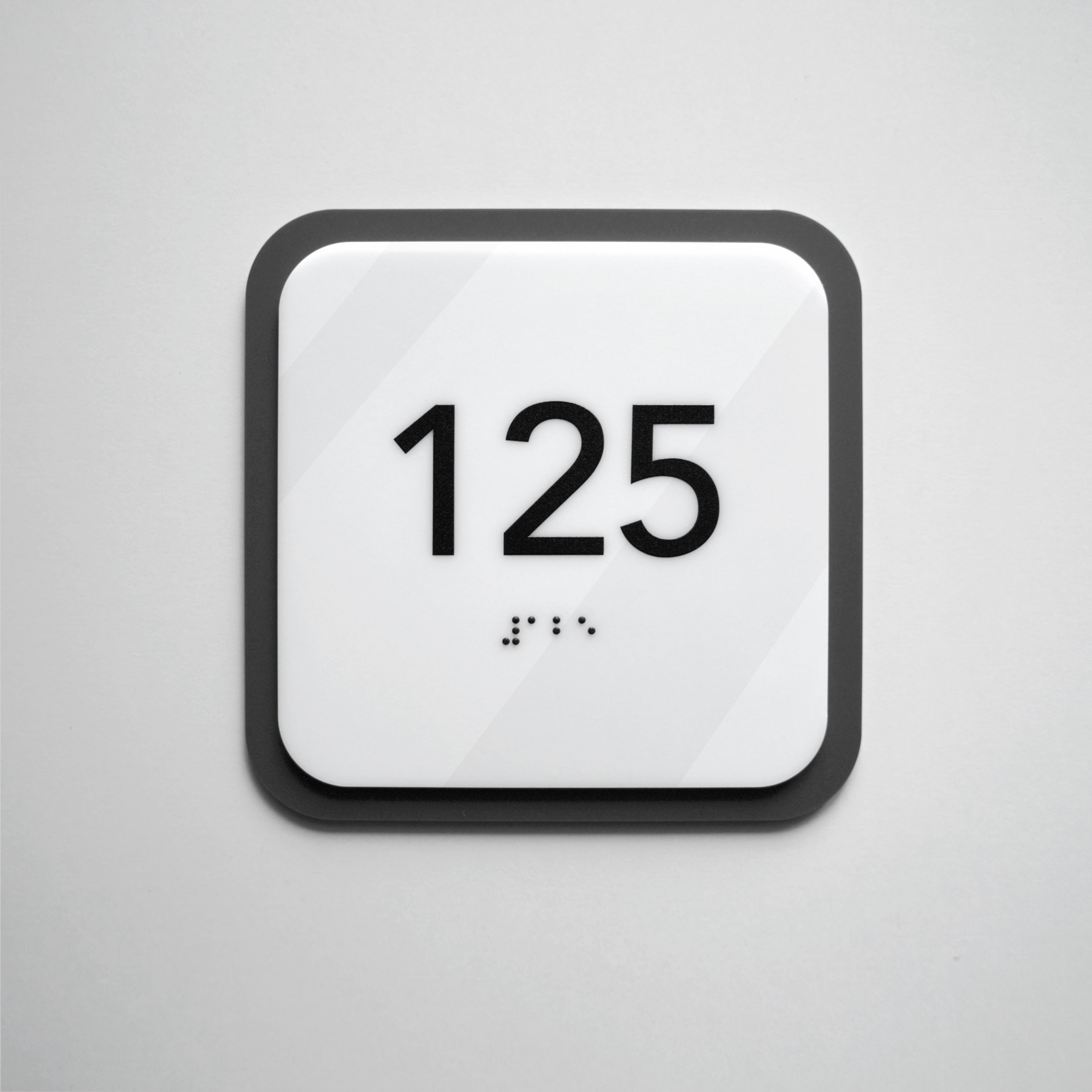
Modern metal plates with a minimalist design from the Wave collection remain highly legible even under intense lighting in kitchens or service areas:

What are outdoor cafe signs?
Directional signs for outdoor spaces refer to informational elements placed in open areas: terraces, outdoor seating zones, and venue entrances. These solutions are a core part of outdoor hospitality design, where aesthetics and function work together.
They create a system of operational efficiency, help visitors make decisions quickly, and maintain a clear flow logic within the layout. This approach is especially important in the hospitality industry, where speed and comfort directly affect customer satisfaction.
At the same time, the design of restaurant signage should align with the venue’s style and ensure fast readability in any conditions — from bright sunlight to evening lighting. This is what defines professional outdoor signage.
How Outdoor Signs Support Service Efficiency on Summer Terraces
During peak season, venues face overload. Guests arrive without a clear plan, look for available seating, and get confused within the flow of movement. This is exactly where outdoor restaurant signs begin to function as part of the operational system, improving outdoor customer guidance.
When clear orientation is absent in a layout, guest behavior becomes unpredictable:
-
• the customer doesn’t understand where to go;
-
• stops or turns back;
-
• delays occur;
-
• queues form;
-
• staff workload increases;
-
• service efficiency drops.
Properly implemented restaurant signage changes this scenario:
clear route → quick decision → fewer questions → faster service → higher turnover.
This directly impacts guest flow management and operational stability, while improving outdoor visibility of key zones and directions.
Why Outdoor Signs Became an Operational Tool for Cafes and Restaurants
Modern service is an environment that enables the guest to act independently, without additional explanations. The layout begins to function as a system where each element suggests the next step. This is the foundation of hospitality navigation, where traffic feels natural and intuitive.
During peak season, guest behavior and process speed change:
-
• the number of visitors increases;
-
• decision-making time decreases;
-
• navigation errors become critical.
Guests are not willing to spend time searching or asking for clarifications. They expect a clear spatial structure at first glance.
In this context, summer terrace signage functions as part of the service that does not require staff involvement. It takes over basic communication with the guest and reduces the workload.
It explains:
-
• where the entrance is;
-
• where to wait;
-
• where to move;
-
• where to find the right zone.
This is where well-designed entrance signage becomes essential, as it defines the first interaction point and sets the direction for further movement.
Without this, even experienced staff cannot compensate for spatial chaos. The number of repetitive questions increases and communication becomes overloaded.
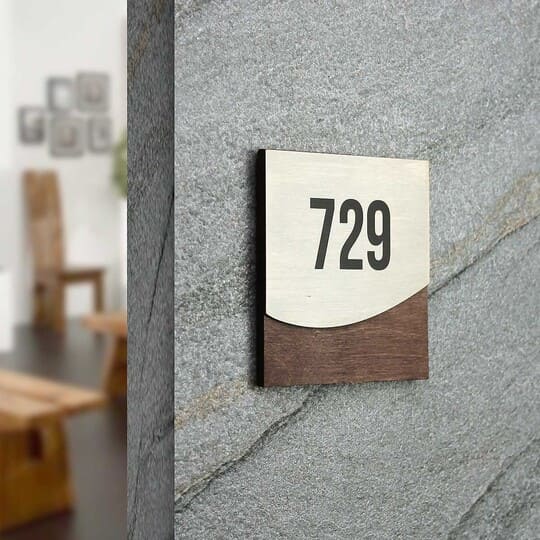
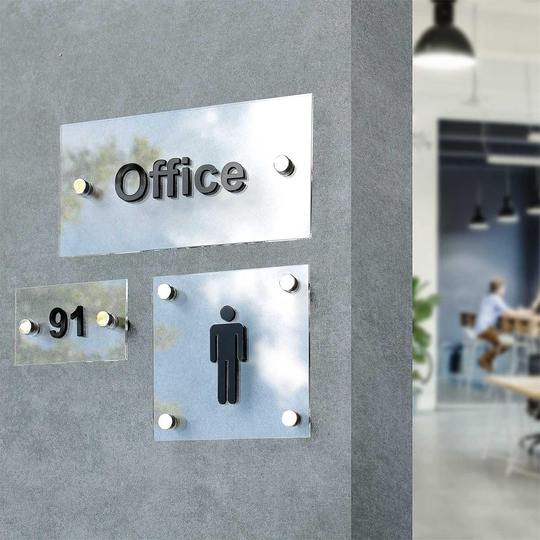
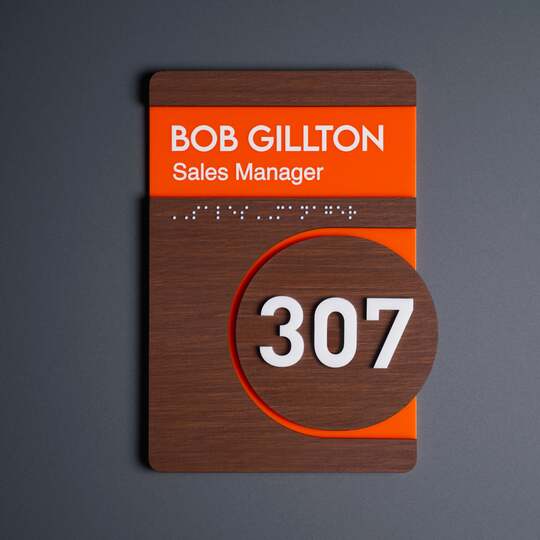
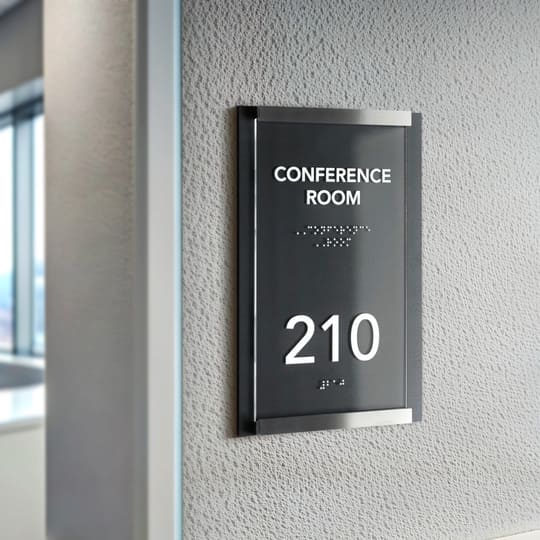
High-contrast acrylic informational plaques from the Simple collection provide excellent visibility and are suitable for staff-only areas and restricted zones:

The Main Role of Outdoor Signs: Controlling Guest Flow
The primary task of any outdoor signage is to create a clear and predictable flow logic. It guides guest behavior within the space.
Signage helps establish:
-
• directions of movement;
-
• guest routes;
-
• waiting areas;
-
• operational efficiency.
This allows guests to move without hesitation or confusion, even in an unfamiliar environment.
Result:
-
• less chaos;
-
• faster navigation system;
-
• reduced workload for the team.
An additional effect is flow stability. People don’t accumulate in one place or create bottlenecks in walkways.
That is why outdoor wayfinding signs become the foundation for structuring a space. It creates a framework onto which all other elements are built.
Four Essential Types of Signs for Summer Terraces
In outdoor seating areas, visitors interact with the space faster than indoors. That’s why it is important to cover all basic traffic scenarios with clear solutions. This is achieved through several types of signage, each responsible for a specific stage of interaction with the layout.
Entrance Signs for Zoning Outdoor Spaces
This is the first point of contact between the guest and the layout. It is where the first decision is made: whether to enter or not, and where exactly to go.
Functions:
-
• marking the entrance;
-
• distributing visitor movement;
-
• creating the first impression.
If the entrance is not obvious, the customer begins to hesitate or moves randomly. This creates delays even before entering the venue.
Outdoor cafe signs in this area should be readable, high-contrast, and visible from a distance as much as possible.
Outdoor directional signage for Guest Movement
This is the foundation of any orientation system. It defines the logic of traffic within the layout and connects all zones together.
Functions:
-
• directing flows;
-
• reducing route intersections;
-
• improving guest orientation.
Thanks to these elements, guests do not turn back or create opposing flows that complicate movement.
Menu boards and Information Signs for Outdoor Areas
These plaques work at points where the visitor makes decisions: what to order, where to wait, and how to proceed further.
They are placed in key locations:
-
• entrance area;
-
• ordering zone;
-
• waiting area.
They help reduce the number of questions directed to staff and shorten service time.
When information is available immediately, the guest does not slow down the process and moves more quickly to the next stage.
Restroom Signage for Clear Guest Navigation
This is one of the most common needs in any layout, especially in outdoor areas. That is why restroom signs must be as visible and immediately understandable as possible.
Functions:
-
• quick access;
-
• reduced guest tension;
-
• avoidance of unnecessary movement.
If a customer cannot quickly find the restroom, they begin to move unpredictably, cross traffic flows, and create additional pressure on the space.
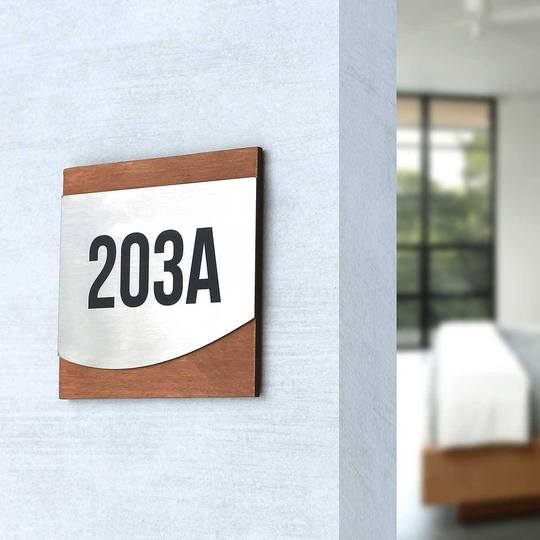
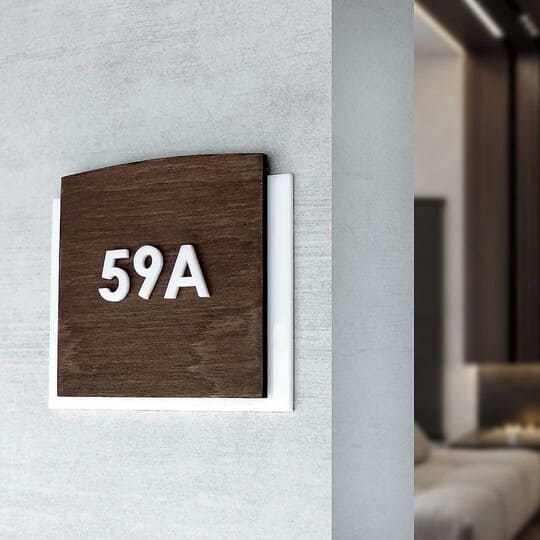
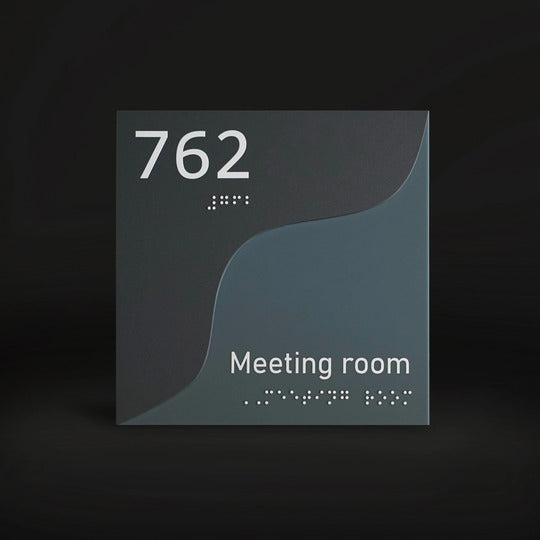
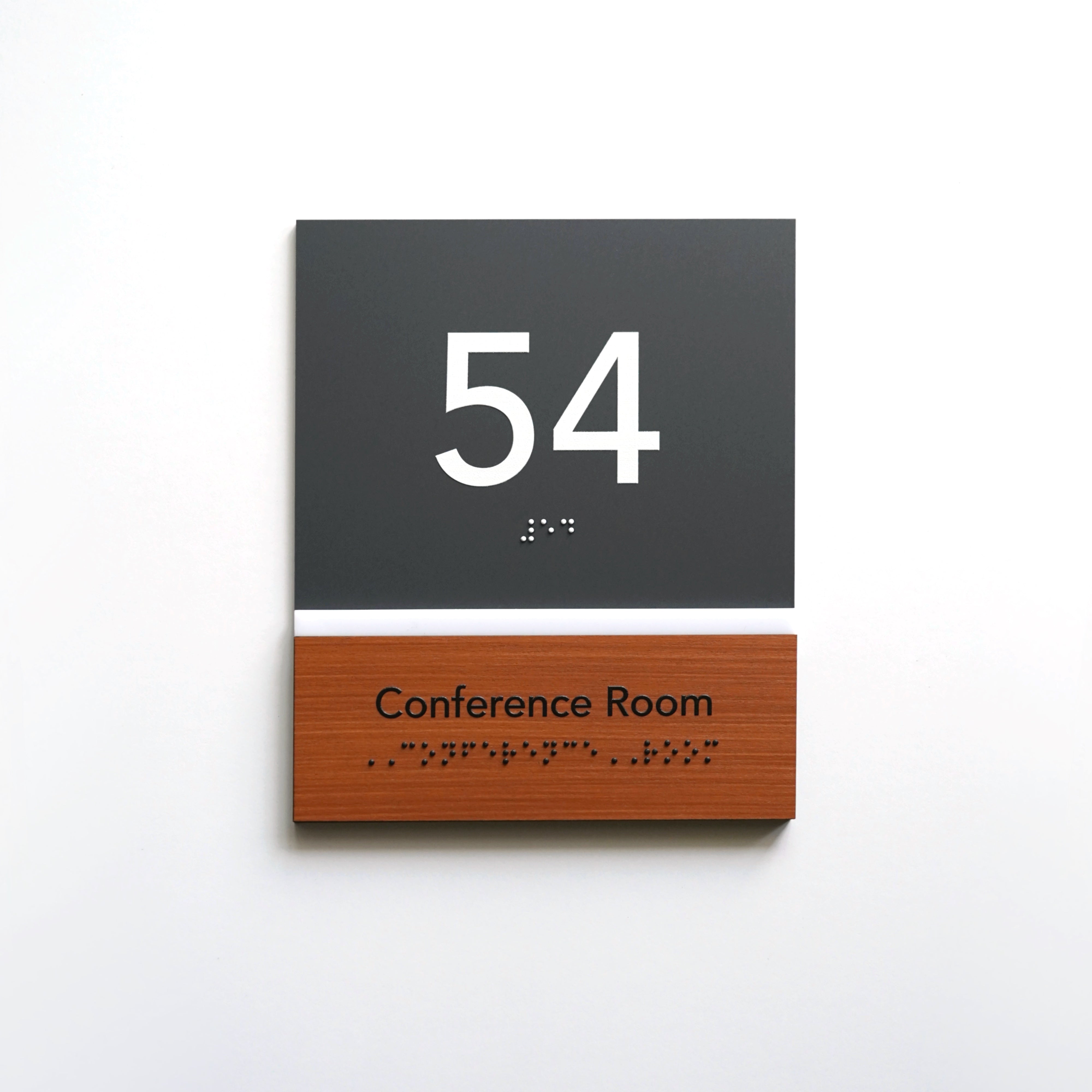
Elegant navigation restaurant signage from the Elegant collection combines a stylish appearance with functionality in outdoor environments:

Signage for outdoor dining areas
This type is responsible for clearly dividing the territory into functional areas.
It is used to separate:
-
private zones;
-
waiting areas;
-
service zones.
Signage for outdoor dining areas helps avoid misunderstandings between guests and staff, reduces random traffic, and maintains order within the layout.
It also reinforces a sense of structure, as the guest understands where they are and what actions are appropriate in that area.
How Sunlight Readability Affects Guest Decisions
In outdoor seating areas, not only the content of signage matters, but also its visibility. Lighting conditions are constantly changing: direct sunlight, shadows, and reflections from surfaces. If information is difficult to read, visitors spend more time on basic actions.
In such an environment, plaques must work instantly — without requiring effort from the person.
Key factors:
-
• sunlight readability;
-
• contrast of text;
-
• glare-resistant signage;
-
• sufficient font size.
When these parameters are not considered, even correct information fails to perform its function.
If a decorative element is not readable:
-
• the customer stops;
-
• spends time;
-
• asks staff for help.
This creates micro-delays that build up and affect the overall rhythm of operations.
If it is easily readable:
-
• decisions are made instantly;
-
• traffic is not interrupted;
-
• visitor navigation flow remains stable.
As a result, the space operates evenly, without overload in key areas.
Materials Comparison: What Works in Real Outdoor Conditions
The choice of material directly affects the appearance, durability, and performance stability of signage in outdoor environments. It is important to consider how the material behaves under external conditions.
|
Material |
Advantages |
Disadvantages |
Where to use |
|
Stainless steel |
durability, weather resistance |
higher cost |
premium locations |
|
Acrylic |
high contrast, modern appearance |
prone to scratches |
contemporary venues |
|
Wood |
natural style, warm look |
requires maintenance |
covered terraces |
Each material solves a specific task. Stainless steel is stable in all conditions and maintains its appearance over time. Acrylic performs well visually, ensuring clear visibility and contrast. Wood adds character to the layout but requires more careful use.
The optimal solution for exterior signage is a combination of stainless steel and acrylic, as it provides a balance of durability and readability. Wood adds style but requires controlled conditions.
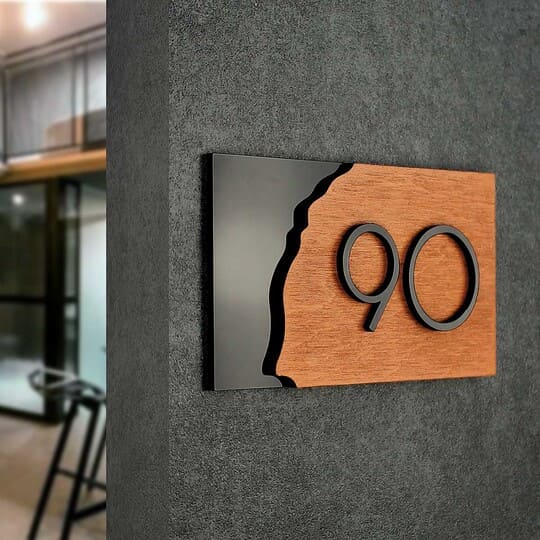
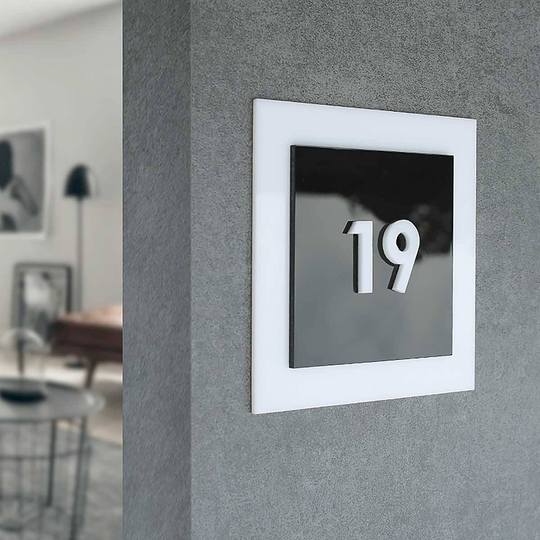
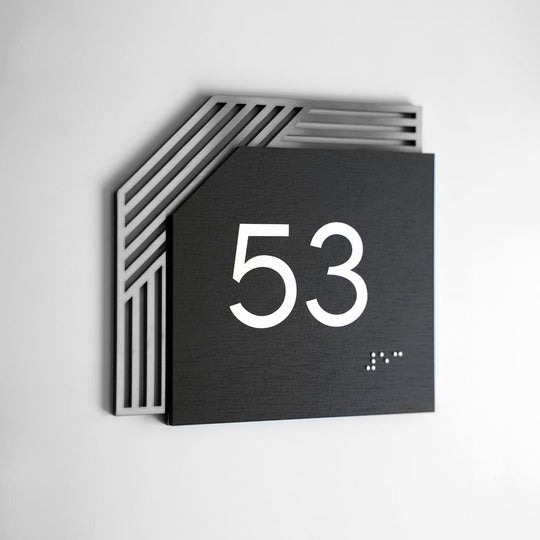
Designer signage with a strong visual identity that attracts attention and enhances a venue’s branding — a solution from the Creative collection:

Three Common Mistakes When Choosing Outdoor Signs
Even high-quality products can fail if basic mistakes are made. These issues reduce navigation efficiency and create additional difficulties for guests.
Low Contrast That Reduces Visibility
Low contrast is especially critical in outdoor layouts where lighting conditions constantly change. As a result, visitors spend more time reading information or ignore it completely.
Solution:
-
• use high-contrast combinations;
-
• avoid excessive decorative elements.
The simpler and clearer the navigation element is, the faster it works.
Wrong Placement That Causes Guest Confusion
A well-designed element is ineffective if it is placed outside the guest’s field of view or after the decision point has already passed.
Solution:
-
• place plaques at customer decision points;
-
• consider traffic directions.
A decorative element should appear exactly when the guest is looking for an answer.
Materials That Fade in Sunlight
With time, unstable materials lose color and contrast. This gradually reduces the effectiveness of the product, even if it initially performs well.
Solution:
-
• use durable, stable materials;
-
• avoid unstable coatings.
Material stability directly affects the long-term efficiency of orientation and the overall appearance of the space.
Placement Is 50% of Sign Effectiveness
Even well-designed products do not work without proper placement. Its effectiveness depends less on customer experience design and more on where exactly the customer sees it.
Correct signage placement strategy is based on movement logic. It is necessary to consider how a person enters the layout, where they stop, at which points they hesitate, and when they make decisions.
Key principles:
-
• installation at decision points;
-
• placement at route intersections;
-
• duplication of important information.
These principles help avoid situations where guests turn back or move randomly.
It is important that information appears before the decision point, not after the action. This ensures continuous traffic and reduces chaotic flow.
Outdoor directional signs should be placed where visitors hesitate — this is how effective terrace navigation is created, ensuring smooth movement and fewer delays.
Additionally, viewing angle, installation height, and spatial density should be considered. The plaque must be noticeable without effort and readable on the move, without stopping.
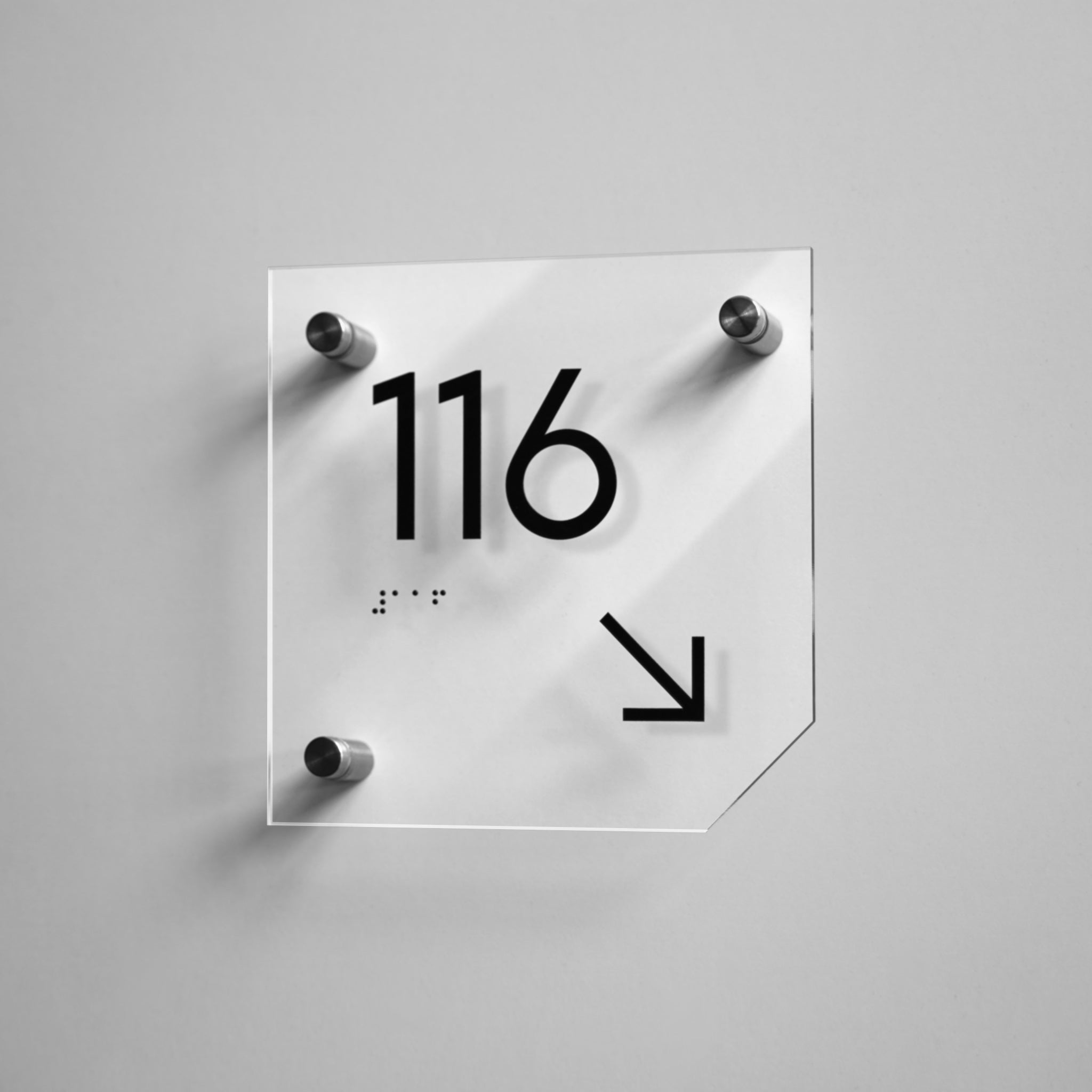
Clear outdoor wayfinding signs focused on readability from the Clear collection, designed for fast information perception even in challenging lighting conditions:

How Signage Improves Service Speed
Service efficiency directly depends on how independently a guest can navigate the layout. When information is immediately accessible, processes happen without delays.
Direct relationship:
fewer questions → faster service → higher turnover.
This principle works across any type of venue, especially in outdoor seating areas where it is harder to control guest flow.
Details:
-
• the guest finds a seat independently;
-
• makes decisions faster;
-
• does not create delays.
As a result, staff do not spend time on repetitive explanations and can focus on service. This increases outdoor signage effectiveness and reduces workload on employees.
It is also important to consider the impact of directional elements on the overall rhythm of operations. When the space is properly organized, visitor movement is distributed evenly, without overload in specific areas.
To reduce queues using signage, it is necessary to clearly separate flows, mark waiting areas, and make movement routes visible. This eliminates chaotic crowding.
In addition, a combination of several types of decorative elements works effectively — informational and zoning elements. Together, they create a clear structure in which the guest does not get lost or delay others.
Why Single Signs Do Not Work: The Importance of a Signage System Planning
Isolated elements do not work without logic. They may be high-quality and visually appealing, but without connection to each other they do not form a clear traffic scenario.
Guests perceive a layout not as a collection of separate elements, but as a unified system. If this system is not structured, it leads to pauses, errors, and unnecessary movement.
A navigation system is required that ensures:
-
• a unified style;
-
• a unified logic;
-
• sequential placement.
A clear navigation logic allows guests to move without pauses or mistakes.
It is important that directional elements do not contradict each other or overload the visitor with information. They should work as a chain, where each element complements the previous one.
An outdoor signage systems ensures:
-
• stable flow;
-
• a clear spatial structure;
-
• predictable guest behavior.
In addition, it reduces situations where visitors are forced to turn back or ask for clarification.
To create a navigation system for a café, it is necessary to analyze guest movement, identify key points, and build a sequential route with wayfinding elements at each stage.
In practice, this means:
-
• defining main traffic scenarios;
-
• marking critical interaction points;
-
• ensuring a continuous flow of information.
This approach helps avoid chaotic placement and makes orientation an integral part of the service.
Functional plate that helps organize terrace navigation and distribute guest flow without delays. Similar options are presented in the Downhill collection:

How Exterior Signage Improves Guest Experience and Service Flow
Modern business outdoor signage is a tool that influences guest behavior without direct interaction. It helps manage expanse through clear signals and guidance. The guest does not consciously analyze the process but follows the built-in logic.
They shape:
-
• guest experience;
-
• movement logic;
-
• service speed.
When the space is properly organized, people move confidently and do not create unnecessary delays.
Directional elements reduce traffic errors and help prevent bottlenecks. This directly affects comfort and the perception of the venue.
Additionally, they reduce staff workload, as part of the communication happens without human involvement.
To correctly place products in a restaurant, it is necessary to consider guest routes, visibility, installation height, and the logic of traffic from the entrance to key areas.
It is also important to maintain balance, as directional elements should be noticeable but not overwhelm the expanse.
Additional selection aspects
Beyond basic parameters, it is important to consider a comprehensive approach to choosing decorative elements. Each element should work not in isolation, but as part of a unified system.
|
Criterion |
What to consider |
Result |
|
Design |
unified style |
recognizability |
|
Material |
resistance to environment |
durability |
|
Placement |
decision points |
effective orientation |
A unified style makes the layout cohesive and understandable. Visitors recognize directional elements faster and trust them more.
Material durability affects long-term performance. Plates must maintain both appearance and functionality even under intensive use.
Placement determines effectiveness. Even the highest-quality items do not work if they are outside decision-making points.
Custom outdoor signs allow solutions to be adapted to a specific expanse and avoid template-based mistakes. They account for layout specifics, visitor movement, and the venue’s style, making navigation clarity.
Subtle universal signage from the Grey Calm collection, designed to support navigation logic and blend harmoniously into modern layouts:

Key takeaway
Signage for outdoor spaces is a management tool, not a decorative element. It affects service speed, guest behavior, and the overall perception of the venue.
When navigation system is well-designed, the area operates smoothly:
outdoor cafe signs create order;
-
• signage for summer patios ensures movement;
-
• outdoor restaurant signs build a clear and predictable environment.
As a result, delays are reduced, staff workload decreases, and the overall guest experience improves.
A well-designed system ensures stable operation even during peak periods, when every detail matters.
If you are planning to design a layout or want to improve existing navigation, it is worth approaching it systematically. A consultation with Bsign specialists can help identify weak points, build a clear movement logic, and select solutions tailored to a specific type of venue.
Thin acrylic signage with a modern look is ideal for informational areas and ensures easy perception of area. Similar solutions are available in the Thin collection:

FAQ
Does cafe signage really affect visitor movement?
Yes. They shape traffic routes and shorten decision-making time, which reduces delays and stabilizes flow. When guests immediately understand where to go, they do not create obstacles for others or overload the layout with chaotic movement.
What signs are essential for café terraces?
The basic set includes entrance, informational, and summer terrace signage, as well as restroom and zoning markers. It is important that these elements work together and cover all key guest traffic scenarios — from entrance to exit.
Which materials work best outdoors?
Stainless steel and acrylic are the most stable solutions for outdoor conditions. They ensure durability and strong readability even under intensive use. Wood can complement the layout stylistically, but requires more careful maintenance.
Why might signage not work?
The main reasons are low contrast, incorrect placement, and lack of system logic. If a plaque is not visible or appears at the wrong moment, it fails to perform its function and does not influence guest behavior.
Is signage necessary only for large restaurants?
Yes. Isolated elements do not create traffic logic. Only a comprehensive navigation system works, where all elements are connected and guide the guest through the layout step by step.


