











by Oleksandr Radich
Environmental Graphic Design and Wayfinding Signage: The Invisible Language of Space That Saves Your Day
What Is Environmental Graphic Design (EGD)?
Experiential Graphic Design (XGD) is a multidisciplinary field that combines typography, architecture, color, and spatial planning to help people navigate and understand physical environments.
Every day, we drift through dozens of complex environments—hospitals, transit hubs, shopping malls, corporate offices, theaters, and even zoos. Thoughtful environmental and experiential graphic design quietly supports every step of that journey, using wayfinding signage, navigation signage design, and cohesive signage systems to keep us oriented without effort.
Yet, we rarely spare a thought for the "invisible director" guiding our footsteps. We don't notice wayfinding signage systems or environmental graphic design interventions—at least not until we find ourselves in a windowless corridor with no exit sign in sight.
Signs, colors, arrows, and fonts are like oxygen: invisible when present, but critically vital the moment they disappear. There’s a paradox at the heart of great wayfinding and environmental signage system design: the better it is, the less you think about it.
There’s a paradox at the heart of great environmental signage: The better it is, the less you think about it. Nobody applauds a well-placed arrow. No one writes a love letter to a legible font at 30 meters. We just arrive, calmly and efficiently like competent adults.
But let one link in the chain break—one confusing corridor, one missing map, one “helpful” sign pointing three different directions—and suddenly everyone turns into a stressed philosopher asking the ancient question: *Where am I, and why is the restroom always in another dimension?
That “you are here” moment is exactly where this discipline lives.
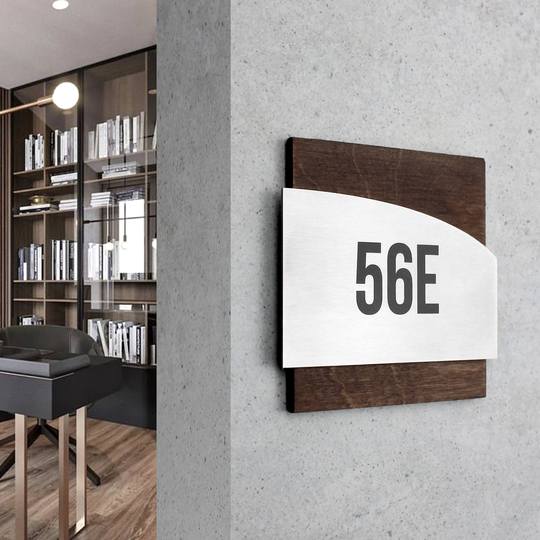
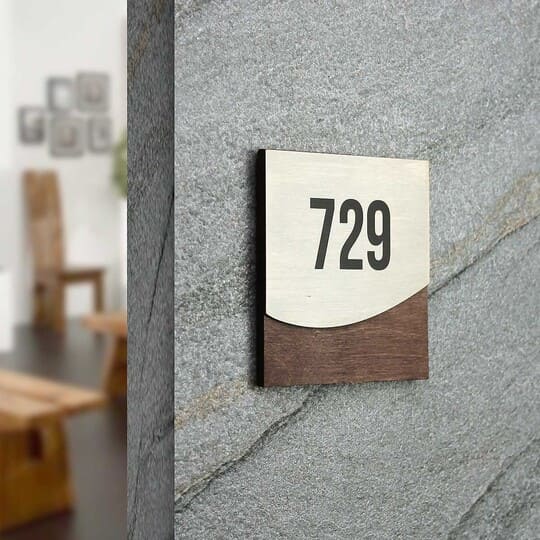
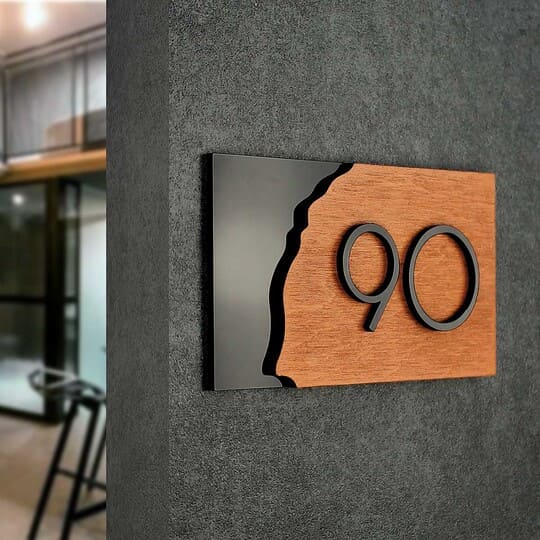
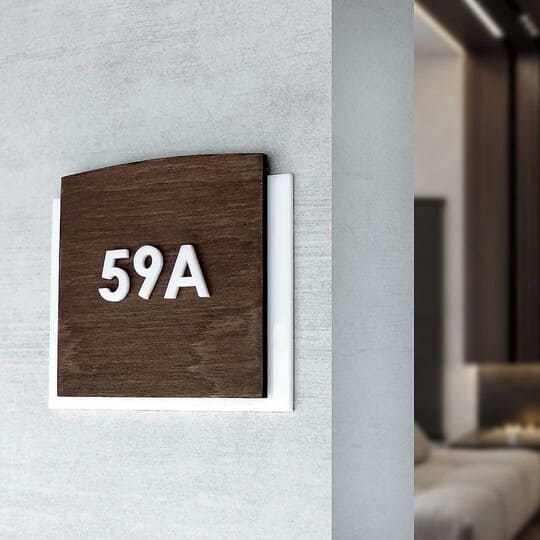
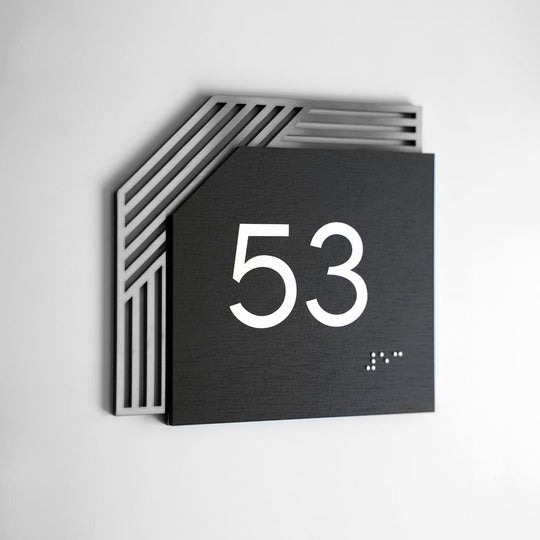
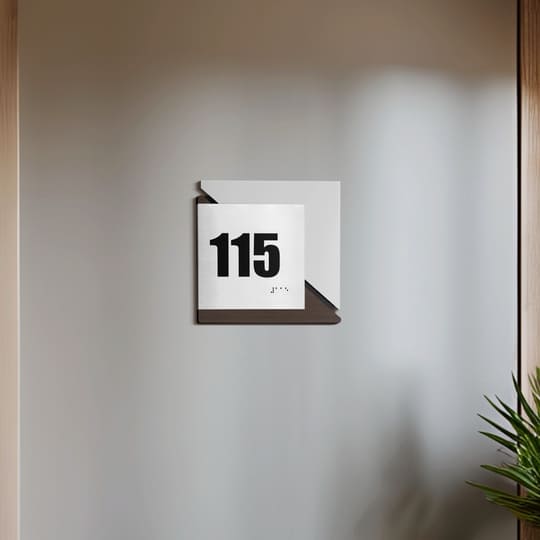
At Bsign, we live and breathe this "invisibility." Environmental Graphic Design (EGD)—now often called Experiential Graphic Design (XGD)—is far more than just "plaques on doors." We have door signs that speak the message.

XGD is the language of space, a built-in form of human care, and a communication art that saves time, lowers anxiety, and transforms a sterile "space" into a meaningful "place."
Let’s dive into the fundamental concepts of this discipline, inspired by the industry "bible," Signage and Wayfinding Design by Chris Calori and David Vanden-Eynden.
This is the first part of a six-part series based on the philosophy of this groundbreaking book.

Why Wayfinding Matters: The Columbus Navigation Metaphor
On October 12, 1492, Christopher Columbus stepped onto a shore he sincerely believed was India. He was dead wrong. Yet, that mistake became one of the most significant discoveries in history.
"We’ve arrived!" he likely shouted, looking at locals adorned in feathers and gold. "Arrived where, exactly?" his navigator, Juan de la Cosa, might have whispered while mentally flipping through every known map.
Columbus spent the rest of his life refusing to admit he’d hit a new continent. This isn't just a history book curiosity; it’s a metaphor for our daily lives. We move through space with "mental maps" that are often fuzzy, approximate, and occasionally flat-out wrong.

The difference between Columbus and us? He had zero clues. We have thousands. We just rarely acknowledge them. These clues—arrows, icons, maps, and illuminated directories—are the work of EGD. If you thought this was just about "signs," prepare to have your perspective recalibrated.
What is Experiential Graphic Design (XGD)?
According to the SEGD (Society for Experiential Graphic Design),
XGD is a multidisciplinary field that marries graphics, architecture, interior design, and landscape to improve the human experience. It’s the strategic orchestration of typography, color, and technology to create an "architectural environment that communicates."
Key Components of a Wayfinding System: The Three Pillars of a Functioning Space
Imagine landing at a massive hub like Frankfurt, Toronto, or Amsterdam. Thousands of people, miles of corridors, and zero people screaming, "Go left!" in your ear. Yet, ten minutes later, you’re at your gate with a latte in hand.

In January 2026, I found myself in the New Istanbul Airport. Twenty minutes before boarding, my gate changed from F8 to A4. That’s a 1.5-kilometer sprint through Duty-Free mazes and crowds. With three kids and luggage in tow, we navigated solely via electronic boards and overhead signs. Never have I appreciated the practicality of good design more than in that frantic dash.
For many organizations, this journey is supported by a consistent system of wayfinding signage that connects lobbies, corridors, elevators, and exits into one readable story.
How does it work?
According to Chris Calori, author of "Signage and Wayfinding Design" (2015), there are three pillars of any successful navigation program (the "Signage Pyramid"):
1. Information Content: The Philosophy of Distribution
This isn't just about what is written; it’s about where and when. In a hospital corridor, "Emergency" is more critical than "Cafeteria." Designers analyze "decision points"—places where a person must choose a direction—and place information exactly there, not just where there's an empty wall.

2. The Graphic System: The Physiology of the Eye
Why use Sans-Serif fonts? It’s not a trend; it’s biology. When moving, our eyes perform saccades—rapid jumps of focus. In these conditions, the brain doesn't read every letter; it recognizes the "word shape" (pattern).
-
Serifs (the little "feet" on letters) create "visual noise" that blurs under vibration or speed.
-
Sans-Serifs have cleaner apertures, allowing the visual cortex to identify the letter’s "skeleton" instantly.
-
Color Coding: Red has the longest light wave, triggering the amygdala (instant alert). Blue feels stable and informative. Yellow provides maximum contrast with black, perfect for operational instructions.

3. The Hardware System: The Medium is the Message
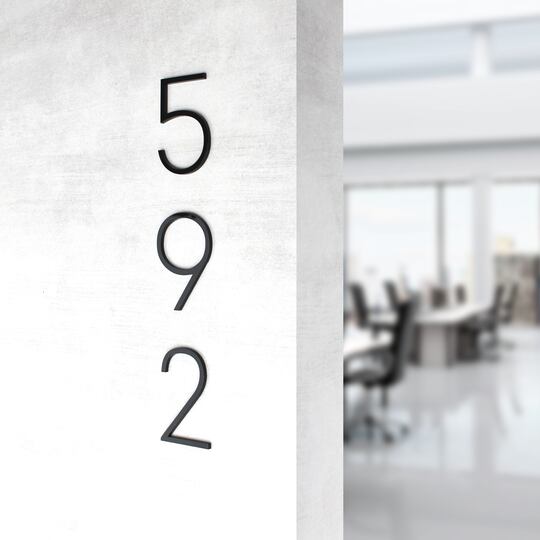
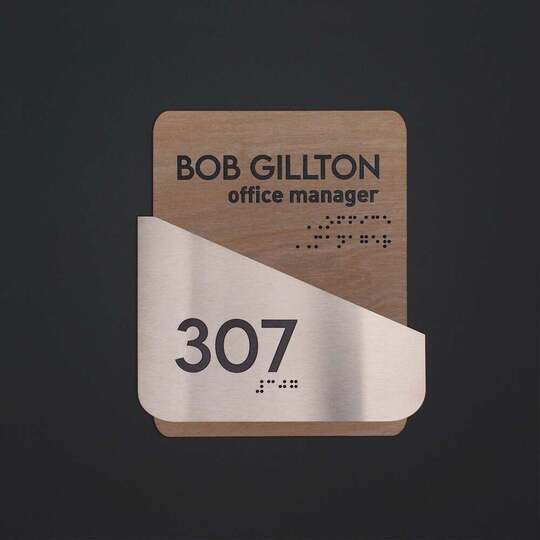
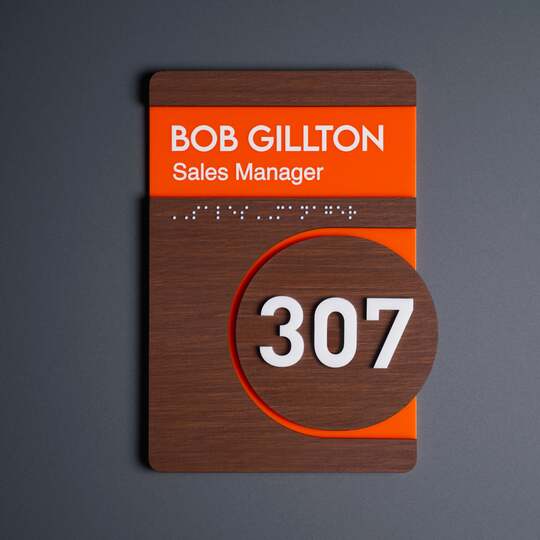
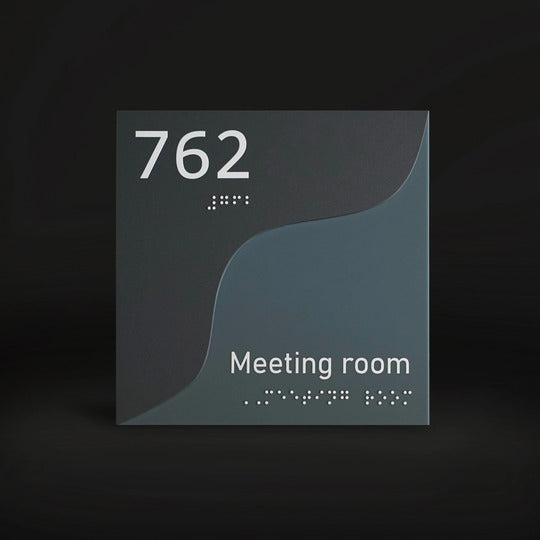
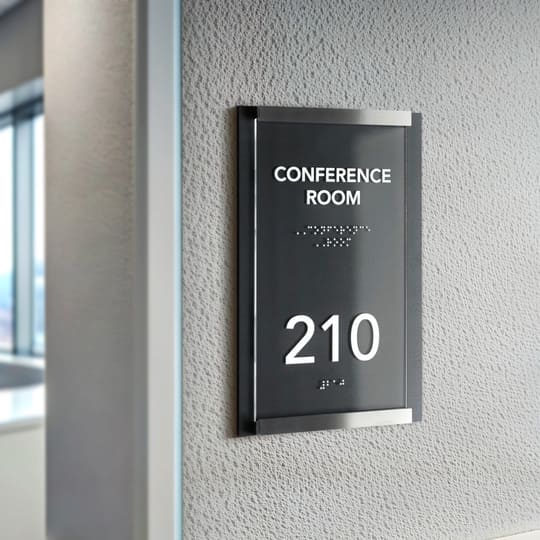
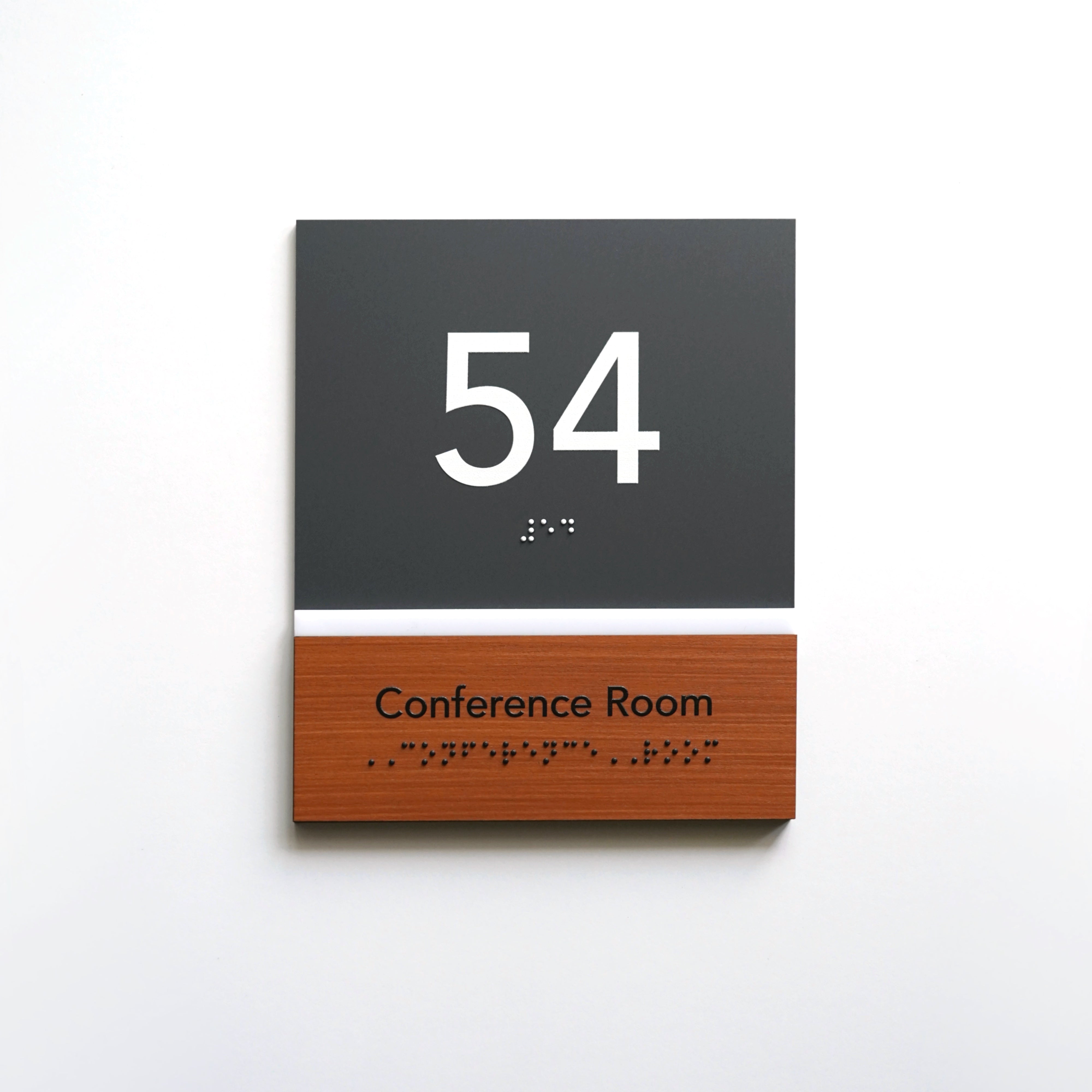
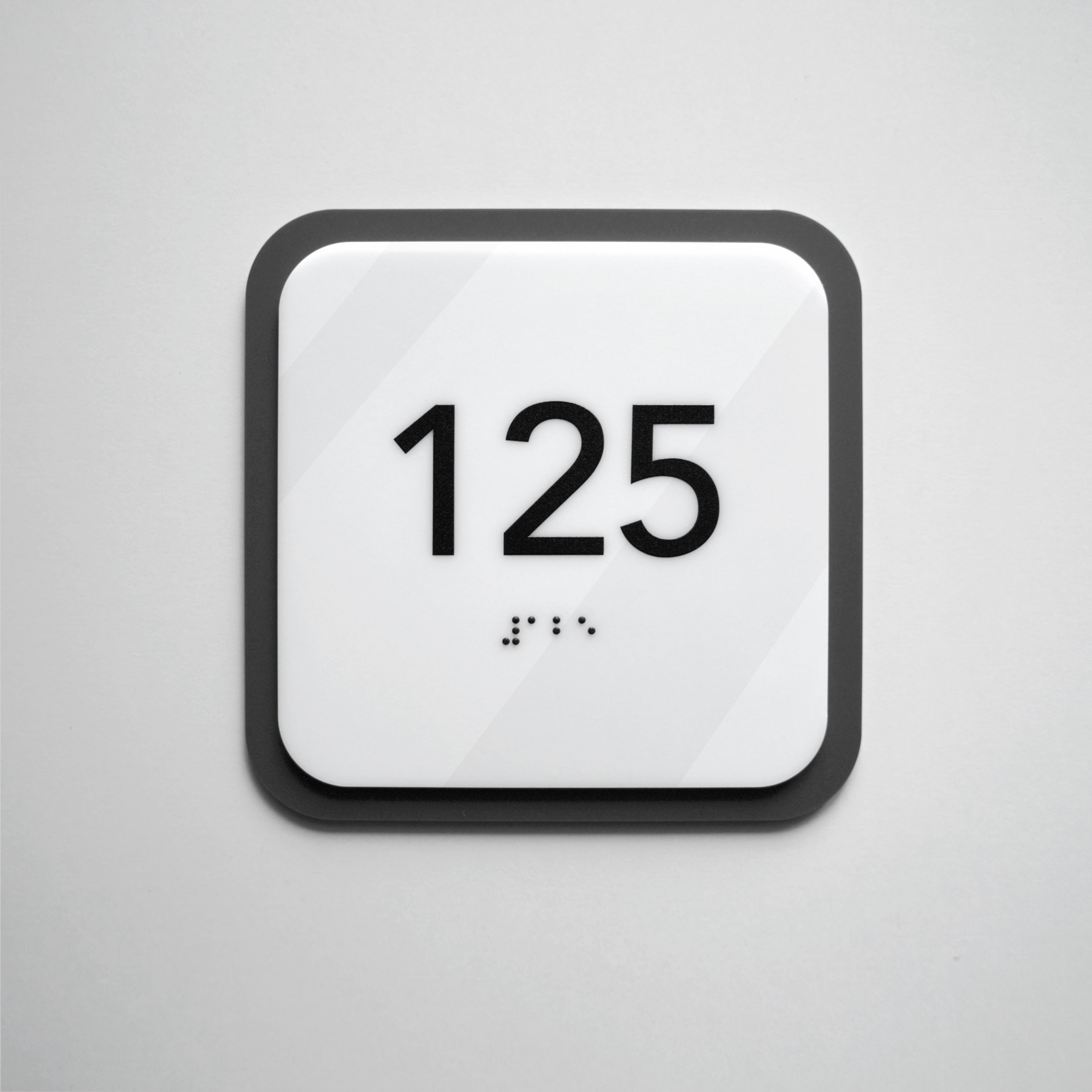
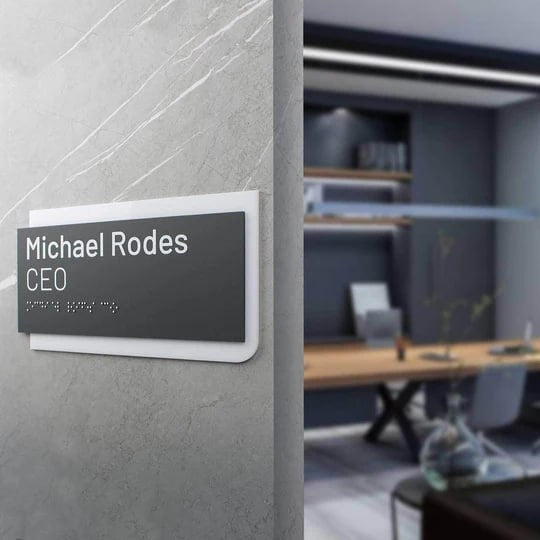
The material tells a story. A massive stone slab with a carved bank name screams, "We are permanent." A lightweight, brushed aluminum hanging sign in a tech startup says, "We are agile." Even the matte finish is intentional—it prevents glare from hiding the words from someone approaching at an angle. In real projects, this might mean combining ADA signs with office door signs so that every door number, icon, and Braille line feels like part of one coherent navigation system.

The Phenomenon of "Invisible" Design
We’ve all been there: arriving at a new office building for a conference. Where is the parking? How much is it? Which elevator leads to the hall? Where is the cloakroom?
If the designers didn't do their homework, you end up like that classic 80s movie trope—the guy wandering through endless gray floors shouting, "People, where are you?!"
But when it’s done "by the book," you move as if guided by an invisible hand.
This is what researcher Kevin Lynch described in his book "The Image of the City" (1960) as the five elements of "city legibility":
-
Paths: The channels of movement.
-
Edges: Boundaries like rivers or walls.
-
Districts: Sections with a shared identity.
-
Nodes: Strategic decision points (intersections).
-
Landmarks: Visual anchors (towers, monuments).
When these align, you don't think; you just go. When the system breaks, anxiety spikes. Heart rates climb. EGD isn't just aesthetics; it’s spatial hygiene.

The Three Realms of Experiential Graphic Design: Wayfinding, Interpretation, and Placemaking
Theory expert Wayne Hunt divided EGD into three realms that change how we experience the world:
-
Wayfinding: The most obvious. Signs and maps. In a park, a sign for "The Lake" isn't just a direction—it’s a promise of a small adventure.
-
Interpretation: This is where space tells a story. Think of a nature trail with a plaque: "These trees remember the Cossack era." You learn without feeling like you're being taught. As an example of a tree story engraved in a plate in Kyiv: Standing for over 400 years near the remains of the Desyatynna Church, this ancient tree is a silent witness to history. Planted by Metropolitan Petro Mohyla around 1635 to mark the church's restoration, it remains a powerful symbol of Kyiv’s resilience—surviving centuries of turmoil while continuing to bloom every spring.
-
Placemaking: This is the "soul" of the craft. Times Square without its lights and graphics is just a busy intersection. With them, it’s a global icon.

Another brilliant example is Superkilen Park in Copenhagen. By using graphic lines on the asphalt and objects from 60 different countries (from Ukrainian manhole covers to Brazilian benches), they turned a transit zone into a symbol of cultural unity.
"The difference between a space and a place," as a designer once said, "is the same as the difference between a room and a home. A space becomes a place when it starts to speak."
| Realm | Primary Goal | Typical Tools | Example in Real Space |
|---|---|---|---|
| Wayfinding | Help people understand where they are and how to reach their destination. | Directional signs, maps, pictograms, floor numbers, landmark cues. | Airport signage system that guides passengers from check-in to gate with clear routes. |
| Interpretation | Explain context, history, or meaning of a place without feeling like a textbook. | Informational plaques, timelines, illustrated panels, storytelling graphics. | Nature trail with panels describing local species and historical events along the path. |
| Placemaking | Create an emotional connection and a unique identity for a location. | Large-scale graphics, colors, lighting, branded murals, sculptural elements. | Public square transformed with bold graphics and lighting into a recognizable city landmark. |

Practical Wisdom: How to "Read" Your World
Columbus’s problem wasn't that he moved in the wrong direction; it was that he ignored the "signs" (the birds, the vegetation, the locals). We do the same.

Here is how to be more present:
-
Read space consciously: Once a week, enter a new building and look for the signs. Are they where you need them? This builds spatial intelligence.
-
Never ignore exit signs: When checking into a hotel, find the map. It takes 30 seconds but gives you a five-minute head start in an emergency.
-
Appreciate the "Easy": If you found the milk in a new supermarket in under two minutes, thank an invisible designer.
-
Audit your own life: Is your "internal EGD" clear? Is your resume readable in 10 seconds? Is your office organized so colleagues don't have to ask where things are? Good design is, above all, respect for another person's time.

The next time you find your gate at the airport without breaking a sweat, look up at that simple white rectangle. Behind it lie months of work by psychologists, typographers, and architects. They did everything in their power so that you wouldn't have to notice them.
And that is the highest compliment their work can receive.
How Bsign Applies Experiential Graphic Design in Real Projects
At Bsign, experiential and environmental graphic design principles are translated into tangible wayfinding signage systems for real spaces—offices, hotels, clinics, and public buildings across the US and Europe. Our team starts with the user journey: who needs to find what, from where, and under which level of stress.
From there, we build a layered signage system design that combines directional wayfinding signs, ADA-compliant room identification, and office door signs into one consistent visual language. Materials such as wood, stainless steel, and acrylic are selected not only for aesthetics but also for legibility, contrast, and durability in real-world conditions.
Whether it is a hospitality project that relies on discreet custom door signs to reinforce brand character, or a medical facility that needs highly legible emergency routes, Bsign applies the same EGD mindset: clear hierarchy, intuitive decision points, and a calm, human-centered experience for every visitor.
Conclusion: Experiental Graphic Design Is Not about Decoration
In the end, experiential graphic design and environmental graphic design are not just about decoration; they are about clarity, empathy, and time saved for every person who enters a space.
A well-planned wayfinding signage system transforms confusion into confidence, turning abstract buildings into readable, human-centered places.
When you invest in navigation signage design and integrated signage system design, you are investing in lower stress, better accessibility, and a more memorable experience for visitors and staff alike. From custom door signs to large-scale directional wayfinding, every element works together. The next time you move effortlessly from entrance to exit, remember that behind that ease stands an entire discipline answering a simple but profound question: what is wayfinding, and how can we make it feel natural?
Frequently Asked Questions About Experiential and Environmental Graphic Design
1. What is experiential graphic design?
Experiential graphic design (XGD) is a multidisciplinary practice that uses typography, color, imagery, materials, and spatial planning to shape how people feel and move within physical environments. It connects architecture, interiors, and information so that spaces become readable, memorable, and emotionally engaging, rather than just functional backdrops.
2. What is environmental graphic design (EGD)?
Environmental graphic design (EGD) focuses on how visual communication systems work in and with architecture to help people understand where they are and how to navigate a space. It often includes signage systems, branded environments, and interpretive graphics that turn complex buildings and campuses into clear, legible experiences.
3. What is wayfinding and wayfinding signage?
Wayfinding is the process people use to orient themselves in a physical environment and navigate toward a destination, from initial orientation to final recognition of the goal. Wayfinding signage is the family of directional, identification, informational, and regulatory signs that supports this process step by step, reducing confusion and stress.
4. How do wayfinding signage systems differ from standalone signs?
A wayfinding signage system is a coordinated network of messages, placements, and sign types that work together along the entire user journey—from entrance to destination and back again. Unlike isolated signs, a system is planned at decision points, uses consistent typography and symbols, and is tested to ensure that people rarely have to stop and ask for directions.
5. What are the main components of an effective wayfinding system?
Most experts describe three core components: information content (what the sign says and where it appears), the graphic system (how it looks and is prioritized), and the hardware system (the physical form and material). Together, these layers ensure that messages are relevant, legible under real conditions, and durable enough to support daily use and safety requirements.
6. Where is wayfinding signage most important?
Wayfinding signage is critical in complex or high‑stress environments such as hospitals, airports, campuses, shopping centers, and transportation hubs, where people must make quick decisions with limited time. In these settings, clear navigation signage design directly influences perceived service quality, accessibility, and overall safety.
7. How do custom door signs and ADA signs fit into environmental graphic design?
Custom door signs and ADA-compliant signs are key building blocks within a larger environmental graphic design system, confirming destinations and ensuring inclusivity for all users. When coordinated with corridor directionals, floor directories, and landmarks, they help create a continuous, legible story from arrival to the specific room or office.
8. What makes a wayfinding signage system user-friendly?
User-friendly wayfinding systems rely on simple language, consistent iconography, high contrast, and clear hierarchies so that people can make decisions in seconds, often while moving. They also respect real human behavior by placing signs at natural decision points, confirming routes along the way, and avoiding visual clutter that competes for attention.
9. How can organizations get started with better wayfinding and environmental graphic design?
A good starting point is to map typical user journeys, identify pain points where visitors get lost, and audit existing signage for clarity, consistency, and coverage. From there, collaborating with an EGD or XGD specialist helps translate those insights into a coherent signage system design that aligns with brand, architecture, and accessibility standards.


