










by Andrew Stychinskij
Digital vs Physical Signs: What Should Businesses Choose in 2026?
In 2026, businesses typically need both digital and physical signage, as each format serves a distinct purpose within a navigation needs. Physical signs for business provide permanent room identification, enable quick and intuitive navigation, and support accessibility, while digital wayfinding makes it easier to manage frequently changing information, including schedules, status updates, queues, events, and announcements.
Wayfinding signage in business environments is a comprehensive system that influences the visitor experience, ease of navigation, brand perception, and staff efficiency.
In 2026, businesses are increasingly comparing digital vs physical signage to determine which approach best supports their wayfinding needs. Both formats are widely used in offices, hotels, clinics, apartment buildings, and multifunctional spaces, but they serve different purposes.
Digital signage offers flexibility, allowing schedules, queues, events, and informational messages to be updated instantly. Permanent signs create the core structure of a space. They work without an internet connection, require no software updates, and remain an integral part of the interior.
A common mistake in many projects is trying to replace one format with the other. In reality, an effective signage system is built by combining multiple layers, with each one performing its own specific function.
Key Takeaways:
-
Physical signs provide instant wayfinding without requiring a screen, app, or internet connection.
-
Digital wayfinding works best for content that needs frequent updates.
-
A hybrid system addresses both permanent and changing wayfinding needs.
-
The material used for a sign — such as wood, acrylic, or stainless steel — shapes the perception of a space just as much as the sign's function.
-
Accessibility features, including tactile signs and Braille, are still primarily provided through physical signage.
-
The total cost of ownership for physical wayfinding is more predictable than the ongoing cost of maintaining digital displays.
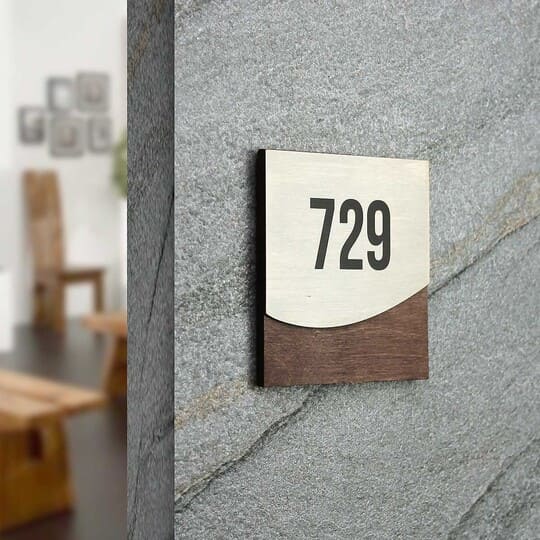
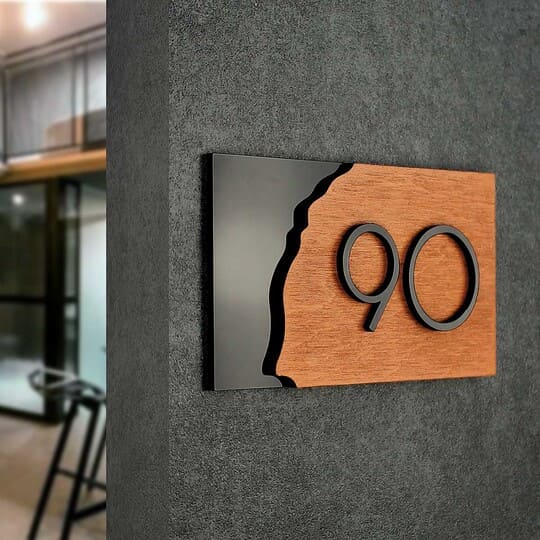
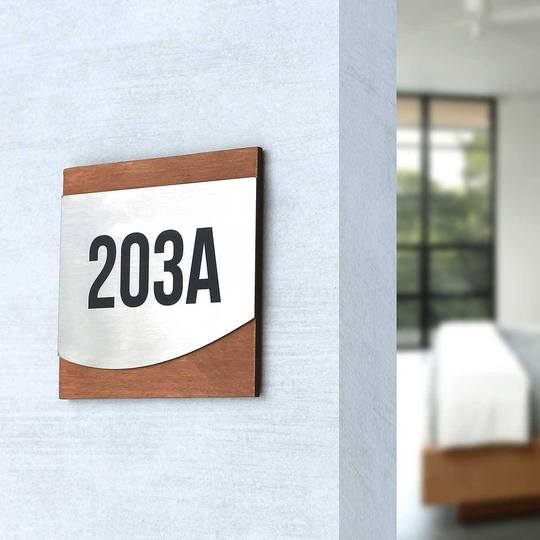
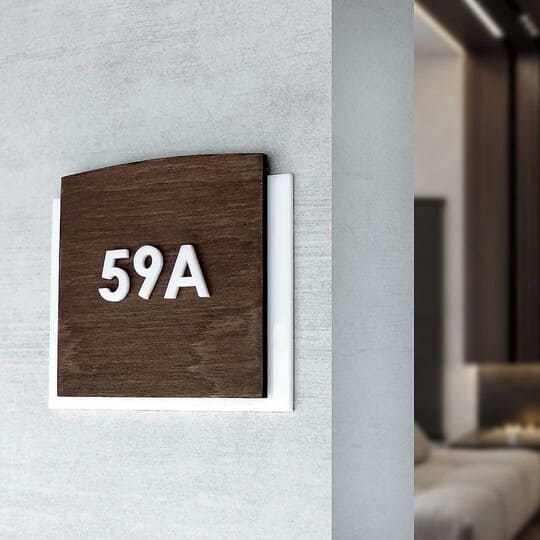
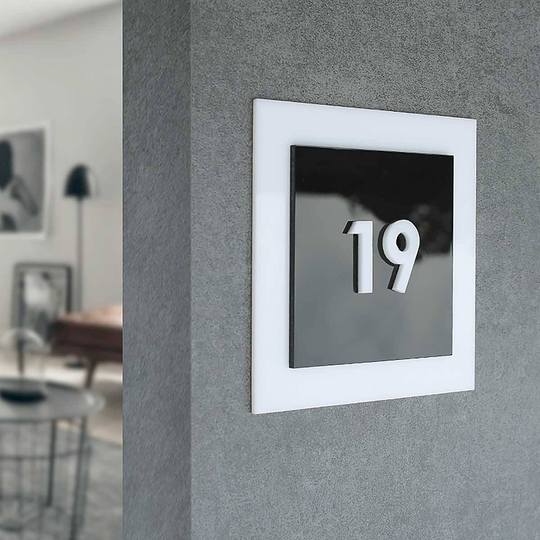
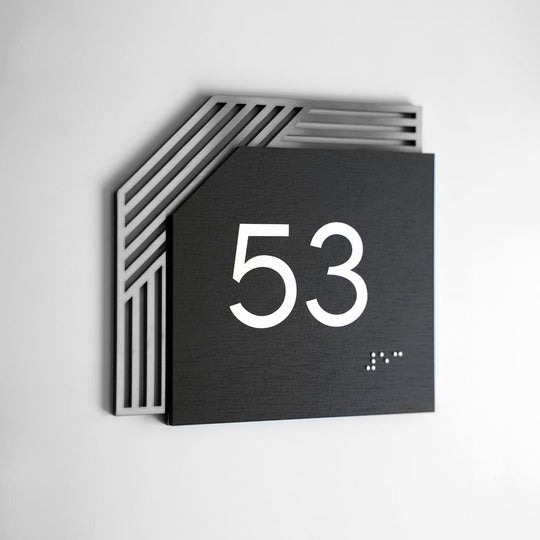
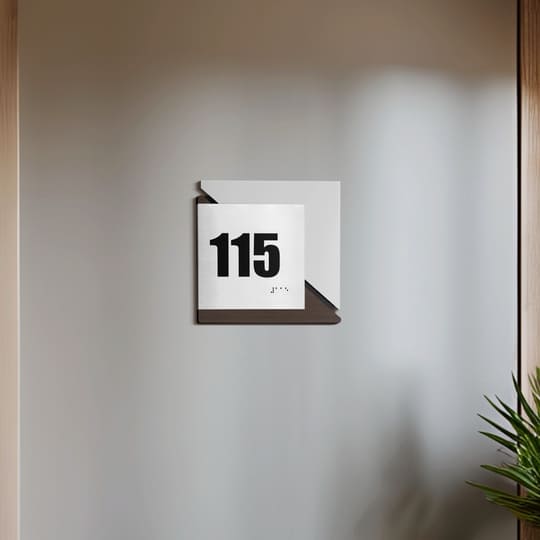
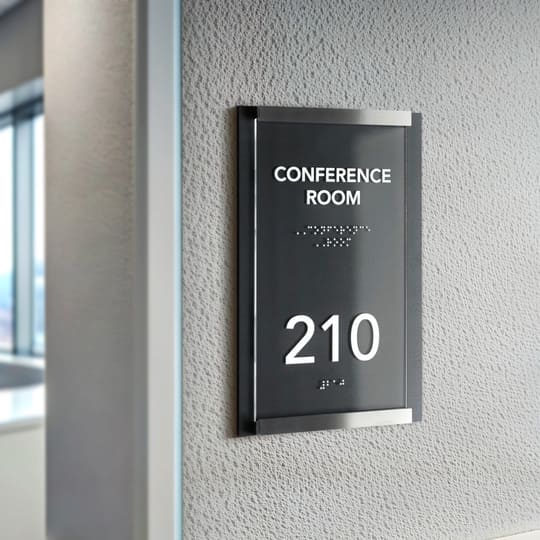
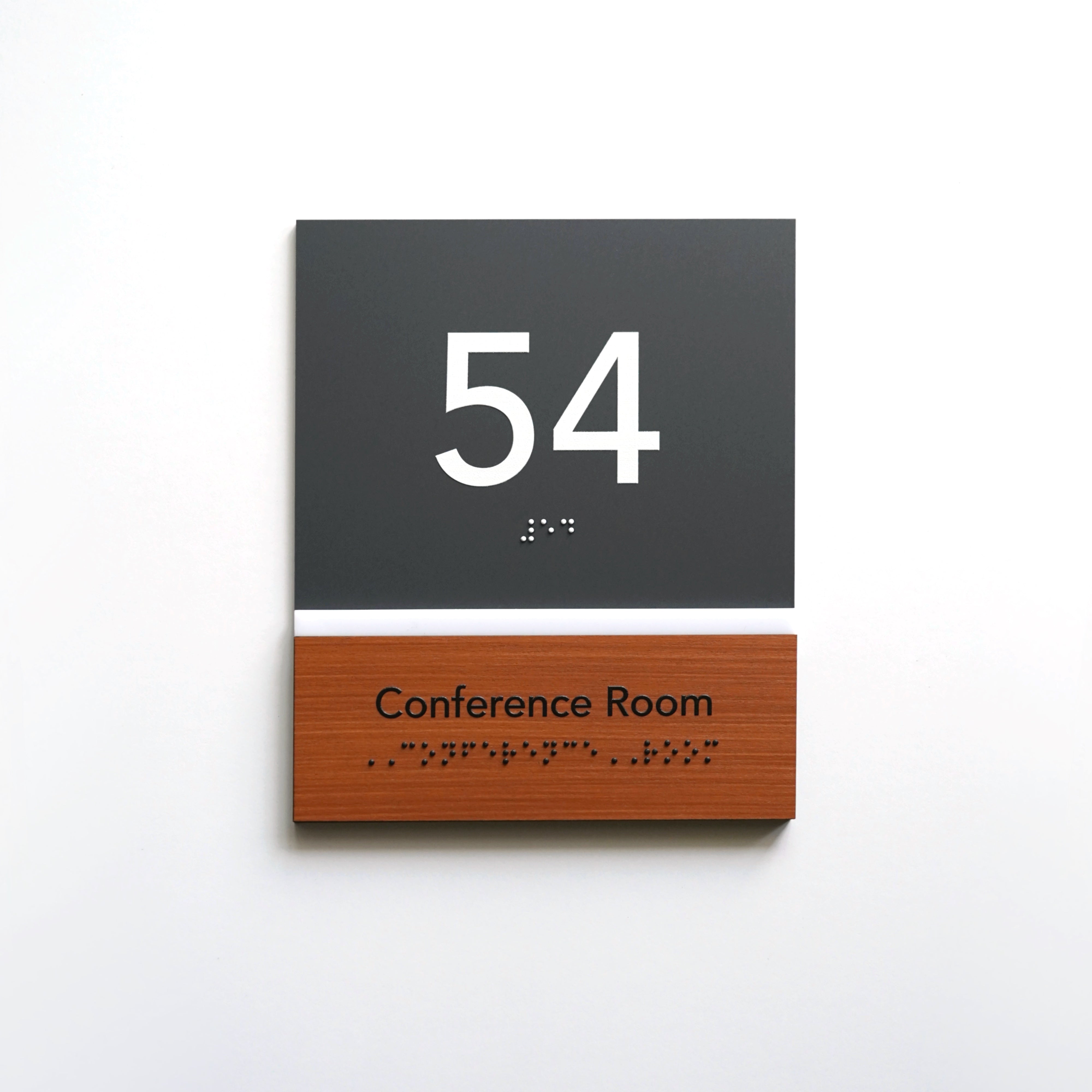
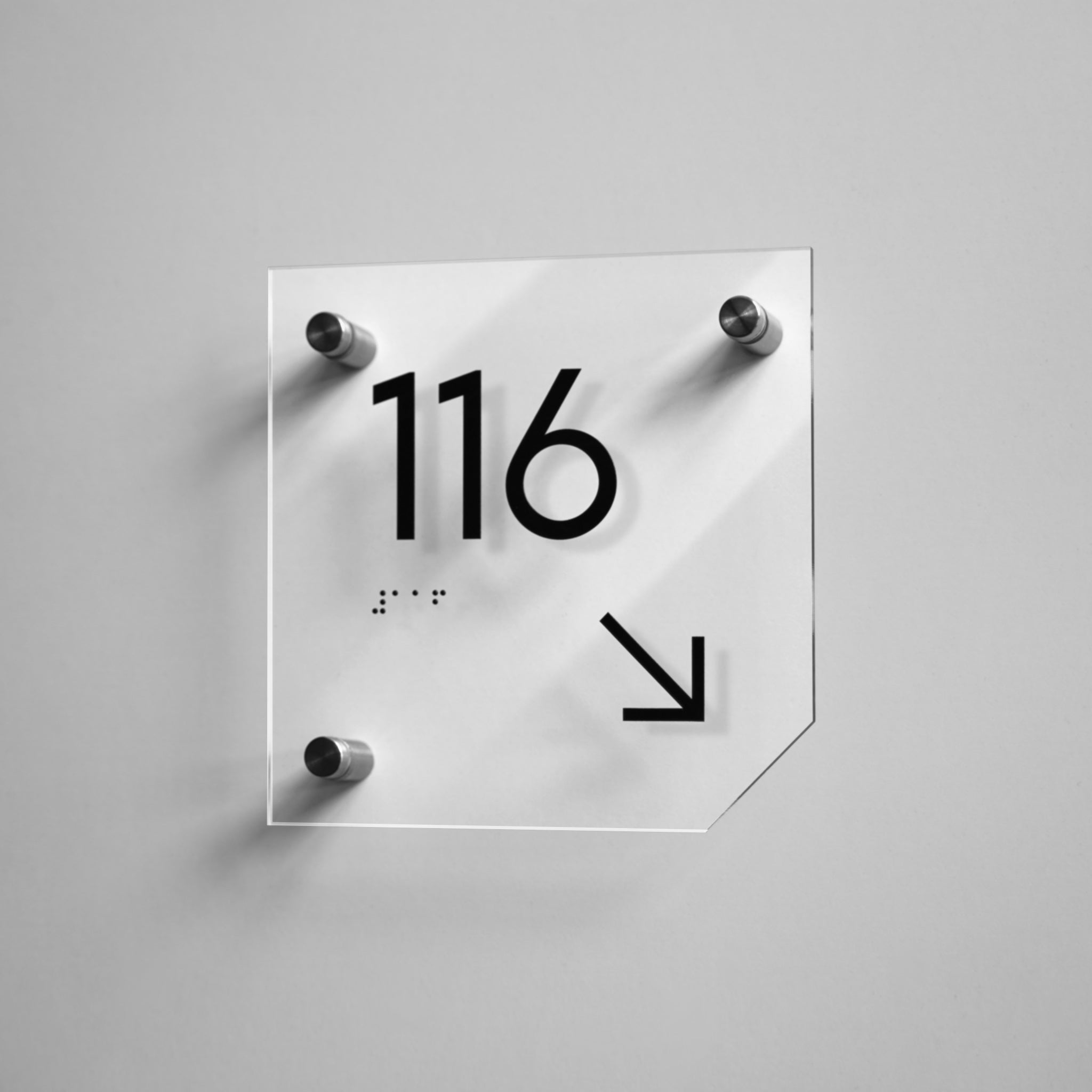
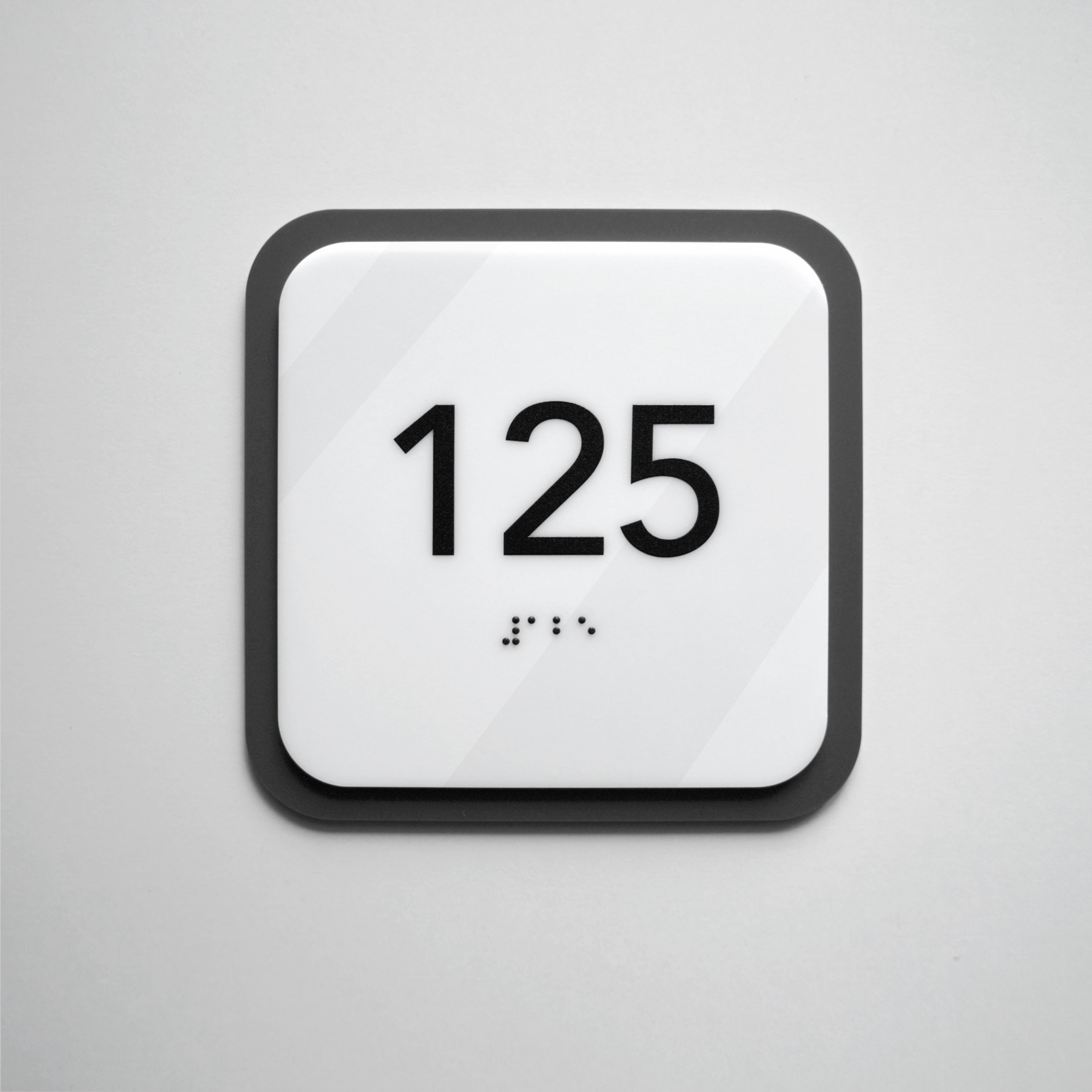
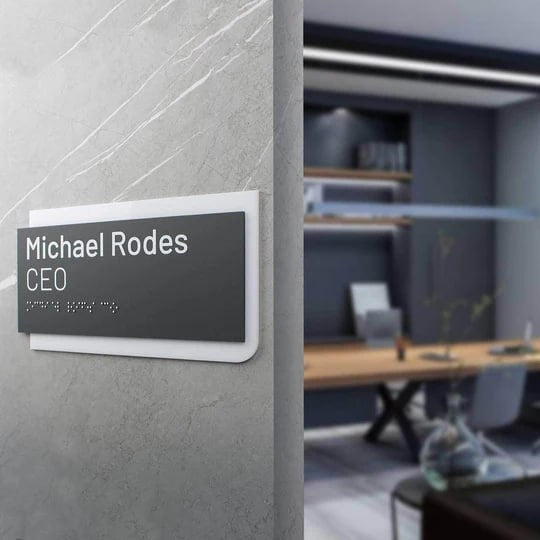
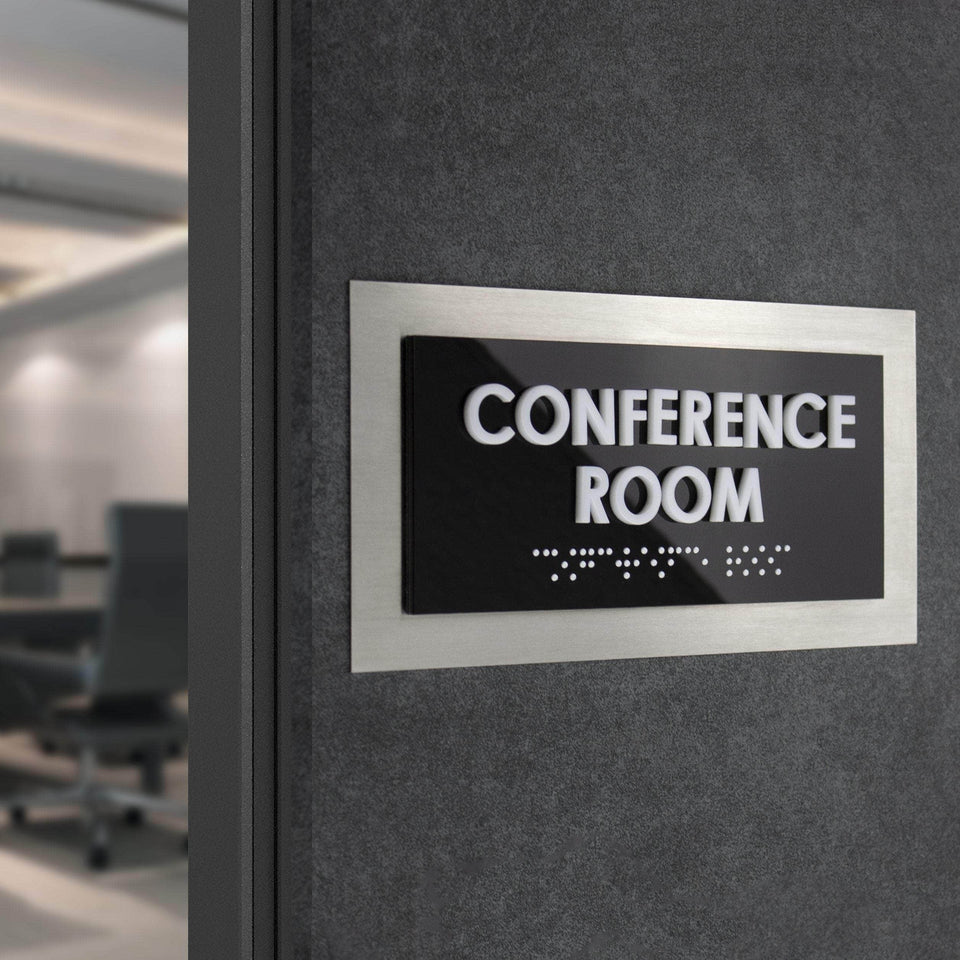
An example of a door sign that combines contemporary design, excellent legibility, and long-lasting durability:
Why Physical Signs Remain Relevant in the Digital Age
Despite advances in digital technology, physical signs remain the foundation of most wayfinding systems. They help people navigate a space quickly without requiring an internet connection, a power supply, or interaction with a screen. That is why physical signage continues to be widely used in offices, hotels, clinics, residential complexes, and other commercial spaces.
Digital signs serve a different purpose: they display frequently changing information, such as room availability, schedules, queues, and visitor announcements. Physical signs, on the other hand, provide permanent wayfinding, including directions, room numbers, floor identification, and service-area signage. This clear division of functions makes the overall system intuitive and convenient for users.
People expect instant wayfinding without extra steps
When visitors enter a business center, hotel, or clinic, they want to know where to go within seconds. They should not have to search for an app, wait for a screen to load, or scan a QR code for basic directions. A sign displaying a room number or directional arrow provides an immediate answer without requiring any interaction. That is why physical signage remains the first layer of wayfinding in most spaces, while digital tools are introduced where additional or frequently changing information is needed.
Permanent signs work without internet access, software, or power
A digital display depends on electricity, network connectivity, and properly functioning software. If any of these components fails, the navigation information disappears with it. A sign made of stainless steel, acrylic, or wood continues to serve its purpose under any conditions, including power outages, network failures, and system maintenance. For businesses, this means that essential navigation remains available regardless of technical issues.
Signs shape the first impression of a space
Wayfinding signs and directional signage are among the first physical elements visitors encounter after entering a building. The sign's material, typography, and mounting style communicate the quality and character of the space before visitors have even seen the full interior. Digital displays can also look modern, but they are more likely to be perceived as technical devices mounted on a wall.
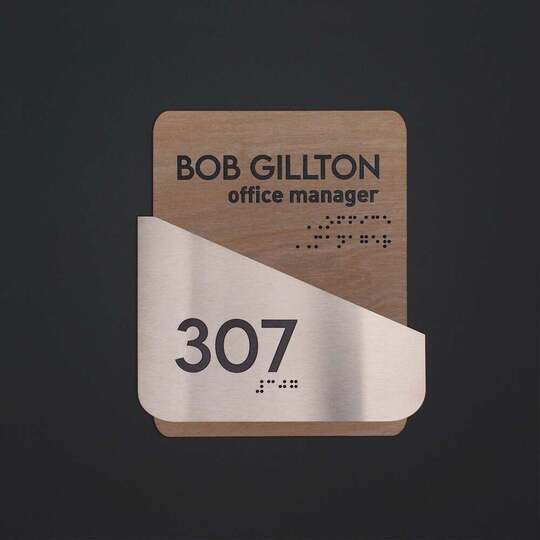
A wooden wayfinding sign that creates a warm atmosphere and complements the interiors of hotels, apartments, and boutique spaces:

Digital or Physical Solutions: Different Roles Within One System
Digital and physical wayfinding serve different functions, so they should be viewed as parts of a single navigation system. Each format is effective in specific scenarios and addresses different business needs.
When digital tools are truly useful
Digital wayfinding includes interactive directories, room-status displays, queue systems, and other tools that provide live navigation or location-related information. Broader digital signage also includes screens and panels used for promotions, event schedules, and general announcements. Digital solutions are most effective when information changes daily or even hourly, and when multiple locations need to be managed centrally from a single dashboard.
What physical signs do better
Physical signs are permanent wayfinding elements that function without a screen, app, or network connection. They are best suited to information that remains unchanged for months or years, including door identification, office and apartment numbers, directional guidance, accessibility requirements, and maintaining a consistent visual style throughout a space.
What is a signage system?
A signage system is a coordinated set of signs, directional markers, information elements, and routes that helps people quickly find their destination and understand how a space is organized.
|
Wayfinding Need |
Best Format |
|
Room, apartment, or floor number |
Physical sign |
|
Event schedules, promotions, and news |
Digital display |
|
Real-time meeting room availability |
Digital screen |
|
Tactile room identification |
Physical sign with Braille |
|
Directional guidance in corridors |
Directional sign |
|
Clinic appointment queue |
Electronic display board |
QR codes and information displays as a secondary layer
QR codes and information signs work well together when each serves a clear purpose. The sign provides essential information at a glance, while the QR code gives visitors access to additional details, such as menus, instructions, or booking forms. The key message should always be clear before anyone needs to scan the code.
Digital vs. Physical Wayfinding in 2026
The choice between digital wayfinding and physical signage depends on what the system needs to accomplish.
|
Criterion |
Digital Wayfinding |
Physical Signage |
Stronger Format |
|
Updating changing content |
Fast, central, remote updates |
Requires reprinting or a replaceable insert |
Digital |
|
Live content, such as room status, queues, and events |
Designed for real-time updates |
Cannot display live information |
Digital |
|
Managing multiple locations |
One dashboard updates all screens |
Each signage set must be produced separately |
Digital |
|
Instant room identification |
Works, often more than needed |
Immediate, no interaction |
Physical |
|
Operation without power or internet access |
Stops working without them |
Always remains available |
Physical |
|
Maintenance |
Power, software, updates, repairs |
Minimal |
Physical |
|
Integration with the interior |
May look like a device mounted on the wall |
Can be matched to the space through materials and finishes |
Physical |
|
Cost predictability |
Variable due to hardware replacement cycles and license fees |
Predictable |
Physical |
Main Findings
The comparison of digital vs physical signage shows that each solution serves a different purpose within a signage system. Digital wayfinding is best suited to information that changes frequently, while physical signs provide permanent identification, intuitive navigation, and reliable operation without technical dependencies. In most business environments, combining both formats creates a more effective and user-friendly signage system. Choosing the right approach depends on the function each element is intended to perform.
Total Cost of Ownership: What to Consider
The initial purchase price is only one part of the overall cost of a signage system. When choosing between different solutions, businesses should consider the total cost of ownership, including all expenses incurred throughout the system's service life.
For digital wayfinding, these costs may include screens, installation, power supply, software, license fees, updates, technical support, maintenance, and potential equipment repairs. For physical signage, the main expenses are typically production, installation, and the replacement of individual signs when layouts change or rooms are repurposed.
Digital and physical solutions should therefore be assessed not only by their upfront cost, but also by the resources required to operate and maintain them over their entire lifespan.
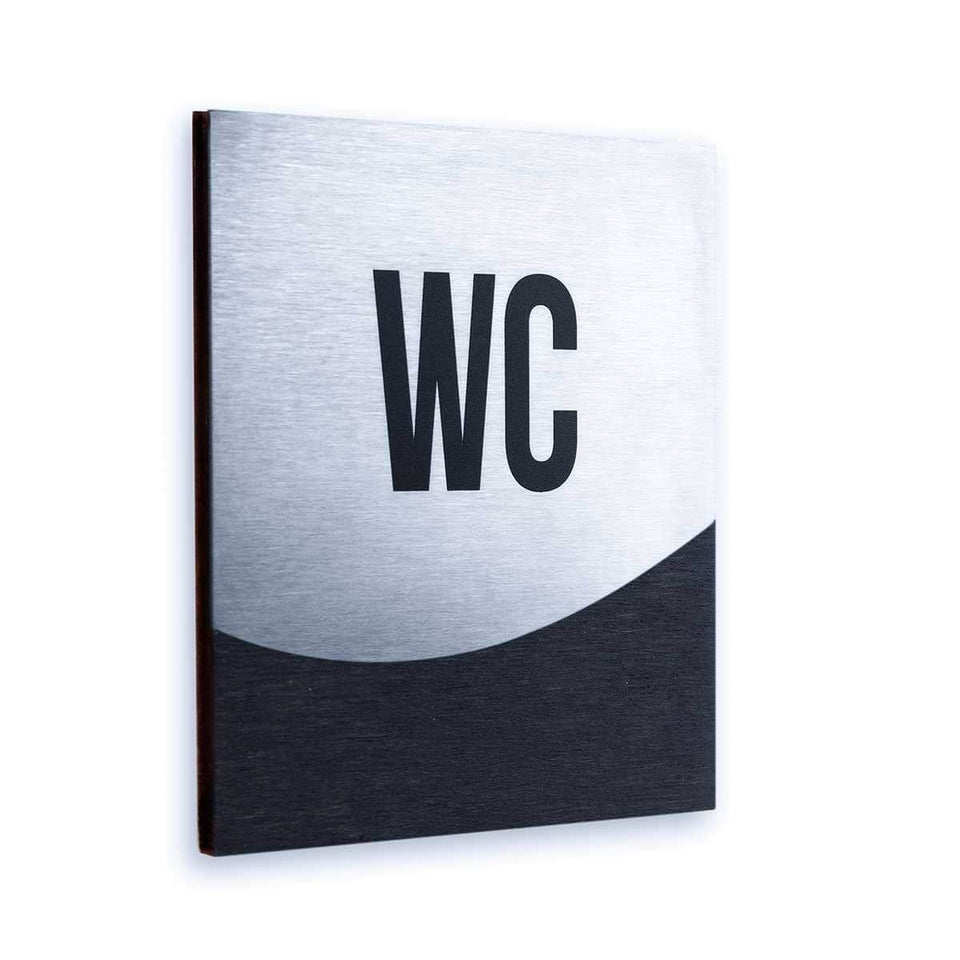
An example of a minimalist restroom sign designed to help visitors identify the facility quickly:
Five Common Reasons Businesses Choose Physical Signage in 2026
-
It works around the clock without technical support. Permanent signs do not require firmware updates, restarts, or technician visits. Hotels and business centers get a signage system that performs consistently day and night, on weekdays and public holidays, without involving the IT department.
-
Designed to complement interior architecture. The material, typography, and color of a sign can be coordinated with the space in the same way as furniture or lighting. In hotels and offices, signage often becomes an integral part of the visual identity.
-
No reliance on technology. Unlike screens, which attract attention through movement and light, a static sign communicates essential information without distracting visitors as they look for the right room or destination.
-
Easy to expand as buildings grow. Adding a sign for a new office or department is usually simpler and faster than integrating another endpoint into a digital display network with its own power supply and connectivity requirements.
-
It offers a predictable service life. High-quality materials such as stainless steel and acrylic can last for years without replacement, while digital wayfinding hardware follows separate maintenance, repair, and replacement cycles.
Where Physical Signage Works Best in Business Environments
Every type of commercial space has its own visitor routes, decision points, and navigation requirements. For that reason, no single system works equally well for every property. Effective planning should take into account how people move through the space, which areas they visit most often, and what information needs to be available at a glance.
Hotels and Resorts
Room number signs, directional signs between buildings and service areas, and directional guidance to reception, restaurants, spas, and elevators are all essential touchpoints. They allow guests to find their way instantly, without opening an app or asking for assistance at the front desk.
Offices and Business Centers
Office door signs, meeting room signage, department markers, and reception signs help create a consistent corporate identity throughout the workspace.
Apartments and Residential Complexes
Apartment and floor numbers, building signs, and common-area navigation are designed for long-term use and rarely require updates.
Healthcare Facilities
Clear navigation between departments, treatment rooms, and offices directly affects the comfort of every patient visit. Accessibility requirements also make physical tactile and Braille signs an essential part of a healthcare signage system.
Coworking Spaces
Members and visitors need to navigate flexible environments that may include meeting rooms, phone booths, shared workspaces, and communal areas. A QR code placed next to a physical sign can provide additional information about bookings, availability, or schedules.
The role of physical and digital signage varies depending on the type of property. Visitors move through hotels, offices, residential complexes, healthcare facilities, and coworking spaces in different ways, which means each signage system should be designed around the specific user journey.
|
Space |
What Physical Signage Covers |
Where Digital Signage Adds Value |
Recommended Approach |
|
Hotels |
Room numbers, floors, service areas |
Event schedules, promotions |
Physical base and digital updates |
|
Offices |
Room names, meeting rooms, departments |
Room bookings, announcements |
Physical identity and digital support |
|
Apartments and residential complexes |
Apartment numbers, floor numbers, general wayfinding |
Resident notices |
Mostly physical |
|
Healthcare facilities |
Departments, treatment rooms, restrooms |
Queue information, live status updates |
Physical wayfinding with targeted digital elements |
|
Coworking spaces |
Zones, meeting rooms, phone booths |
Meeting room status, events, QR information, bookings |
Hybrid signage system |
Accessible Wayfinding: What to Consider
Signs with Braille help make navigation easier for people with visual impairments and are an important part of an inclusive, barrier-free environment.
When designing an accessible signage system, it is important to consider installation height, sufficient contrast between text and background, font legibility, and the logical placement of information. Durable tactile signs are the most practical option for permanent rooms and facilities.
When information changes regularly, such as meeting room names, room availability, or event schedules, digital signage systems or modular signs with replaceable inserts are often the better solution.
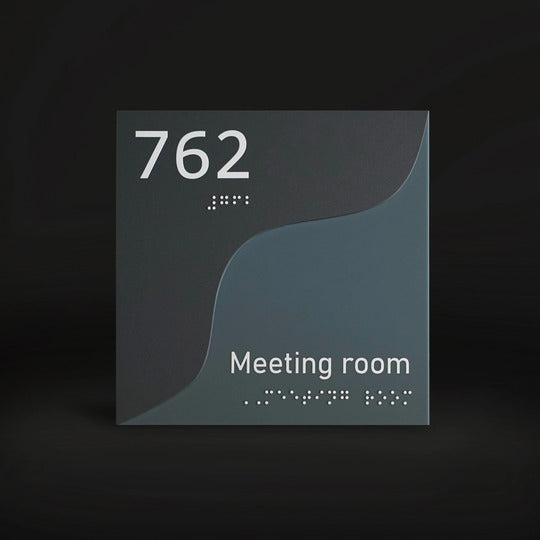
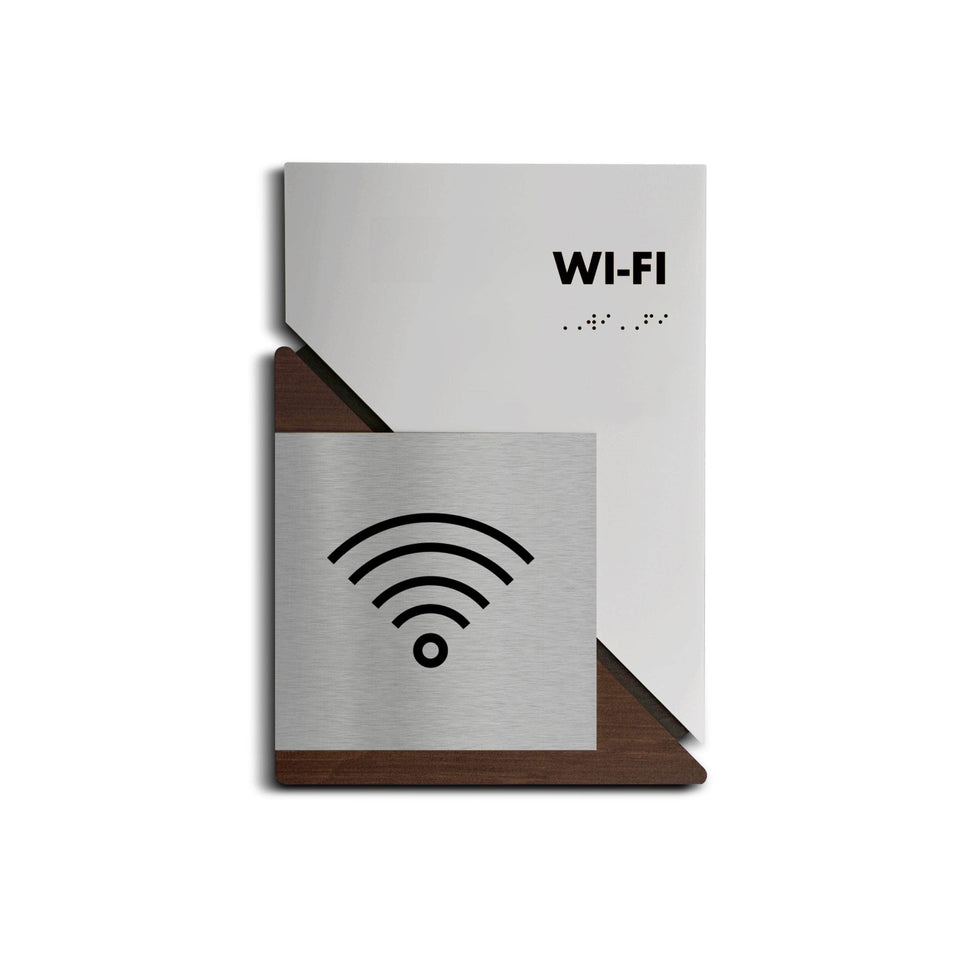
An example of a wayfinding signage system that helps visitors navigate a space easily while maintaining a consistent interior design:
How Wayfinding Sign Materials Influence the Perception of a Space
The material used for wayfinding signage affects both its lifespan and the way visitors perceive the environment. It shapes the first impression, supports the architectural concept, and helps create a cohesive brand image. Even when the design is identical, wood, acrylic, and stainless steel create different associations and interact with an interior in distinctly different ways.
Wooden signs: warmth, comfort, and a premium feel
Wood brings a sense of warmth and natural character to a space. Wooden signs work particularly well in hotels, apartments, and boutique offices where atmosphere matters. Choosing the right fonts for signage in warm-toned interiors is equally important, as typography can complement the natural beauty of the wood while ensuring clear and effortless wayfinding.
Acrylic signs: clean lines and modern aesthetics
Acrylic creates a clean, minimalist, and contemporary look. It can also be easily customized to match a company's branding. Acrylic signage is well suited to offices, coworking spaces, and clinics where visual clarity, consistency, and a polished appearance are essential.
Stainless steel signs: prestige and durability
Stainless steel communicates professionalism, quality, and permanence. It is commonly selected for executive offices, premium commercial environments, and high-traffic areas where signage must withstand intensive use for many years.
Comparison of Wayfinding Sign Materials in 2026
Every material has its own advantages, so there is no single solution that works for every space. The right choice depends on the interior style, traffic levels, durability requirements, and the specific tasks the signage system needs to perform.
|
Material |
Visual Impression |
Durability |
Best Suited For |
Notes |
|
Wood |
Warm, natural, premium |
Good indoors |
Hotels, apartments, boutique offices |
Works in soft, hospitality-focused interiors |
|
Acrylic |
Clean, modern, minimal |
Good indoors |
Offices, coworking, clinics |
Flexible for branded and layered designs |
|
Stainless steel |
Polished, professional |
Very strong |
High-traffic, public areas, offices |
Best for long-term, premium-looking systems |
How to Create a Signage System That Will Not Become Outdated
A signage system is designed for long-term use, so it should be planned with future changes in mind. Office reconfigurations, new rooms, or changes in how individual areas are used should not require the replacement of the entire signage system.
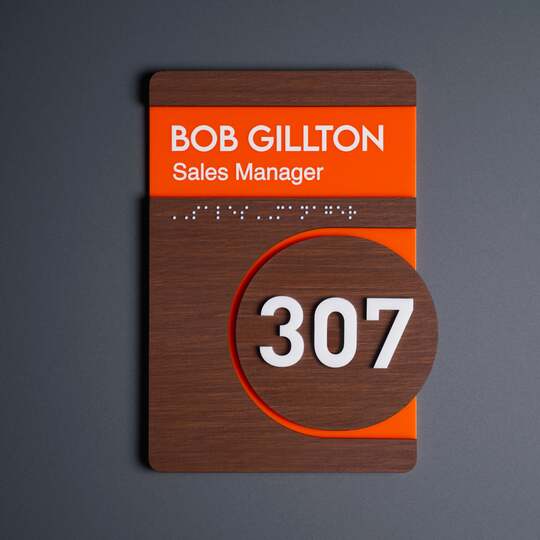
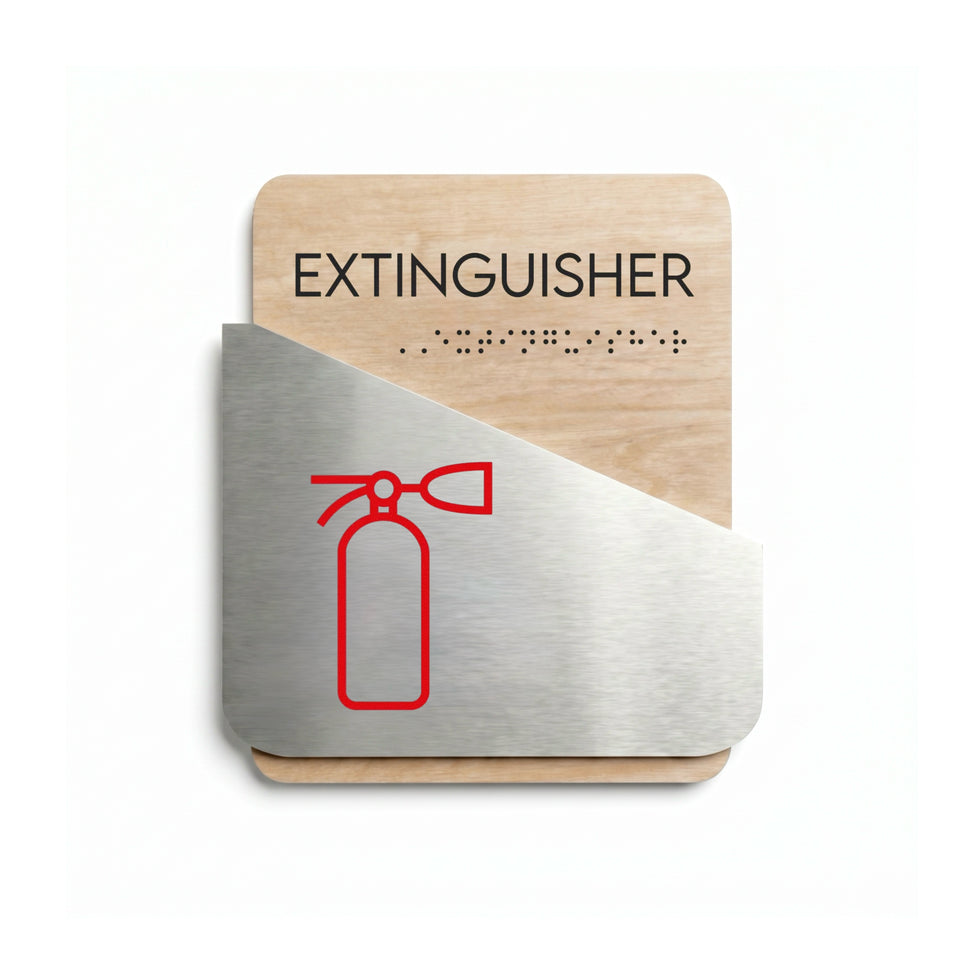
An example of individual wayfinding signs that combine text, pictograms, and Braille to make a space clear and accessible for every visitor:
Design around the architecture rather than short-term trends
A signage system built around the actual architecture and layout of a building will remain relevant longer than one based on a short-lived design trend. Each sign should support and reinforce the natural logic of the space.
Maintain a consistent style and clear information structure
Using the same typography, sign dimensions, and placement principles throughout the property creates a signage system that visitors can understand intuitively, even when they enter an unfamiliar part of the building.
Make the system easy to expand and update
Modular inserts and replaceable elements make it possible to update signs for rooms with changing functions without replacing the entire system.
Tips from Bsign Store:
-
Plan signage around the actual routes visitors take, including entrances, corridor turns, elevators, stairways, and final destinations.
-
Treat QR codes as a second layer of information. The primary message should always be clear before a visitor scans the code.
-
Use durable physical signs for permanent rooms. For flexible spaces, choose modular inserts or combine physical signage with a live digital status display.
-
Repeat the relevant information at the final destination so visitors can immediately confirm that they have arrived at the correct place.
-
Coordinate sign materials and visual style with the interior, and build in a 10–15% allowance for new rooms, replacements, and future expansion.
How to Choose the Right Wayfinding Solution
Once you understand what the signage system needs to achieve, choosing the right format becomes much easier.
|
Business Requirement |
Recommended Solution |
Why It Works |
|
Permanent room identification |
Physical signs |
Instant recognition without interaction |
|
Frequently changing content |
Digital signage |
Content updates quickly |
|
Premium interior presentation |
Physical signs made from high-quality materials |
Materials carry brand and design |
|
Extra instructions or details |
Physical signs and QR codes |
Visible navigation stays simple, details stay accessible |
|
Live availability or queues |
Digital displays |
Real-time status only screens can show |
|
Multi-floor navigation |
Physical directional signs and directory |
Clear guidance at decision points |
|
Rooms that change function |
Modular physical signs or digital status layer |
Information can be updated without replacing the entire system |
The Future of Wayfinding: Physical and Digital Signage Working Together
In 2026, most business environments use a layered navigation approach. Physical signage provides permanent, reliable orientation, while digital tools display information that changes throughout the day. Hotels combine physical room number signs with digital event displays. Offices use door signs alongside meeting room booking screens. Clinics rely on physical directional signage for departments while using electronic displays for queue management.
Bsign Store's approach to custom signage systems was featured in Ukrainian business media Vector in the article "Custom Wayfinding Systems for Commercial Spaces: How to Combine Branding and Functionality in One Solution" (available in Ukrainian).
Businesses planning their signage systems several years in advance will usually incorporate both formats during the initial interior design and planning stage.
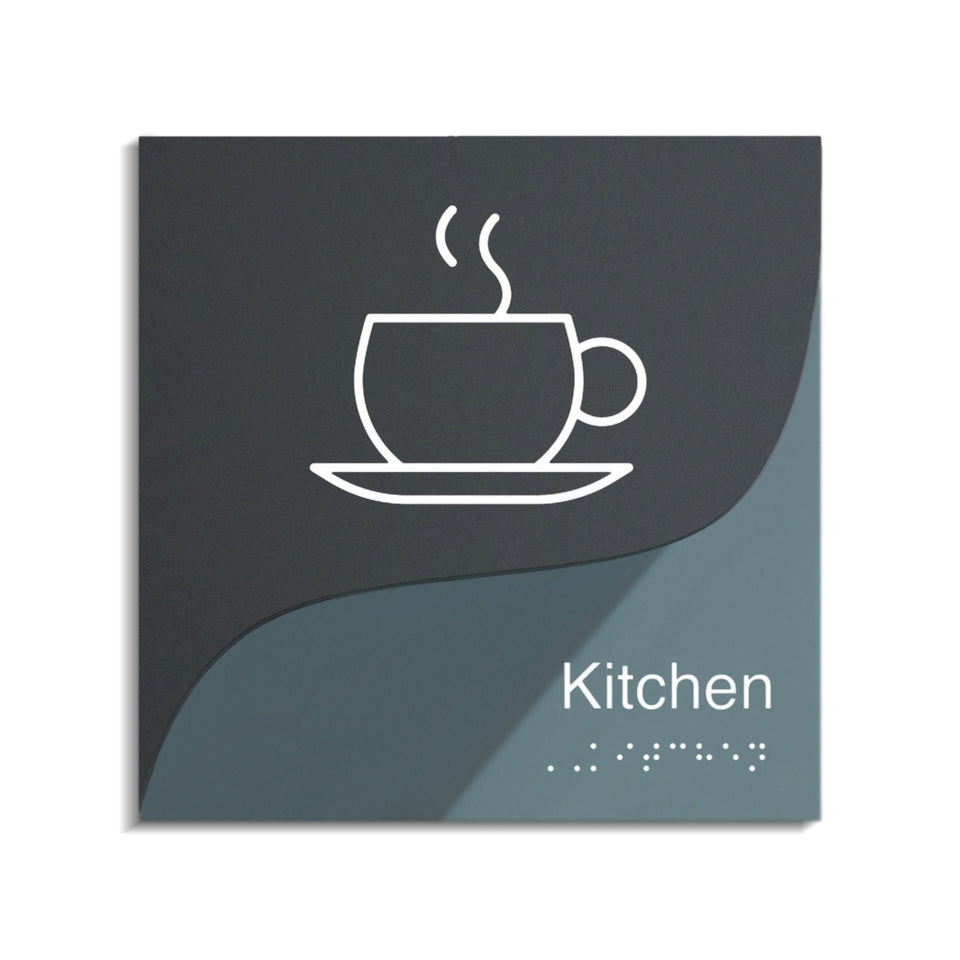
Wayfinding signs that help guests find the right rooms quickly while reinforcing the overall interior style:
Planning a Wayfinding System for Your Space?
Bsign Store creates physical signs for business as well as custom wayfinding systems for offices, hotels, apartments, clinics, and coworking spaces. Our solutions range from office door signs and directional signage to complete wayfinding systems tailored to your interior, brand identity, and accessibility requirements. Submit a request, and our team will help you choose the right signage solution for your property.
Frequently Asked Questions
Can digital solutions completely replace physical wayfinding signs?
Digital signage is effective for live and frequently changing content, but it depends on electricity, network connectivity, hardware, and software. Permanent room identification, accessible navigation, and reliable operation during technical interruptions still require physical signage. For this reason, fully replacing physical signs with digital systems remains uncommon in practice.
What are the advantages of physical signage in modern business spaces?
Physical wayfinding signs provide immediate guidance without requiring visitors to interact with a device. They work independently of digital infrastructure, integrate naturally into the interior, and offer predictable maintenance costs throughout their lifespan.
Which is more cost-effective in the long term: digital or physical wayfinding?
Physical signage usually involves a one-time production and installation cost, followed by minimal ongoing maintenance. Digital wayfinding may require hardware, electricity, software, content management, technical support, and eventual equipment replacement.
Why do hotels still use physical room numbers and directional signs?
Room number signs and directional signage between buildings allow guests to find their way instantly without using an app or asking at the front desk. This is especially important in large hotels and resorts with several buildings, floors, or accommodation areas.
Which material is best for a durable signage system?
Stainless steel is well suited to high-traffic areas and premium commercial environments because of its exceptional durability. Wood and acrylic are often better choices for spaces where atmosphere, warmth, branding, or contemporary aesthetics are the main priorities.
How can QR codes and physical signs be combined in one signage system?
A QR code should be placed next to a clearly visible physical sign as an additional layer of information. It may provide access to detailed instructions, menus, booking forms, or other digital content. The main message on the sign should always be understandable without scanning the code.
Do businesses need tactile signs and Braille signage?
Tactile signs and Braille are essential elements of an accessible environment, particularly for permanent rooms and facilities. Digital screens cannot replace them. Before implementing an accessible signage system, businesses should review the current accessibility requirements that apply to their specific type of property.


