










by Olena Zadniprovska
Custom Signs as a Style Tool: Real Bsign Case Studies in Modern Commercial Interiors
Style in a space works subtly. It shapes the first impression even before any direct interaction with the brand begins. People read it intuitively — through the rhythm of the space, materials, colors, and functional aesthetic details that either create a sense of thoughtful design or leave an impression of indifference. That is why custom signage has long moved beyond a purely navigational function and has become part of cohesive interior design solutions in business spaces, residential complexes, and medical facilities.
In modern corporate interiors, there are no insignificant details. How a room number plate is designed, what custom door signs to make every room unique, or how corridor navigation is organized directly affect how the environment is perceived. These elements either support the architectural concept or undermine it. This is precisely why developers, business teams, and managers of residential, commercial, and medical spaces increasingly view interior elements not as consumables, but as part of the service and the overall visitor experience.
Real Bsign client success stories demonstrate how professionally designed interior details influence the visitor experience, design consistency across spaces, and brand perception. In each case, navigation elements solve specific tasks. They help people orient themselves, reduce tension, emphasize the quality of the environment, or create a sense of trust even before the first interaction with staff.
This approach is equally relevant for residential, corporate, and healthcare environments, as well as hotel and hospitality signage for premium guest experience, where first impressions and intuitive navigation directly affect how guests perceive service quality.
In this article, we want to share practical signage case studies created for different environments — from New York condominiums to medical centers in California. These are real-world interior solutions that already function in everyday use for residents, employees, and patients. They show how thoughtful design becomes an invisible assistant to the space and why the overall impression is ultimately shaped by details.

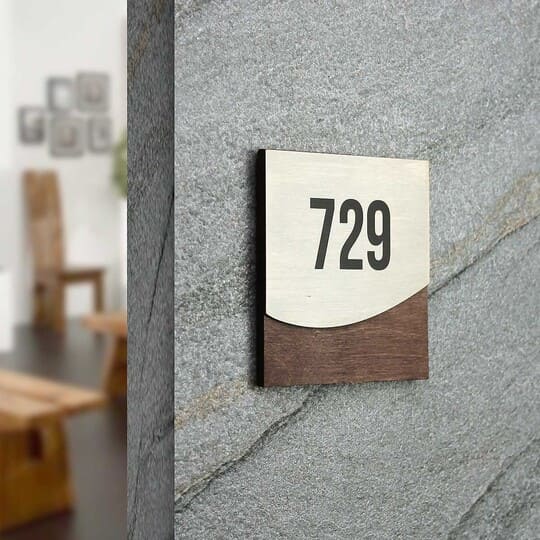
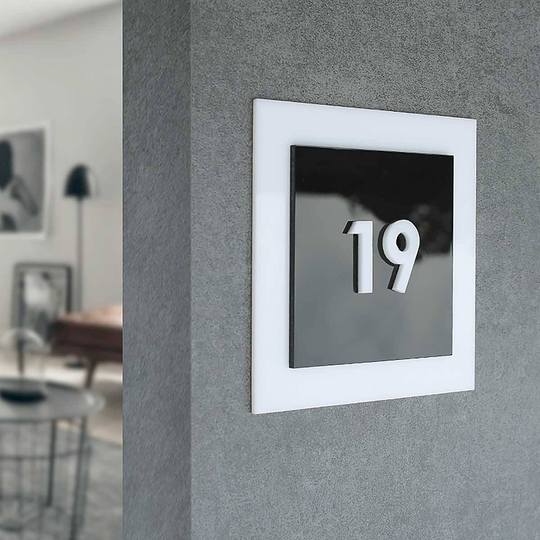
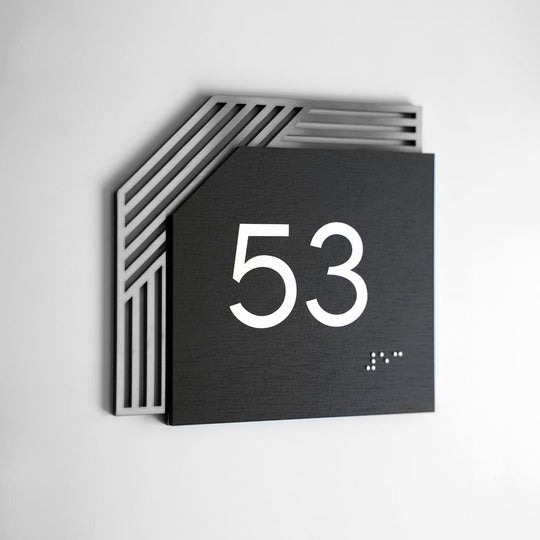
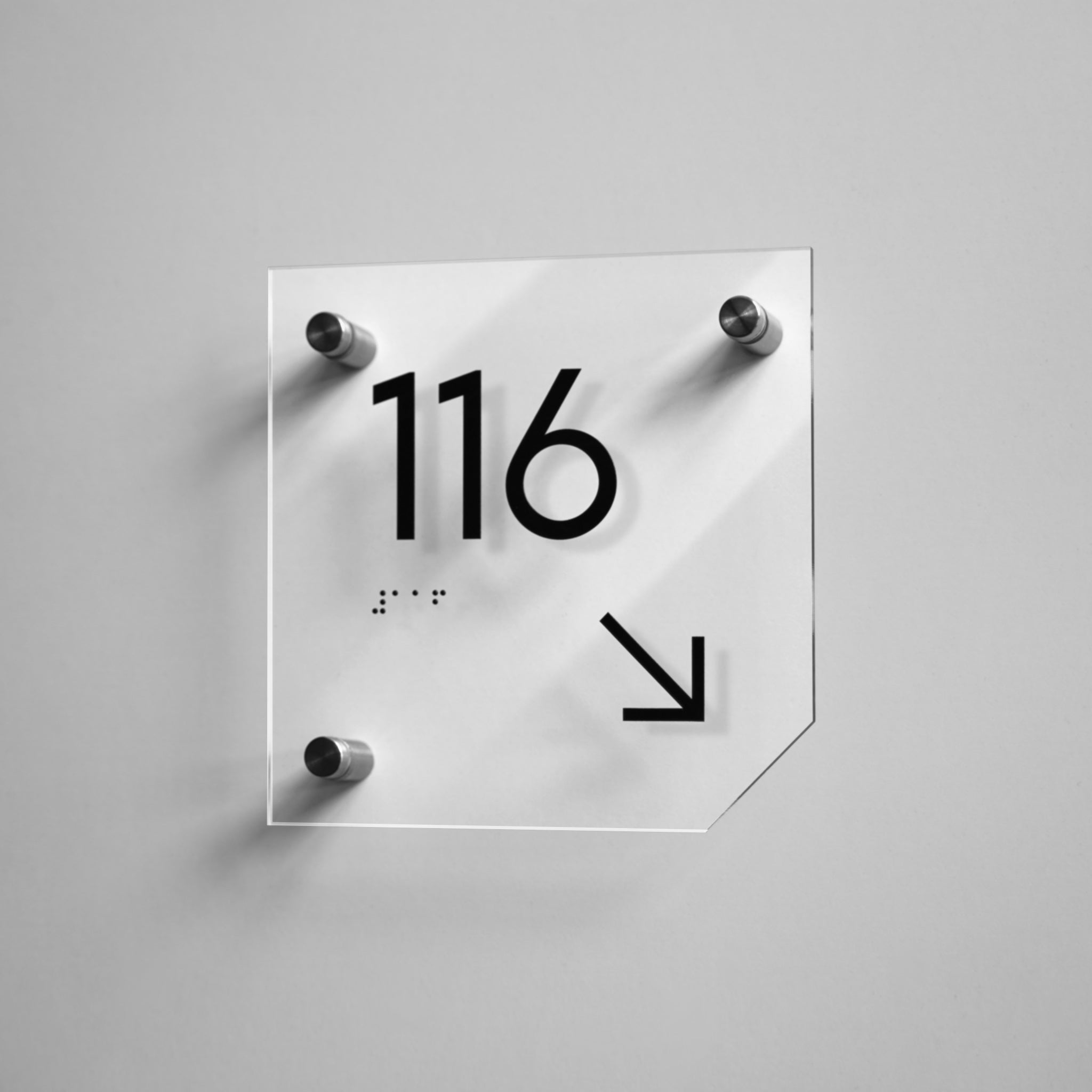
Example: acrylic door numbers in a minimalist residential interior, designed for clear readability and visual balance.
How Interior Signage Design Works in Real Commercial Spaces
In modern commercial interiors, architectural wayfinding elements are no longer perceived as secondary details. They shape the logic of movement and emphasize the cohesive interior design language. Through these elements, visitors intuitively understand how well thought-out and comfortable the environment is.
Well-designed plaques do not draw unnecessary attention to themselves, yet they consistently work in favor of the space. They help people orient themselves quickly, reduce the number of questions addressed to staff, and create a sense of order. In offices, this is reflected in a clear zoning structure; in residential complexes, in a feeling of privacy and status; and in medical facilities, in calmness and a clearly understandable route for patients.
Bsign works with three core materials — wood, acrylic, and stainless steel — which makes it possible to create customized signage solutions for different types of properties.
For example, wooden signs add warmth and a human touch to a space, acrylic provides lightness and readability, while stainless steel signs emphasize restrained premium quality and durability in high-traffic areas.
The combination of materials, proportions, and graphics allows for design consistency throughout the space, where all elements feel like parts of a single system. As a result, the product goes beyond being merely an information carrier and becomes a fully integrated interior element that contributes to brand image and the everyday experience of visitors.

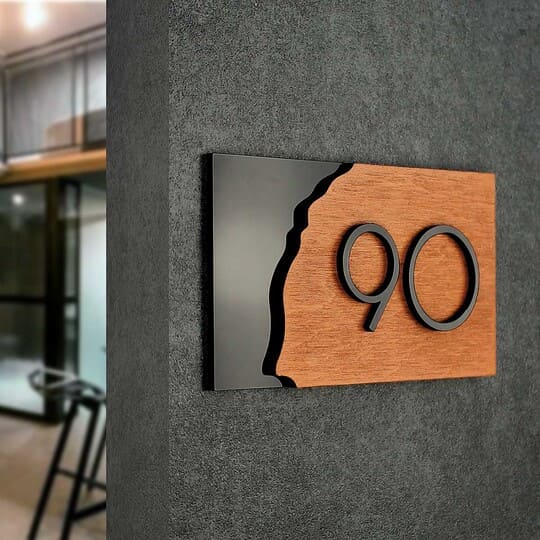
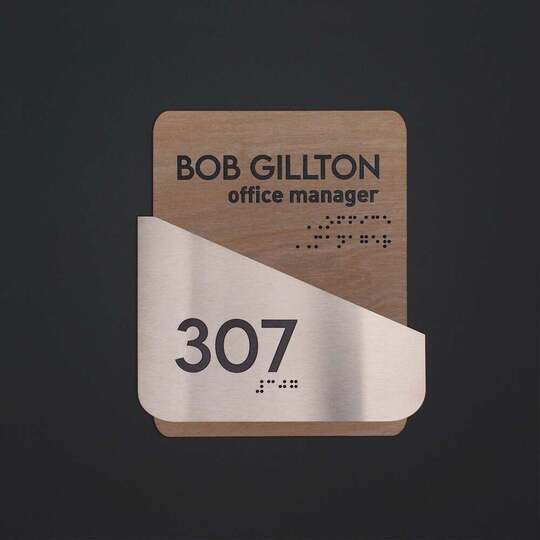
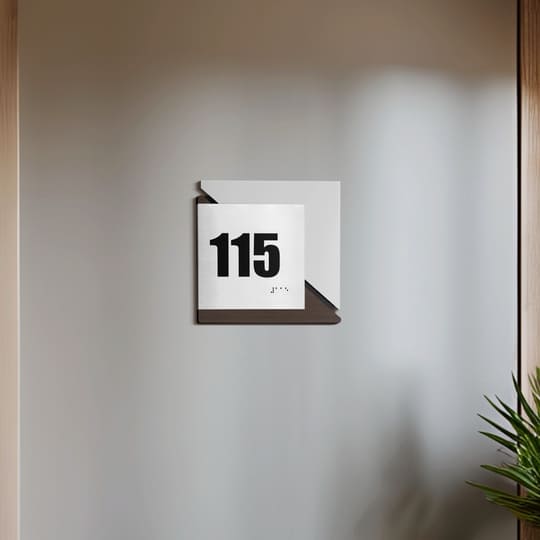
Example: layered interior signage combining acrylic and stainless steel for modern commercial spaces.
Personalized Door Signs: The Alexander Condo Case, New York
When it comes to premium residential complexes, mistakes in details are unacceptable. For the Alexander Condo in New York, the task was to update corridor navigation in strict compliance with city codes. This was not merely a replacement of signage, but a work within a highly regulated environment where every interior element must meet both aesthetic requirements and safety and accessibility standards.
The project required personalized door plaques compliant with ADA standards: tactile elements, ADA-compliant signage, raised letters, and precise adherence to the approved color palette. For the resident management team, it was essential that the navigation appeared as an integral part of the design concept rather than a separate technical addition. The products had to function for all residents and guests while remaining visually restrained.
The solution was custom ADA-compliant residential wayfinding signage. This approach made it possible to combine durability requirements with accurate color reproduction and graphic clarity. The process included several rounds of coordination of design, typography, and tactile zones, allowing every detail to be refined before production. Communication between all parties focused on specific parameters such as dimensions, contrast, readability, and code compliance.
According to the complex’s resident manager, the result not only met expectations but exceeded them, integrating seamlessly into the overall interior and enhancing comfort for residents.

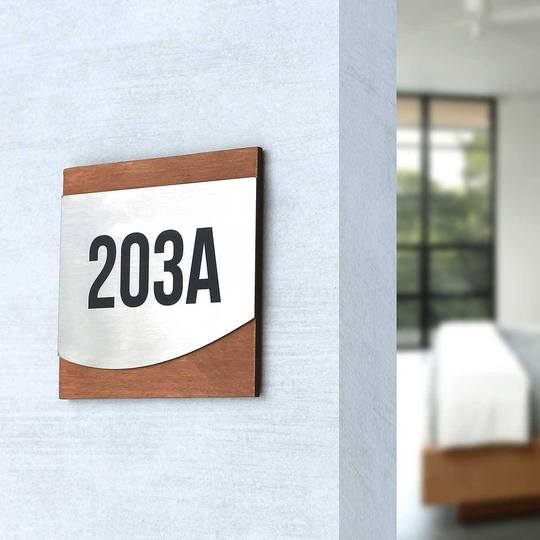
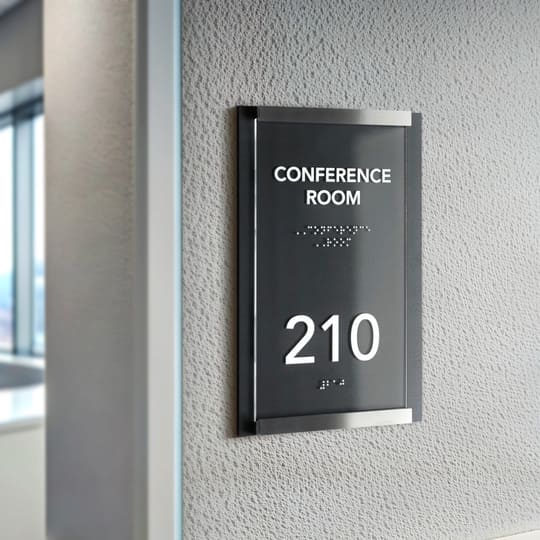
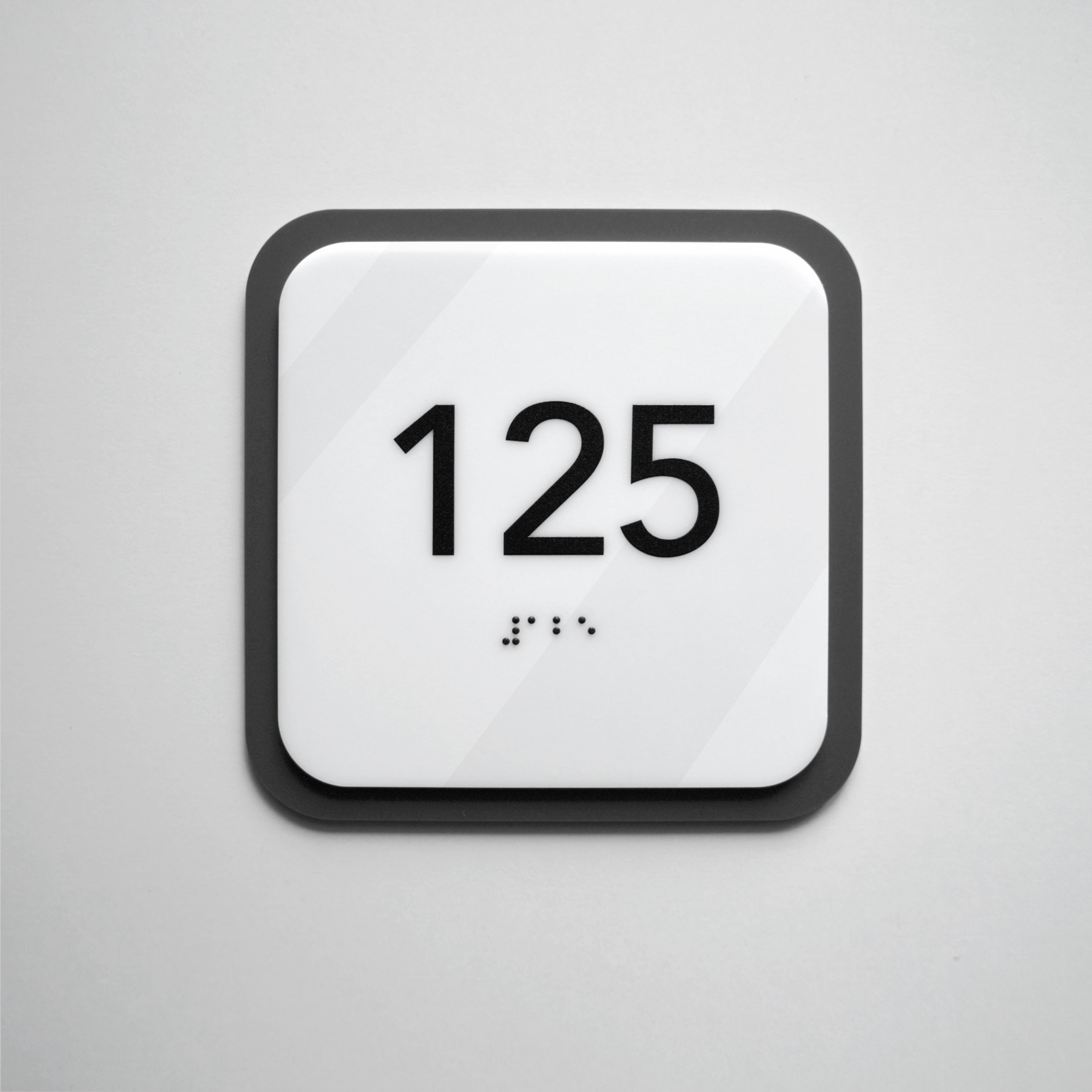
Example: ADA-compliant acrylic door numbers integrated into a premium condominium corridor.
How Interior Office Signs Shape the First Impression: The Leon-Service Plus Case
A new office is always a test of attention to detail. For the Leon-Service Plus team, completing the interior was the final stage of relocation, when it was important to preserve the integrity of the space and maintain a sense of thoughtful design. That is why the company was looking for custom office signage that elevates workspace design, supporting the interior style without unnecessary experimentation or complex approvals.
The key factors in the decision were fast communication, a wide selection of ready-made designs, and the ability to adjust fonts and sizes. As the company representative noted, the choice was based not only on the appearance of the products but also on the overall service experience: a user-friendly website, prompt responses to inquiries, and clear consultations at every stage. This made it possible to quickly navigate the options and avoid delays in completing the office setup.
As a result, the company selected a product model from the proposed options, adapting the font and format to the office’s needs, and later supplemented the solution with signs for business. This approach allowed standardized elements to be combined with customization for a specific space without disrupting the overall style. The client also highlighted the ability to quickly make changes to the layouts and receive the final version without unnecessary complications.
The navigation elements accurately supported the office’s aesthetic, and the service — from the first inquiry to delivery — became the reason for a repeat order. According to the company’s management, the result fully met expectations and was perceived as a high-quality addition to the new space. Here, the door number signs served not only a functional purpose but also an image-building one, emphasizing the office’s structured and professional character.

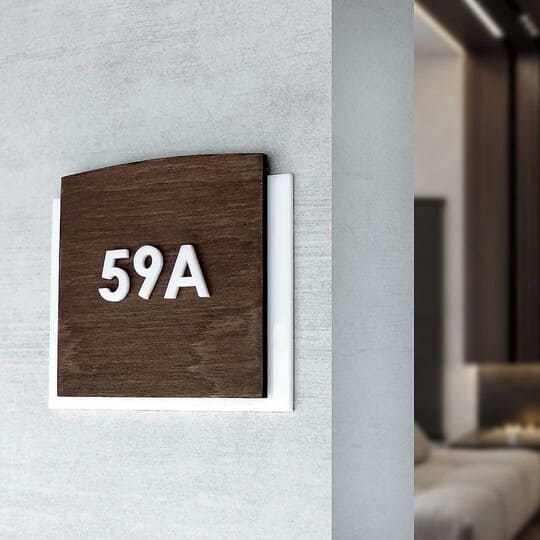
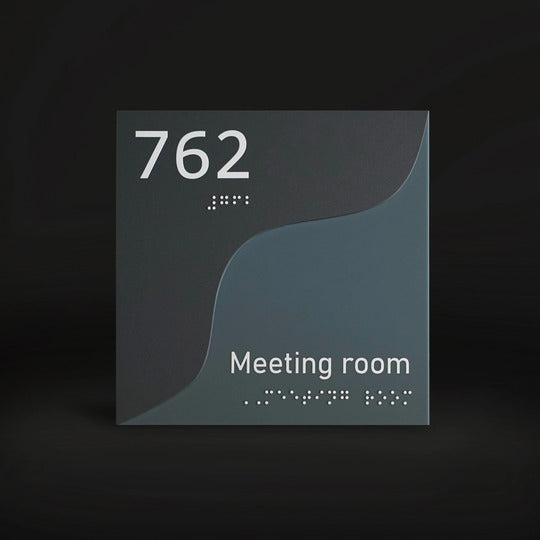
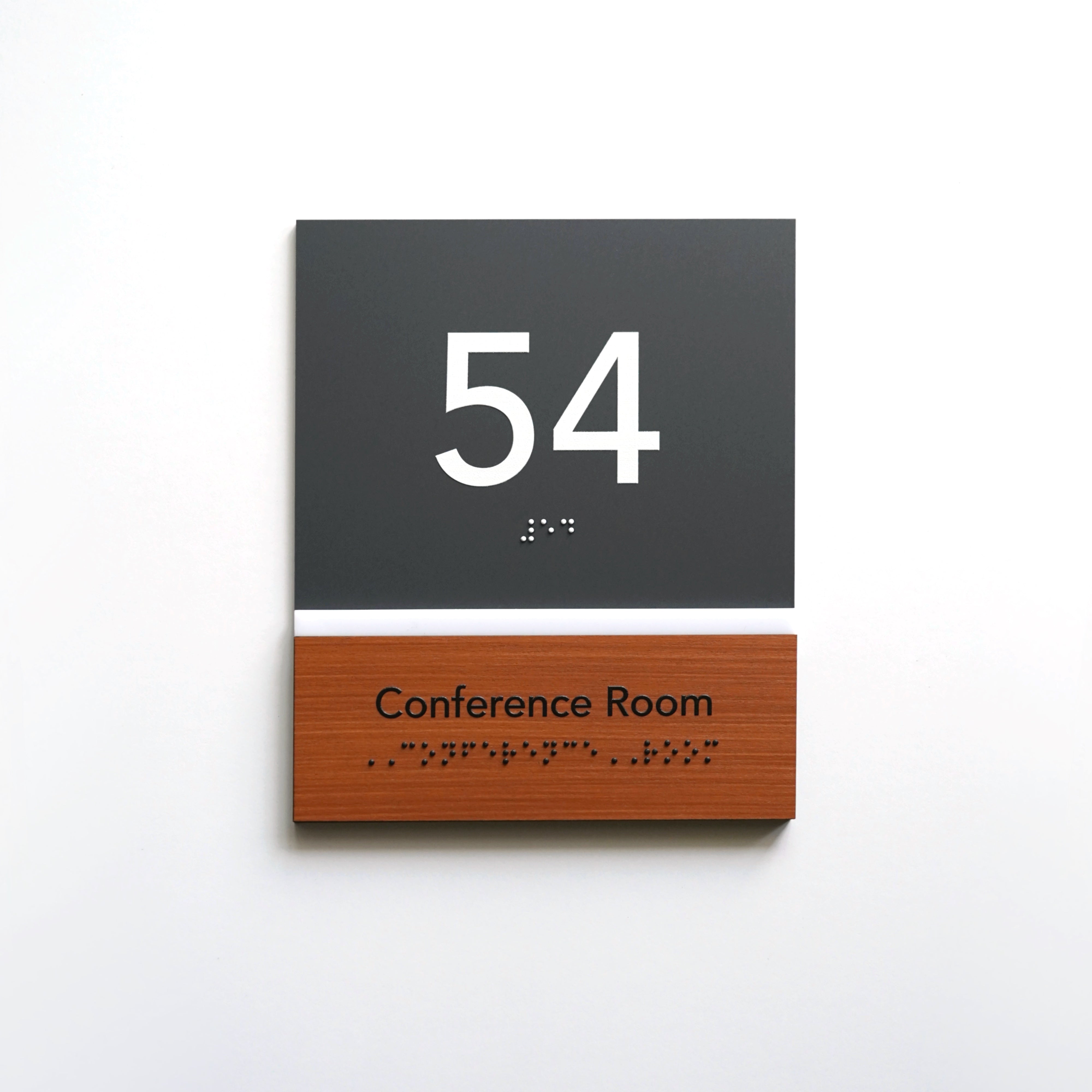
Example: minimalist office door numbers in acrylic, supporting a clean and structured workspace design.
Apartment Complex Signs: The VELDCO Case, USA
VELDCO works with modern multi-family projects focused on small to mid-sized residential complexes consisting of several buildings. In such projects, not only aesthetics matter, but also the stability of solutions in real operating conditions, where navigation elements interact daily with residents, contractors, and service teams.
The task was to create architectural signage that would match the modern style of the developments. According to the VELDCO project coordinator, the key objective was to combine black façade lines with warm wooden elements already used in the buildings’ architecture. The products needed to support this visual balance and not appear as a random or foreign element.
The solution was wayfinding signage with clear geometry and high-contrast graphics that is easy to read against the façades while emphasizing the modern character of the projects. During the process, the VELDCO team noted the importance of design mockups, which made it possible to preview the final appearance of the solutions in advance and simplified the approval process.
After the installation of the residential complex signage, the client confirmed satisfaction with both the result and the quality of execution. Over time, these solutions began to be used as a reference for other projects by the developer. According to the VELDCO representative, the installed navigation elements perform reliably in everyday use.
Apartment building signs from this case are now used as wayfinding design examples in subsequent construction phases. It illustrates an approach in which navigation is treated as part of the architectural logic of the space, rather than as a separate technical element.

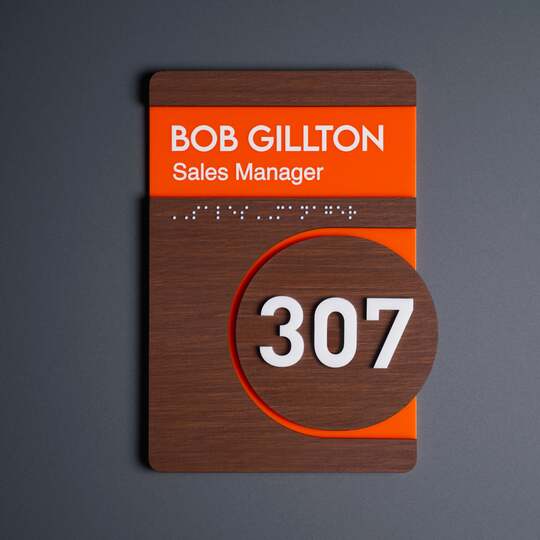
Example: apartment wayfinding signs that combine dark architectural lines with warm wooden accents.
Signage for Healthcare Facilities as an Element of Trust: the CHC Central Coast Case
In healthcare environments, design directly influences the sense of safety and psychological comfort. For Community Health Centers of the Central Coast, it was important to create a space in which patients feel supported even before the consultation begins. That is why the project focused not only on navigation logic, but also on the role of healthcare facility signs as part of a calm, predictable, and human-centered interior environment.
As a CHC representative notes, building trust is the foundation of their work. Patients are asked to speak openly about their health, so the space must be as clear and welcoming as possible. Visual elements, including design-driven navigation and staff identification, play an important role here — they create a sense of confidence and order.
Bsign implemented hospital signs with interchangeable inserts, which aligned with the organization’s internal processes. CHC staff work in different clinics and roles, so flexibility became a key requirement — specifically, the ability to easily change a name or photo without fully replacing the product. This approach made it possible to combine functionality with long-term use.
A particular emphasis was placed on personalization. The name and photo of a doctor or staff members help patients remember the person accompanying them more quickly and reduce anxiety levels. According to the CHC team, even such small details significantly affect the healthcare interior improvements and the perception of the space as more human and accessible.
These acrylic signs combine clear readability, a modern form, and visual restraint, which works well for a multi-generational audience. They support the overall style of the clinics and create a sense of consistency across all network locations. As a result, the design became not just a navigation tool, but part of a holistic experience that helps patients feel calmer and more confident in a medical environment.

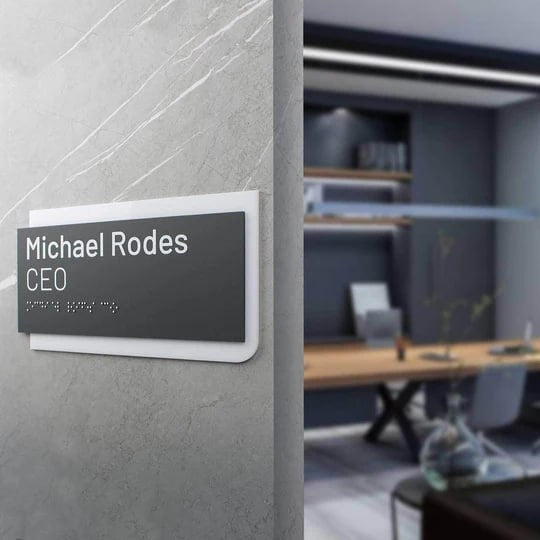
Example: acrylic healthcare staff signage with interchangeable inserts for flexible use in medical facilities.
Professional Signage: What Unites Business, Residential, and Healthcare Cases
Despite the different types of spaces — residential complexes, offices, development projects, and healthcare facilities — all of these cases share a common foundation. They demonstrate a systematic approach to interior details, where signage is viewed not as a standalone element, but as part of the overall spatial logic.
Across all projects, a shared set of principles can be observed:
-
• Signage as part of the interior logic, not decoration.
In every case, wayfinding and identification elements work in harmony with the architecture, color schemes, and materials, supporting the overall rhythm of the space and making orientation easier. This systematic approach often becomes one of the most effective interior branding ideas, as it subtly communicates values, attention to detail, and the overall level of the environment without overt visual statements.
-
• Use of premium materials only — wood, acrylic, stainless steel.
Materials are selected not for universality, but according to the character and requirements of each environment. -
• Hand assembly and precise UV printing as a guarantee of durability.
This approach ensures a consistent appearance of the signage in everyday use, clear graphics, and long-term preservation of visual quality — regardless of the intensity of use. -
• A flexible design process and clear communication.
In each project, the design went through several approval stages, making it possible to adapt solutions to real spatial conditions and avoid mistakes before production began. -
• Focus on user experience.
Signage is designed with consideration for how residents, employees, or patients interact with it — from readability and tactile qualities to intuitive perception of information.
This approach makes it possible to create premium wood and metal interior accents that integrate organically into the interior, remain relevant over time, and continue to function for years without losing quality or meaning.

Example: custom apartment unit numbers designed as part of a cohesive residential wayfinding system.
Custom Business Signs as an Investment in Brand Identity
For businesses, signage is more than navigation. It is branded interior signage for business identity, supports the business space transformation, and creates a cohesive impression even before the first interaction with the team.
Investing in commercial interior signage is an investment in long-term brand perception. These elements do not change seasonally, but they work on reputation every day, strengthening trust and emphasizing business stability. This is why professionally implemented wayfinding elements become part of a strategic approach to space rather than a one-time design solution.

Example: acrylic room numbers used as subtle interior accents in a modern business space.
Which Solutions Are Worth Choosing for Your Business?
The practice of Bsign’s case studies highlights several universal principles that work equally well across different types of spaces — from offices and business centers to residential complexes and medical facilities. These approaches are independent of project scale and help avoid common mistakes at the interior design stage.
-
• Acrylic, wooden, and metal accents in interiors outlast trends.
-
• Custom-made interior elements increase the memorability of a space.
-
• Professional signage = better navigation + a stronger first impression.
-
• Consistency of details matters more than the number of solutions.
-
• Investing in quality reduces future costs.

Example: custom interior signage integrated into a contemporary commercial environment.
The Value of Custom Signage Solutions in Modern Interiors
Real-life case studies show that custom condo signage that matches project design is fully fledged tools that combine aesthetics, functionality, and service. It operates at the intersection of design and user experience, shaping a sense of order, clarity, and thoughtful planning from the very first moments in a space. Modern signage design makes it possible to achieve this effect without visual noise or excessive accents.
Custom interior signage in commercial spaces:
-
• improves wayfinding without staff involvement, reducing the number of questions and overall tension in the space;
-
• strengthens trust in the brand through a sense of thoughtfulness, order, and professional execution;
-
• creates a cohesive visual experience in which navigation appears as part of the architectural system rather than a separate element;
-
• supports the status of the space, especially in residential complexes, offices, and medical facilities;
-
• contributes to long-term brand image, remaining relevant regardless of changing interior trends.
These principles underpin all Bsign case studies — from residential complexes and offices to medical facilities.
Another common feature across all projects is attention to detail and a systematic approach. When navigation is aligned with the architecture, materials match the character of the space, and the design goes through deliberate approval stages, the result feels natural and requires no explanation. Such solutions are not tied to short-term trends and remain relevant over time.
If you are planning a space update or are at the design stage, a consultation with the Bsign team can help you select custom solutions that support the architectural concept and enhance the overall interior impression. Even if the concept is not yet fully defined, we can propose relevant medical centers, hotel, and condo signage ideas, drawing on real case studies and experience working across different environments.


