





by Olena Zadniprovska
Office Door Signs: How Navigation Shapes a Professional Company Image
Office signs are an element of the navigation system that ensures room identification, defines the logic of movement within the space, and supports a structured perception of the office environment.
They perform three key functions:
-
Identification of offices and zones.
-
Creation of predictable office navigation.
-
Support of the corporate structure through spatial organization.
Office door signs define the functions of rooms, establish the sequence of movement, and reduce the number of questions addressed to staff. This directly impacts workflows: employees are not distracted, visitors do not get lost, and communication becomes predictable.
In this article, we examine how door signs in the office function within a navigation system, how they influence the perception of space, and why wayfinding is essential for a company’s daily operations. We also explain how office signage helps organize movement, reduce orientation errors, and maintain a cohesive perception of the office environment.
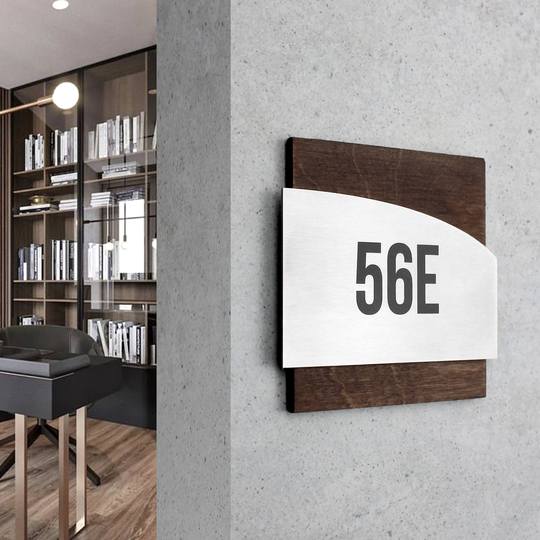
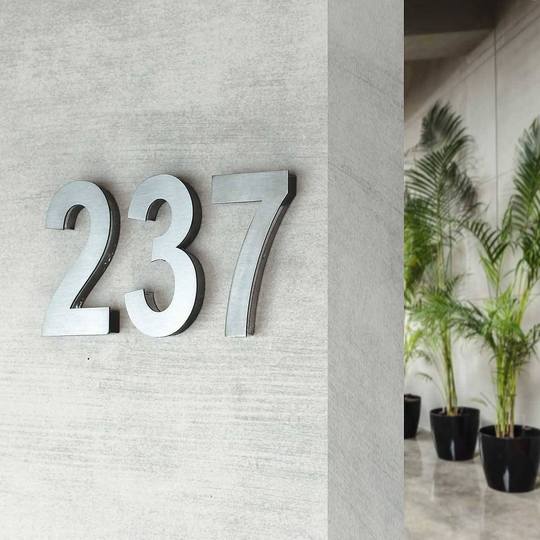
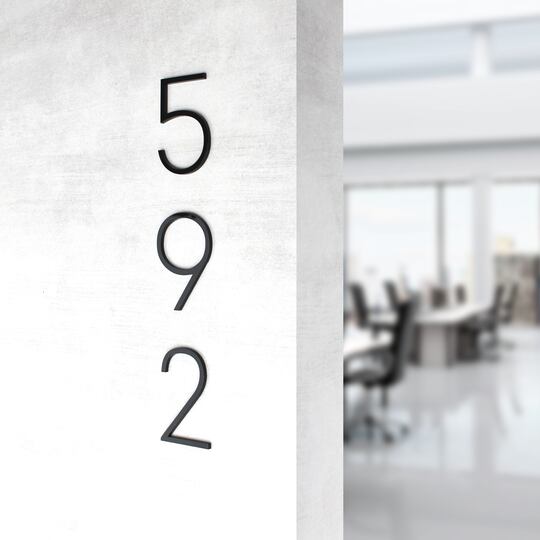
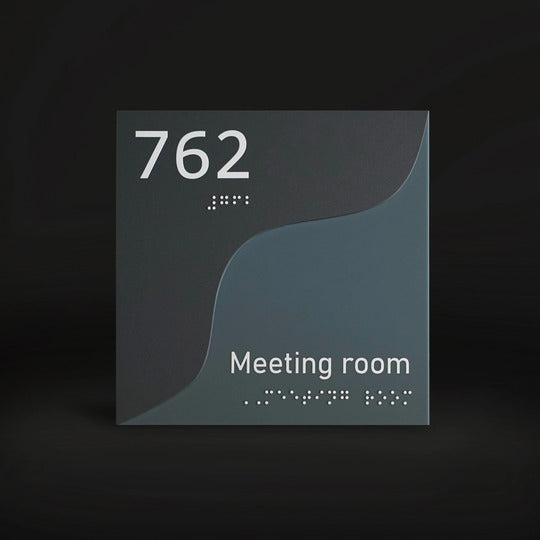
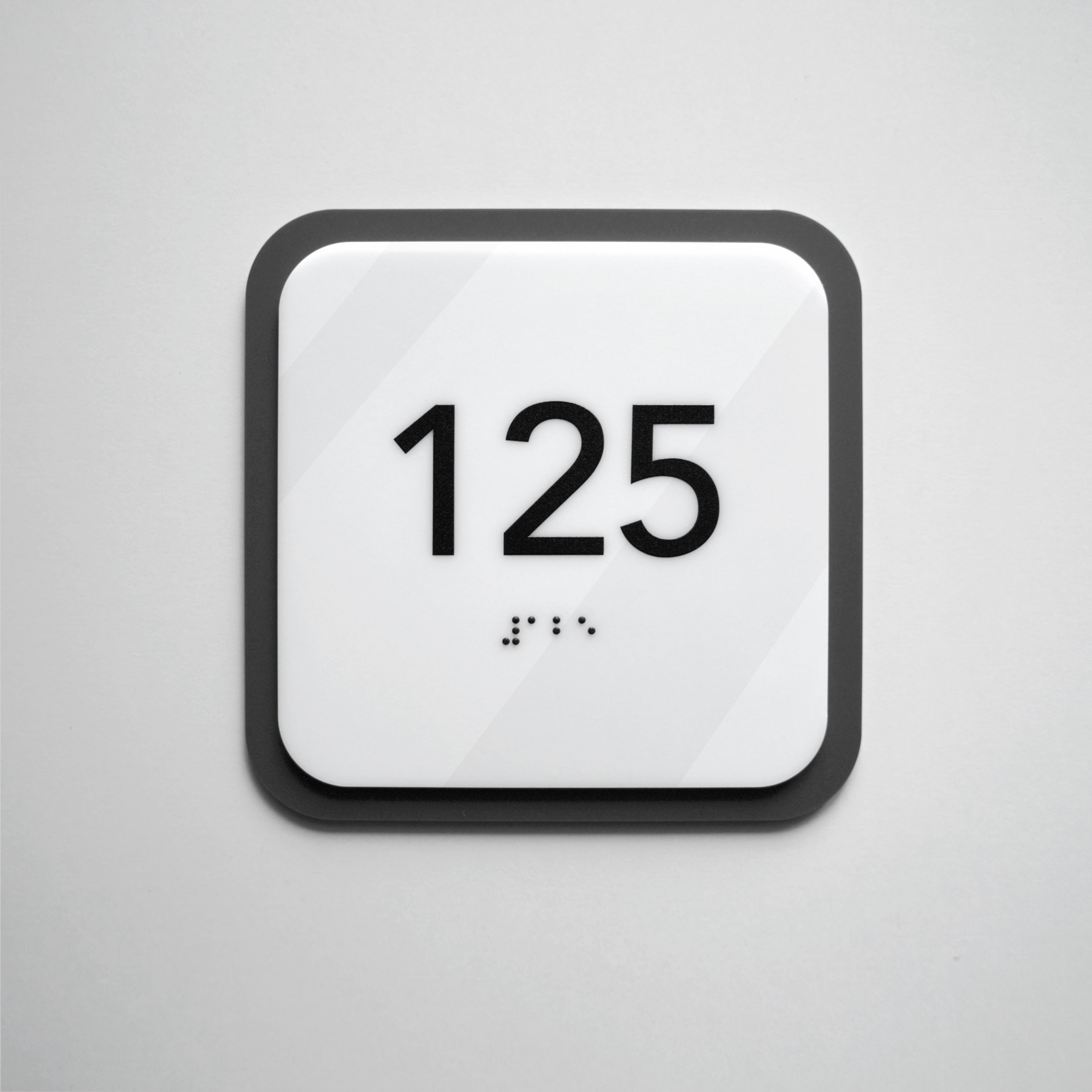
A minimalist door number plaque with high-contrast typography, designed for clear readability in office corridors with artificial lighting:

Door Signs in the Office as Part of Daily Navigation
Daily orientation begins not with staff explanations, but with how readable the space itself is. Office informational signs serve a practical function: they define the purpose of rooms and help people move without additional inquiries. This is especially important in offices with a constant flow of visitors or a complex room structure.
That is why modern office design trends for business centers focus on clear navigation, scalability, and consistent readability in everyday use. Stable navigation in business centres reduces orientation errors and shortens the time needed to find a destination.
How Office Wayfinding System Creates the First Impression
A visitor evaluates a space within the first seconds after entering. Creative office door signs reduce tension and immediately demonstrate the level of organization. A well-structured system is perceived as a plate of responsibility and control over processes.
When a person finds the right office without assistance, it creates a sense of order. This type of internal building navigation works without direct interaction with staff, yet consistently influences trust in the company.
Why People Perceive Office Space Before Interacting with Staff
A space shapes expectations even before any communication takes place. If office door signage is designed in a consistent style and placed logically, they create a sense of interior cohesion and thoughtful planning. This is an example of visual discipline that is perceived automatically.
Navigation mistakes or the absence of proper labeling create a sense of inconsistency. In such an environment, even a professional team may appear less organized, because the space does not support a clear sequence of actions.
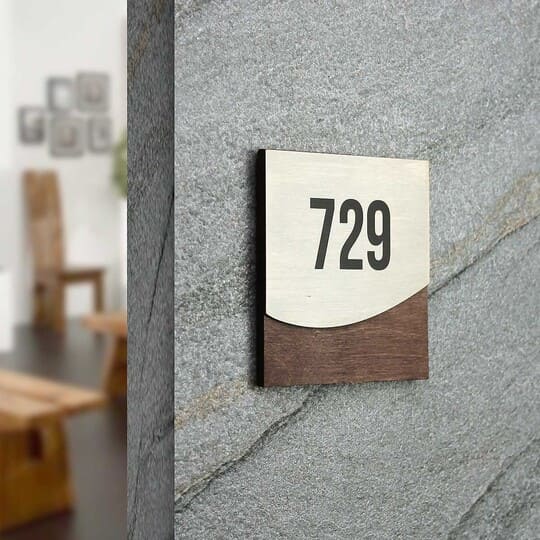
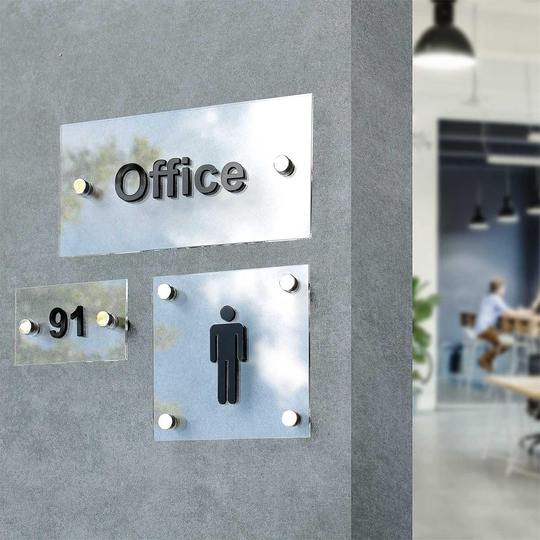
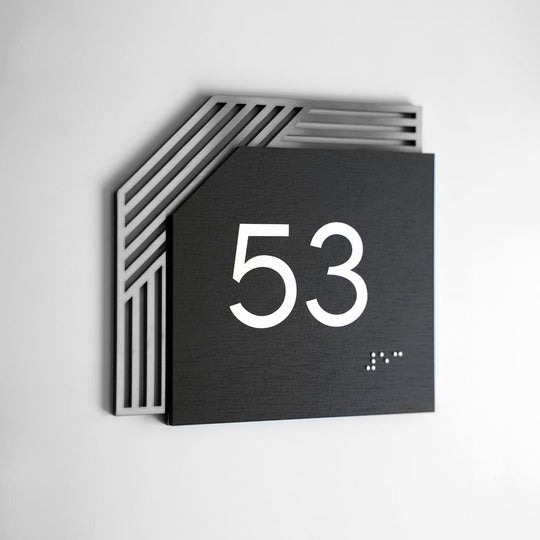
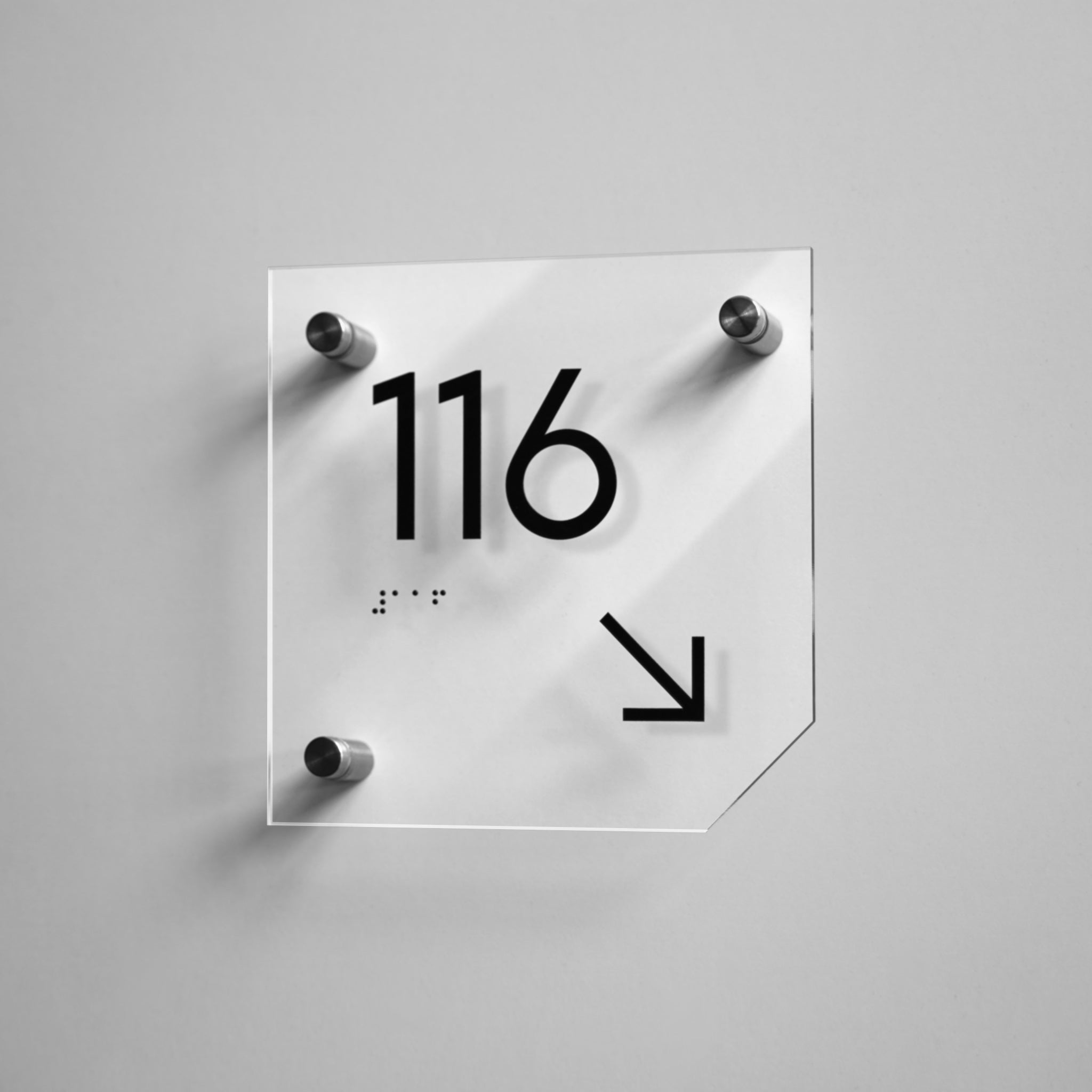
A wall-mounted office wayfinding sign that helps visitors orient themselves inside a corporate building:

The Functional Role of Door Signs in the Office Environment
The function of interior office door signs goes beyond simply labeling rooms — they help organize the daily activities of everyone within the office. They establish a clear spatial structure and enable orientation without outside assistance. As a result, the number of unnecessary stops, clarifications, and workflow interruptions is reduced.
Why Navigation Without Explanations Signals Strong Organization
Well-designed office door elements do not require additional explanation. A person immediately understands where they are and where to go next. This indicates that the space has been designed with usability in mind, not just layout.
Comfort for Teams and Visitors
For employees, a clear movement logic means daily time savings and fewer minor obstacles during work. They navigate the space more quickly, are distracted less often, and can focus on their tasks. For visitors, it signals respect for their time and attention to detail.
Custom door signs in 2026 provide comfort without unnecessary communication. When a space is easy and consistent to read, the overall user experience in the office improves and stress during visits is reduced.
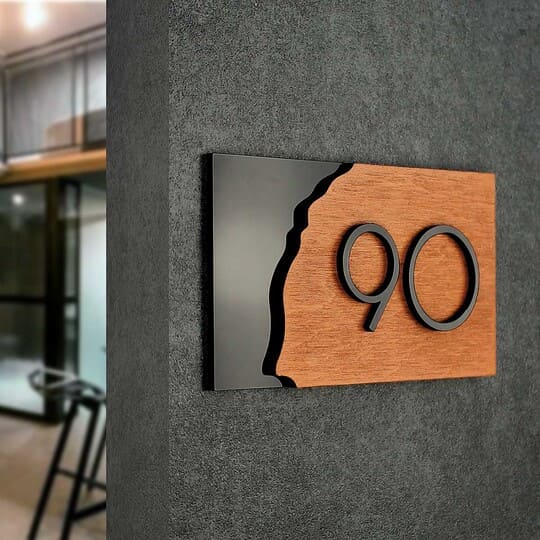
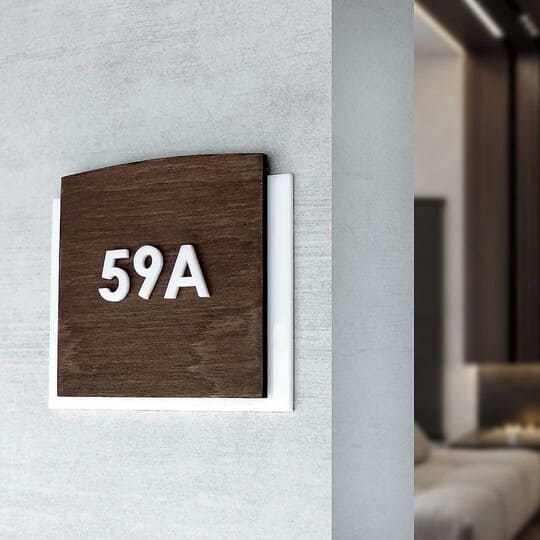
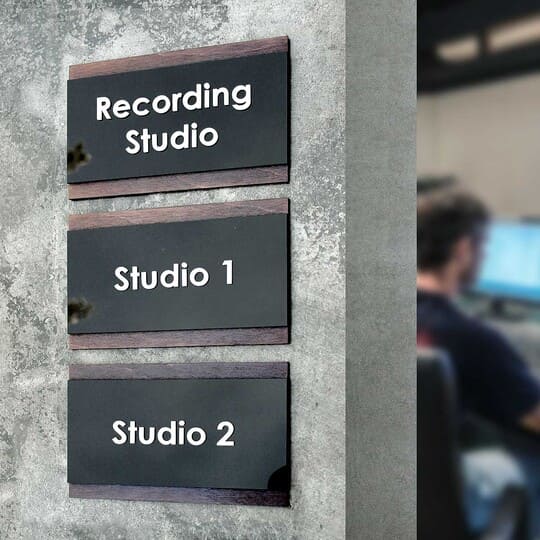
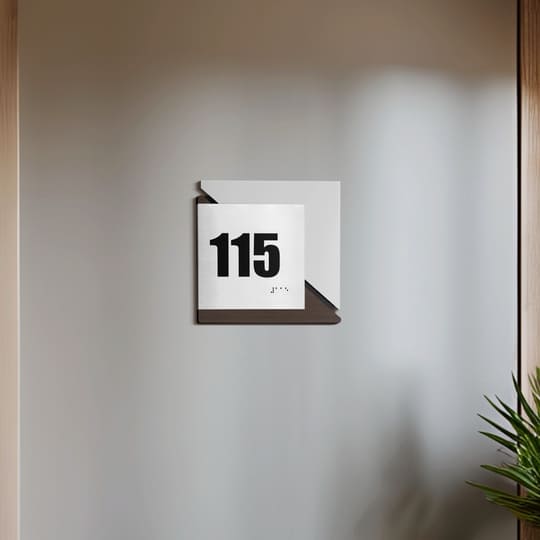
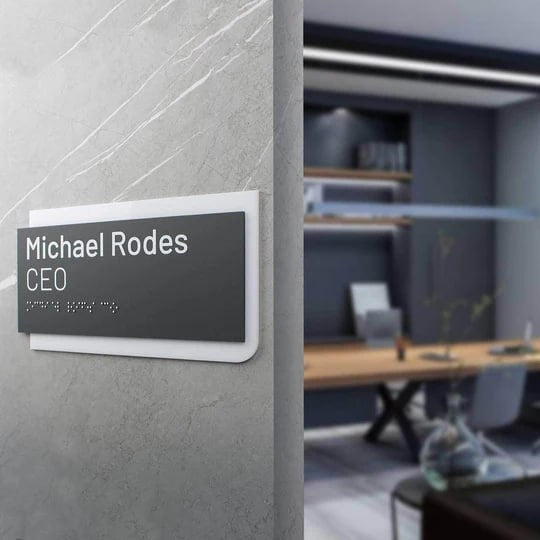
A wall-mounted sign that combines material cohesion with clear labeling for the daily navigation of employees and visitors:

Main Types of Office Door Signs

Each type of decor element serves a specific function, yet all operate within a unified navigation logic. When combined, they help structure the space, distribute the flow of people, and reduce orientation errors. It is important that each navigation element is appropriate and used consistently, without duplicating functions.
The Office Door Name Signs and Role Structure in Office Wayfinding
Name plates clearly indicate responsibility and internal structure. This is part of the building’s wayfinding system, especially in large teams or companies with complex organizational hierarchies. A person can immediately understand who works where, without needing to contact reception or colleagues.
Such plaques for navigation in office spaces support organizational transparency and simplify internal communication. They are useful not only for visitors but also for new employees who need to adapt to the space quickly.
Door Signs for Offices and Rooms: Identification Zones
Labeling meeting rooms, server rooms, or technical areas establishes a clear movement logic within the building. This is a basic level without which orientation does not function effectively. Clear room names help prevent confusion and accidental entry into restricted areas.
These signs perform several practical functions:
-
• help quickly locate the required room;
-
• reduce the need for verbal clarification;
-
• maintain order in the daily use of the space.
Informational Signage and Internal Circulation Logic within a Building
Navigation elements in the office help build routes without overloading the space. They function as guidance points between main destinations and complement door signage rather than replace it.
Information signs are especially relevant in large offices where door labeling alone is not sufficient.They help to:
-
• direct the flow of people;
-
• reduce search time;
-
• maintain consistency of movement between zones.
Combined with signs for office doors, these elements create a clear and manageable orientation system within the office.
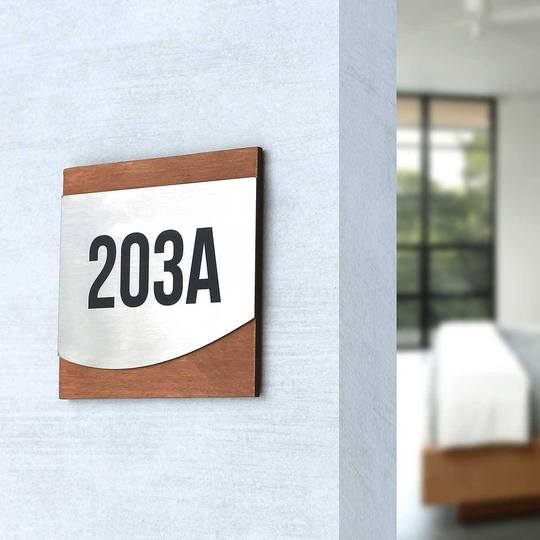
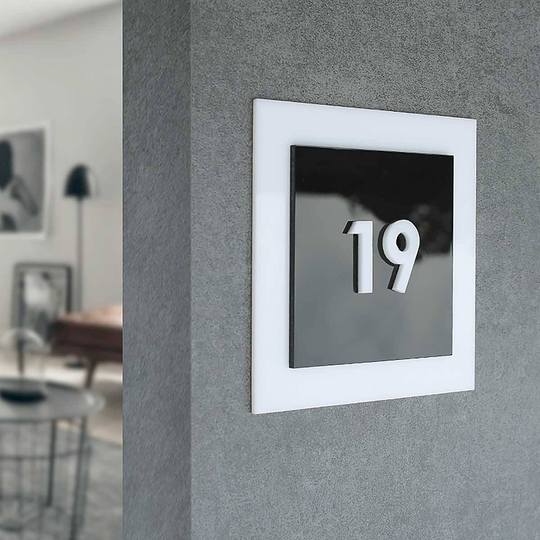
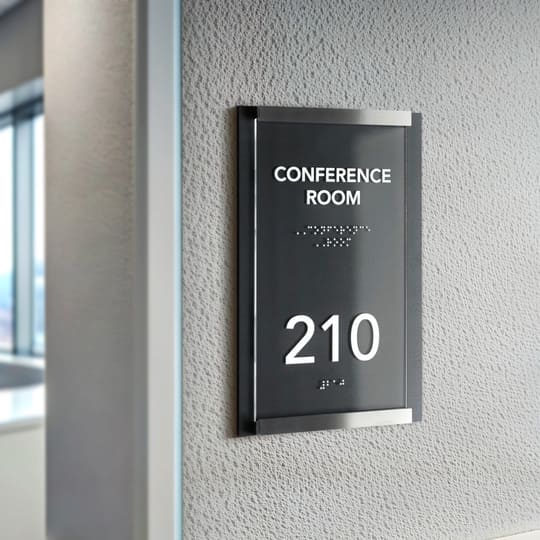
A custom acrylic sign illustrating the alignment between navigation elements and the interior design style:
Door Signs as a Tool for Building a Professional Image
A company’s image is shaped not only through communication or service, but also through the organization of its office space. Door signs are part of this perception, as they remain constantly visible and are used every day. Through such elements, a company demonstrates its attention to detail and the overall maturity of its management decisions.
How Details Communicate Responsibility and Stability
High-quality materials and consistent design reinforce a company’s image. They show that decisions were made thoughtfully, with long-term use in mind rather than spontaneously. This creates a sense of reliability and predictability.
Such details are directly connected to corporate identity and office environment design. When navigation elements align with other parts of the interior, the space feels complete and well-managed.
Why the Lack of Navigation Harms Brand Perception
Without a clear movement logic, an office appears temporary and insufficiently planned. Visitors are forced to ask for directions, and employees are distracted by providing explanations. As a result, the impression is that the space does not support work processes.
Such an office is difficult to associate with stability or growth. Even a strong brand loses part of its credibility if the physical environment does not reflect the declared level of organization.
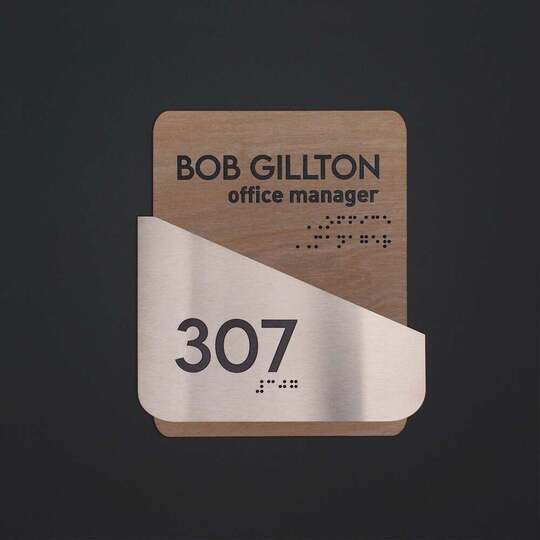
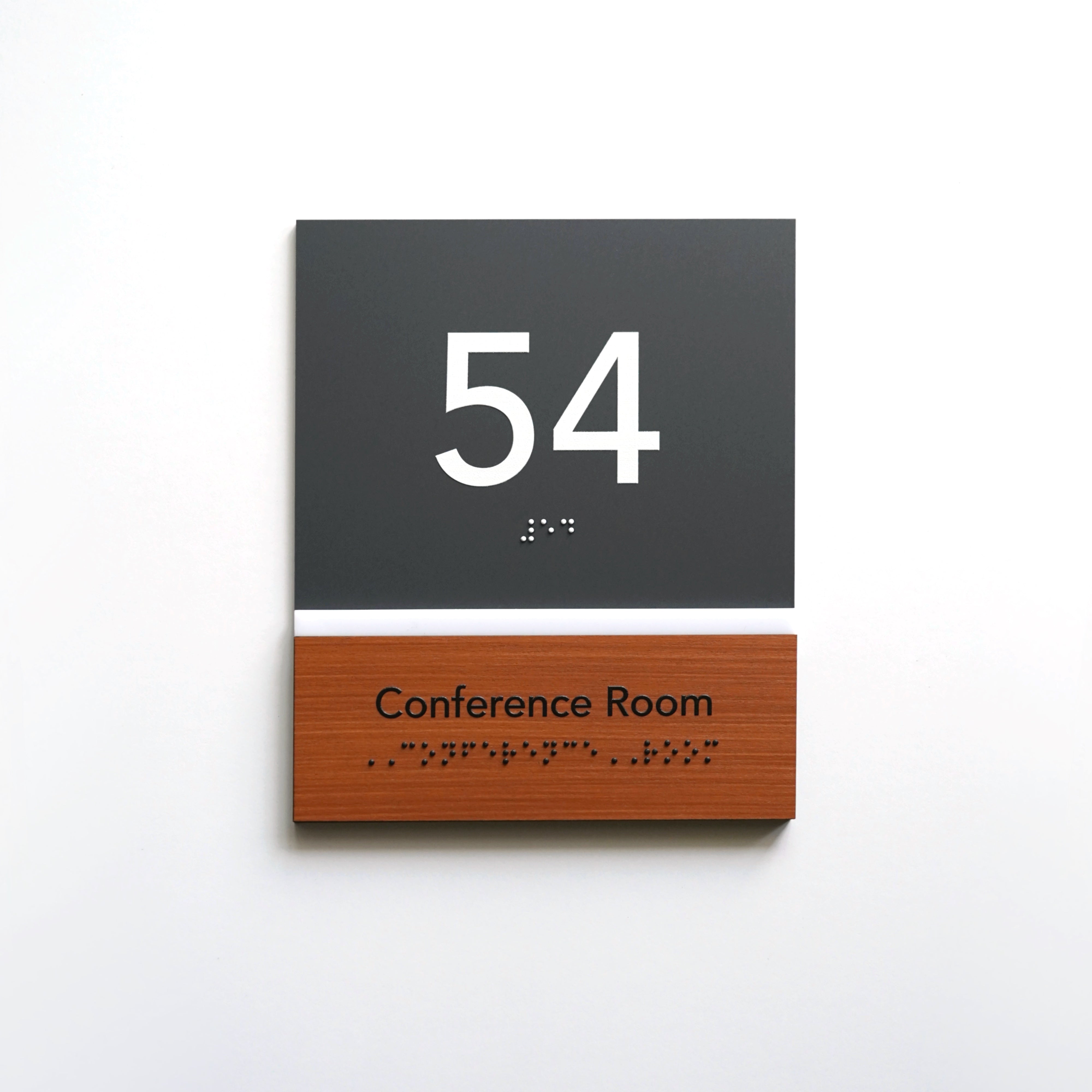
A staff-only office door sign made of matte metal and wood, featuring high-contrast lettering and Braille dots for accessible navigation:

Systematic vs. Chaotic Signage: How Office Wayfinding Affects Perception
Systematic solutions create a sense of control and logic, even in a large office. Chaotic ones, on the contrary, highlight the absence of a unified approach and complicate the further development of the space. That is why movement logic through door navigation elements should be perceived as part of the company’s image strategy, rather than as secondary decoration.
|
Criterion |
Systematic Solutions (Professional Approach) |
Chaotic Solutions (Ad Hoc Approach) |
|
First impression |
Create a sense of order and structure |
Disorient and create visual clutter |
|
Navigation clarity |
Intuitive: the route is clear without guidance |
Confusing: require unnecessary explanations |
|
Brand perception |
Consistent and recognizable image |
Blurred and inconsistent image |
|
Comfort |
High: the client feels confident |
Low: cause irritation and stress |
|
Durability |
Designed for years of use |
Temporary |
|
Scalability |
Easy to expand without losing style |
Dead end: require complete redesign |
Visual Discipline: Why a Unified Style Is Critical
Cohesive perception in an office is a matter of spatial manageability. When all navigation elements are designed in a unified style, the space feels structured and logical. A lack of stylistic consistency, on the contrary, creates a sense of randomness, even if a formal navigation logic is in place.
A wooden office door sign integrated into the interior architecture supports visual discipline and a consistent navigation logic:

Design Consistency as Part of Architectural Logic
A unified style supports the office space architecture and does not conflict with the layout or interior materials. It helps the space be perceived as a cohesive system, where all elements are interconnected and subordinated to a single logic.
Such an approach creates a sense of interior integrity and thoughtful spatial detailing. Navigation does not draw unnecessary attention, yet it consistently performs its function without disturbing the overall visual balance.
Scaling Office Spaces Without Losing Visual Identity
As a company grows, the office space evolves — new rooms, zones, or floors are added. If the wayfinding and orientation system is built systematically, door signs for office use can be easily scaled without redesigning or replacing existing elements.
A unified style allows new solutions to be integrated without visual disruption. As a result, the space maintains consistency, and all changes appear as a logical continuation of the existing structure rather than a forced addition.
Materials for Office Signs for Door: Focus on 2026
The choice of materials for door signs determines not only their appearance but also the longevity of the office wayfinding system. In 2026, the priority shifts toward practical, wear-resistant solutions that perform well in everyday use and do not require frequent updates. The material must match the intensity of use, the type of office, and the overall concept of the space.
An acrylic sign aligned with long-term navigation trends for business centers:
Wood in Contemporary Office Design
Wood is often used in spaces where it is important to soften the visual rigidity of the interior. It pairs well with neutral colors and natural textures without overwhelming the space.
Practical considerations when using wood:
-
• Suitable for offices with moderate traffic;
-
• requires a protective coating to maintain its appearance;
-
• works well within sustainable office design..
Stainless Steel as a Symbol of Stability
Stainless steel remains one of the most practical materials for office solutions. It withstands intensive use and retains its appearance over time.
Typical use cases:
-
• business centers and large corporate offices;
-
• areas with high visitor traffic;
-
• zones where increased durability is essential.
The material is associated with reliability and longevity, making it a logical choice for businesses focused on the future.
Acrylic and Mixed-Material Solutions
Acrylic allows for clear shapes and high readability. It adapts easily to different formats and performs well in modern scenarios, including 2026 office design trends.
Combined solutions integrate acrylic with other materials, expanding functional possibilities:
-
• pairing with metal to enhance strength;
-
• using contrasting layers for improved visibility;
-
• adapting to different lighting conditions.
Such solutions help maintain a balance between practicality and visual restraint without overloading the office space.
Acrylic lettering designed for high readability and adaptability to various lighting conditions and office layouts:

Durability and Practicality as a Business Argument
For businesses, navigation solutions are part of the office infrastructure. Their quality directly affects costs throughout the entire period of use. That is why the approach to selecting signage should be evaluated from an operational perspective, not solely based on initial cost.
Why Temporary Solutions Cost More Long-Term
Temporary solutions quickly lose their appearance and require replacement. Frequent updates involve not only direct expenses but also additional time for dismantling, production, and installation.
Durable materials for offices help reduce the number of replacements, avoid downtime and unnecessary organizational costs, and maintain a consistent appearance of the space.
As a result, the total cost of ownership of the navigation system becomes lower, even if the initial investment was higher.
The Investment Logic of Workplace Navigation
High-quality office door signage performs reliably for years without losing its appearance or relevance. They do not require regular updates due to style changes or physical wear.
From a business perspective, this means predictable expenses, no need for frequent replacement decisions, and a stable perception of the office environment.
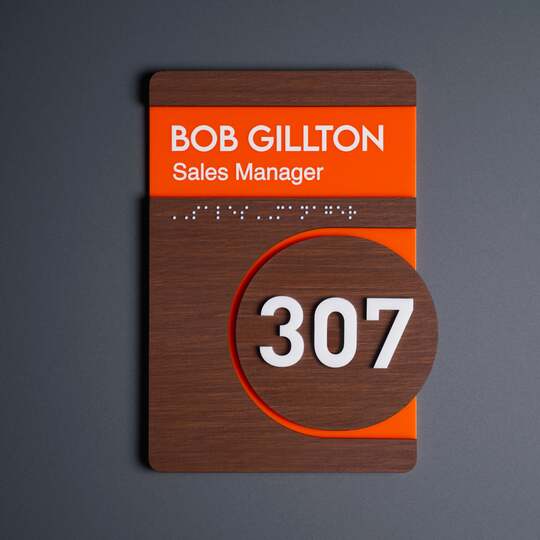
An office sign made of natural wood and acrylic, used in low-traffic corporate areas to combine functionality with interior aesthetics:

Door Signs as Part of Company Culture
Wayfinding affects not only visitors but also internal processes. The way a space is organized directly reflects a company’s approach to order, comfort, and daily operations.
How Space Influences Employees’ Daily Experience
A well-organized space increases engagement and reduces stress. Employees spend less time searching or asking for clarification, are less often distracted, and work in a predictable environment.
This is part of a systematic approach to space, where navigation supports workflows rather than complicates them.
Navigation as Part of Internal Aesthetics
Wayfinding becomes the backdrop for everyday work. It does not require constant attention, yet it creates a sense of order and stability.
When all elements are implemented consistently, they reinforce corporate values at the level of daily experience. The space becomes visually mature and thoughtfully designed, which directly influences how the company is perceived internally.
A custom-designed navigation sign reflecting the company’s structure and internal wayfinding requirements:

Why Office Door Signs Are a Strategic Decision
Business office door signs are an infrastructural element of a company. They influence movement efficiency, operational costs, and brand perception.
Office door signage should be viewed as part of space management rather than as a separate decorative element. It establishes a predictable movement logic, reduces orientation errors, and makes interaction with the office clear from the very first contact. This works both for visitors and for employees who use the space daily.
A wayfinding system directly affects how clients perceive the office’s movement logic and the company itself. When a space is easy to read, the business appears organized, stable, and well-managed. Conversely, the absence of a clear system creates a sense of temporariness and lowers trust, even if other aspects of the company’s operations are well structured.
Door signs as an element of company branding operate through details rather than direct messaging. They do not declare values — they demonstrate them in everyday use. That is why high-quality wayfinding supports the office space and navigation as a unified system, where all decisions are interconnected and logical.
From a management perspective, investing in movement logic is a decision that reduces operational losses, increases comfort, and ensures long-term spatial stability. This makes it a strategic, not decorative, step.
If you are planning an office update or want to build a systematic movement logic, it is worth starting with a professional consultation from Bsign specialists. We will help assess the current state of the space, identify weak points, and select solutions that will support your business in the long term.
Frequently Asked Questions
1. Why are door signs for office needed?
Door signs are necessary for room identification, establishing movement logic, and reducing orientation errors. They help employees and visitors quickly find the required offices without additional explanations.
2. How do systematic signs differ from chaotic ones?
Systematic signs are designed in a unified style, have a consistent placement structure, and support the architectural logic of the space.
Chaotic solutions create visual clutter, complicate scaling, and negatively affect the perception of the company.
3. Which materials for door signs are the most durable?
The most durable options include:
-
• stainless steel
-
• combined solutions with metal
-
• high-quality acrylic
The choice depends on the intensity of use and the type of office space.


