








by Oleh Tomilenko
House Numbers vs Door Numbers: What’s the Difference and Which Do You Need?
Choosing between door numbers and house numbers may seem straightforward at first glance. In reality, they are distinct identification tools that operate under different conditions, have varying reading distances, and require different material specifications.
These terms are often treated as interchangeable. Visually, they can be the same digits or plaques, but their function is fundamentally different. One option is intended for use inside a building and is designed for close viewing distances. The other is mounted outdoors and must remain legible under varying lighting and weather conditions.
Interior number signage is an element of indoor navigation. It helps people to find an apartment, office, or room quickly without extra questions or confusion. Its effectiveness depends on scale and how well they align with the interior design.
House number signs are part of the building facade identification. They serve an address function and need to be clearly visible from the street. In this case, size, material, and mounting method are crucial.
A mistake in selection affects not only appearance but also readability, durability, and compliance with address numbering requirements. An inappropriate format can complicate wayfinding, create visual imbalance, or even reduce the solution’s practicality.
In this article, we will outline clear selection criteria, provide a practical comparison, review materials, and highlight common mistakes. This information will help you determine which solution is appropriate for your specific environment and how to avoid costly missteps.
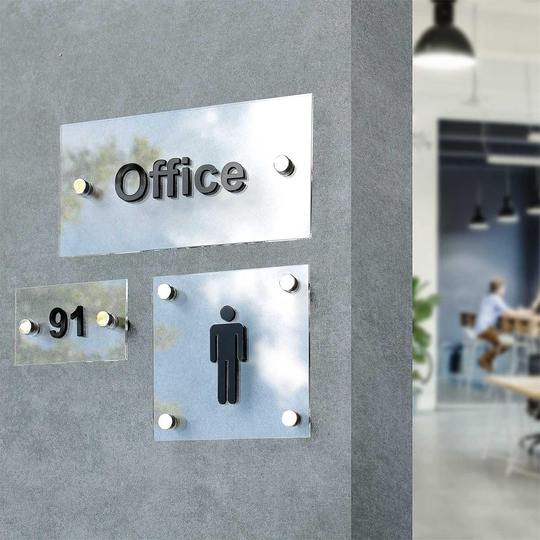
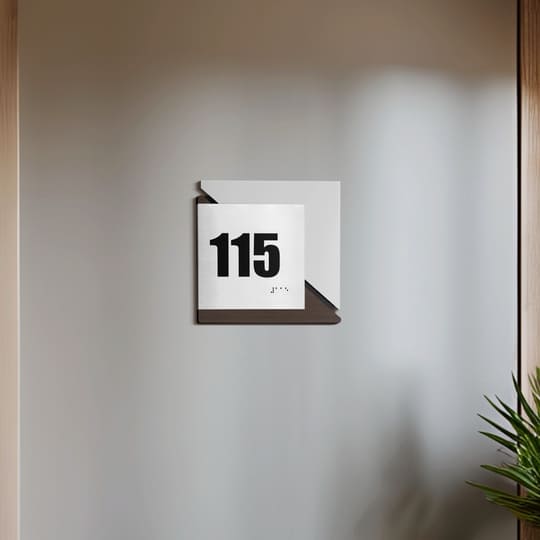
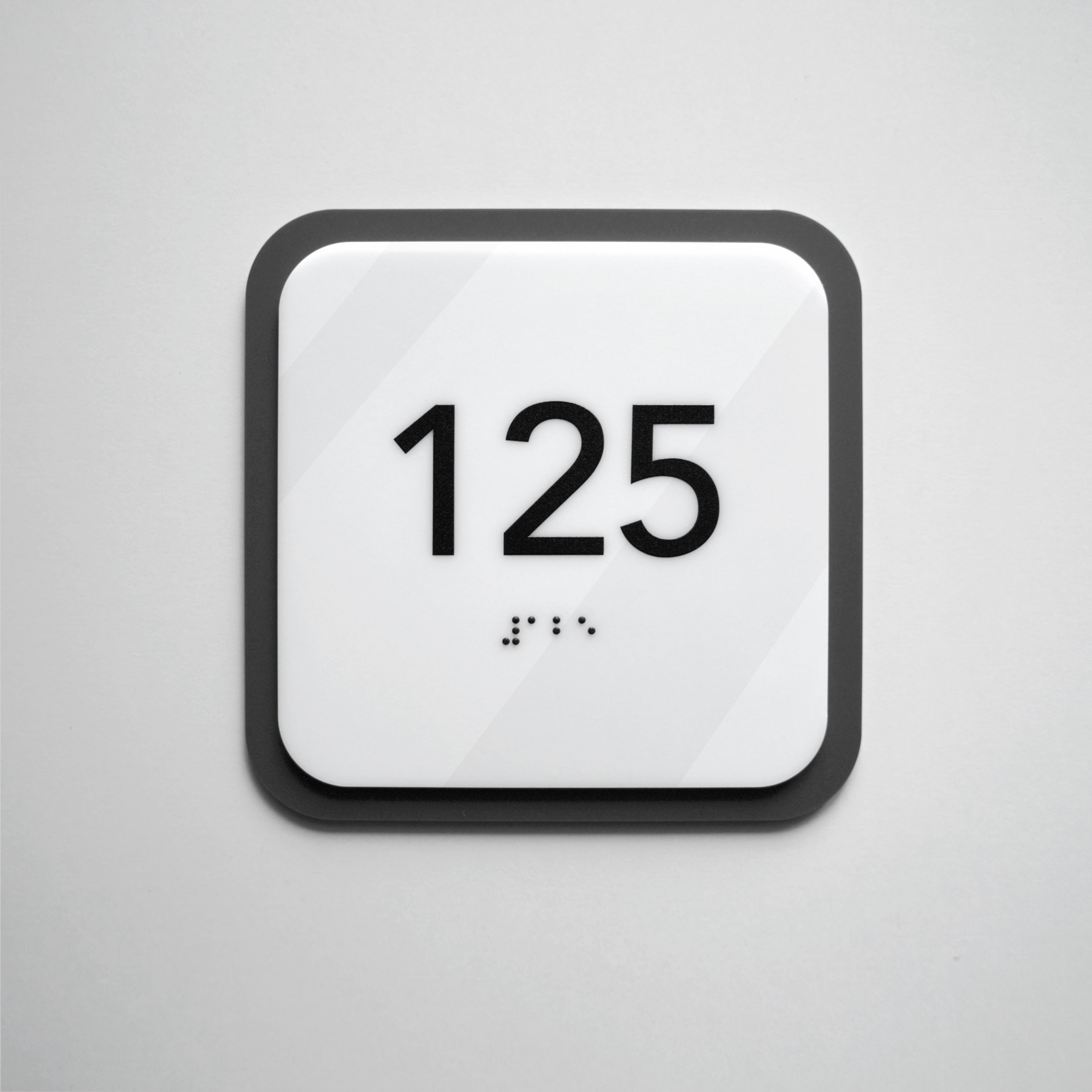
Modern acrylic door plaques for apartment doors with a minimalist design and crisp graphics for interior use:

What Are Door Numbers?
Door numbers are interior identification signs installed directly on doors or adjacent walls. Their primary function is to identify individual rooms within a building, such as apartments, offices, hotel rooms, or service areas.
What Are House Numbers?
House numbers are exterior address signs mounted on a building facade, gate, or fence. Their main purpose is to identify the entire property from the street, allowing visitors, delivery services, and emergency responders to locate the building quickly and accurately.
What Is the Difference Between House Numbers and Door Numbers?
In practice, these two types of signs are frequently perceived as identical, with the only assumed difference being their installation location. However, despite a similar appearance, they operate at different scales and from different distances. Operating conditions, size requirements, and material specifications differ fundamentally. That is why a one-size-fits-all solution is rarely effective.
Different Functions: Building Identification vs Room Identification
Door plaques identify a specific room, such as an apartment, office, or study. Their function is local wayfinding inside a building. A person stands at close range and reads the number almost directly in front of the entrance.
Building numbers on the building facade identify the entire structure. They serve as address markers for services, visitors, and deliveries. In this case, the number must be visible from the street and sometimes from the roadway.
The key difference is scale and reading distance. For door plaques, accuracy within a floor matters; for facade-mounted house numbers, visibility from a distance is essential.
Different Reading Distances and Visibility Requirements
Trying to use a single solution for both tasks leads to technical and visual problems. An interior product does not withstand weather conditions. A facade-grade option will be too bulky for an apartment door.
A universal door number mounted on the facade will quickly lose its visual appeal when exposed to rain and sunlight. Conversely, a decorative house number sign with insufficient emphasis will blur at a distance and fail to fulfill its primary function.
Indoor vs Outdoor Use: Why Environment Matters
Before choosing, assess the conditions in which the number will be used. The installation location determines:
-
• material requirements for the numbers;
-
• the mounting method;
-
• the scale of the digits;
-
• the required level of contrast.
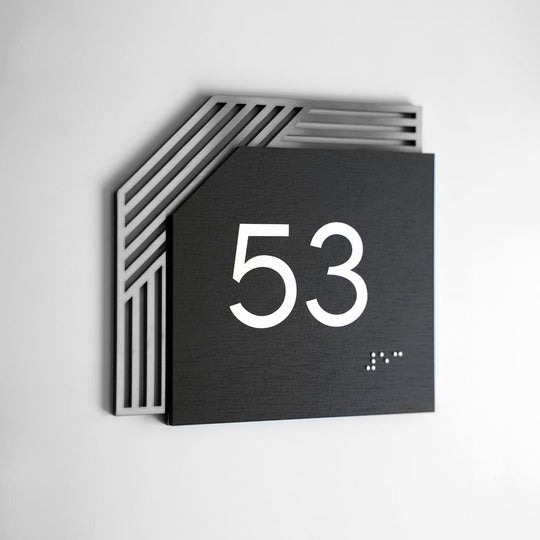
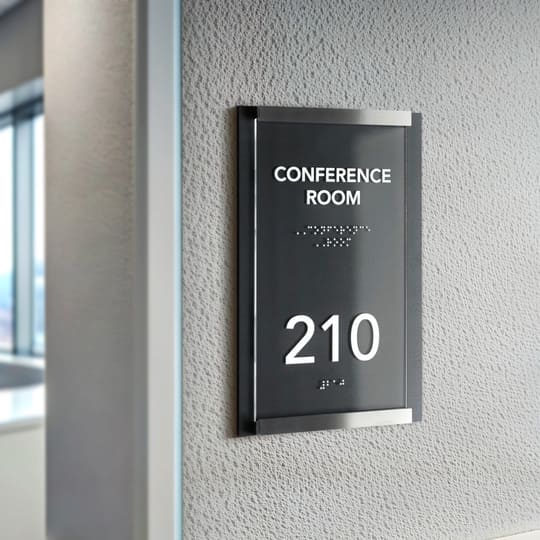
A door number with high contrast for clear room identification in a corridor:

What Are Door Numbers
Decorative numbers for doors are an indoor identification tool for residential and commercial buildings. They operate within a floor or section and help people find the right unit quickly without extra directions. Despite their compact format, they are a basic element of the building’s wayfinding system.
Unlike facade solutions, here precision, scale, and compliance with the overall design of the space are important. A poorly chosen format can break the navigation logic or reduce the usability of the room. That is why the choice should take into account the type of building, traffic intensity, and lighting conditions.
Why Door Numbers Matter
Navigation elements on doors provide precise visual identification of a room. They are part of the building’s indoor navigation and help users orient themselves quickly without assistance from staff or additional signs.
Their primary functions include:
-
• simplifying orientation;
-
• organizing rooms;
-
• supporting interior design cohesion.
How to Choose Apartment Numbers or Office Numbers
The choice depends on the type of property and the character of the space. In residential settings, apartment door numbers with clear digits and a neutral design are most appropriate.
In business environments, office door numbers should feature concise graphics and high readability. They should look restrained and correspond to the general style of the company.
When selecting interior door numbers, it is important to evaluate both the style of the interior space and the scale of the door leaf. An overly large option creates visual imbalance, and a too small one will be difficult to read.
Interior Door Numbers and Optimal Reading Distance
Inside a building, the typical reading distance ranges from 1 to 5 meters. This means the number should be clearly visible without dominating the interior space. Therefore:
-
• excessive size feels crude;
-
• tiny digits on a door reduce readability;
-
• low contrast complicates orientation.
A proper balance of size, color, and placement ensures usability and logical flow.
Decorative metal door plaques mounted on a dark door leaf:

Where Door Number Signs Are Used
Navigation signs on doors are used across many building types — from residential blocks to commercial and public facilities. Regardless of the building’s format, their task is the same: to provide quick, unambiguous identification of a room. The difference lies in the scale of the space, the intensity of foot traffic, and the stylistic requirements.
In small buildings, door signs serve as a basic organizational element. In large complexes, they form part of a considered wayfinding system where sequence, uniform format, and placement logic matter.
Apartment Door Signs: Identifying Individual Units
In multi-unit residential buildings, a door number is part of the floor-level addressing structure. It should be mounted at a consistent height and follow a uniform format on every door.
Apartment door numbers should be standardized to avoid a chaotic corridor appearance. A unified design simplifies indoor navigation and creates a visually organized environment.
HOA and residential complex plaques also play a role, as they complement the marking system and support spatial structure.
Hotels, Medical and Educational Facilities
In these environments, door number signs are part of a more complex wayfinding system. Here, functionality takes precedence over decoration.
Hotel door numbers must be easily read in dimly lit corridors. In medical and educational institutions, they must comply with internal standards and ensure clear visual identification even during high traffic flow.
Office Door Numbers in Commercial Buildings
In business environments, office door plaques serve both a navigational and a reputational function. They support corporate visual identity and work alongside department signs.
In large business centers, consistent numbering and a unified design are crucial. This reduces confusion and speeds up finding rooms for clients and partners.

What Are House Numbers and Why Are They Important for Address Identification?
On the building exterior, building numbers play a strategic role in the address identification system. While signs for doors operate within a floor or corridor, exterior numbers are responsible for identifying the entire structure. They are often the first piece of information a person sees when searching for a specific location.
A properly chosen house number sign enables quick reading from the street and minimizes mistakes during a search. An inconspicuous or overly small option complicates orientation, especially at night or in dense urban fabric. That is why facade numbering has strict requirements for size, contrast, and placement.
According to address numbering rules in Ukraine, the house address numbers must be placed on a visible part of the facade and ensure unambiguous identification of the object. Their location must not hinder reading from the street or the roadway.
What Is an Address Number?
A house number on the facade is a mandatory element of address identification. It helps services find the property quickly, shortens search time, and reduces the risk of navigation errors.
The address number must be visible from the road and meet visibility requirements. Its job is to allow unambiguous reading without extra explanation.
House Numbers on the Facade: Visibility from the Street
The size of the numbers depends on reading distance and the building’s position relative to the road.
-
• 5–10 m — medium format;
-
• 10–20 m — enlarged scale;
-
• private plots with a fence — even larger digits.
The greater the distance, the larger the decorative element should be. If a building sits deep in a yard or is set back from the pavement, a standard size of numbers will be insufficient.
Exterior House Numbers and Weather Resistance
Insufficient size or poor contrast makes a house number nearly invisible in the dark. This is especially critical for emergency services and delivery providers.
Facade numbering must remain readable under varying lighting conditions. If the digits blend into the background or lose clarity at a distance, they fail their primary function.
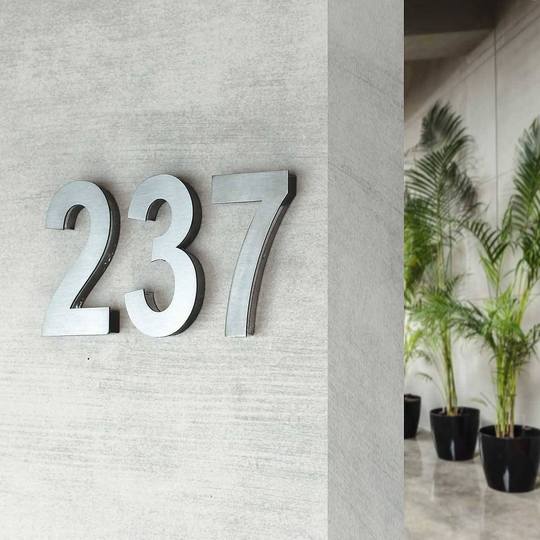
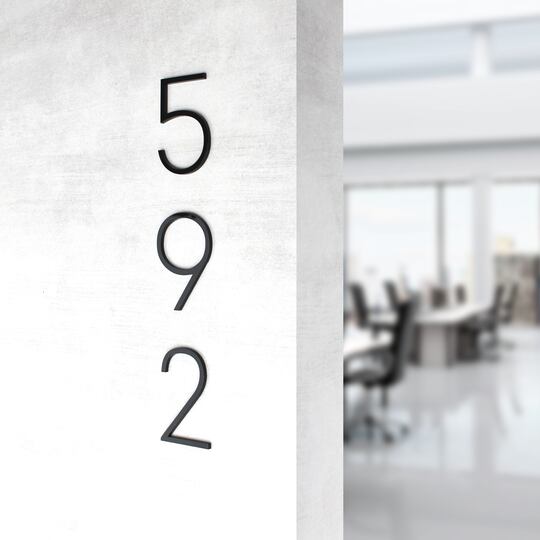
A facade house number with dimensional digits mounted on a light exterior wall:

Legal and Practical Requirements for House Numbers
Beyond aesthetics and convenience, house number signs carry regulatory weight. They are part of the official addressing system and are used for records, navigation, and service operations. Therefore, placement rules are not only design recommendations but practical requirements.
Proper placement directly affects how quickly a building can be identified, impacts resident safety, and ensures accurate logistics. Violating basic principles — poor placement, weak visibility, or excessive decoration — reduces effectiveness and can complicate address searches.
According to local government rules, the address numbers must be mounted on the facade or fence and be clearly visible from public space. Missing or improperly placed building numbers can complicate the work of emergency services and postal logistics.
Are House Numbers Mandatory?
A house number is part of the settlement’s addressing system. It is mandatory and used for official identification in documents, registries, and navigation services.
The absence or incorrect placement can make a building difficult to find and create issues for delivery and emergency services.
Requirements for Contrast and Placement
An address number must meet basic visibility and accessibility criteria. It should:
-
• be placed on a visible part of the facade;
-
• contrast with the background;
-
• be readable from the road.
Insufficient contrast or concealed placement significantly reduces identification efficiency.
Common Mistakes When Choosing House Numbers or Door Numbers
Excessive decoration lowers readability. Dark digits on a dark facade are a typical mistake.
Complex typefaces, decorative backings, or nonstandard formats can also make quick reading more difficult. In facade numbering, functionality must take precedence over visual effect.
Modern house numbers with clear, large digits for reading from 10–20 meters:

Key Differences Between Door Signs and House Signs
At first glance, the difference may seem merely technical. However, a closer look makes it clear that door numbers vs house numbers operate at different scales and solve entirely different tasks. One helps you find a specific room inside a building; the other identifies the building itself in the urban environment.
The differences go beyond size. They concern operating conditions, visibility requirements, and durability standards. What works well indoors is often inadequate for a building facade. That is why these solutions should be considered separately rather than as interchangeable options.
Reading Distance Requirements
Reading distance determines digit height, stroke thickness, contrast level, and even the choice of typeface. The general guidelines are:
-
• numbers for doors: 1–5 m;
-
• address numbers: 5–20 m.
Indoors, people move more slowly, approach closely, and benefit from stable lighting conditions. Here, neatness and precision are essential. Overly large characters appear disproportionate, while overly small ones make orientation difficult.
On a facade, conditions are entirely different. A person may be viewing the building from the sidewalk or from a vehicle. Lighting changes throughout the day, and shadows, glare, and varying weather conditions affect visibility. For that reason, exterior numbers require increased scale and clean, clear typography without decorative elements that disappear at a distance.
The rule is simple: the greater the distance, the larger the size and the higher the required clarity.
Materials and Mounting Methods
Material choice is directly tied to the installation environment. In an interior space, the product is not exposed to moisture or extreme temperature shifts, so lighter solutions are acceptable. On a building facade, however, durability against precipitation, UV exposure, and mechanical stress becomes essential.
Mounting must be mechanical and reliable. Screws, anchors, or standoff mounts are typically used. Adhesive methods are less stable outdoors.
Role in the Wayfinding System
A door number works at the floor or corridor level as a local wayfinding element. It helps locate a specific room among others and maintains numbering logic.
A house number performs a different function. It identifies the building itself within the cityscape and is used for address lookup by services, guests, or delivery providers.
Each requires its own approach to format, size, and mounting method. Mixing these approaches reduces effectiveness: the number will either be hard to spot from outside or disproportionately large inside.
Metal house number plaque with high-contrast digits designed for facade installation:
Comparison Table: House Numbers vs Door Numbers
Before choosing a format, it is worth comparing the key parameters. Below are the main differences between interior and facade solutions:
|
Criteria |
Door Signs |
House Signs |
|
Environment |
Interior |
Exterior |
|
Reading Distance |
1–5 m |
5–20 m |
|
Materials |
Decorative / Indoor |
Weather-resistant |
|
Main Function |
Identify rooms or units |
Identify buildings |
Common Mistakes When Choosing House Numbers or Door Numbers in 2026
In 2026, building identification requirements have become more stringent due to denser urban development, the growth of logistics services, and courier deliveries. Buildings must be quickly identified in navigation systems and in real space. At the same time, attention to design is growing, and decorativeness without regard for function often leads to errors. Instead of a functional approach, visually attractive options are chosen without considering the installation conditions or reading distance.
Most errors arise from ignoring the usage environment. What looks good in a catalog or photo may lose effectiveness once mounted.
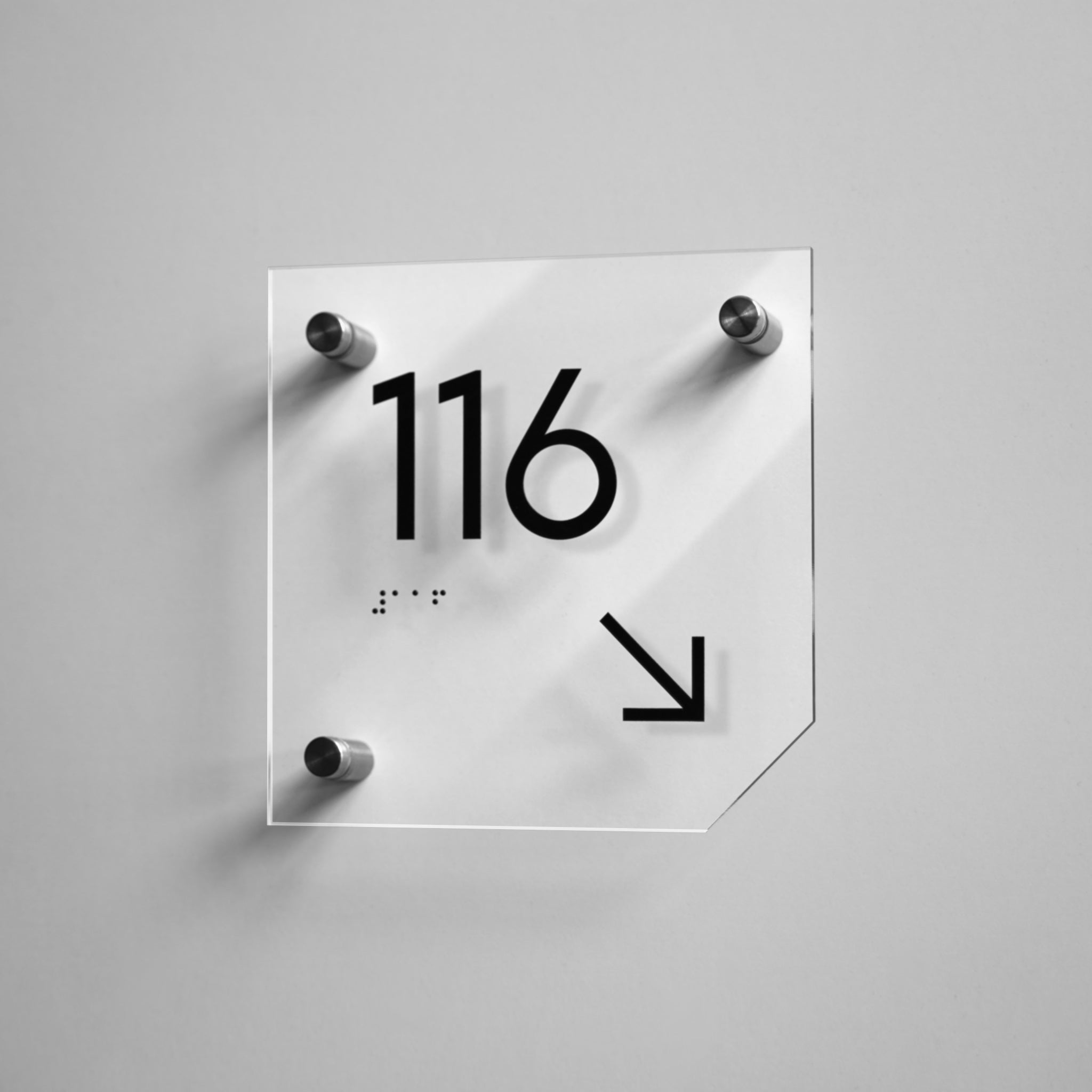
Interior apartment signs with a clean design and sufficient contrast for corridor lighting:

Using Indoor Products as Exterior House Numbers
Interior door numbers are not designed for outdoor use. They are intended for stable temperatures and moisture-free conditions. Once installed outside, materials may lose color, shape, or density.
Adhesive bases fail to stick, thin decorative elements deform, and surfaces fade under sunlight. As a result, the number quickly loses its neat appearance and stops serving its function.
Choosing the Wrong Scale or Insufficient Contrast
A small house number on the facade blends into the background, especially if the digit color is close to the wall shade. Even high-quality material cannot compensate for proportion errors.
Insufficient size reduces readability at a distance, while an overly decorative font impairs perception. The choice should be based on viewing distance and lighting conditions, not just aesthetics.
Ignoring Architectural Context and Mounting Method
A wooden house number plaque without protection quickly deforms. Moisture causes swelling, temperature fluctuations lead to cracks, and UV exposure damages the finish.
Similarly, unstable paints or untreated metals can lose their appearance within a few seasons. Exterior numbers require materials with enhanced durability and protective coatings that preserve both form and color over the long term.
Decorative door signs with an elegant typeface for hotel or residential interiors:

What Material Is Suitable for Numbers: Interior vs Facade
Material selection is determined by the usage environment and durability requirements. Indoors, priority is given to aesthetics, precision of detail, and alignment with the interior space. On a building facade, resistance to moisture, sunlight, and temperature fluctuations becomes critical. Different conditions call for different technical solutions.
Materials for Interior Use
Wood, acrylic, and stainless steel are commonly used for premises. These materials remain stable in dry environments and allow crisp graphics and neat shapes. Their surfaces can be finely processed and retain a decorative look in the long run.
Materials for Outdoor Use
Exterior house numbers require increased durability. For facade installation, stainless steel, weather‑resistant acrylic, or properly treated wood with protective coatings are used. The material must preserve shape, color, and contrast even after prolonged exposure to the outdoor environment.
That is why house number signs are manufactured with moisture, UV, and seasonal temperature changes in mind. Additional protective coating increases durability and extends service life.
Why Universal Materials Do Not Exist
A material that performs well indoors does not automatically guarantee durability on a building facade. Different operating conditions demand different structures, coatings, and mounting methods.
Making the correct choice ensures that the appearance and readability are preserved for many years.
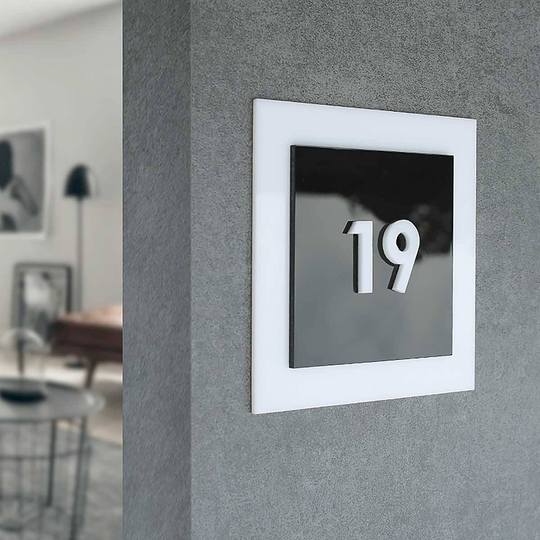
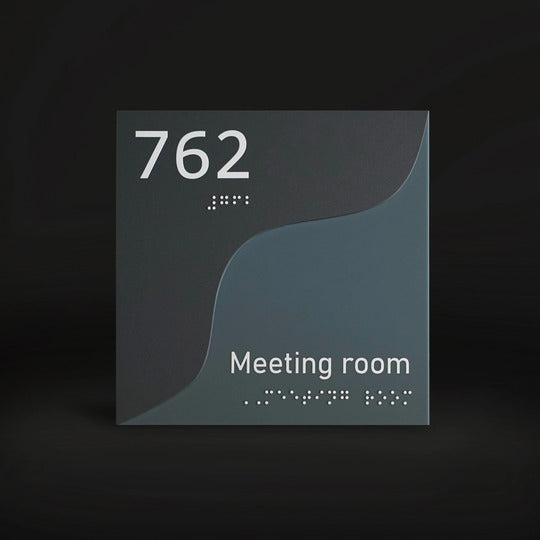
Glossy black plaque with white digits and a decorative wave line in a modern minimalist style for interior use:

Design Considerations: Why Functionality Comes First
In 2026, visual noise in cities is increasing due to the growing number of commercial properties, dense buildings, and intense competition for attention. In such an environment, every navigation element must function precisely and without overload, otherwise it will simply be lost among other signals. A number performs a specific task. It should be quickly noticed, recognized, and remembered in seconds.
When aesthetics outweigh logic, usability suffers. That is why functionality must always come first.
Readability and Contrast Over Decoration
The main goal is to convey the digit clearly. Front door numbers should be readable at first glance, without strain and without requiring a closer look.
Overly complex fonts, thin strokes, or excessive decoration hinder perception. Strong contrast between the background and the digit, sufficient scale, and simplicity of form consistently perform better than excessive stylization. If a number requires extra effort to read, it fails in its function.
Modern Door Numbers and Architectural Integration
A house number plaque must respect the architectural context of the building. A modern facade calls for one approach; classical architecture requires another.
The number should not clash with wall materials, colors, or overall style. Harmonious design strengthens the building’s identity. It appears natural and appropriate, as if it were part of the original project.
Why a Good Door Number Doesn’t Draw Excessive Attention
An effective apartment door number works as part of the system. It is noticed exactly when needed and remains unobtrusive at all other times.
Overly bright colors or aggressive shapes can distract and create visual imbalance in the interior space.
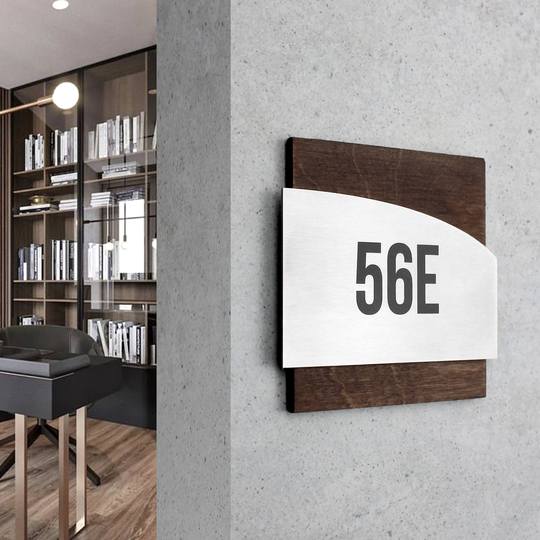
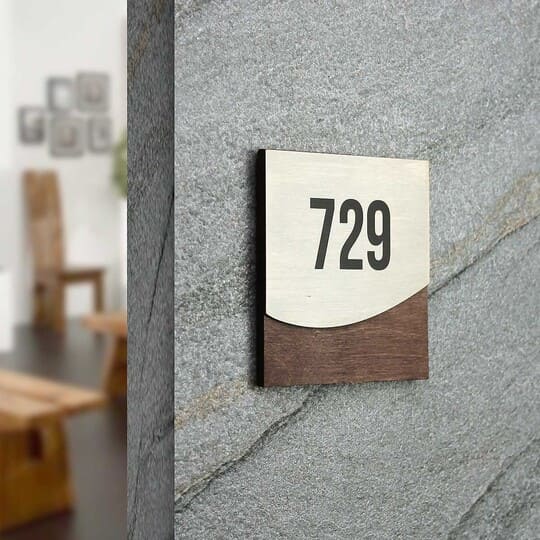
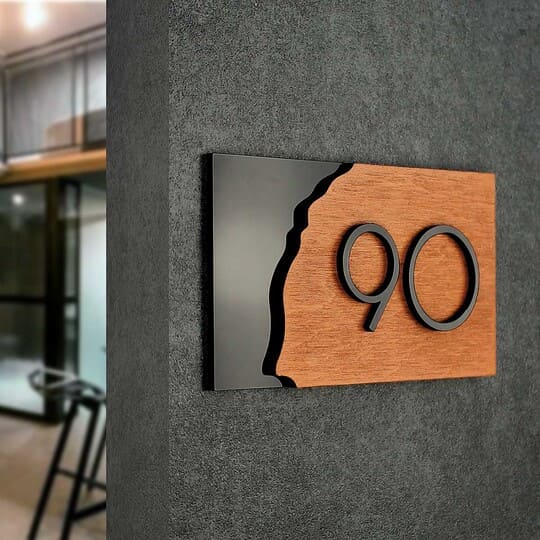
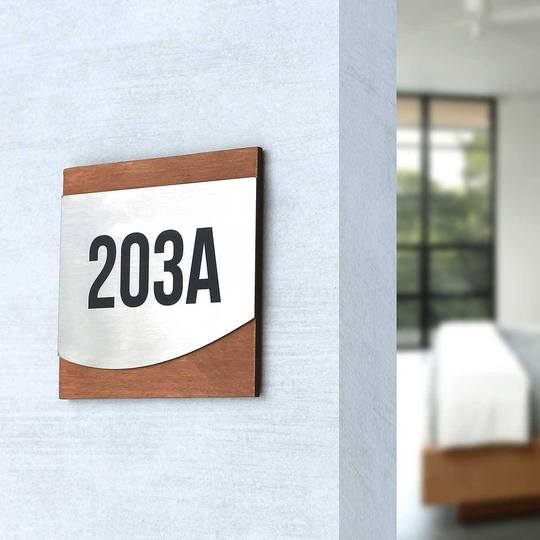
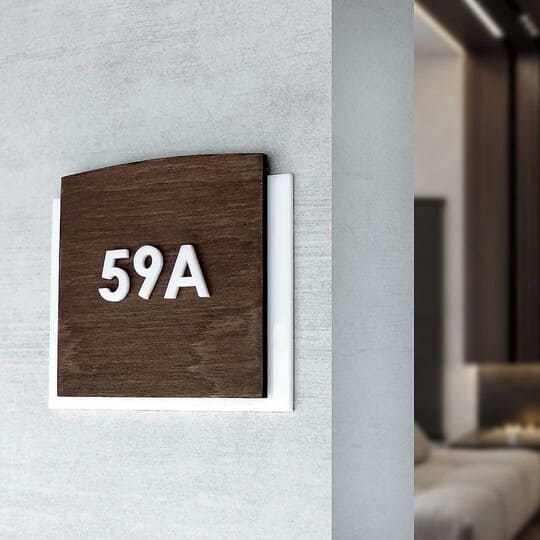
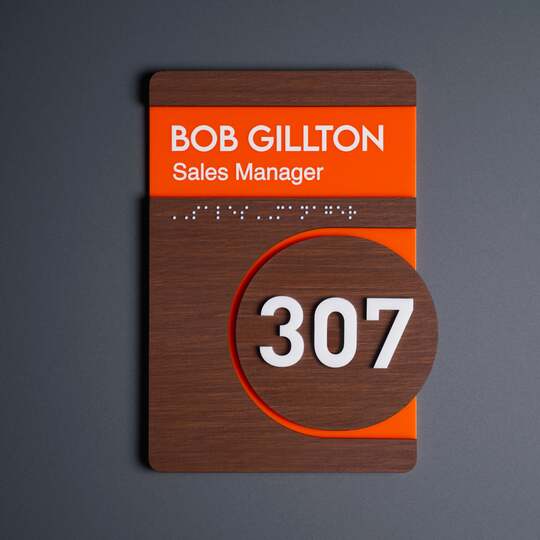
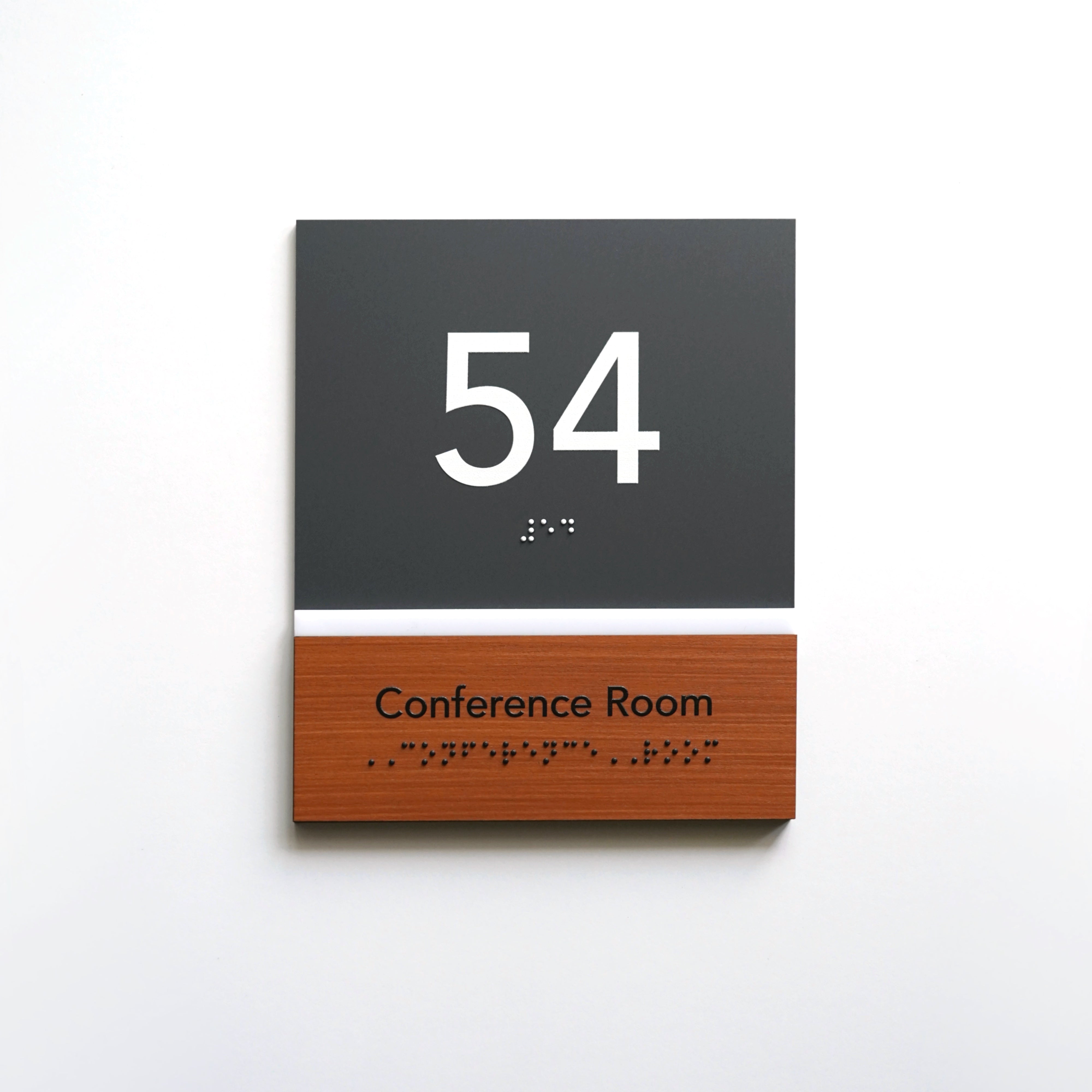
Combined plaque featuring a room number with wood and metal elements, installed near the entrance to a hotel room in a modern interior:

Why the Right Choice of Number Affects Wayfinding and Durability
Door numbers and house numbers serve different purposes and operate in different environments. The former category supports internal orientation and comfort within a building. The latter provides exterior identification and must remain legible from a distance under varying lighting and weather conditions.
Interior solutions are unsuitable for facades, whereas facade solutions may be too bulky for doors. There is no universal option, because different levels of wayfinding require different technical approaches.
In a wayfinding system, functionality always outweighs decoration. A properly chosen number doesn’t overload the space, doesn’t fade into the background, and maintains its appearance for years. A systematic approach to selection ensures durability, convenience, and compliance with address numbers requirements.
When choosing between interior and exterior solutions, or planning to update a numbering system, consider reading distance, operating conditions, and architectural context. Professional consultation helps determine the optimal format, proportions, and materials for a specific building.
Round black apartment door number with a matte finish, mounted on light-colored doors for clear visibility:

FAQ
What is the difference between house numbers and door numbers?
Door numbers work within an interior space and are designed for short reading distances. They are intended for close contact and stable environmental conditions. Address numbers are installed on the building facade and must remain clearly visible from the road. In this case, proportion, contrast, and resistance to weather conditions are essential.
What size should exterior house numbers be?
The size depends on viewing distance and building placement. The farther the point of perception, the larger the digits must be. Exterior numbers must be easily readable without requiring a person to stop or move closer. Contrast with the facade and lighting must also be considered.
Can interior door signs be used outside?
No. Interior numbers are not designed to withstand rain, temperature fluctuations, or UV exposure. Indoor materials may lose shape or color under external conditions. Exterior numbers require more durable solutions with protective coatings.
What material is best for exterior house numbers?
For outdoor use, stainless steel, weather‑resistant acrylic, or treated wood with protective finishes are recommended.
How visible should house numbers be from the street?
Ensure proper proportions, strong contrast, and facade illumination. Even high-quality house number signs lose effectiveness without proper lighting. The light should highlight the digits rather than create shadows that hinder readability.


