










by Oleh Tomilenko
Fonts for Signage in Warm Interiors: How to Maintain Readability and Enhance the Atmosphere of a Space
Interior door signs are part of a navigation system that helps people orient themselves and find the rooms they need. They are used in hotels, offices, and commercial spaces to convey information while supporting the overall interior design, so the chosen fonts must stay readable and harmonize with the sign material.
Modern buildings increasingly install tactile Braille signs to make spaces accessible for people with visual impairments.
Well chosen fonts for signage preserve the balance between an interior’s aesthetic and its functionality. In cozy interiors — where wood, soft colors, and natural textures dominate — it’s especially important that the text remains clear while reinforcing the room’s atmosphere.
In this article we will examine:
-
• which fonts work best in warm interiors;
-
• how to pair a font with the sign material;
-
• how to preserve signage readability even in decorative environments;
-
• solutions commonly used in hotels, offices, and commercial spaces.
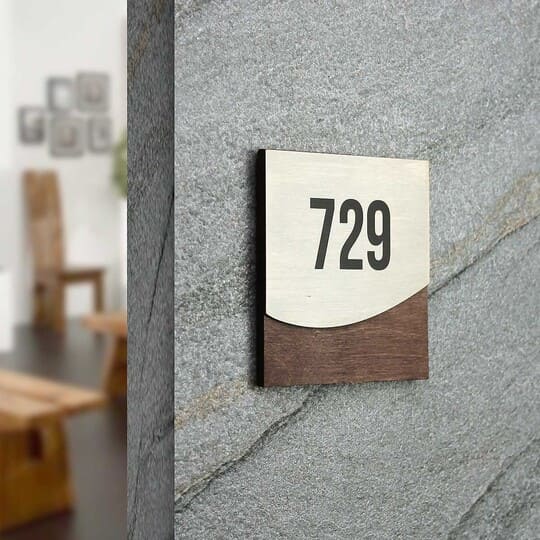
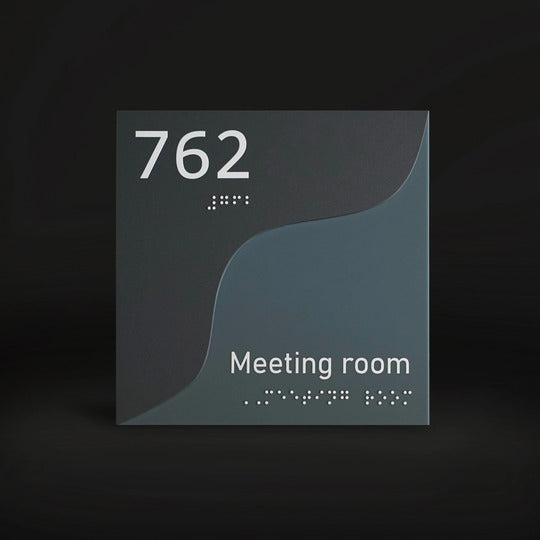
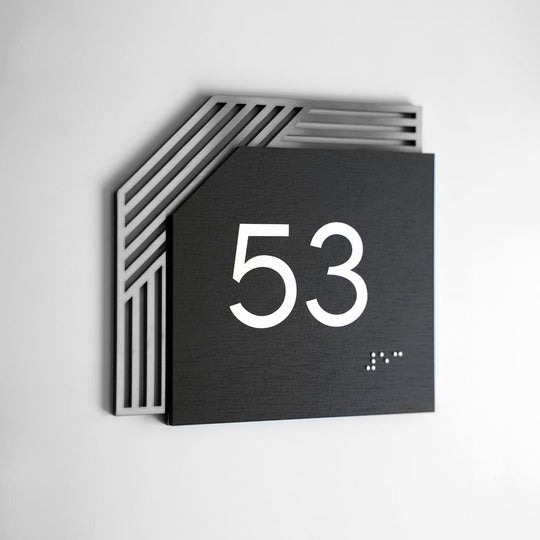
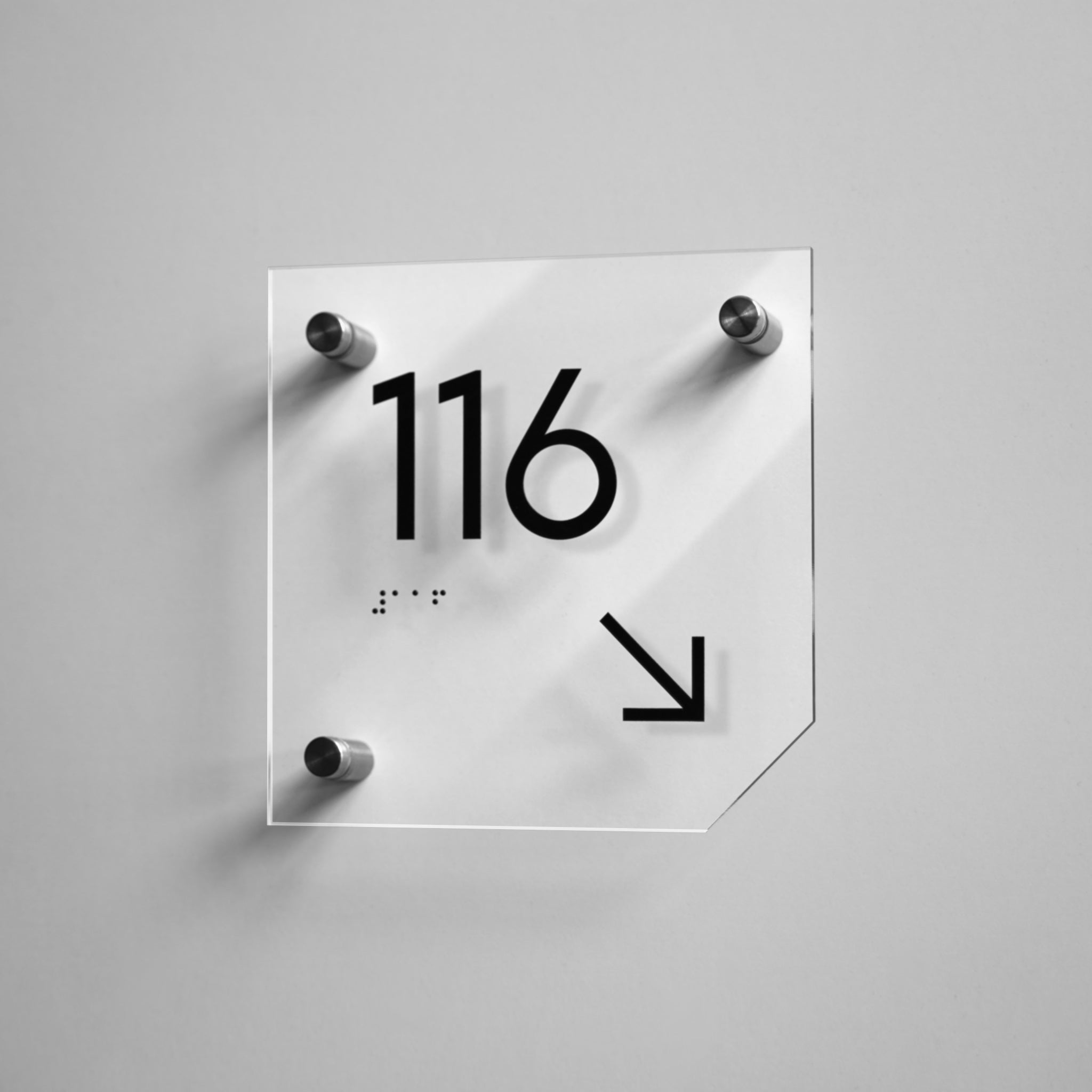
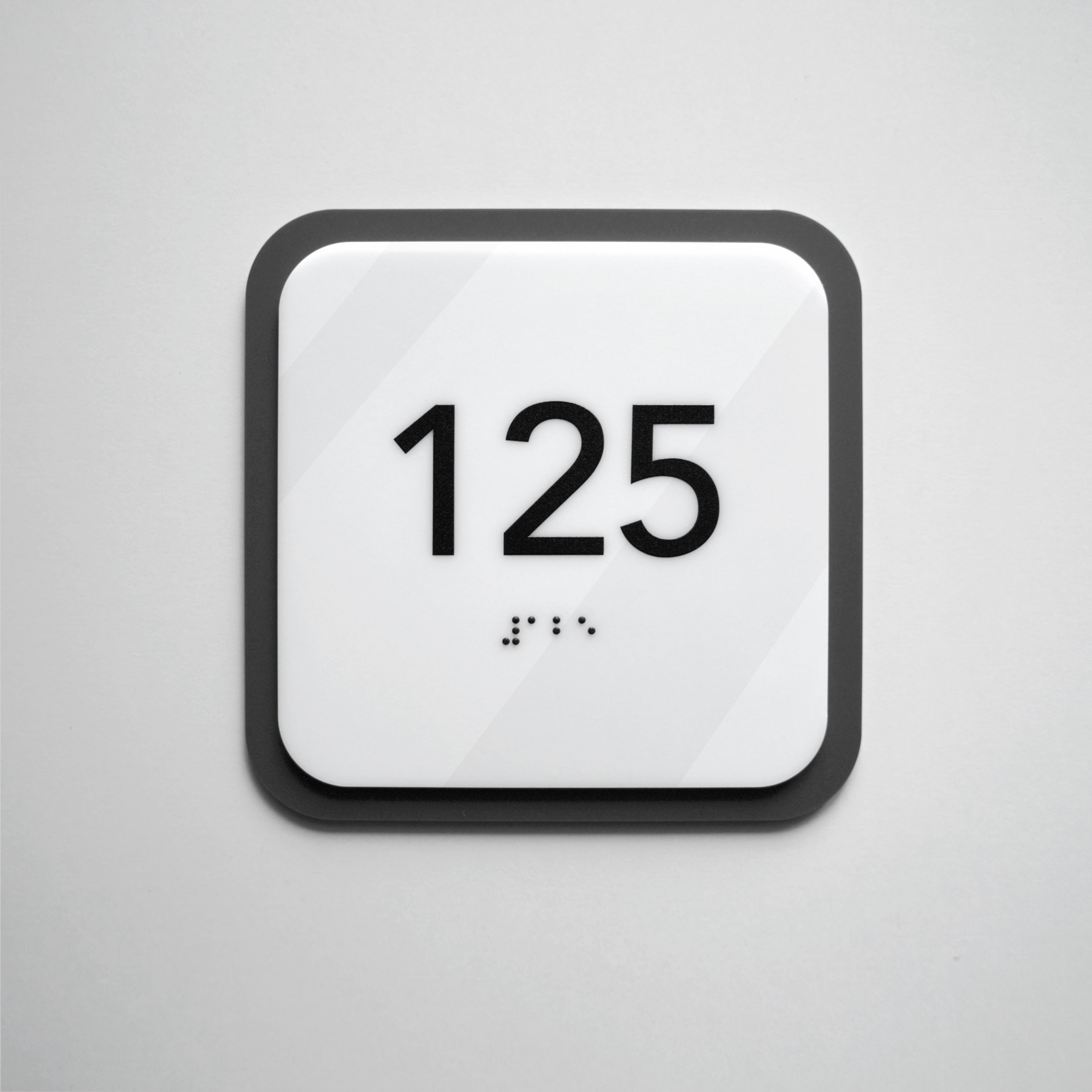
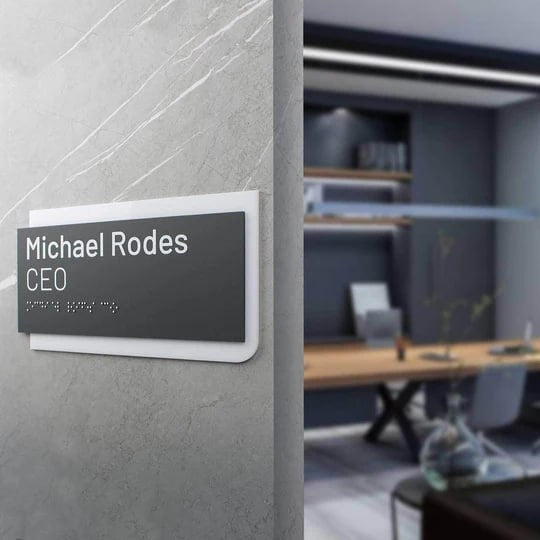
Example of metal and acrylic door signage with modern sans-serif typography for minimalist interiors from the Wave collection:

What are fonts for signage?
Fonts for signage are typefaces designed to remain readable at different distances while supporting navigation and complementing interior design materials. They work as part of an interior system. They provide quick reading of information and enhance the visual integrity of the space.
How Typography Influences the Perception of Warm Interiors
The font used on navigation signage is part of a space’s visual system. It works together with colors, materials, and lighting.
In cozy interiors where natural materials dominate, fonts should be restrained and legible. If a typeface is overly ornate or decorative, readability of signs drops.
Key principles:
-
• simplicity of form;
-
• clear letter proportions;
-
• sufficient contrast;
-
• material-appropriate choice.
This is the foundation on which interior typography is built.
The Role of Typography in Interior Wayfinding
Typography helps people recognize directions quickly. In hotels, offices, and apartments a font becomes part of the interior wayfinding system. It works alongside icons, color coding, and sign placement.
Elements that create effective visual navigation:
-
• a single type family throughout the building;
-
• a stable text hierarchy;
-
• a consistent style for navigation signs;
-
• repeated character proportions.
Such combinations create a more cohesive sign system and make navigation easier to understand.
Why Readability Matters Even in Decorative Spaces
Sometimes a designer tries to make a product as decorative as possible. The result can look visually appealing, but the text becomes slow to read.
Signage readability depends on several factors:
-
• letter shapes;
-
• spacing between characters;
-
• font size;
-
• font-to-background contrast.
Even in a stylish interior, ensuring readable fonts for signage must remain a priority.
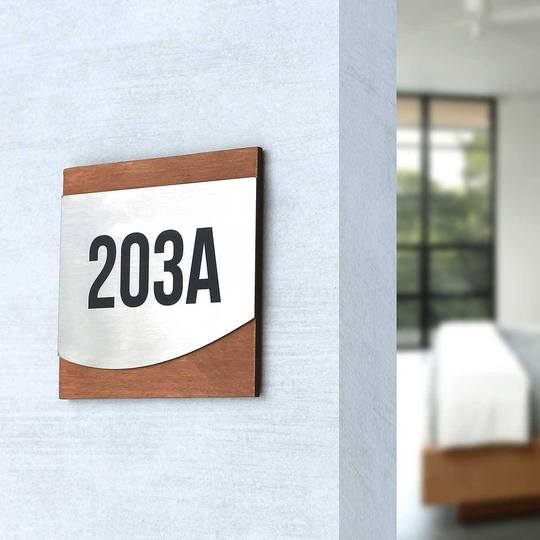
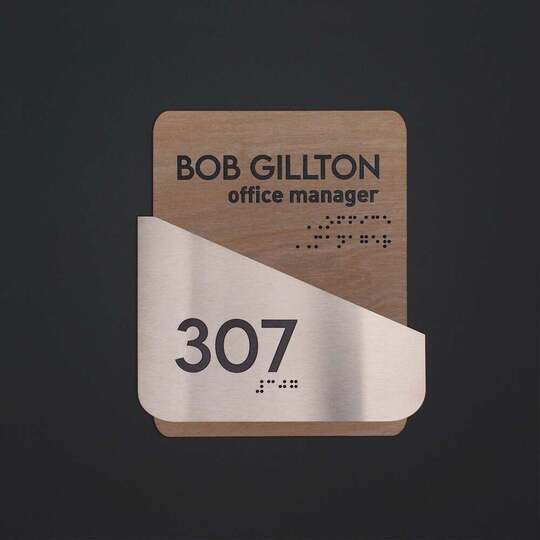
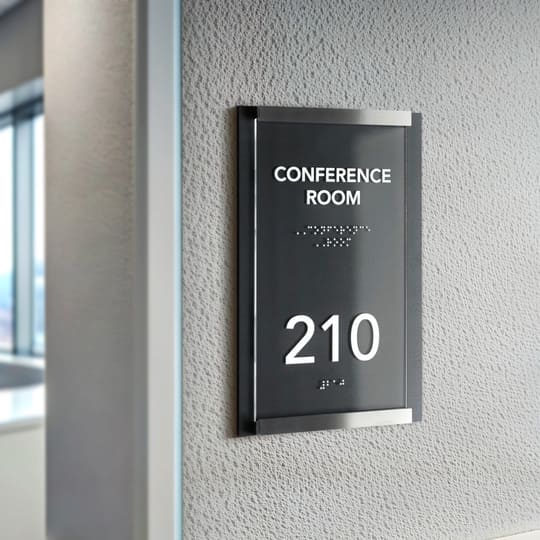
Example of a door piece in stainless steel and wood from the Venture collection, showing how a clear sans-serif typeface improves legibility in commercial interiors:

Best Fonts for Signage in Cozy Interior Design
The right fonts support a space’s atmosphere while ensuring comfortable navigation. They should remain legible from various distances, avoid overwhelming the interior, and look organic next to natural materials and warm colors.
Most contemporary interiors use three main type families:
-
• sans serif;
-
• serif;
-
• geometric.
Each option has its own characteristics and suits different interior styles.
Sans Serif Fonts for Modern Navigation
A sans serif font is one of the most common choices for modern navigation. It’s used in public and commercial spaces where quick information uptake is essential.
Characteristics:
-
• simple letterforms;
-
• even stroke weight;
-
• high legibility.
Thanks to their structure, these typefaces work well across different formats and do not overwhelm the interior.
Advantages:
-
• easy to read from a distance;
-
• pairs well with minimalist signage design;
-
• suitable for office signage and contemporary interiors.
This is why the font for door signs in many buildings is based on sans-serif typefaces.
Serif Fonts with Moderate Contrast
A serif typeface has small strokes at the ends of its letters. In natural interiors it reads as more classical and conveys a sense of stability.
These typefaces work well for:
-
• restaurant signage;
-
• historical buildings.
They add a sense of tradition to the space and pair well with natural materials in interiors.
Soft Geometric Fonts for Contemporary Spaces
Geometric fonts are built on simple shapes — circles, squares, and rectangles — giving them a modern, tidy appearance. They perform well on door number signs and in clean, contemporary settings.
Common uses:
-
• modern offices;
-
• apartments;
-
• coworking spaces.
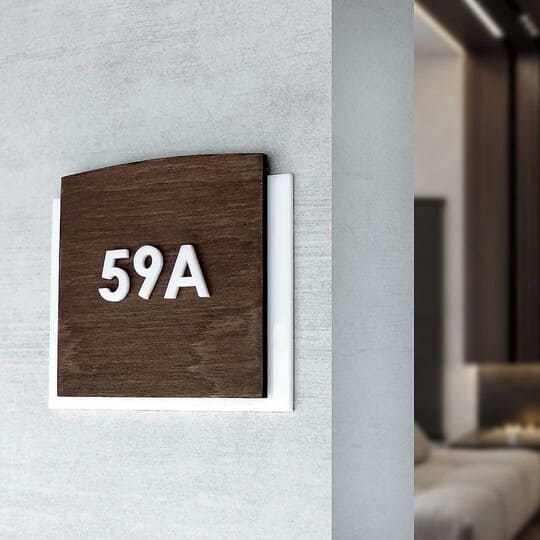
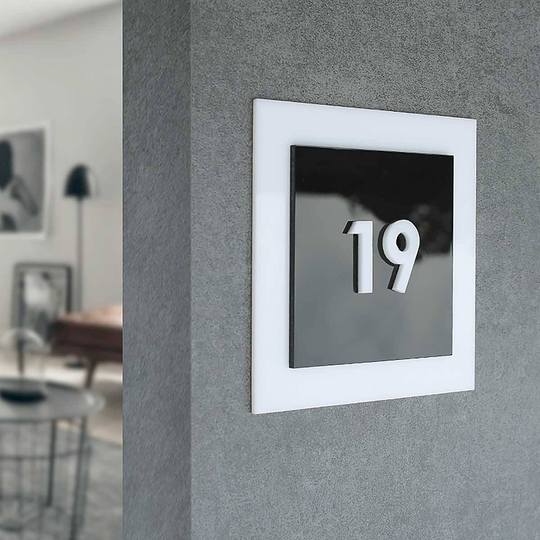
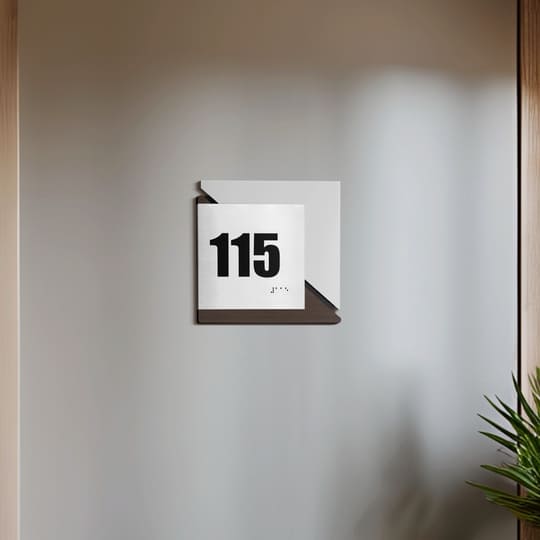
Example of minimalist acrylic signage with geometric typography for contemporary interiors from the Genova collection:
Sans-Serif vs Serif for Signage
The font on signs determines how easily information is read and how well it integrates with the interior. In warm spaces it’s important to find a solution that both supports the atmosphere and ensures clear navigation. That’s why the choice between sans‑serif and serif requires a measured approach.
|
Criterion |
Sans-serif |
Serif |
|
Letterform |
Simple, clean shapes without serifs |
Letters with serifs, more detailed |
|
Readability |
Fast to read from a distance |
Readable, but slower in motion |
|
Visual character |
Modern, neutral |
Classical, more expressive |
|
Perception in the interior |
Light, does not overwhelm the space |
Adds depth and character |
|
Impact on atmosphere |
Supports minimalism and modernity |
Emphasizes status and coziness |
Which font is better for door signs
In most projects the answer depends on functionality.
-
• sans-serif fonts are a universal solution for most spaces;
-
• geometric fonts are suitable for contemporary interiors with clear architecture;
-
• serif fonts with moderate contrast work well for hotel signage and cozy environments.
The best result comes not from a single font but from a system: a single type family + proper scale + sufficient contrast + appropriate material.
This combination allows you to create signs that not only convey information but also become part of the interior and enhance its character.
How to Combine Fonts with Signage Materials
Material directly affects the choice of typeface. The same font can look different on wood, acrylic, or metal. When designing a sign, consider surface texture, color, and contrast. Understanding how to combine materials and fonts in signage allows you to create solutions that are both visually balanced and highly readable.
The most common materials used for wall signage include:
-
• wood;
-
• acrylic;
-
• stainless steel.
Choosing Fonts for Wooden Signs
The font must account for the wood texture. Wood’s surface has a natural grain, so very fine or thin details may be less visible.
Best-performing options include:
-
• simple geometric fonts;
-
• typefaces with soft proportions;
-
• medium stroke weight.
Thin letterforms can disappear on a textured surface. That’s why wooden signs often use high‑contrast characters or dimensional elements.
Dimensional Acrylic Letters for Signage
Dimensional letters help increase text visibility. Raised characters make the inscription stand out, even in complex lighting conditions.
Advantages:
-
• create depth;
-
• cast clear shadows;
-
• improve text legibility.
Acrylic letters are often used — they add a modern look and pair well with different navigation elements.
Font Contrast and Background Materials
Contrast is one of the key factors in navigation. Even a well‑chosen typeface can lose effectiveness if text and background are too similar in color.
Basic rules:
-
• light letters on a dark background;
-
• dark characters on a light surface;
-
• sufficient color difference.
Ultimately, font contrast determines how quickly a person will read the information.
Example of a scandinavian style signage with simple sans-serif typography and neutral materials from the Scandza collection:

Balancing Decorative Style and Functionality
In soft interiors it’s easy to get carried away with decoration. However, the font for door plaques must remain clear even within a complex spatial design.
To keep the balance between aesthetics and functionality, three main factors are usually considered.
Reading Speed and Information Clarity
People read orientation system text in a matter of seconds. Letterforms must be as immediately understandable as possible.
Therefore, wayfinding signage typography should:
-
• use simple shapes;
-
• avoid complex ligatures;
-
• employ clear proportions.
This is especially important for corridor signage and high-traffic areas.
How Lighting Affects Signage Readability
Lighting directly affects readability. Light alters color perception and can increase or reduce the contrast between characters and background.
For example:
-
• warm lighting can reduce contrast;
-
• side lighting enhances shadows from dimensional letters;
-
• insufficient illumination makes reading difficult.
That’s why signage design for interiors is tested under real lighting conditions.
Choosing the Right Font Scale
Font size depends on reading distance. The farther a viewer is from a sign, the larger the characters should be.
For doors, recommended sizes are:
-
• 20–40 mm for numbers;
-
• 12–20 mm for nameplates.
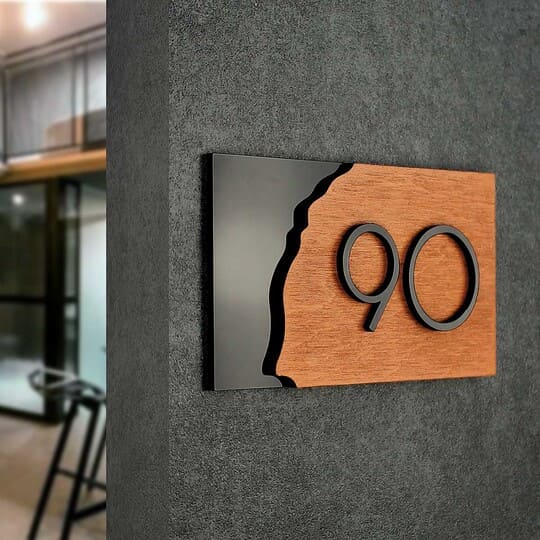
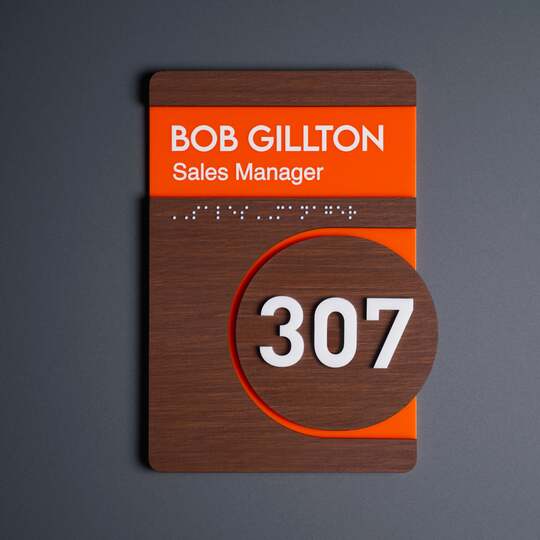
Example of a decorative door sign with expressive typography and high contrast lettering for modern interiors from the Dragon collection:

How Signage Design Influences Interior Atmosphere
Well‑planned signage design for interiors supports the overall style of a space and makes navigation intuitive for visitors. Decorative elements become part of the building’s visual system, so their appearance must match the materials, colors, and forms used in the interior.
Door signage should not feel like separate objects; they should be a logical extension of the space’s design and fit naturally into its architecture.
Material Choice in Interior Signage
Material shapes a sign’s character and affects how it’s perceived in the interior. Different materials set different moods and can emphasize a space’s style.
For example:
-
• acrylic signs add a contemporary touch;
-
• wooden signs create a warm atmosphere;
-
• steel underscores minimalism.
Stainless steel is often used in commercial signage, where there is a high flow of visitors. In such environments, navigation elements must be clearly visible and easy to understand at first glance.
Harmony Between Typography and Texture
A typeface must suit the surface material. If letterforms and a sign’s texture clash, the text can feel out of place even in a well‑designed interior.
For example:
-
• smooth acrylic pairs well with geometric fonts;
-
• wood works best with softer shapes;
-
• metal suits crisp, restrained typefaces.
Such combinations help create cohesive design and result in tidier, more comprehensible navigation.
Navigation as Part of Interior Design
Contemporary interior wayfinding is integrated into the space’s design. It helps visitors orient themselves quickly while supporting the building’s overall aesthetic.
Elements of such a system:
-
• information signs;
-
• apartment signage;
-
• wall signage;
-
• directional signs;
-
• prohibition signs;
-
• service and technical signs;
-
• tactile elements with Braille.
All these components form a unified building navigation. When they are executed in a single style, the space looks more orderly and becomes easier for visitors to understand.
Example of a professional sign from the Scandza collection, developed for offices and commercial spaces with high visitor flow:

Example of Wooden Signage Design in Warm Interiors
Many contemporary interiors use natural materials that create a cozy atmosphere. That is why wooden signs often become part of the navigation system in such spaces. A successful example is the Sherwood collection.
This series combines:
-
• a sans-serif or geometric font with a simple letter shape without complex details is used;
-
• the height of the characters for door numbers is usually 20–40 mm, which ensures readability in corridors;
-
• for additional labels, a scale of 12–20 mm is used with a clear hierarchy;
-
• an average stroke thickness avoids losing characters on the texture of the wood;
-
• high contrast is used: dark characters on light wood or light elements on a deep tone of wood;
-
• volumetric acrylic letters are often added, which create a shadow and enhance readability in warm side lighting.
Such a combination works well in hotels, apartments, and restaurants.
Thanks to its natural texture, wood supports the atmosphere of warm spaces and helps create a more cohesive interior.
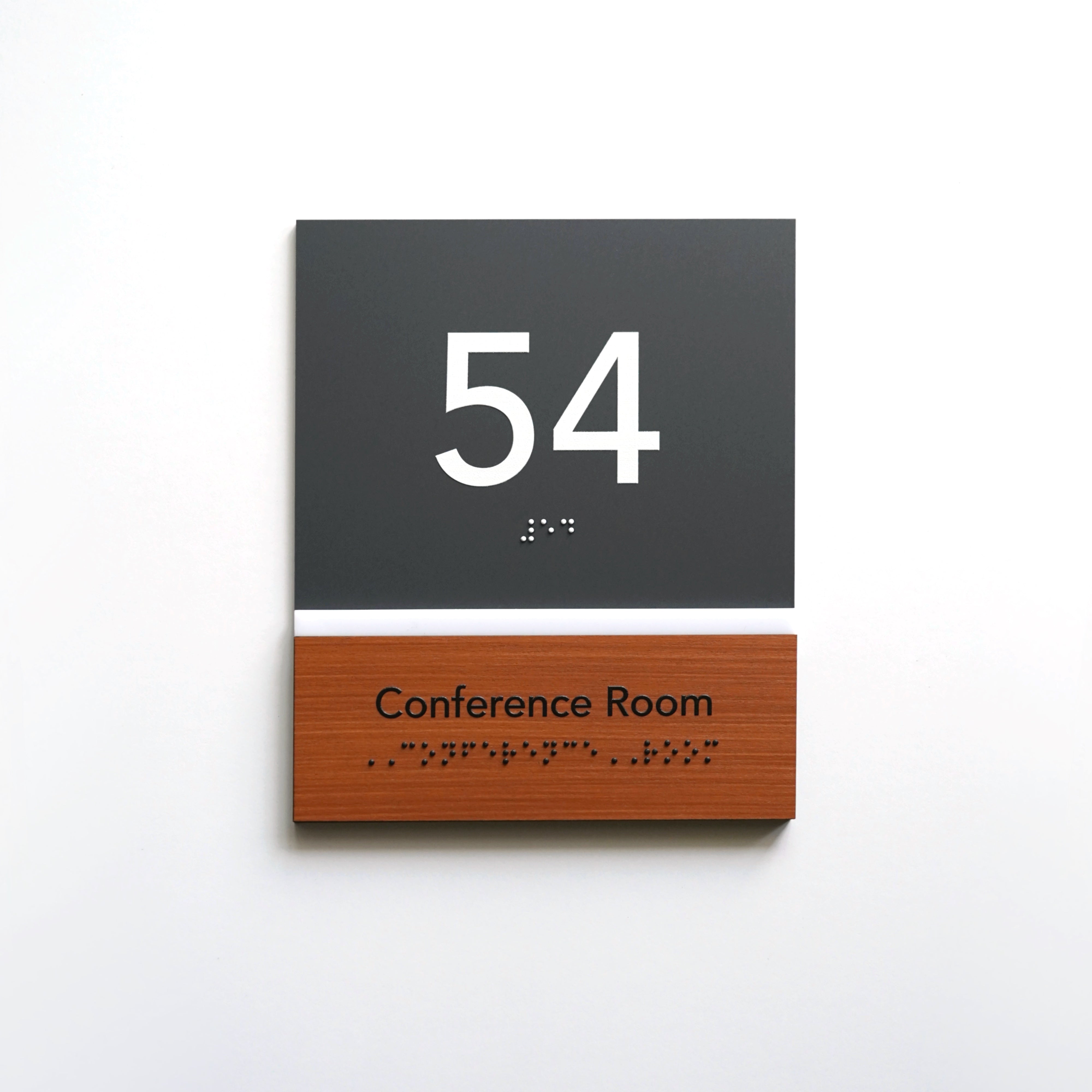
Example of a wooden door signage with modern sans-serif typography and natural wood texture for warm interiors from the Sherwood collection:
How to Choose the Right Font for Signage: Practical Guidelines
Choosing a typeface is part of the overall design of door elements and orientation system. It’s important to consider how easily the text will be read in the real space.
Basic rules for choosing a font for a sign:
-
• check text readability from different distances;
-
• test the room lighting;
-
• consider the material texture;
-
• avoid overly thin typefaces;
-
• use a unified navigation infrastructure.
It’s also important that fonts for signs align with the overall interior style. When typography, material, and form work together, the pieces feel like a natural part of the space and do not disrupt its atmosphere.
What to Remember
Fonts for door signage have a significant impact on how an interior is perceived and on the ease of navigation. In cozy interiors it’s especially important to maintain a balance between aesthetics and functionality. A typeface should remain clear, be legible from various distances, and harmonize with the sign materials.
Well‑chosen fonts improve legibility and emphasize the space’s atmosphere. That’s why, when creating navigation elements, it’s important to consider material, lighting, text scale, and the overall interior style.
If you are planning to create an orientation system for a hotel, office, or residential complex, consider the design of informational signs, the materials, and the typeface in advance.
Bsign specialists can help you:
-
• select a font that fits the interior;
-
• determine the optimal text size and contrast;
-
• pair the font with sign materials;
-
• create a unified visual navigation system for the building.
A professional consultation will help find a solution that organically complements the interior of your space.
Example of an office door sign with clear sans-serif typography for fast navigation in workspace from the Scandza collection:

FAQ
What font works best for wooden signs?
A font for wooden signs should have a simple shape and sufficient stroke weight. This helps preserve legibility on a textured surface. Geometric or sans‑serif typefaces are most often used because they pair well with wood texture.
Can decorative fonts be used in warm interior design?
Decorative fonts are sometimes used in design, but only as accents. They are less suitable for orientation because they reduce reading speed. Therefore, more neutral readable fonts for signage are usually preferred.
How does lighting influence signage readability?
Lighting affects contrast and symbol visibility. Warm light can reduce color contrast, while side lighting enhances shadows from dimensional letters.
Are dimensional acrylic letters suitable for warm interiors?
Yes, dimensional letters signage works well in cozy interiors. It creates depth and makes text more noticeable. Acrylic letters are often used in modern hotels and restaurants.
What font size is recommended for door signage?
The optimal size depends on reading distance. Hotel room number signs typically use character heights of 20–40 mm. This size allows easy reading of wayfinding signs even in long corridors.
Should the same font be used across all signs in a building?
A single type family makes the interior wayfinding system clear. When all wall signs, directional signs, and door elements follow the same style, navigation becomes faster and more logical.


