













by Olena Zadniprovska
How to Create a Wayfinding System in a Building: Principles, Logic, and Practical Solutions
A wayfinding system is the set of cues that helps people navigate a building confidently, without stress or extra effort. It is formed from an architectural scenario, a clear sequence of information, and predictable routes.
Wayfinding in large buildings consists of four key zones:
-
Exterior and entrance direction — helps users understand where movement begins and how to enter the space.
-
Horizontal direction — guides movement along corridors and passages within the same floor.
-
Vertical direction — provides orientation between floors via elevators, staircases, and floor indicators.
-
Local direction — marks the final destination of the route using navigation elements and local identifiers.
In a large building, people often find themselves in a new, unfamiliar environment. Without clear reference points, they feel tension: Where am I? Which way to go? How long will it take? Route predictability is what gives visitors a sense of calm and comfort. When a building navigation system is designed correctly, people move with confidence, expend less effort, and do not feel stressed.
Disorientation forces visitors to focus not on the purpose of their visit, but on finding their way. In this state, even a high-quality space is perceived as complex, disorganized, and indifferent to the visitor. Every extra stop and every clarifying question intensifies the feeling of tension and uncertainty. Instead, a well‑thought‑out orientation within the building creates a clear movement scenario, conveys professionalism, and signals care for people even before they interact with staff.
In this context, navigation ceases to be a collection of individual signs. It becomes part of architectural navigation that allows the space to be read intuitively, without extra effort or explanations. Well-designed directional signage in buildings does not draw attention to itself, yet it constantly works to support comfort and trust.
In this article, we will look at how to approach the creation ofmodern directional signage solutions in a large building in a systematic way, what to pay attention to at different stages, and what principles make a space understandable, logical, and convenient for visitors.

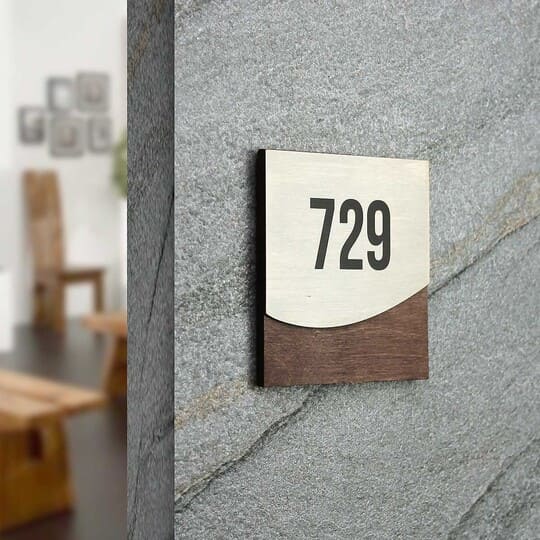
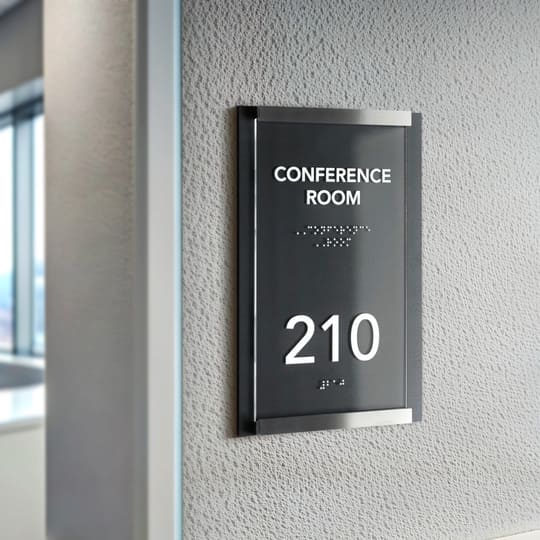
An example of an acrylic navigation element in a space with restrained graphics that is easy to read at a glance.
Where Navigation in a Space Begins
Navigation begins long before the first plaque appears. It is formed by the logic of human movement in space, embedded in the planning. The way the visitor enters the building, sees corridors, passageways, and decision points determines their subsequent behavior. The architectural logic of the building suggests where to stop, where to make a decision, and where to expect confirmation of the correct route without additional explanations.
The entrance area plays a crucial role in this process. It is here that a person first “reads” the space and forms a mental map of the building, even if they are visiting it for the first time. If movement directions are clear from the start, the visitor feels confident and calm. In that case, subsequent navigation does not impose decisions but only reinforces the already formed sense of logic and order.
Navigation elements within this system function as reinforcement of the structure rather than as an attempt to compensate for planning flaws. They confirm the correctness of movement, mark key points along the route, and help with orientation without information overload. A building signage scenario of the space can be considered successful when each element logically continues the previous one and does not conflict with the interior.

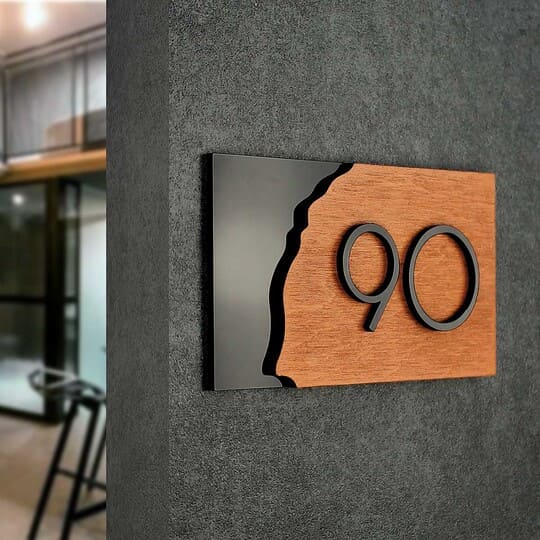
An example of using a sign with logical placement at a decision-making point.
Wayfinding in large buildings
For navigation to function reliably and predictably, it’s important to treat it as a coherent system divided into functional levels. Navigation zones in a large building don’t work in isolation. Directional signs for navigation consistently guide a person from the first contact with the space to the final point of the route, forming a single, logically structured path.
Exterior and entrance navigation
Orientation begins even before entering the building. A person must quickly understand exactly where they are, which entrance is the main one, and where movement inside starts. Clear markings at this stage relieve tension before any interaction with the interior and create an initial sense of order. Entry wayfinding shapes the initial impression of whether the space will be easy to understand further on.
Horizontal navigation
Corridors, passages, and galleries form the primary movement on a floor. Here, consistency and repetition of logic are essential so that people do not have to stop repeatedly to check the route. When the principle of information placement is clear, visitors begin to move almost automatically, without spending extra attention on searching for cues.
Vertical navigation between floors
This zone requires special attention, as this is where mistakes and doubts most often arise. Elevators, stairs, and floor indicators must provide clear confirmation of the correct direction before a person reaches the target level. Well‑designed vertical directional products help people understand in advance where they will end up after changing levels.
Local navigation
Proper door sign placement rules are especially important here, as it serves as the final point of confirmation that the chosen path is correct. Clear local directional plaques remove the last doubts and allow a person to focus on the purpose of their visit.

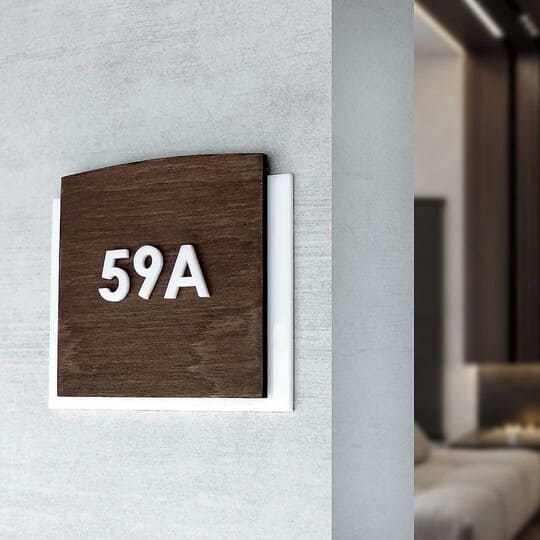
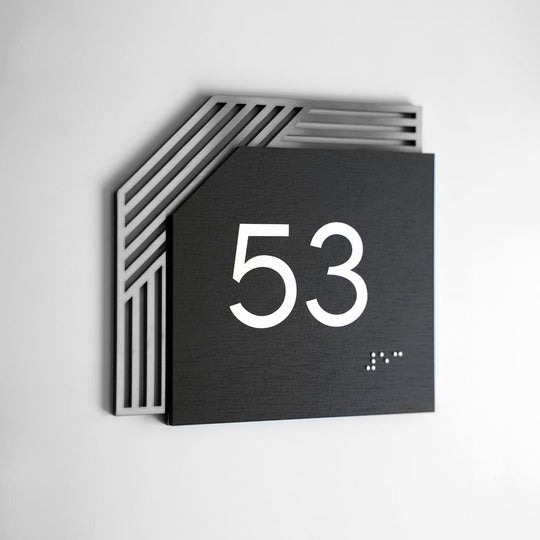
An example of an access‑restricted navigation element combining tactile symbols and high‑contrast graphics on metal and wood surfaces.
Wayfinding in different types of large buildings
Although building signage principles are universal, the building context significantly affects their implementation. In office centers, it is important to ensure quick adaptation for new visitors without overloading the space. People should be able to find the required floor or company easily, without stopping at every step.
Navigation is even more critical in medical facilities. People are often under stress here, and any uncertainty increases tension. The space should "lead" visitors as calmly and predictably as possible, with a minimum of decisions and doubts.
Educational buildings typically have complex structures and a large number of repeated rooms. Here, wayfinding helps not only to find a classroom but also to quickly understand the logic of the whole space. A clear structure lowers the barrier for new students and visitors.
In public and multifunctional buildings, it is especially important to account for different usage scenarios. People may come with varied purposes, and navigation must be flexible enough to support those scenarios without conflict or confusion.

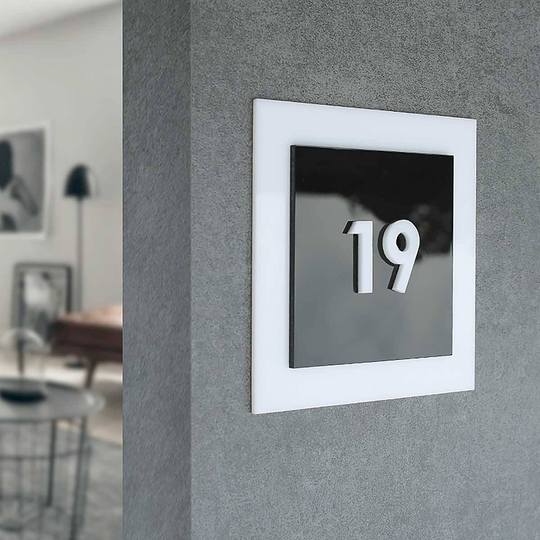
An example of a minimalist informational restroom sign designed for quick perception within the space.
The Principle “People Should Not Have to Think”: The Basis of Intuitive Wayfinding
Movement within a building is a sequence of micro-decisions. People constantly assess their surroundings, look for confirmation that they are on the right path, and compare expectations with reality. Navigation should support this process, not complicate it.
The most critical moments are not long, straight stretches, but moments of doubt. That is where visitors stop, look around, and search for a signal that they are moving in the right direction. If that signal appears in time, movement continues without tension. If it does not, a sense of error arises.
Effective navigation works when it requires no effort and does not draw unnecessary attention to itself. People do not analyze individual signs separately but perceive the space as a whole. Intuitive navigation is based on a clear wayfinding signs hierarchy, where the primary message is visible immediately, and secondary information does not interfere or create a feeling of overload.
A minimal amount of text reduces cognitive load and allows decisions to be made more quickly. When information is presented in measured amounts, visitors do not stop to think or doubt the correctness of their route. Repeating the same logic at every level of the building helps people adapt quickly, even in large and complex spaces.
It is thanks to this predictability that wayfinding solutions for large spaces are formed, allowing visitors to feel confident without staff assistance. As a result, the space is perceived as clear, calm, and well-organized.

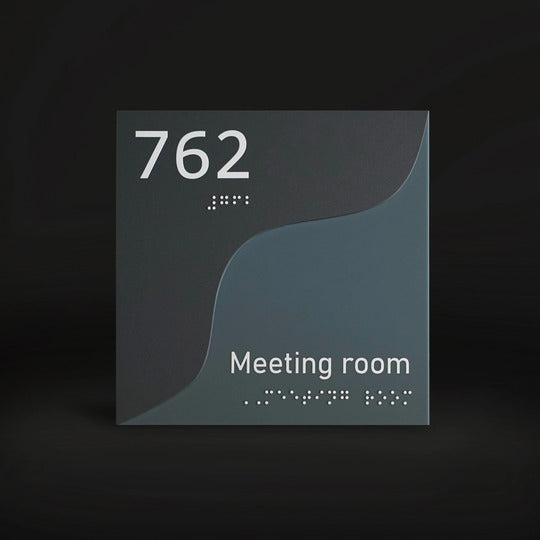
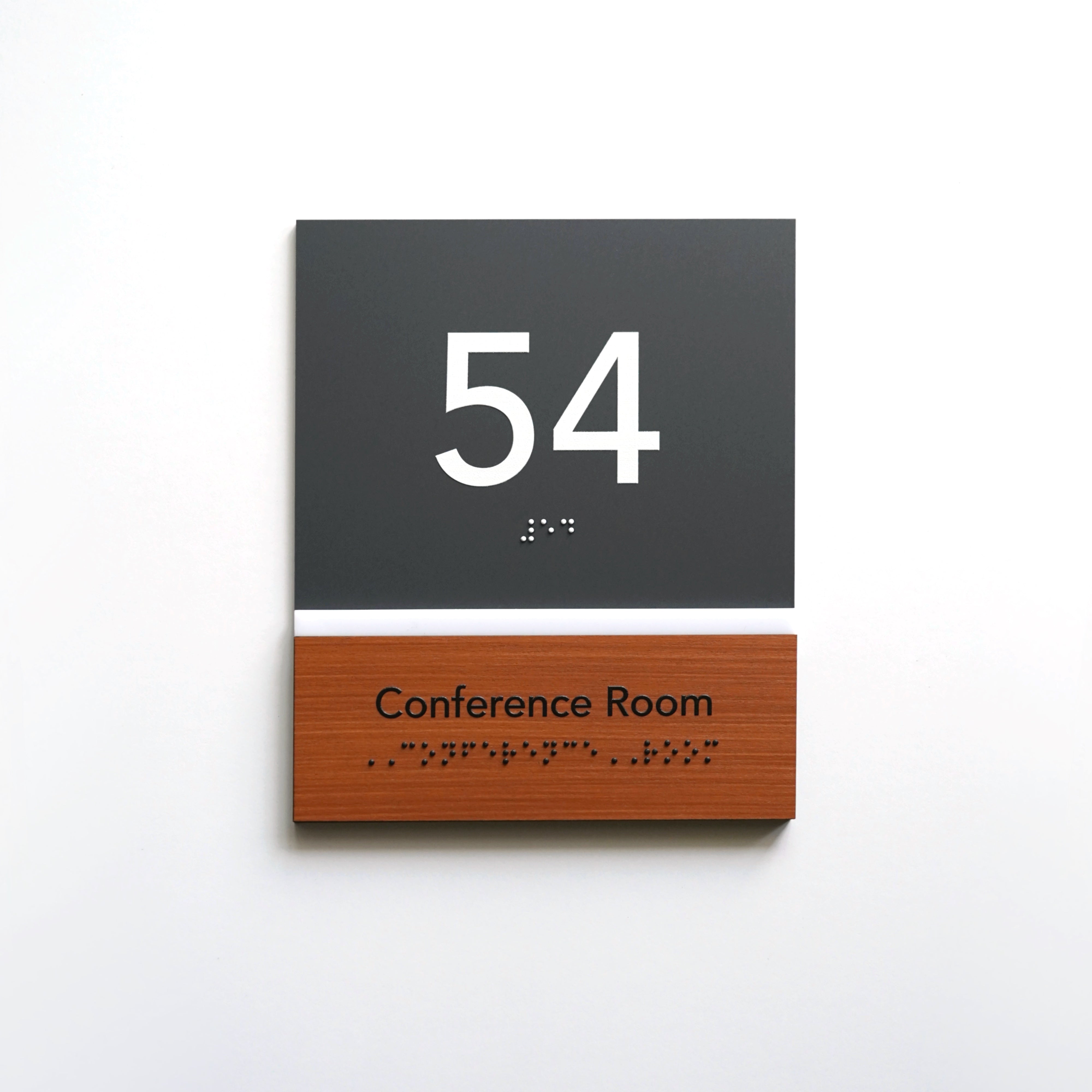
An example of a meeting room product with layered colored surfaces and Braille elements for convenient navigation.
Types of Directional Wayfinding Signs and Their Role
A navigation system design cannot function without a clear division of roles among its elements. Wayfinding signs in a building serve different purposes but must be united by a single style and logic of information delivery.
Directional wayfinding signs form the route and help make decisions at decision points where navigation flow in buildings intersects. They point the way and cut down on wrong turns. Door navigation elements confirm the result of movement, remove final doubts, and confirm that the visitor has reached the intended destination without the need for additional clarification.
Informational signs complement the wayfinding signage system by adding a sense of order and structure. They provide necessary information without overloading the space and do not distract from the main route.
Consistency in shapes, materials, and mounting methods transforms individual elements into a unified signage system that is perceived as an organic part of the interior rather than an external technical addition.

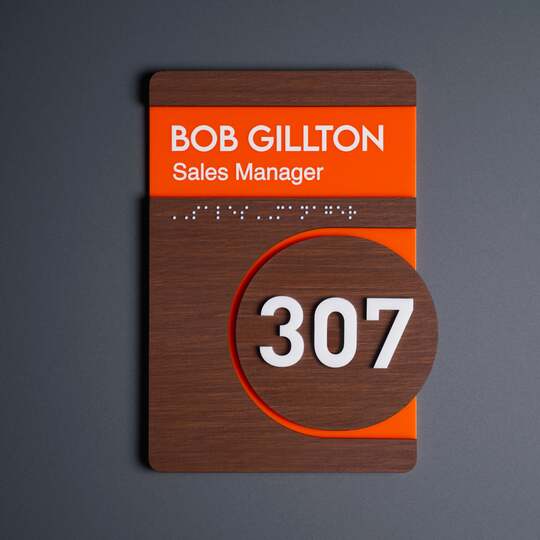
An example of a combined navigation sign that emphasizes the warm atmosphere of the space and integrates harmoniously into the interior.
Wayfinding Signage Materials That Build Trust
Material directly influences the perception of a space and how people assess its quality and reliability, as the first sense of trust and thoughtfulness of the environment is formed through the tactile and visual elements of navigation.
That is why the choice of materials for interior wayfinding signage has strategic importance and works to build trust, no less than planning or visual logic.
-
• Wooden wayfinding signs bring warmth and a human touch to a space, soften its scale, and foster a sense of calm. They work well in offices, hotels, and educational institutions where a comfortable atmosphere is important.
-
• Stainless steel wayfinding signs convey stability and durability — qualities especially important in medical and commercial buildings, where the environment needs to feel reliable and orderly.
-
• Acrylic wayfinding signs deliver crisp graphics and a modern look, so information is read quickly and effortlessly. They work well in minimalist interiors where clean lines and precision of form are essential.

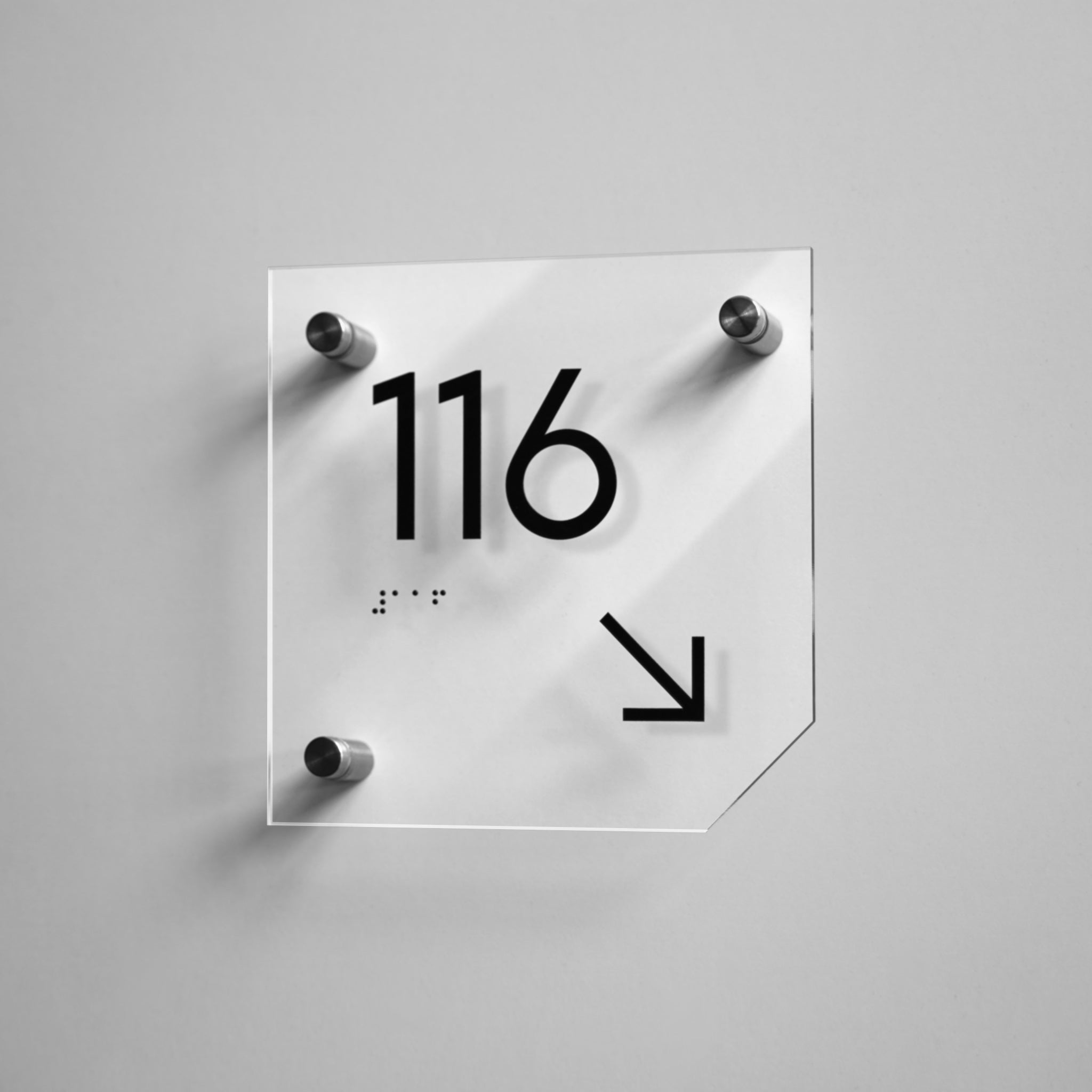
A minimalist navigation element on transparent acrylic with bold typography and Braille elements for inclusive and easy-to-read navigation.
Visual Calm Instead of Information Overload
Building signage should be noticeable but not intrusive. It must support a person’s movement, not distract them from the space. Visual calm is achieved when the entire system is built in a unified style, with consistent element sizes, a clear rhythm, and carefully calibrated spacing. In such an environment, information is read quickly and without strain.
Reducing the number of variations in form and presentation prevents chaotic perception. This approach lowers information overload and allows people to focus on movement instead of analyzing each element separately. Wayfinding stops being a collection of signs and begins to function as an integrated structure.
When navigation becomes part of the interior, it enhances it. The space feels calm, composed, and considered, and interacting with it requires no extra effort from the visitor.

A navigation element with a clear information hierarchy, directional arrows, and a high‑contrast layout for quick orientation in a multi‑storey building.
Common mistakes in wayfinding for large buildings
Even in well-designed buildings, navigation often becomes a weak point. The cause is usually not individual elements, but a lack of a systemic approach. When the signage system is treated as an add‑on rather than part of the space, it stops fulfilling its primary function — supporting people’s movement without tension or doubt. The most common mistakes include:
-
• Treating wayfinding as a secondary element.
Building signage is added at the final stage of a project, often after the building has already been opened. As a result, plaques do not reflect the actual logic of how people move through space and only partially compensate for spatial shortcomings. -
• Lack of a unified approach.
When different parts of a building are designed in different styles, visitors are forced to "relearn" the system at every turn. This destroys the sense of predictability and creates tension even along simple routes, and the space no longer feels cohesive. -
• Compensating for complexity with an increased quantity of information. Instead of simplifying the route, more navigation elements and more text are added. As a result, people receive an excess of information but still do not get an answer to the main question — where to go next. This approach only amplifies the sense of chaos.
-
• Ignoring decision points.
At junctions where routes branch, people need confirmation most. If there are no clear cues at these points, visitors stop, hesitate, and begin to look for help. As a result, navigation fails to perform its primary function.

A plaque on transparent acrylic with minimal typography, Braille markings, and a directional arrow for clear orientation.
How Wayfinding Reduces Visitor Stress
Clear building signage directly affects a person’s emotional state in a space and demonstrates how invisible wayfinding improves user comfort without drawing attention to itself. It reduces the number of questions directed to staff and speeds up adaptation, allowing visitors to act independently without feeling uncertain. When a route is easy to read, people do not waste energy or time on doubt or on searching for confirmation.
Visitors do not feel rushed or irritated because movement happens naturally and predictably. The space ceases to be a source of tension and begins to function as a supportive environment where it is easy to focus on the purpose of the visit.
This is how a positive visitor experience is formed, based on a sense of care and a professional approach. In this case, building signage becomes an invisible service that enhances the overall impression of the space without extra words or explanations.

An example of a minimalist plaque with raised lettering, integrated into a modern interior.
The Reputation Effect of a Systemic Wayfinding Approach
Thoughtfully designed navigation changes the overall perception of a building and influences how people evaluate a space from the very first minutes of their visit. When the route is clear and predictable, the space appears mature, organized, and reliable without the need for additional explanations.
A business in such an environment seems responsible and attentive to detail. Visitors feel that care has been taken in advance and that all processes are planned systematically. This creates a calm perception of the facility and reduces the level of distrust that often arises in complex or unclear spaces.
That is why the signage system becomes part of the reputation. It quietly communicates professionalism and stability, leaving a clear movement scenario that endures even after the visit ends.

An example of technical navigation where accuracy and unambiguous information are crucial.
Wayfinding That Scales Over Time
A flexible system makes it easy to add to the space without losing style or integrity. When a navigation system is designed as a system rather than a set of separate elements, any changes look natural and do not disrupt the overall perception of the space.
Scalable wayfinding is especially important for buildings that grow or change function. New zones, floors, or services can appear gradually, yet the navigation remains clear and recognizable. Visitors do not notice a difference between “old” and “new” elements.
For this reason, such a signage system is a long‑term solution. It works for years without losing relevance, maintaining order in the space and preserving a unified image of the building even as changes occur.

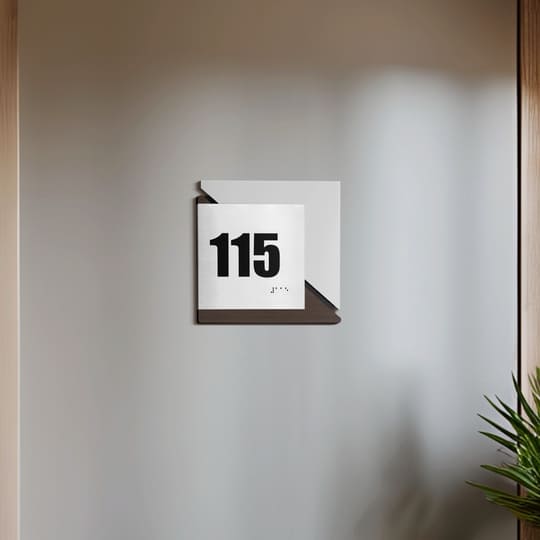
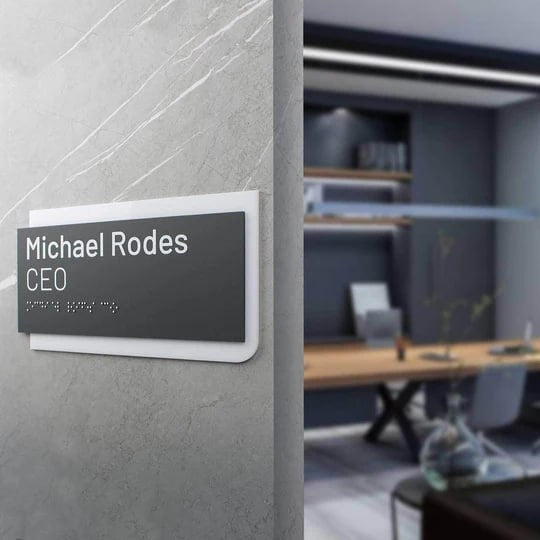
An example of door building signage that supports a unified signage system in the building.
Wayfinding as Part of the Image and Perception of the Space
The wayfinding system in a building is an investment in comfort, trust, and reputation that works every day. It does not draw direct attention, but it constantly influences how people perceive the space, how confident they feel in it, and whether they want to come back again. Such solutions create a clear movement scenario and a readable route logic without extra explanation.
Thoughtful, well‑designed solutions benefit the business even when people don't consciously think about them. They reduce tension, save time, and reinforce a sense of professionalism. A unified wayfinding logic in a building forms a cohesive spatial image that is easy to remember and inspires trust from the very first visit.
If you plan to create or update directional signage in your building and want to do it systematically, start with a consultation. A professional approach will help assess the space, build the movement logic, and find solutions that will work for a long time and support your facility’s reputation.


