





by Oleh Tomilenko
Wayfinding Signs for Hotels and Resorts in 2026: How to Prevent Guest Disorientation
Hotel signs are navigation and identification elements that help guests quickly locate key destinations, navigate the property with confidence, and move comfortably throughout the facility.
The guest experience begins long before check-in. If, after arriving at a hotel or resort, a person can't quickly locate the reception desk, an elevator, the restaurant, or the SPA, that creates stress and leaves a negative impression. This issue is especially pronounced at large properties with multiple buildings, sprawling grounds, or complex zoning.
In 2026, wayfinding becomes part of the visitor's experience — on par with interior design, service quality, and room comfort. That's why more properties invest in hotel wayfinding signage that lets guests navigate independently, reducing the need to ask staff for directions.
Thoughtfully designed wayfinding plaques for hotels cut down routine "where is…?" questions at the front desk, improve perceived service quality, and reinforce a unified brand look.
In this article, we'll cover how to build an effective hotel wayfinding system, which types of signs are most commonly used, and how to avoid frequent mistakes during the design process.
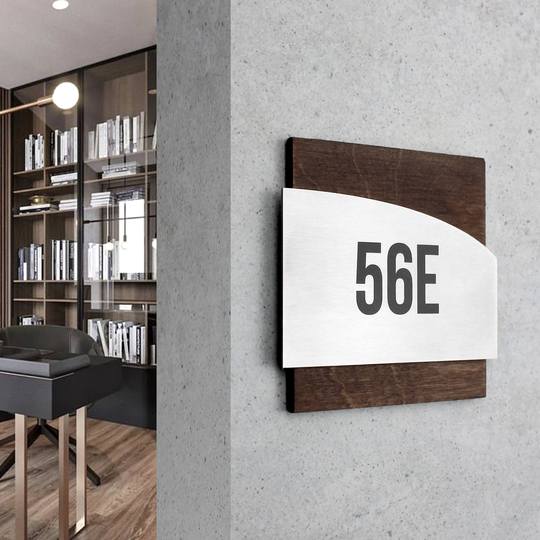
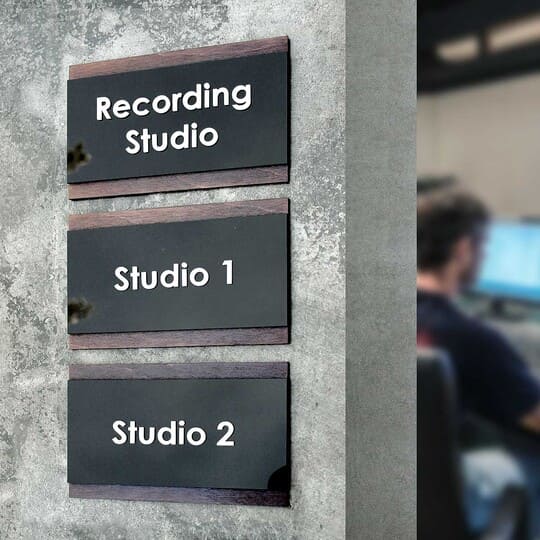
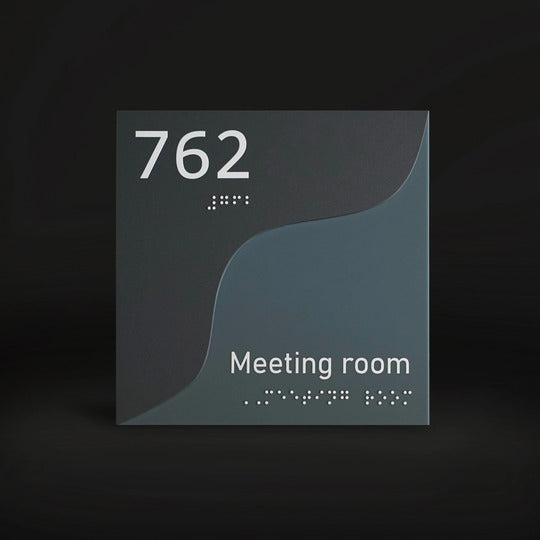
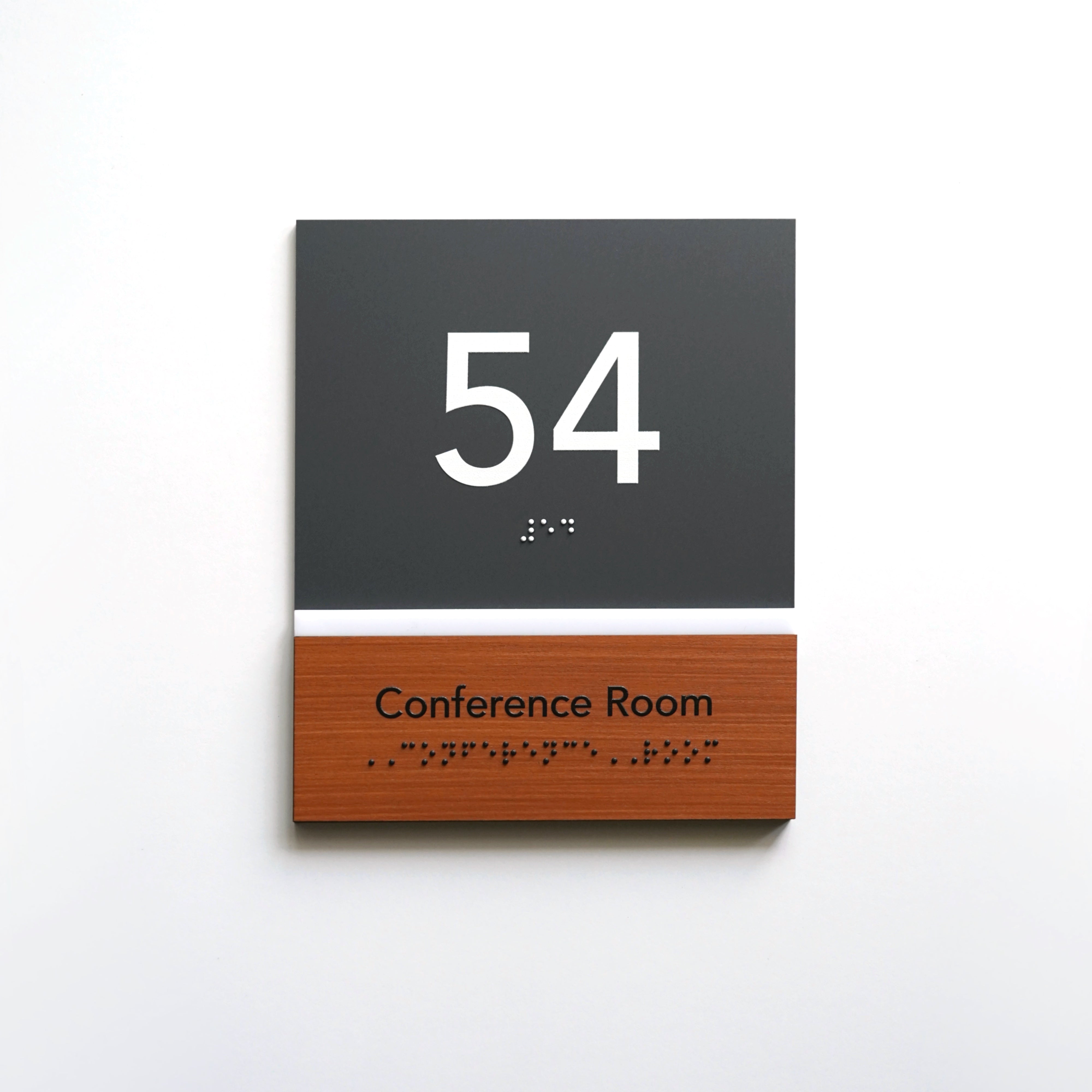
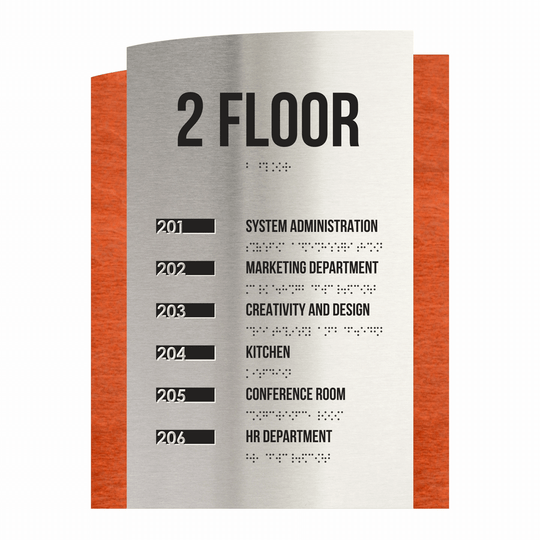
Example of contemporary hotel wayfinding signs from the Wave collection, crafted in a consistent style using wood and stainless steel:
What is a hotel wayfinding system?
A hotel wayfinding system is a coordinated set of directional signs, identification signs, maps, and room numbers that helps guests navigate a property and find rooms, restaurants, spas, and amenities without asking staff for directions. Therefore, it is important to understand why a hotel needs door signs, as they are key navigation elements that complete the guest's route and make orientation intuitive.
The core system typically includes a site map, directional signs, zone-identification signs (SPA, restaurant, conference hall, pool), door-number signs, and service-room markers. Large complexes add floor directories and inter-building guest navigation system. Everything is executed in a single corporate style to support clarity and hotel branding.
Key facts:
- Wayfinding signage directly shapes guest experience and the first impression of the property, even before check-in.
- A well-designed wayfinding system reduces "how do I get to..." queries and frees staff to deliver higher-value service.
- Clear directional signs help guests orient themselves faster across the entire property.
- Consistent, branded signage reinforces the hotel's brand identity throughout the guest journey and signals quality.
- Effective navigation reduces complaints about guest disorientation and improves reviews.
Wayfinding plaques for hotels and resort signage form a single navigation system that leads guests from the entrance to their rooms, the restaurant, or the spa without staff assistance. It includes maps, directional signs, zone plates, and room number signs laid out along guest routes, boosting comfort, reviews, and the property's standing.
Numbers worth knowing
Orientation problems remain common even in modern hotels and resorts. According to Mappedin, approximately 75% of large hospitality properties face guest complaints related to navigation. At the same time, a well-designed resort wayfinding system can cut directional inquiries to staff by 30–40%, which benefits both guest experience and operational efficiency.
Navigation quality also affects spending: Medallia research shows 61% of consumers are willing to spend more where they receive a seamless, comfortable experience. For hotels, that means wayfinding is not just a navigation tool but a key component of brand perception and service level.
1. Why Guests Get Lost in Hotels and Resorts: Main Causes of Disorientation
Guest disorientation is one of the most overlooked operational issues in the hospitality industry. A guest who can't find the elevator or the SPA feels stressed, and that stress becomes part of the overall guest experience — often ending up in a Booking.com review.
Informational signs help visitors quickly grasp the property layout, locate the right zone, and confirm they're on the correct route.
Large property footprint and complex layouts
Resort complexes, hotels with multiple buildings, properties with underground parking, separate entrances, and sprawling infrastructure are natural navigation traps. A guest won't understand where they are in relation to their destination if there isn't a clear landmark at every decision point.
In these conditions, resort signage must function as a full resort wayfinding system, with site maps, floor directories, and inter-building navigation.
No unified wayfinding system, small fonts, and confusing numbering
Another common scenario: signs exist, but they don't work. A lobby sign points to "SPA ↓," but there's no follow-up sign down the corridor. Or signs are present in different zones but vary in size, font, and color — guests subconsciously read them as separate systems and ignore them.
Room numbering can also cause confusion: if rooms 201 and 215 are in different wings with no directional cues, guests walk the wrong way and call reception.
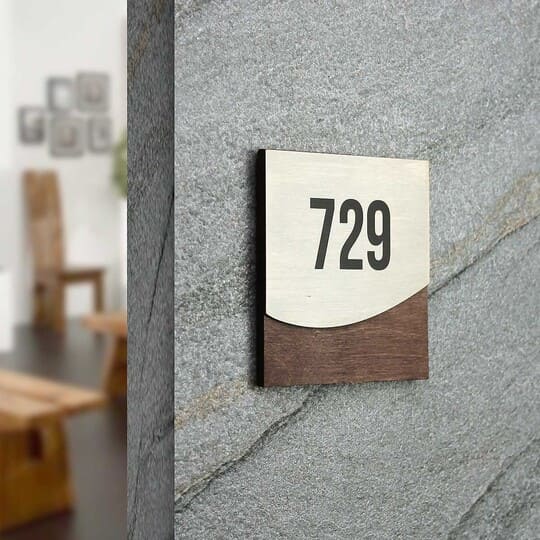
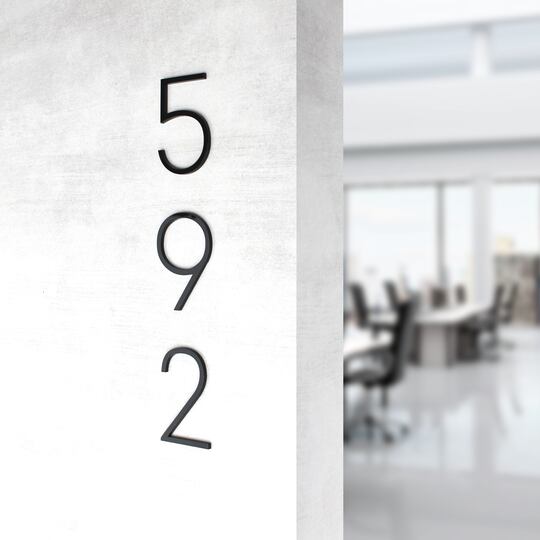
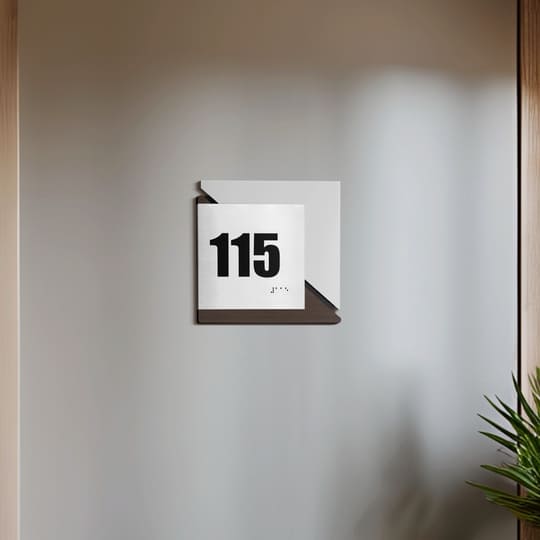
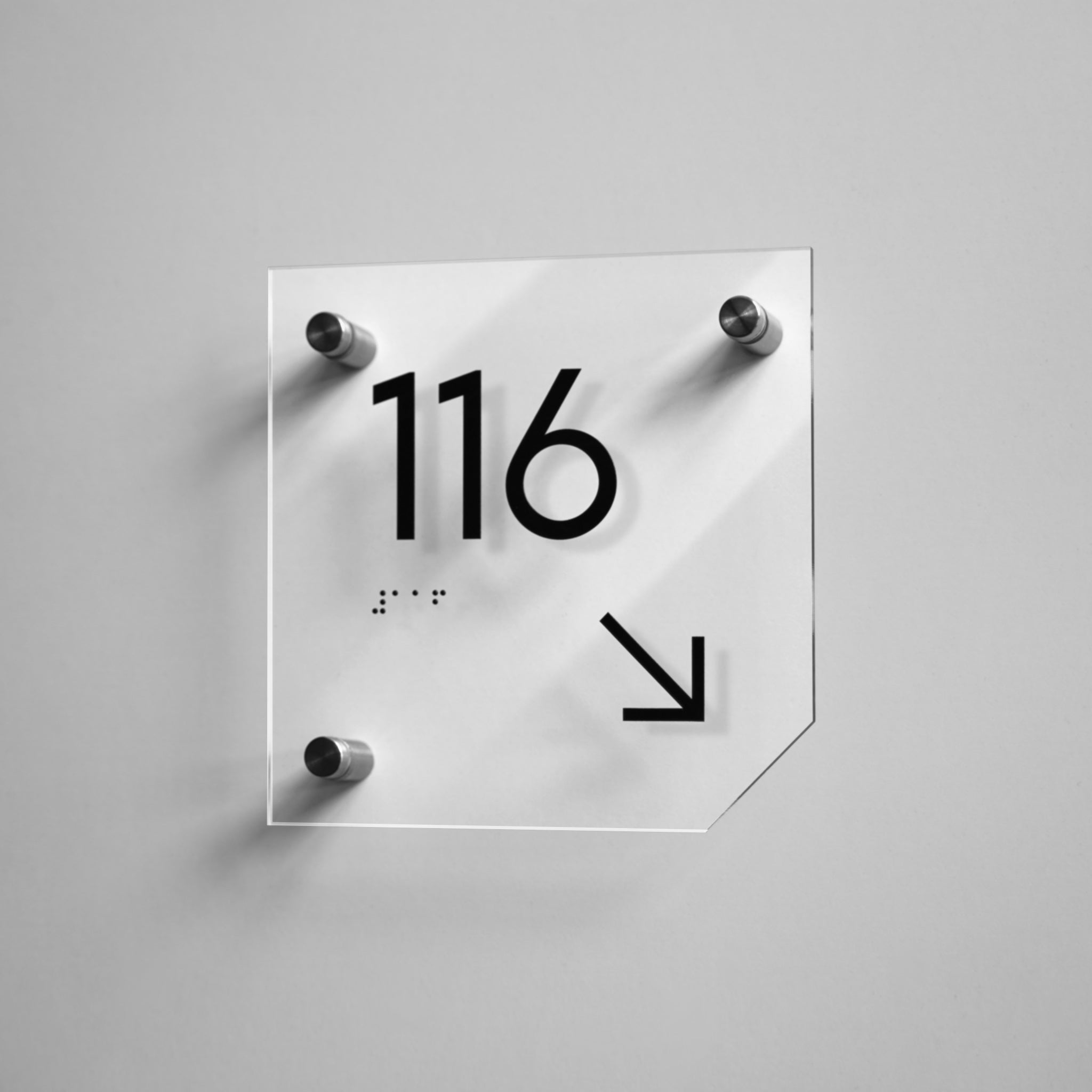
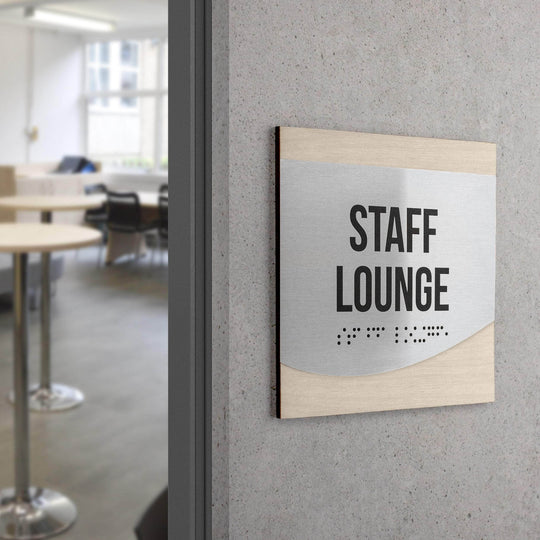
Example of hotel room number signs with clear typography and high-contrast design from the Venture collection, which help guests find rooms quickly:
2. 7 Common Navigation Mistakes in Hotels and Resorts in 2026
Here are the most common mistakes encountered when setting up hotel wayfinding signage:
- No site map at the entrance or reception — guests can't see the property's overall structure.
- Inconsistent directional signs — a sign appears at the start of a route but disappears halfway through.
- Mixed-style signs from different purchases over the years — no single visual code.
- Small type and poor contrast — signs exist but are unreadable.
- Signs placed between decision points rather than at them — they arrive too late to help.
- Information overload — too many zones listed on one sign without hierarchy.
- Ignoring accessibility — missing Braille signs, tactile elements, and low contrast for visually impaired guests.
3. Types of Hotel Wayfinding Signs That Create an Effective Navigation System
An effective hotel wayfinding system is a hierarchical structure made of several levels. Hotel wayfinding signage must work as a single, unified system that guides the guest from the entrance to their destination. Each level serves a purpose: indicating direction, confirming the route, or identifying a specific zone.
Site maps and directional signs
A site map is the first orientation point. It should be placed at the entrance and at key route nodes: next to elevators, at inter-building crossings, and at corridor junctions. Hotel directional signs act as sequential cues, helping guests move toward their destination without needing staff assistance.
For large properties, floor directories become especially important: they help guests orient themselves between levels and quickly locate guest rooms, conference facilities, and service areas.
Zone identification signs, room numbers, and service signs
Every functional area needs its own identifier. That includes hotel lobby signs and informational signs for the SPA, restaurant, conference hall, pool, reception, and other amenities. Hotel room number signs keep the floor navigation logical and make it easier for guests to locate rooms.
Signage for SPA-zones, restaurants, conference halls, and pools
These amenities are among the most visited and also generate the most navigation questions. For this reason, it is not enough to place a sign only at the entrance to the destination. Effective hotel wayfinding signage relies on a sequence of directional signs that guide visitors from the reception desk or main entrance all the way to their final destination.
The longer the route, the more consistently the wayfinding signs should repeat. This approach helps guests orient themselves faster and creates a positive guest experience.
Service and restroom signs also play an important role. These elements provide a clear directional system in common areas and help guests quickly locate essential facilities without needing to ask staff for directions.
Table: Types of Wayfinding Signs
| Sign type | Where used | Primary function |
|---|---|---|
| Directional | Corridors, grounds | Shows the route |
| Informational | Entrance area, site map | Explains property layout |
| Zone identification | SPA, restaurant, conference hall | Identifies the location |
| Room number sign | Guest rooms, blocks | Identifies spaces |
| Service | Exits, technical zones | Ensures safety |
| Floor directory | Elevators, stairwells | Navigates between floors |
4. The Guest Journey: From the Entrance to the Destination
Effective wayfinding is built around the guest's route. That's the fundamental difference between chaotic signage and a planned wayfinding system.
Decision points: where guests choose their next direction
A decision point is any location where a guest stops and chooses a direction: an intersection, an elevator exit, a corridor split, or the threshold of a new zone. That is exactly where a sign must be placed — not between decision points, but directly at them.
Where there's no sign at the choice point, confusion follows. Where a sign exists but is inconsistent, confusion remains. A classic mistake is placing a sign at the corridor entrance and then losing it at the first turn.
Wayfinding scenarios for hotels, resorts, and apartments
Different property types require different navigation logic:
- Multi‑storey hotel — priority: floor number signs by elevators, clear room numbering with directional cues, and a floor map.
- Resort complex with multiple buildings — priority: a site map at the main entrance, navigation between buildings, and color‑coded building zones.
- Apartments or chalets — priority: clear door number signs, wayfinding from the parking area to buildings, and a minimalist signage style.
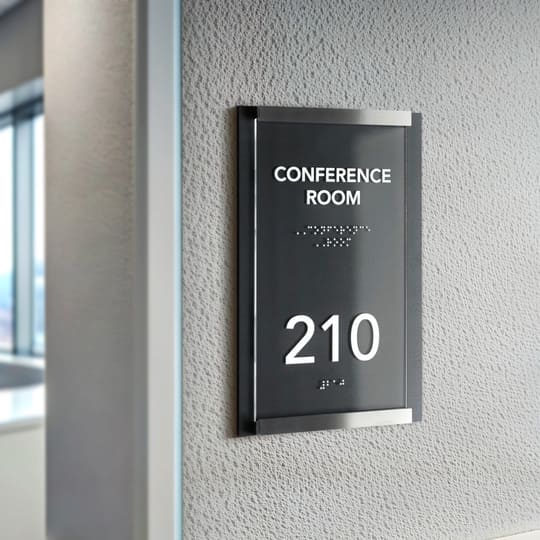
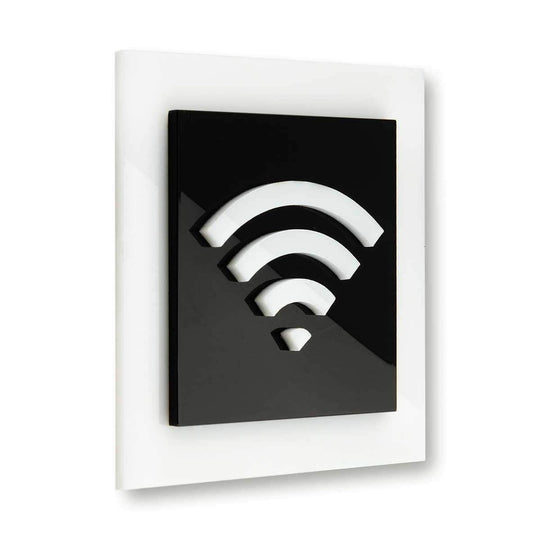
Example of custom wayfinding signs for public hotel areas from the Simple collection, which helps visitors quickly find services:
5. Chaotic Signs vs. a Planned Wayfinding System: What Works Better
Let's compare the two approaches most commonly seen in hotels and resorts.
| Parameter | Chaotic signs | Planned wayfinding system |
|---|---|---|
| Guest comfort | Guests get lost and feel stressed | Guests navigate independently |
| Staff workload | Many "how do I get there?" questions; staff distracted | Minimal inquiries; staff focus on service |
| Reviews | Complaints about confusion; lower ratings | Positive reviews about service level |
| Brand perception | Chaos lowers the property's standing | Unified style emphasizes premium quality |
| Guest spending | Disoriented guests spend less | Confident guests visit all areas |
| Long‑term effect | Frequent reworks and fixes | System scales and can be extended |
Chaotic signs often do more harm than having no signs at all: they create a sense of disorder, complicate navigation, and erode trust in the property.
6. ADA Compliance, Accessibility, and Materials in Hotel Wayfinding
Modern hotel wayfinding systems must combine visual clarity, inclusivity, and material durability. Proper planning of signage not only improves directional system for all guests but also directly impacts hotel room numbers visibility, making orientation in corridors and guest areas more intuitive. A well-designed system includes ADA signs for hotels, ensuring compliance and accessibility for people with visual impairments.
Tactile lettering, Grade 2 Braille, contrast, and mounting height
Accessible signage relies on several core standards: tactile lettering for physical readability, Grade 2 Braille for efficient text communication, strong color contrast for visual recognition, and correct mounting height for universal access. In hospitality environments, custom braille signs are often used to integrate accessibility requirements into the overall interior design without compromising aesthetics.
Acrylic, stainless steel, and wood: which material fits each property type
Materials are part of the property's visual language. Different materials not only look different but also convey different messages about the property's level.
| Material | Characteristics | Best for |
|---|---|---|
| Acrylic | Versatile, durable color retention, easy to install | Modern hotels, apartments, budget properties |
| Stainless steel | Premium look, exceptional durability, moisture resistance | Luxury hotels, SPA areas, pools |
| Wood | Warmth, natural feel, unique character | Eco‑hotels, boutique properties, mountain resorts |
Material can also be a zoning tool: different textures for different zones while maintaining a cohesive overall design language. That way, guests sense the transition between areas without extra explanation.
7. Hotel and Resort Signage Trends in 2026
Minimalist design and clear typography
In 2026, the guiding principle behind wayfinding signs for hotels is simple: less is more. Large sans‑serif fonts, high contrast, and minimal text per sign dominate. Font sizes on hospitality signage range from 18 mm for nearby zones to 60+ mm for directional signs in large spaces. Pictograms replace long labels so a guest understands a sign within two seconds.
Logo integration and branded wayfinding
Branding in wayfinding means aligning colors, typography, and materials with the hotel brand book. A cohesive custom wayfinding system not only orients — it signals the property's level before the guest sees the room. Logo‑integrated signs are especially effective at entrances and key decision points.
QR navigation and digital wayfinding support
QR navigation is a growing trend. A QR code on a sign links to an interactive site map, restaurant menus, or SPA schedules. This is especially valuable for large properties where a physical sign alone cannot communicate every detail. Crucially, QR complements physical hotel wayfinding signage — it doesn't replace it.
ADA, Braille, tactile elements, and custom shapes
Accessibility is a baseline standard for a modern hotel. ADA-compliant tactile and ADA braille signs make interior navigation inclusive for guests with visual impairments. Accessibility requirements typically include tactile characters, Grade 2 Braille, non-glare finishes, strong light/dark contrast, and proper mounting height.
Barrier‑free interior navigation is also a competitive advantage: hotels that invest in accessibility earn greater loyalty from a wider range of guests.
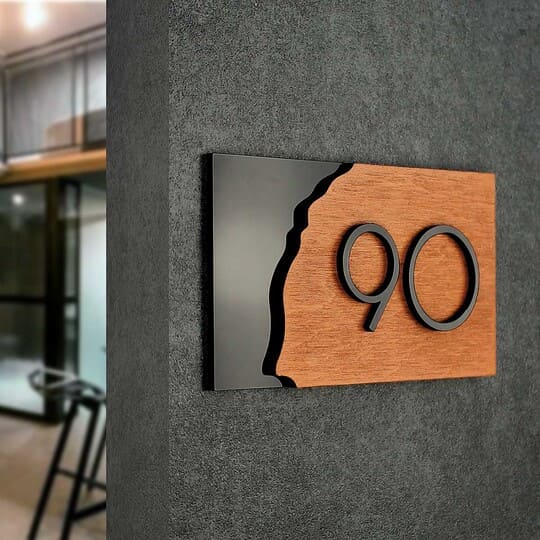
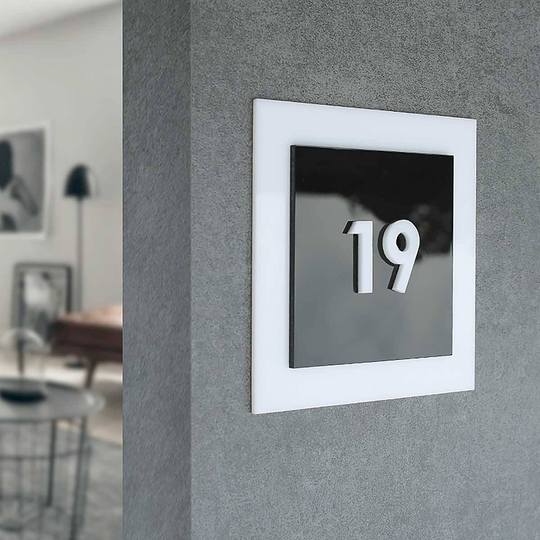
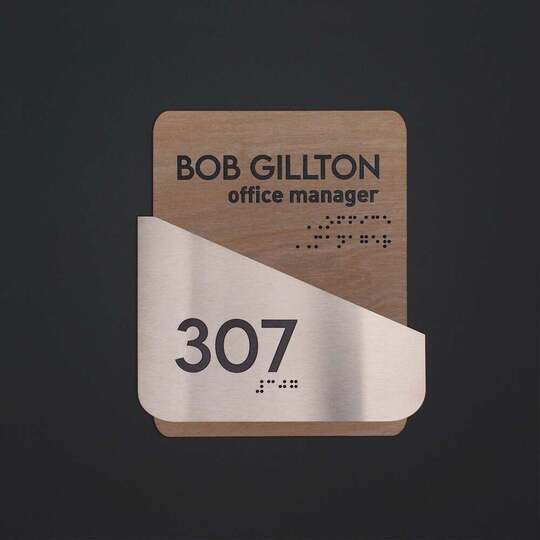
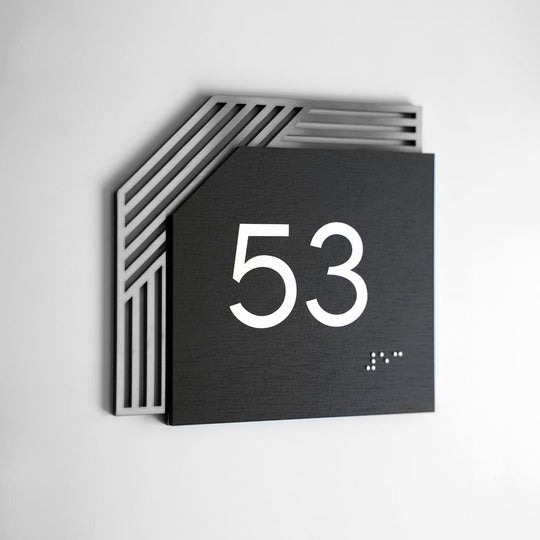
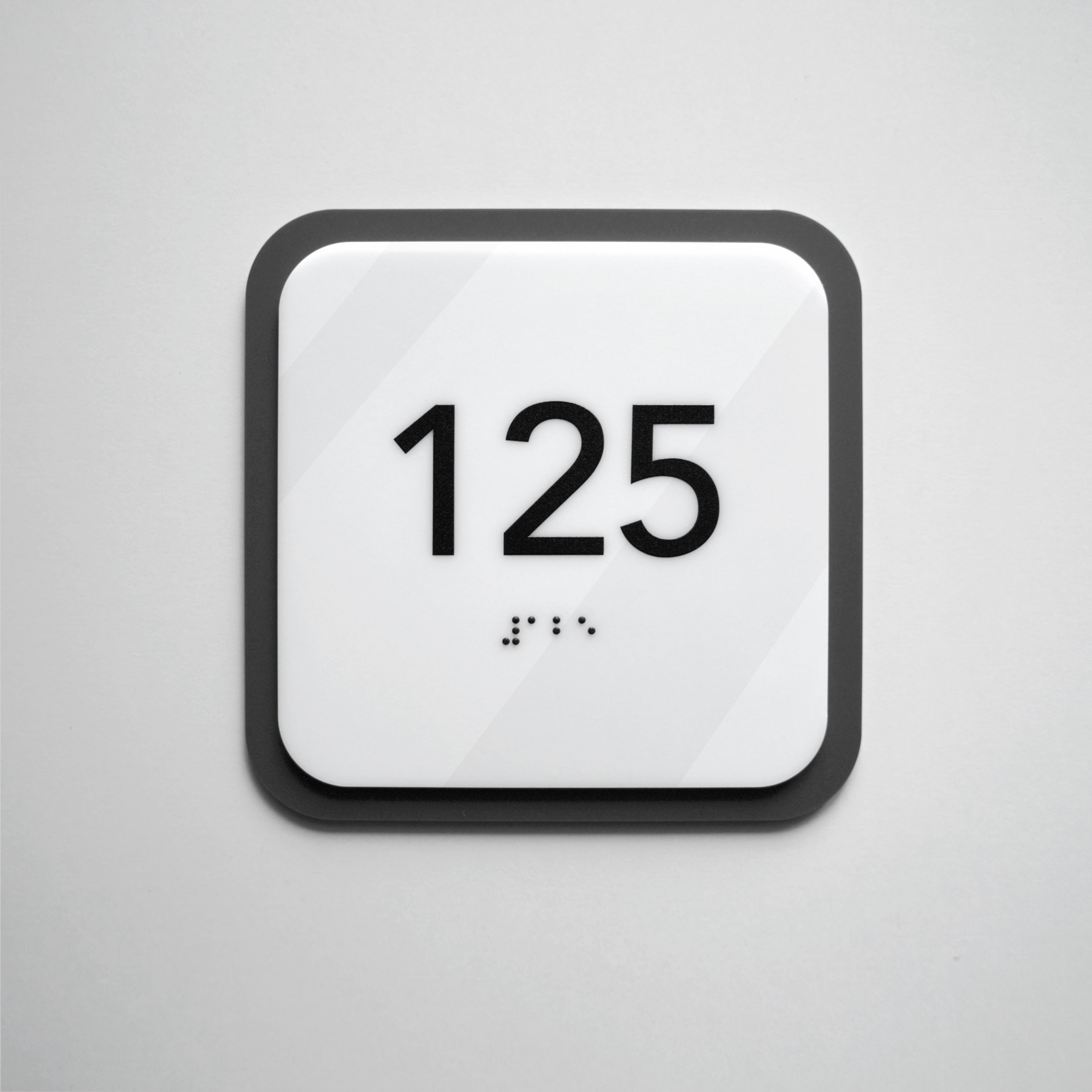
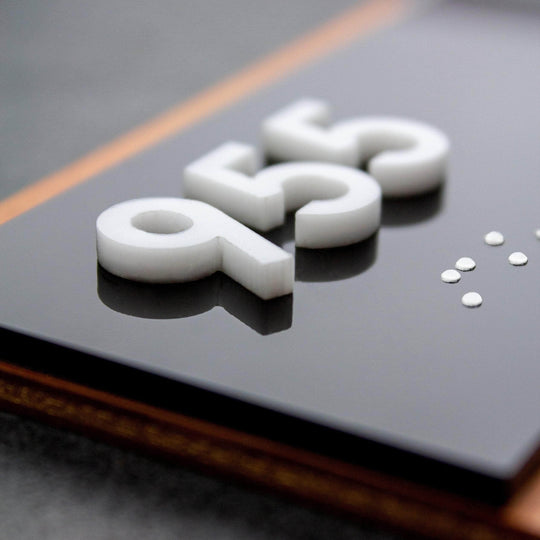
Example of minimalist room number signs from the Buro collection that support a unified wayfinding system and complement interior design:
8. Custom Signage for Hotels and Resorts
Why custom solutions outperform stock signs
Off‑the‑shelf signage doesn't fit every property: each hotel has its own spatial logic, guest movement patterns, and visual concept. Custom directional signs make it possible to build a system tailored to a specific site.
Unlike generic signs, custom hotel signage accounts for building layout, guest flow, brandbook, and accessibility requirements. The result is a custom wayfinding system where every element — from directional signs to hotel room number signs — works together as a unified navigation experience.
Another advantage of custom signs is flexibility. They can be adapted for different functional zones: reception, SPA complex, restaurant, conference hall, or accommodation wings. That prevents chaotic navigation and creates a consistent guest journey across the property.
Branding: logo, brand style, and materials matched to the property concept
Modern branded signage helps build hotel recognition and supports a coherent visual identity.
Personalized signage can include a logo, brand typography, QR codes, tactile features, and Braille. This turns navigation into part of the guest experience rather than a mere collection of markers.
Custom signs made from the same materials and colors used in the interior are especially effective: they strengthen hotel branding and make the space feel unified.
In many projects, bespoke signage is the bridge between wayfinding, design, and accessibility requirements.
Bsign Expert Approach
At Bsign, we treat wayfinding as part of the architectural concept, not as a set of isolated products.
We design custom wayfinding signs for hotels, resorts, apartments, and SPA complexes with attention to guest routes, zoning, interior specifics, and barrier‑free requirements.
That approach allows us to create a personalized wayfinding system where directional signs, room number signs, informational plates, and ADA‑compliant signs work in harmony and reflect a single brand style.
We don't adapt generic templates — we create solutions tailored to a specific space. Custom door signs for each project are developed with the property's architecture and concept in mind.
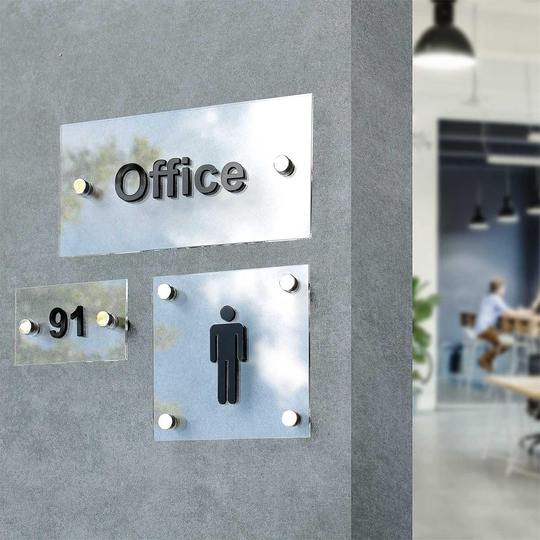
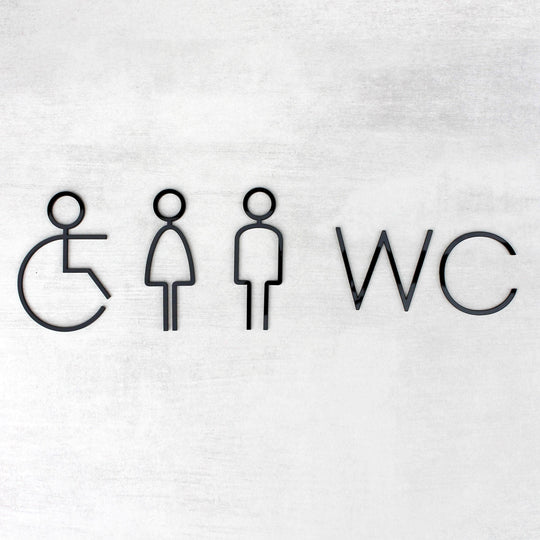
Example of a Thin collection restroom sign with a concise pictogram and clear visual language for quick guest orientation:
9. How to Build a Hotel Wayfinding System That Works Without Staff Assistance
5 Steps to Creating an Effective Wayfinding System
Step 1. Route analysis. Walk the guest's path from the entrance to every key destination. Wherever you find yourself pausing to decide where to go next, a sign is needed. Record all decision points.
Step 2. Property map. Plot every zone, entrance, elevator, stair core, and inter‑building crossing on a site plan. Establish a hierarchy: which destinations guests look for most often. Those become priority routes for hotel wayfinding signage.
Step 3. Select sign types. Assign the right sign type to each route point: site map, directional sign, zone identification plate, or room number sign. The number of signs is determined by decision points, not by total square meters.
Step 4. Unified style. Fonts, colors, materials and shapes must follow the hotel brandbook, and remain consistent across zones. One sign that breaks the visual code makes the whole system feel chaotic.
Step 5. Installation and testing. Before installation, it's useful to review the recommendations on how to mount room number signs in a hotel so that all elements of the system work as effectively as possible. Standard mounting height for most signs is 1.2–1.5 m above the floor. After installation, test the system as a new guest: walk all routes without prior knowledge of the layout. Wherever questions arise, refine the signage.
Decision Framework for Different Property Types
- Large multi‑building complexes — full site maps at the main entrance, floor directories, color‑coded building zones, and clear navigation between structures.
- Boutique hotel or apartments — minimalist hotel room numbering systems, targeted directional plates, emphasis on material and design.
- Resort with SPA and restaurants — signs at every decision point, QR-enabled navigation for extra detail, and mandatory wayfinding to each amenity.
- Any hospitality properties — include Braille signs, tactile elements, and accessible mounting heights.
Why design-stage consultation prevents costly post-opening fixes
The most expensive wayfinding mistake is the one you fix after opening. Redesigning the signage system after launch involves not only costs but also downtime, and it creates a negative first impression for guests.
Consulting during the design phase lets you account for layout before installation, avoid common placement mistakes, and choose materials suited to the site's conditions.
Hotel signage: an investment in guest comfort and brand reputation
Wayfinding signs for hotels and resort signage are an investment in the guest experience. A property where guests can navigate independently earns higher ratings, reduces front‑desk workload, and presents a more cohesive brand.
An effective hotel wayfinding system is built not by the number of signs but by the logic of the guest route: from decision points to a unified style and correct installation.
Designing navigation before opening or during renovation removes most common mistakes at the drawing stage, saving on relocation, renumbering, and remanufacturing costs.
At Bsign, we help design turnkey wayfinding systems for hotels, resorts, and apartments before any signs go into production. Consulting during the planning stage lets you create a logical navigation system, avoid costly rework after opening, and ensure a comfortable guest experience. If you're working on a new project or updating an existing property, we recommend requesting a custom quote during the design phase.
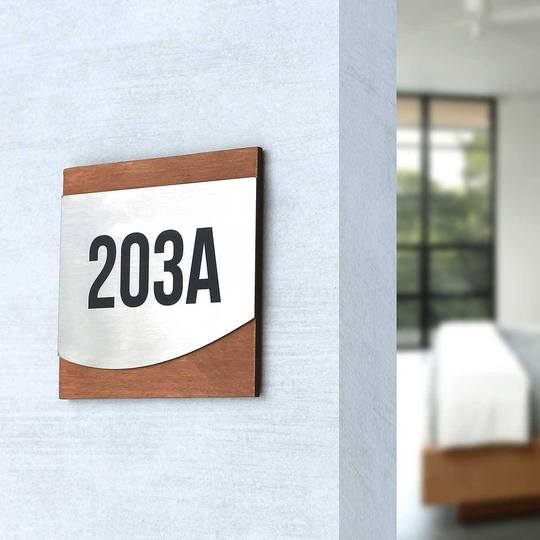
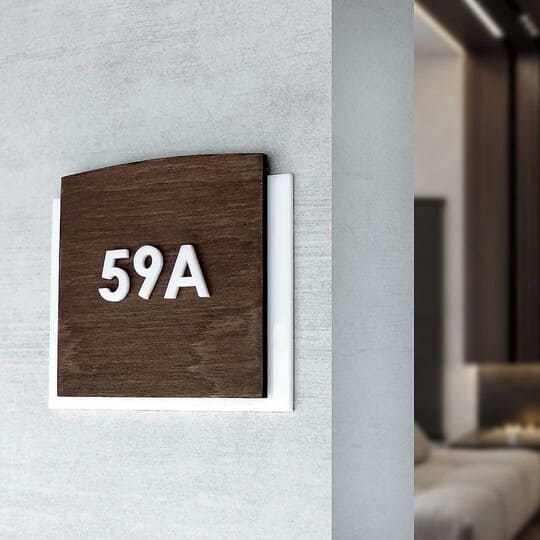
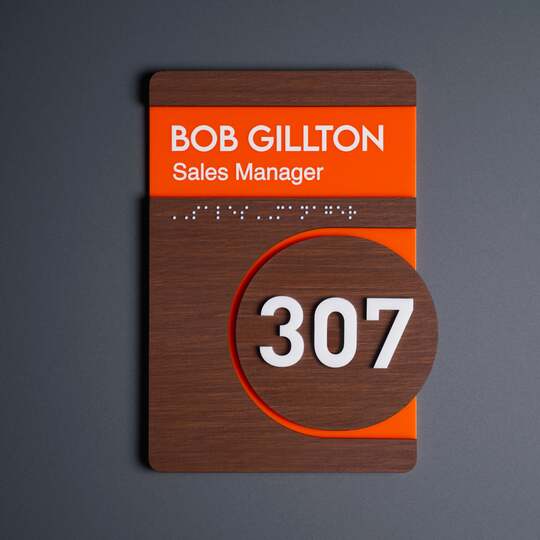
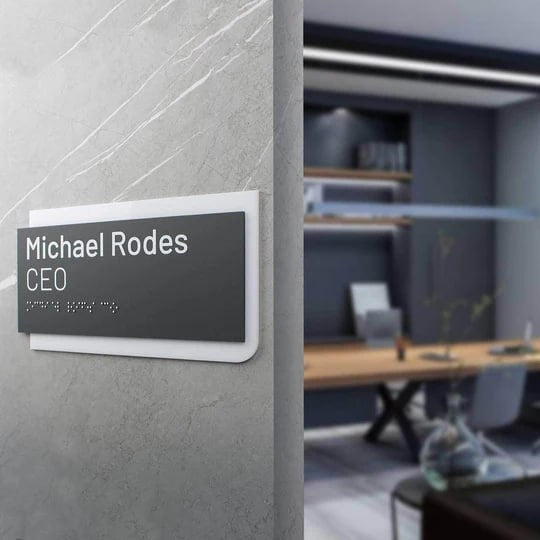
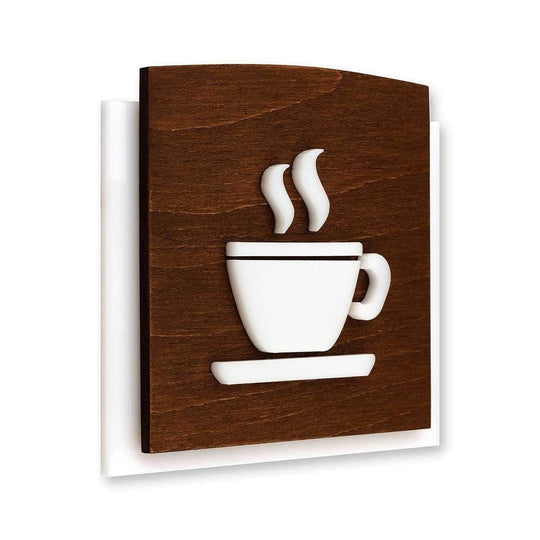
Example of a wooden hotel signage solutions from the Scandza collection that blends functional wayfinding with contemporary interior aesthetics:
Frequently Asked Questions About Hotel Wayfinding Signs
What is included in a hotel or resort wayfinding system?
A complete wayfinding system includes a site map or directory, directional signs, zone identification signs (spa, restaurant, conference hall, pool), room number signs, and service-area signs. Large multi-building properties also add floor directories and building markers. All elements share one consistent visual style for clarity.
How many signs are needed for a multi‑building site?
The required number of wayfinding plaques for hotels is determined not by the property's size but by the number of decision points along the guest journey — intersections, splits, and zone entrances. Each decision point needs a sign. Multi‑building sites also require an entrance site map, floor directories, and building identifiers (letters or color‑coded building zones).
Why do guests still get lost even when a hotel has signs?
Usually, the problem isn't missing signs — it's the lack of a system. Inconsistent styles across zones, signs placed where they're convenient to mount, text overload, and small fonts all cause confusion. If signs aren't sequenced along the guest's route and repeated at decision points, guests still lose their way.
How does wayfinding signage affect hotel staff and operations?
Clear wayfinding reduces repetitive "how do I get to..." questions, freeing front-desk staff for check-in and service. Industry benchmarks suggest well-designed systems can meaningfully cut directional inquiries, improving operational efficiency and letting teams focus on hospitality rather than directions.
What materials are best for hotel wayfinding signs?
The most popular are acrylic, stainless steel, and wood. Acrylic is versatile and holds color well; stainless steel adds a premium, durable feel; wood suits eco and boutique properties. Material also doubles as a zoning tool — different finishes can visually distinguish areas across the property.
Can hotel wayfinding signs include a logo, QR code, or Braille?
Yes. Logos are integrated to reinforce brand identity, QR codes link to digital maps or details, and Braille with tactile elements make signs ADA-accessible. These are typically produced as custom, made-to-order signs matched to a specific hotel's brand style, materials, and color palette.


