










by Oleh Tomilenko
Wooden vs Metal Door Signs: A Practical Guide to Choosing Door Sign Materials in 2026
Modern door signs are an important part of interior wayfinding systems and spatial design. They help people quickly identify rooms, support logical movement through a building, and shape the first impression of an interior. In modern projects, architects and developers most often choose between two materials — wood or metal.
Wooden door signs are typically used in residential interiors, boutique hotels, and spaces where a warm atmosphere and natural aesthetic matter. Metal door signs are more commonly installed in offices, hospitals, and commercial buildings where higher durability and strong visual contrast are required.
Indoor wayfinding signs are used to identify rooms and designate offices. The best choice depends on the building type, interior style, and the intensity of space use.
When planning navigation, architects and developers inevitably face the same question: which door sign material is better for a specific project — wood or metal? This choice directly affects durability, readability, and how the space is perceived. In contemporary projects, the best material for door plaques depends on the environment, traffic level, and design concept.
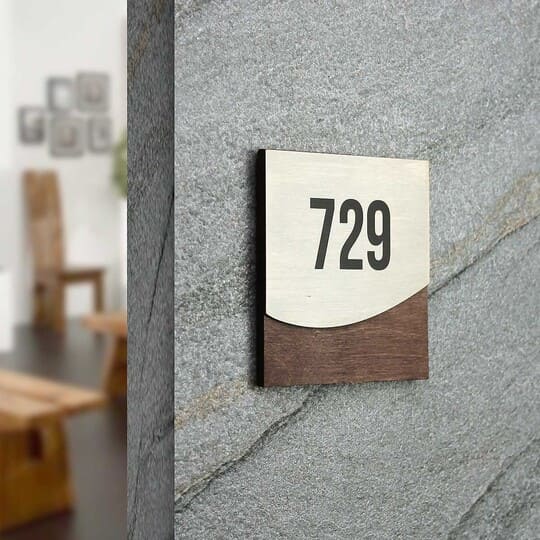
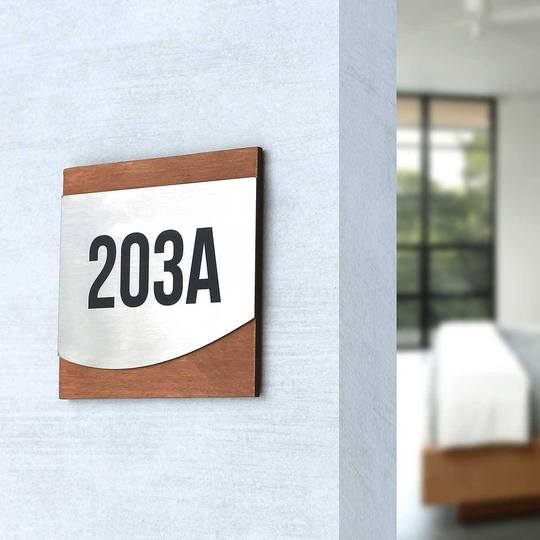
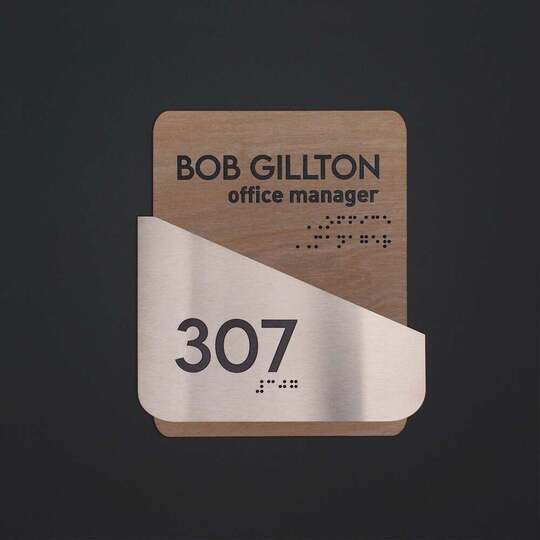
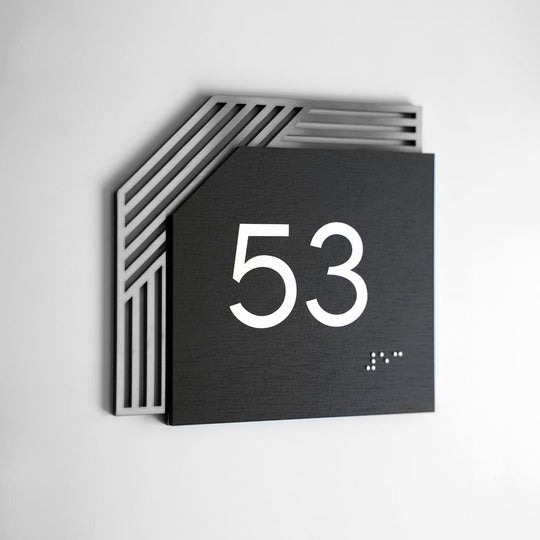
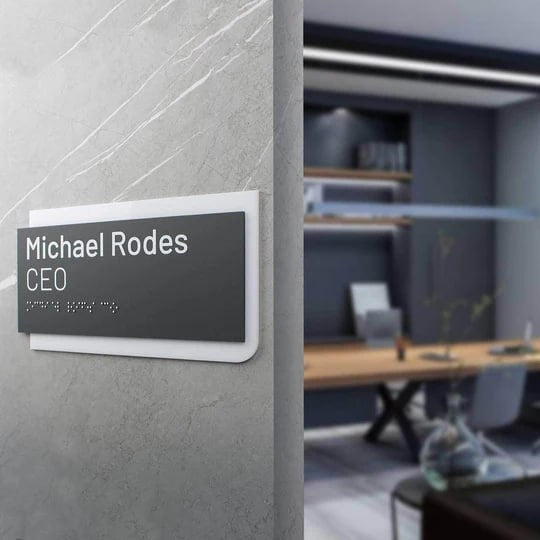
Products from the Wave collection combine wood and stainless steel, creating modern door elements for interior wayfinding in offices, hotels, and residential buildings:

What Are Door Signs in Modern Interior Design
Door plaques are elements of interior wayfinding that help identify rooms and create a clear spatial structure. They are used in residential buildings, offices, hotels, and many other environments.
Main functions of such signs:
-
• marking rooms or offices;
-
• supporting the building’s navigation system;
-
• reinforcing the interior’s style;
-
• creating a recognizable atmosphere within the space.
In modern projects, door plates become part of the architectural concept and help form logical interior wayfinding.
The Role of Door Signs in Building Navigation
Room signage helps people orient themselves quickly in large buildings. This is especially important for business centers, hospitals, and hotels.
In a wayfinding system, the following are used:
-
• wayfinding signs;
-
• informational signs;
-
• directional signs.
These elements form a unified building wayfinding system. The more logically it’s organized, the easier it is for visitors to find their way around the space.
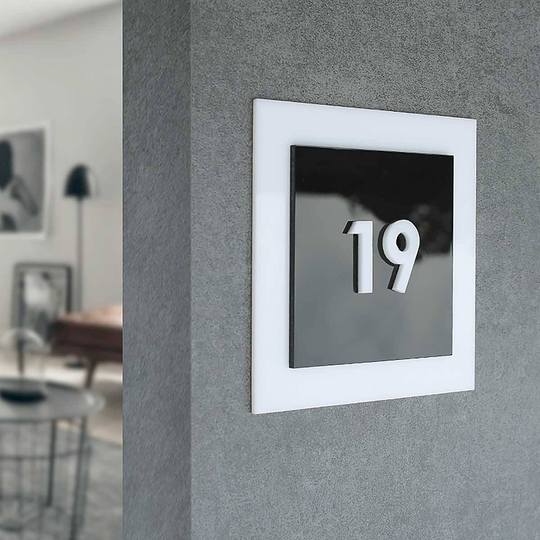
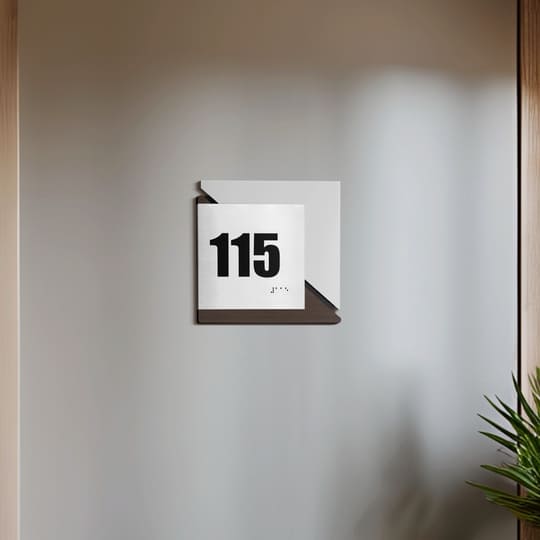
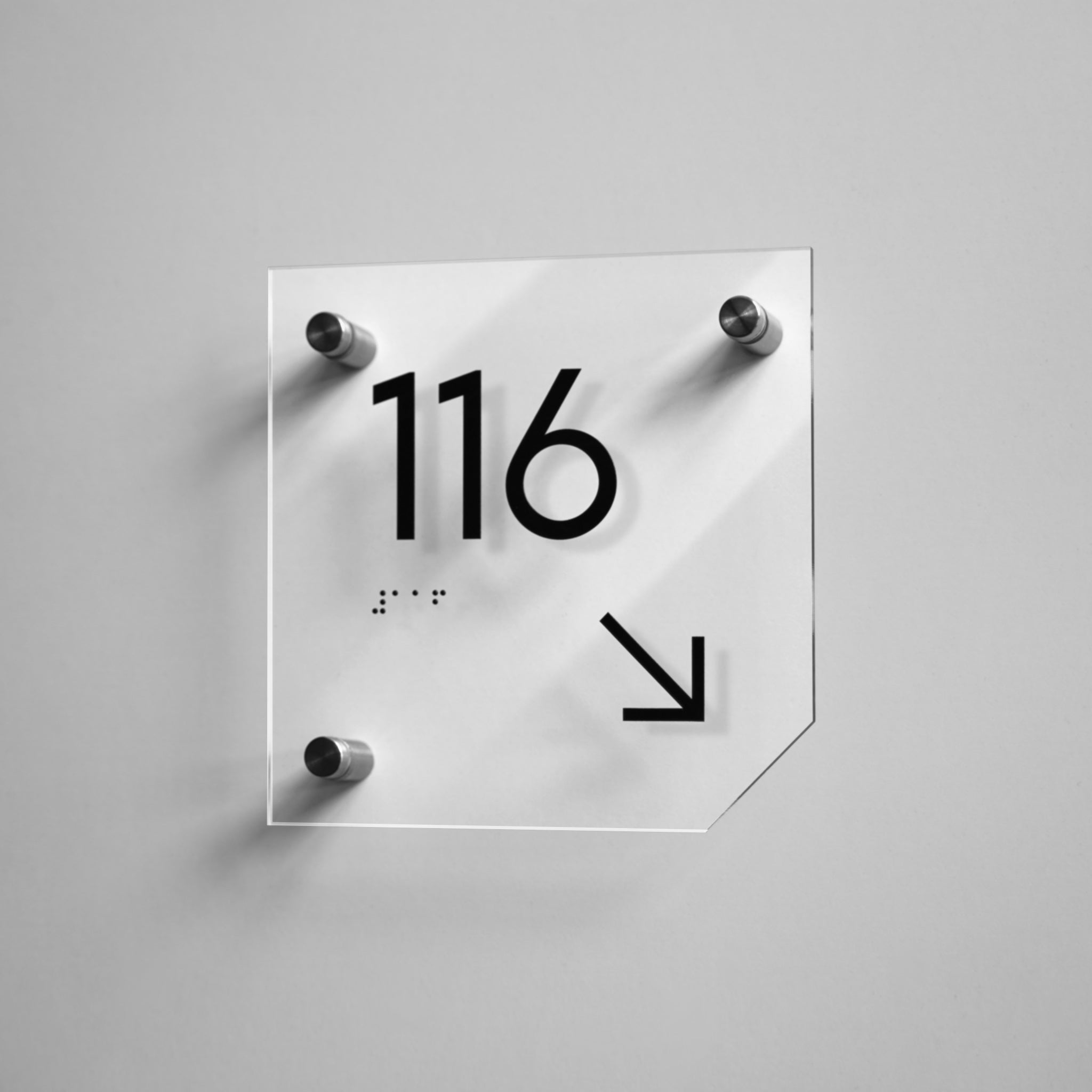
Examples of minimalist door elements from the Genova collection are used for navigation and office identification:
Why Door Sign Materials Influence Interior Perception
The material of a wayfinding element determines the overall perception of the interior. It affects the atmosphere of the space, the level of visual comfort, and even how people navigate the premises. A well‑chosen material makes navigation intuitive and allows the sign to blend harmoniously with the building’s overall style.
Wood typically creates a warm, natural atmosphere, which makes it suitable for interiors where coziness and a soft aesthetic matter. Metal, by contrast, adds a sense of modernity, clarity, and architectural precision, which is often used in minimalist or tech‑oriented spaces. High‑contrast navigation signs can also improve legibility and help people locate rooms faster.
That is why signs for contemporary interiors are often selected together with a designer or architect. This lets them account for the interior style, lighting, wall colors, and the overall logic of the building’s navigation. As a result, wayfinding elements become part of a cohesive interior design.
Wooden Door Signage: Benefits, Design, and Use Cases
Wooden door products are a popular solution for interiors where a natural aesthetic is important. Wood harmonizes with various materials and helps create a cozy atmosphere.
Main advantages of wooden products:
-
• natural texture;
-
• pleasant visual warmth;
-
• harmonious integration with interiors;
-
• the possibility of creating a custom design.
Natural Texture and Warm Interior Aesthetic
Wood has a natural texture that adds depth and character to an interior. Wooden door plaques convey warmth, comfort, and visual balance, especially in spaces where a natural atmosphere is valued.
In such interiors, wood looks organic and supports the overall design concept. It complements natural surfaces, textiles, and neutral colors, so it’s often used in Scandinavian interiors, modern minimalism, or eco‑design. For this reason, designer door signs don’t stand apart as separate elements but integrate harmoniously into the space.
Where Wooden Door Signage Is Commonly Used
Wooden door products are best suited to spaces where creating a warm, natural atmosphere is important. Thanks to their natural appearance, they work especially well in interiors that feature wood, textiles, stone, or other natural materials. These signs help make a space feel more welcoming and visually softer, so they are often chosen for residential or design‑led projects.
Where wood works best:
-
• hotel room signs;
-
• apartment door numbers;
-
• signs for residential complexes;
-
• private homes.
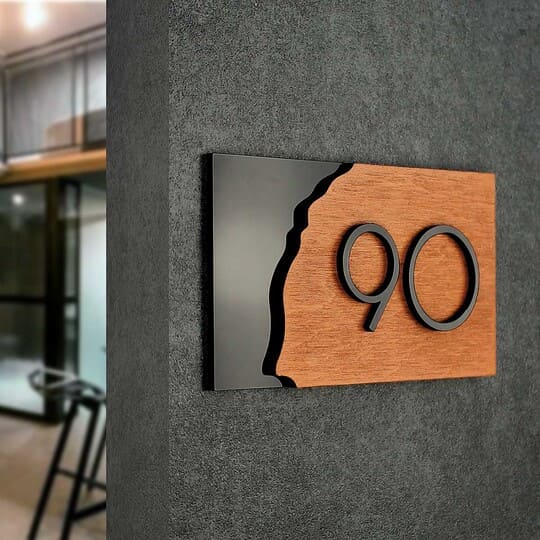
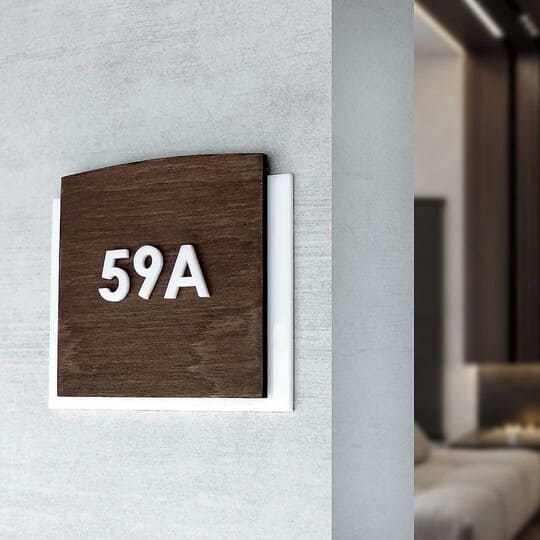
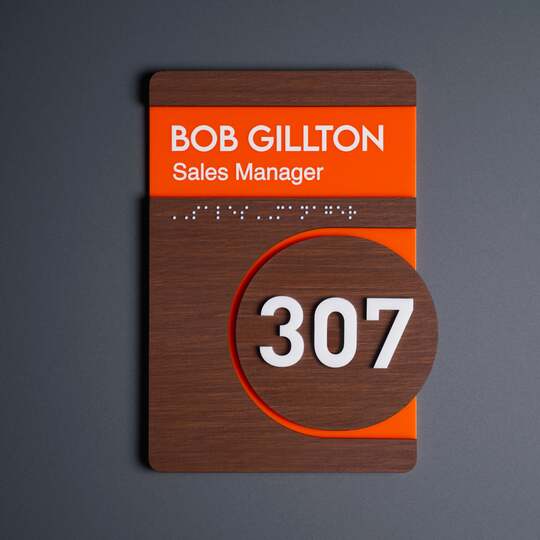
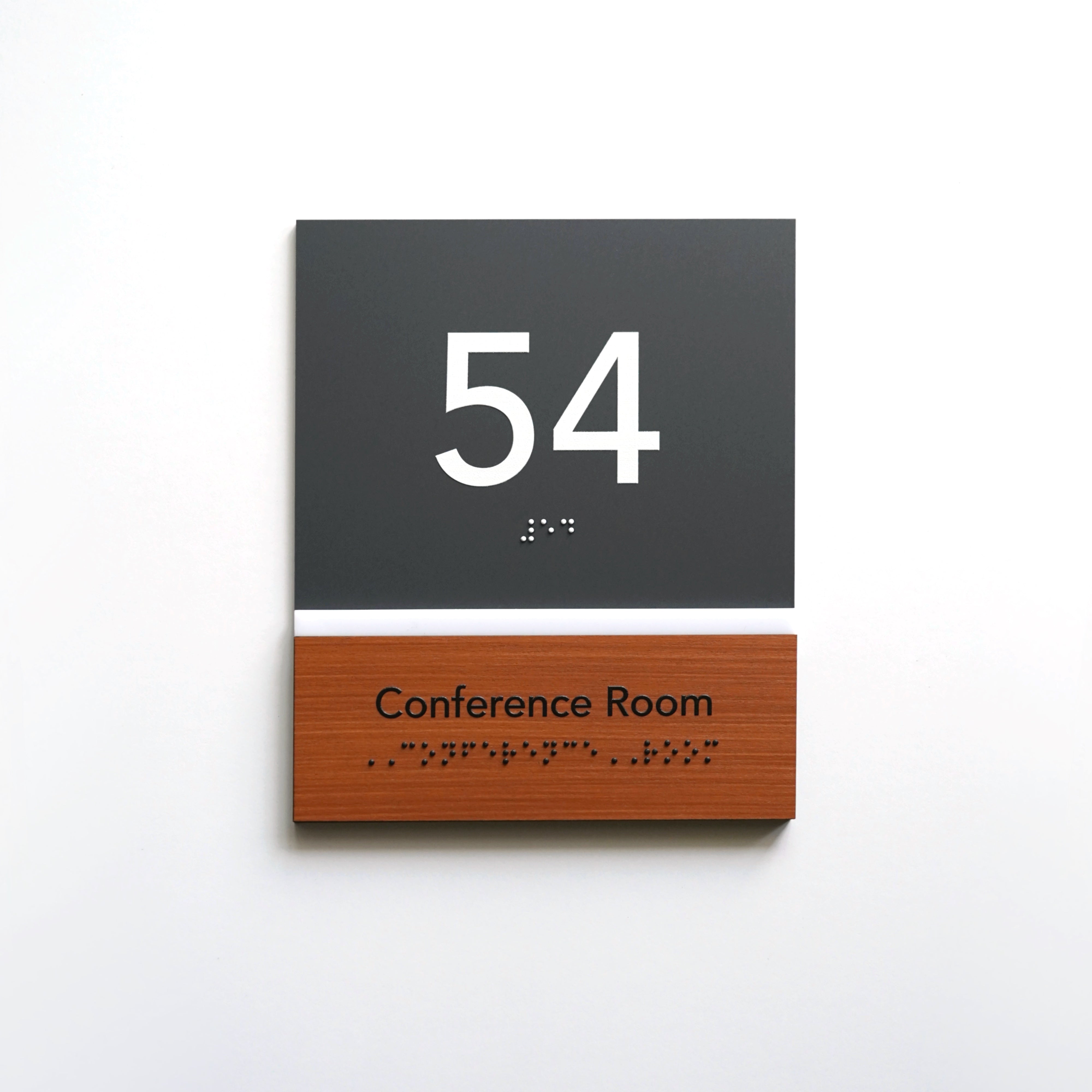
Wooden pieces from the Scandza collection are suitable for Scandinavian interiors, apartments, and designer spaces:

Metal Door Signs and Stainless Steel Door Signage
Metal door products are the go‑to solution for high‑traffic spaces. Stainless steel is the most commonly used material, prized for its durability and resistance to wear.
Key characteristics of metal products:
-
• high strength;
-
• scratch resistance;
-
• modern appearance;
-
• clear text contrast.
Minimalist Design and Architectural Precision
Metal signage is ideal for contemporary architecture. It creates a restrained look, emphasizes the geometry of a space, and gives interiors a sense of order and clarity. Thanks to its texture and neutral tone, metal integrates easily into various design concepts without cluttering the environment with unnecessary details.
Metal signs are often used in modern interiors where simple forms, clean lines, and functionality matter. They complement glass, concrete, and other materials typical of minimalist or tech‑oriented spaces. In such projects, modern door signage has a concise appearance and supports the overall architectural composition.
Where Metal Door Signs Are Most Commonly Used
Metal signs are most often installed in buildings where durability, clear navigation, and a professional interior appearance are essential. They withstand heavy use and keep a neat look even in high-traffic areas.
Common use cases for commercial interior signage:
-
• signs for business centers;
-
• signs for commercial premises;
-
• signs for hospitals.
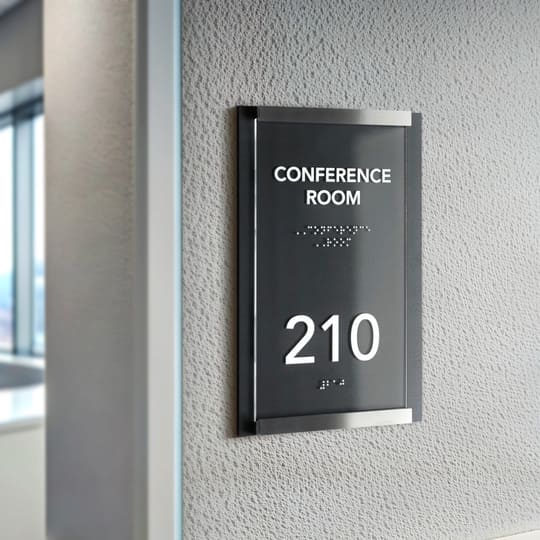
Metal informational elements from the Creative collection are used for wayfinding in public spaces and commercial buildings:

Wood vs Metal Door Signs: Which Material Is Better?
Wood and metal signs are both widely used in interior wayfinding systems. The main differences between these materials lie in durability, design flexibility, and long‑term maintenance.
|
Criterion |
Wooden Signs |
Metal Signs |
|
Best used in |
residential interiors; apartments; boutique hotels |
offices; hospitals; business centers; public buildings |
|
Durability |
high indoors; depends on protective finish |
very high; wear‑resistant |
|
Readability |
optimal with contrasting letters |
very high due to strong contrast and engraving |
|
Design |
warm; natural; decorative |
restrained; modern; minimalist |
|
Cost |
moderate; depends on wood type and finish |
mid to higher; depends on metal |
|
Navigation |
suitable for smaller spaces |
optimal for large buildings and complex navigation systems |
This wood vs metal door plaques comparison shows that there is no universal winner — only the right choice for a specific context.
Durability of Door Sign Materials
Metal door plaques generally last longer, especially when made from stainless steel. This material resists scratches, mechanical impact, and everyday wear. That is why stainless steel signage is often chosen for public buildings where wayfinding elements are used daily by large numbers of people. Wood can also be durable indoors, particularly when the surface has a protective finish and is not exposed to constant moisture.
Readability and Navigation Clarity
The material of a sign can affect how easily people perceive information. Metal creates strong text contrast, so legible metal door signs are frequently used in hospitals and offices where quick orientation matters. Wood can also provide good visibility for inscriptions when contrasting letters or other visual elements are applied. As a result, the right material choice makes navigation clearer and more comfortable.
Design Flexibility and Customization
Modern production technologies make it possible to create custom door signs and adapt them to the style of an interior. For example, you can use acrylic letters signage, or add raised letters, or various contrasting details that highlight text and make it more noticeable. The combination of wood and stainless steel materials for door signage is also widely used in contemporary interiors. This approach makes it possible to combine the warm aesthetic of a natural material with the clarity and restraint of metal, creating a balanced and modern sign appearance.
Life Cycle Cost of Door Sign Materials
When choosing a material, consider not only the initial price but also the service life. Materials vary in cost depending on manufacturing methods, finish type, and design complexity. For instance, stainless steel door signs often retain their appearance for 10–15 years or more, while wooden door plaques typically last around 7–10 years under standard indoor use.
Therefore, when planning a wayfinding signage system, teams usually evaluate how signs will perform over time. The final material choice depends on budget, interior style, and the operating conditions of the navigation elements in a given space.
An example of informational navigation signs from the Creative collection, used in building orientation systems.

Where Door Signage Is Used: Homes, Offices, and Commercial Spaces
Signs for business and residential spaces are used to identify rooms and support logical movement. They help people find the right door quickly, orient themselves in a building, and make the environment more intelligible for visitors.
Main application areas:
-
• residential buildings;
-
• offices;
-
• hotels;
-
• hospitals.
Door Signage for Homes
In residential buildings, door number signs are most commonly installed. These elements primarily serve an informational purpose. They help residents and guests navigate an apartment or floor and make the space feel more orderly.
Door Signage for Offices
Office environments require a clear navigation system, since employees and visitors need to locate rooms and departments quickly. Navigation elements help structure the space and guide movement efficiently.
These interiors commonly use:
-
• room signs;
-
• office door signs;
-
• informational signs for buildings.
Door Signage for Commercial Buildings
In commercial buildings, signs serve not only a navigation function but also an image-building one. They help create a clear orientation system for clients and reinforce the sense of an organized space.
Common commercial use cases:
-
• hotel door signs;
-
• signs for business centers;
-
• signs for commercial premises.
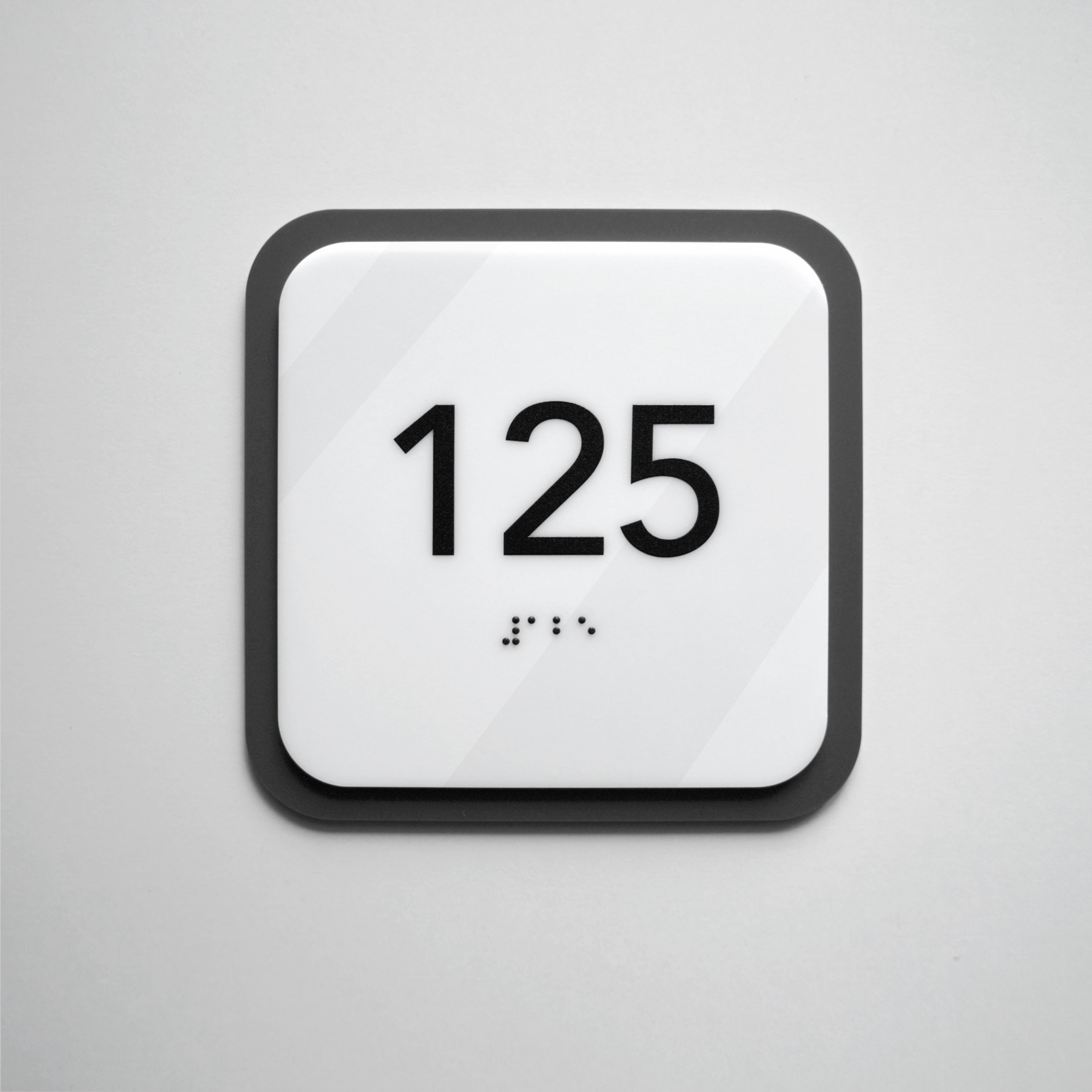
Informational signs from the Jure collection are used to provide accessible navigation in modern buildings:

Interior Door Sign Trends in 2026
The design of wayfinding elements evolves alongside architecture and interior finishes. In 2026, simple, functional solutions remain popular. Most modern signs combine aesthetics and practicality so they look neat while remaining easy to use.
Key trends:
-
• natural materials;
-
• minimalist design;
-
• accessible navigation.
Natural Materials in Interior Signage
Wood and metal are widely used in modern interiors. That is why the best materials for door signs often combine the two options. Such products have a restrained appearance, offer long-lasting performance, and work well with contemporary interior design schemes.
Minimalist Typography
Minimalist door signs remain one of the main trends. They look neat, are easy to read, and suit different types of spaces, from offices to hotels.
Their features:
-
• simple geometry;
-
• clear typography;
-
• contrasting elements.
Tactile Elements and Braille Signs
Accessibility is important in modern buildings. Therefore, braille door signs are increasingly designed so they can be used by all visitors. Tactile markings and special elements help people orient themselves in a space.
ADA compliant signage makes navigation clearer and more convenient in large buildings and public areas.
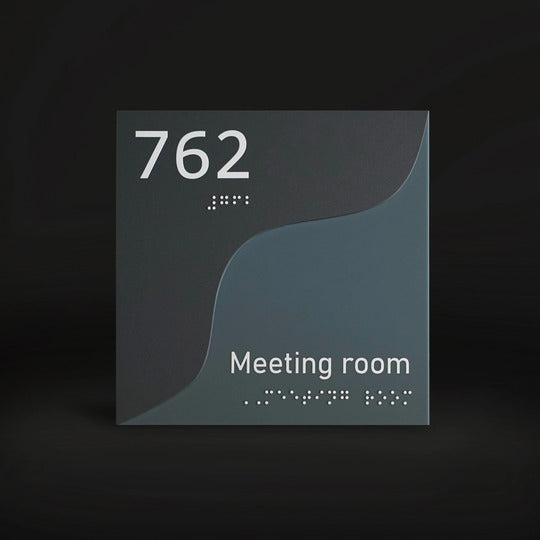
Metal tactile signage with Braille from the Creative collection helps make navigation accessible to all visitors.

How Architects and Developers Should Choose Door Sign Materials
The right material choice depends on a building’s function and the expected intensity of use. This is especially relevant when planning signs for developer projects, since they need to be equally clear for residents, visitors, and staff. When planning, it’s important to consider the space’s characteristics and how the wayfinding system will actually be used.
Main selection factors include building type, interior style, expected traffic level, and navigation requirements. For example, in public buildings signs should be more robust and highly visible, while in office or residential spaces matching the interior design is often more important.
It is best to order signs at the navigation planning stage. At that point, it is possible to think through the door sign placement, their design, and the logic of movement through the building in advance. This approach allows wayfinding elements to be integrated into the interior during the design phase and avoids random or inconvenient placements after construction is complete.
Practical Experience in Producing Wayfinding Signs
Bsign is a manufacturer of interior signage elements and wayfinding systems, specializing in custom signage for residential and commercial projects. The company focuses on best materials for door signage such as wood, stainless steel, and acrylic, combining durability with modern interior design requirements. Text is applied using durable UV printing, which preserves clarity even under long-term use.
When needed, logos, QR codes, or tactile elements, including Braille, can be added to the products. This approach makes it possible to create interior door signs that support the overall design of the space and help make the navigation system clearer for visitors.
What to Remember
Room identification signs on doors play an important role in creating clear navigation and a cohesive interior look. Products made from natural materials are more often used in residential or design-led spaces, where a warm atmosphere and natural aesthetics matter. Metal solutions, by contrast, better suit office and public buildings because they offer increased wear resistance and ensure clear visibility of information.
As a result, the choice of material depends on the building’s function, the interior style, and the intensity of use of wayfinding elements. Well‑chosen door plaques make a space easier to understand for visitors and support the overall architectural concept.
Choosing the right door signage material is part of creating an effective navigation system. Bsign offers custom solutions tailored to residential and commercial projects, helping architects and developers implement clear and durable wayfinding systems.
Informational signs from the Venture collection are used for navigation in large buildings and commercial spaces:

FAQ
Which interior signage elements are more durable — wooden or metal?
Typically, stainless steel signs have a longer service life. They are resistant to scratches and are suitable for spaces with high foot traffic. Wooden door products can also be durable, especially when they are properly finished and protected with a suitable coating.
Are wooden door elements suitable for hotels?
Yes, wooden door elements are often used in hotels and apartments. They create a warm atmosphere and pair well with natural interior materials. These solutions are especially popular in boutique hotels and design‑led projects.
Does the material of a door sign affect readability?
Material can influence text contrast. Metal door plates usually provide very clear visibility of inscriptions, which is important for wayfinding elements in large buildings. Wooden signage can also be legible when contrasting letters or acrylic elements are used.
Can wood and metal be combined in one door sign?
Yes, combining wood and metal is a common design solution. This approach makes it possible to create a balance between natural aesthetics and contemporary restraint.
Can logos or QR codes be added to door signage?
Yes, modern signs for businesses often include a company logo or a QR code. This allows quick access to additional information and supports the building’s corporate identity.
When should door plaques be planned during a building project?
It is best to plan architectural signage while the building’s navigation system is still being developed. This makes it possible to account for the size of the signs, their placement, and the interior style in advance. As a result, building navigation signs become an integrated part of a cohesive spatial design.


